
Imagine trekking through stunning landscapes while picking up a new language. Backpacking offers an incredible opportunity to immerse yourself in different cultures, boosting your language development in a way that textbooks simply can’t. Let’s explore how travel can enhance your language skills!
Understanding the Importance of Language Development Through Backpacking
The Connection Between Travel and Language Skills
When I first embarked on my backpacking journey, I didn’t realize how deeply intertwined travel and language learning could be. I remember standing in a bustling market in Barcelona, surrounded by locals chatting in rapid-fire Spanish. It was in that moment I felt a spark—a realization that language is not just words on a page but the heartbeat of a culture. By immersing ourselves in a country’s language, we connect on a personal level. The sounds, the accents, and even the gestures start to make sense, creating an experience that is both enriching and memorable.
Traveling allows us to step outside our comfort zones. I’ve found that being in a country where the language is spoken forces you to engage more actively. Whether it’s ordering food, asking for directions, or simply striking up a conversation with a fellow traveler, every interaction is a chance to practice. I recall a beautiful evening in Paris, where I attempted to speak French to a local baker. My pronunciation may have been off, but the warmth of their smile and willingness to help made the experience unforgettable. In those moments, I learned that language can be a bridge, connecting us to people and places in ways we never imagined. Read Interesting article: Destination Guide: Nut Allergy-Friendly Backpacking Routes
Benefits of Learning a Language While Traveling
Learning a language while traveling has incredible benefits that go beyond just communication. For starters, it enhances our cognitive skills. Studies show that learning a second language can improve memory and problem-solving abilities. I’ve noticed that when I pick up phrases in a new language, I become more adaptable and open-minded, which is essential during a backpacking trip filled with unexpected challenges.
Furthermore, engaging with locals provides insights into their lives and customs that you wouldn’t find in a guidebook. I remember hiking through the hills of Tuscany, where I met an elderly couple who shared stories of their village’s history. They taught me a few Italian phrases, and in return, I shared tales of my travels. Those exchanges not only enriched my vocabulary but also my understanding of the culture. It’s in these moments that language becomes a powerful tool for connection and empathy.
Another wonderful aspect of learning a language while traveling is the confidence it builds. I’ve experienced the jitters of speaking in a foreign language, worrying about making mistakes. However, I found that locals often appreciate the effort, regardless of how well you speak. The encouragement I received in markets, cafés, and even on the trails pushed me to try more. Each success, no matter how small, added to my confidence. I believe this is a key takeaway for any backpacker: every word spoken is a step toward mastery.
Language learning also opens doors to unique experiences. I’ve stumbled upon local festivals, hidden gems, and beautiful off-the-beaten-path places simply because I was able to communicate with the locals. They shared recommendations that enriched my travels in ways I could never have planned. I remember exploring a quaint village in the south of France, guided by a local’s suggestion, which led me to an exquisite vineyard. That day was a reminder of how language can lead to serendipitous adventures.
Lastly, immersing myself in a new language while backpacking has taught me patience and perseverance. Language learning is not a race; it’s a journey, much like backpacking itself. I’ve had my fair share of blunders—mispronounced words and awkward phrases—but those moments often became the most cherished memories. Laughing off a mistake with locals turned into shared stories, creating bonds that transcended language barriers. These experiences taught me to embrace the process rather than focus solely on the outcome.
In my travels, I’ve seen how language can transform not just our understanding of a culture but our place within it. It has the power to change our perspectives, deepen our connections, and ultimately enrich our lives. As I continue my own journey, I encourage fellow travelers to embrace the languages that surround them. Whether you’re navigating the cobblestone streets of a foreign city or hiking through breathtaking landscapes, remember that every conversation is an opportunity to grow, learn, and connect.
Affordable Backpacking Routes for Language Learning
Europe
Spain: The Camino de Santiago
When I think of Spain, I often reminisce about the Camino de Santiago. This ancient pilgrimage route is not just a hike; it’s an incredible way to absorb the Spanish language and culture. Walking through vibrant towns like Santiago de Compostela, I was surrounded by locals who often shared stories and advice, giving me countless opportunities to practice my Spanish. The beauty of the trek is that each town has its own flavor and dialect, making language learning a rich experience. I remember chatting with fellow pilgrims over shared meals, where I learned not only vocabulary but also the essence of Spanish hospitality. I truly believe that walking the Camino opens your heart and mind to a deeper understanding of the language.
France: Exploring the French Riviera
As for France, the French Riviera is nothing short of breathtaking. I spent a week exploring the coastal towns, soaking in stunning views while trying to converse with everyone I met. The charm of places like Nice and Cannes is enhanced by the melodic flow of the French language; each day was a new adventure in learning. I found myself ordering pastries in French (which, let me tell you, was a delicious incentive to practice!). Engaging in conversations with local shopkeepers made me appreciate the nuances of the language, and they often shared tips on local spots that weren’t in any travel guide. This region is perfect for blending the love of travel with the joy of language learning. Read Interesting article: Backpacking with Kids: Fun STEM Learning Adventures
Italy: The Amalfi Coast Trail
The Amalfi Coast is another gem in Europe. As I hiked along the breathtaking cliffs, I was exposed to the beautiful sounds of Italian. Whether I was stopping for a slice of pizza in Positano or chatting with locals in Ravello, every interaction offered a chance to refine my Italian. I recall one memorable afternoon where I was invited to a family’s home for a traditional meal. The warmth of their hospitality encouraged me to speak Italian more freely, despite my mistakes. It turned out that sharing food and stories created an environment where language could flourish. I left with not just memories but also a deeper connection to the language.
South America
Peru: Inca Trail to Machu Picchu
Traveling to South America, particularly Peru, is a dream for many backpackers. The Inca Trail leading to Machu Picchu is not just a physical challenge but also a cultural immersion. I was fortunate to meet many locals who were eager to share their knowledge of Quechua, the indigenous language. As we trekked through breathtaking landscapes, I learned simple phrases that helped me connect with my guides and fellow travelers. I remember how one guide shared a story about the history of the Incas, and as I practiced the language, I felt a sense of belonging in a rich tapestry of culture and history. Each step of the trail was a lesson, both in language and in life.
Argentina: Trekking in Patagonia
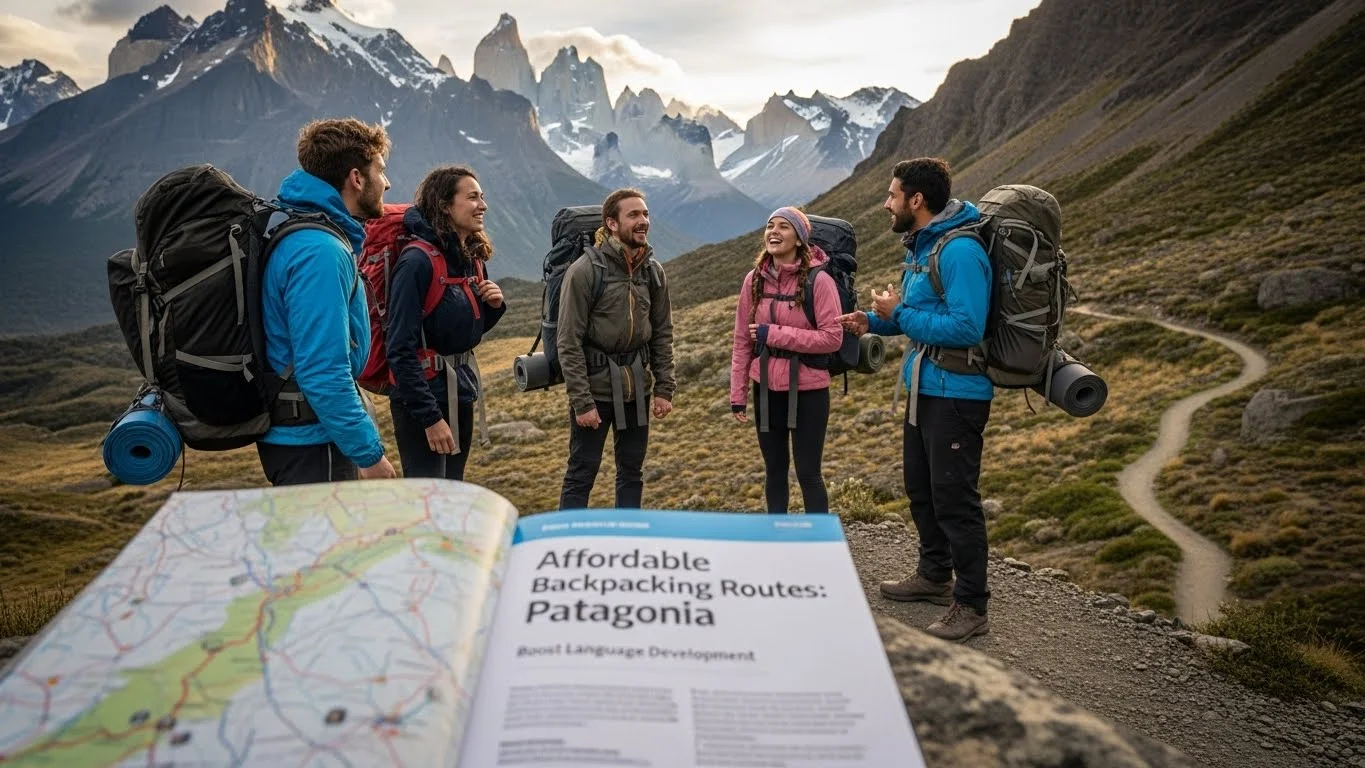
In Patagonia, I found that the vastness of the landscape mirrored the warmth of the Argentine people. Trekking through this stunning region, I was surrounded by Spanish speakers who were more than willing to help me improve my language skills. I learned phrases from fellow hikers, and together we shared stories of our adventures. The beauty of Patagonia, combined with engaging conversations, solidified my belief that every journey is an opportunity to learn. I remember one evening around a campfire, where we exchanged not just words but experiences, making my language skills feel alive and relevant.
Asia
Thailand: The Islands and National Parks
Moving on to Asia, Thailand offers a unique backpacking experience that is perfect for language learners. The islands are breathtaking, but it was the locals’ willingness to teach me Thai phrases that truly enriched my journey. I learned greetings and common phrases while practicing my tones at street markets. I fondly recall a moment when I successfully ordered a meal in Thai, and the vendor’s grin made my day! This interaction highlighted how language can bring joy and connection. Exploring national parks while chatting with locals made me feel more integrated into the culture, turning my backpacking adventure into a language-learning odyssey.
Vietnam: The Ho Chi Minh Trail
Finally, the Ho Chi Minh Trail in Vietnam is an incredible route for those eager to learn Vietnamese. My experience trekking through this historic path was not only beautiful but also filled with chances to practice my language skills. I remember stopping in small villages where the locals were eager to teach me simple phrases. Those moments of connection were invaluable; I enjoyed sharing stories and laughter, often over a bowl of pho. Each interaction helped me grasp the language better, and I felt empowered to explore more deeply. The Ho Chi Minh Trail is a reminder that language learning can blossom in the most unexpected places.
Africa
Morocco: The Atlas Mountains
In Africa, Morocco is a treasure trove of culture and language. Hiking through the Atlas Mountains, I had the chance to learn Arabic and Berber from local guides. Their patience and enthusiasm were inspiring as they encouraged me to try speaking in their native tongues. I remember a particularly delightful moment when a local family invited me to share a meal, and I attempted to express my gratitude in Arabic. Their laughter and appreciation made me feel like I was part of their community. This experience taught me that language is about connection, not perfection.
South Africa: Garden Route
Lastly, South Africa’s Garden Route is not only stunning but also diverse in languages. I found it fascinating to engage with locals who spoke Afrikaans and Zulu. Each conversation opened up new insights into their cultures. While trekking through the picturesque landscapes, I learned simple greetings and phrases that helped me connect with the residents. I remember a unique experience in Knysna, where I joined a local festival. This vibrant atmosphere allowed me to practice my language skills while soaking in the culture. The Garden Route truly highlighted how language learning can enhance travel in ways I never expected. Read Interesting article: Hands-On STEM: Budget Backpacking Tips for Family Travelers
Essential Language Resources for Backpackers
Language Apps and Tools
When I started my backpacking adventures, I quickly realized that having the right tools could make a world of difference in my language learning journey. Language apps became my best friends. I remember downloading Duolingo and Babbel before my trip to Spain, and they turned out to be invaluable resources. These apps are designed to be interactive and engaging, which helped me practice vocabulary and grammar in a fun way. I could sneak in a quick lesson while waiting for a train or relaxing at a café. I found that the gamified nature of these apps kept me motivated, and I loved seeing my progress over time.
Another fantastic tool was Google Translate. The ability to translate text and even have conversations in real-time was a lifesaver. I remember using it to communicate with a local artisan in Italy who spoke little English. It was amazing how just having that tool made me feel more confident in trying to speak Italian. I realized that technology can bridge gaps that once seemed daunting, helping us connect with locals and enhance our experiences.
Phrasebooks and Flashcards
While apps are great, I also found joy in the tactile experience of using phrasebooks and flashcards. There’s something special about flipping through a book and discovering new words and phrases. I often carried a small phrasebook in my backpack, especially when I traveled to places where internet access was spotty. I remember sitting in a park in France, practicing phrases before heading into a restaurant. It felt like a mini challenge, and when I used those phrases, the locals responded with enthusiasm, which fueled my excitement to learn more.
Flashcards were another effective method for me. I created my own, focusing on essential travel phrases and vocabulary. I’d quiz myself while on the bus or during downtime. The repetition helped solidify my knowledge, and I felt a sense of accomplishment each time I remembered a new word or phrase. I believe that combining digital resources with traditional methods like flashcards creates a well-rounded language-learning experience.
Local Language Exchange Opportunities
One of the best ways to learn a language is through interaction with native speakers. I discovered language exchange meetups in several cities during my travels. These gatherings are fantastic for practicing speaking in a relaxed environment. I remember attending a language exchange event in Barcelona, where I met locals eager to practice their English while helping me with my Spanish. It was a win-win situation! We shared laughs, corrected each other’s mistakes, and enjoyed a genuine cultural exchange.
Additionally, many hostels offer language exchange nights or workshops, which I always found rewarding. I recall one evening in a hostel in Prague where travelers from all over the world gathered to teach each other phrases from their languages. Not only did I practice Czech, but I also learned snippets of German, French, and even Japanese! It was a beautiful reminder of how language can bring us together, regardless of where we come from.
Tips for Enhancing Language Skills While Traveling
Engaging with Locals
I cannot stress enough how crucial engaging with locals has been in my language learning journey. Every interaction is an opportunity to practice and improve. I’ve learned that even a simple “hello” or “thank you” in the local language can break the ice. I remember walking into a small eatery in Thailand and attempting to greet the owner in Thai. Her bright smile and laughter immediately created a warm atmosphere, and soon, I was learning how to order food and even ask about her daily specials.
In my experience, locals are usually thrilled when someone makes an effort to speak their language. It opens up doors to deeper conversations and more meaningful experiences. I tried to ask questions about their lives or recommendations for local spots, and it always led to wonderful interactions. I believe that language is not just about words—it’s about connection, and engaging with locals creates those invaluable moments that enrich our travels.
Participating in Language Classes
While backpacking, I also sought out language classes, and I found that they can be a game changer. Enrolling in a short course while in a new city provided structure to my learning. I remember taking a week-long Italian class in Florence. The immersive environment and hands-on practice helped solidify my understanding of the language. Plus, the class was filled with fellow travelers who were just as eager to learn, making it a fun and social experience. We exchanged tips and shared our travel stories, all while practicing our language skills together.
Even if you can only squeeze in a couple of classes, I highly recommend it. The combination of instruction and cultural immersion is powerful. You’ll find that learning alongside others creates a supportive community that encourages you to step out of your comfort zone.
Utilizing Social Media and Online Communities
In today’s digital age, social media can be a fantastic tool for language learning. I often joined language exchange groups on platforms like Facebook or Reddit, where I could connect with native speakers. I remember a particularly memorable interaction where I posted a question about a phrase I heard while traveling in Mexico. The responses were quick and informative, and I even made a couple of friends along the way who offered to help me practice my Spanish through video calls.
Additionally, platforms like Tandem and HelloTalk allow you to chat with native speakers worldwide. I found that even messaging someone in their language helped me reinforce what I had learned. Whether it was through exchanging text messages or voice notes, these interactions felt less intimidating and more accessible. I believe that leveraging online communities can significantly enhance our language learning while we’re on the road.
Frequently Asked Questions
How does backpacking enhance language skills?
Backpacking enhances language skills by immersing travelers in different cultures, allowing them to practice the language through real-life interactions with locals. This experience goes beyond textbook learning, creating meaningful connections through language.
What are the cognitive benefits of learning a language while traveling?
Learning a language while traveling enhances cognitive skills such as memory and problem-solving abilities. It also promotes adaptability and open-mindedness, which are essential during backpacking trips filled with unexpected challenges.
Can learning a language while backpacking build confidence?
Yes, learning a language while backpacking builds confidence as travelers engage with locals and practice speaking. The encouragement received from locals often boosts their willingness to try more, making every small success a step towards mastery.
What unique experiences can language learning provide during travel?
Language learning can open doors to unique experiences, such as discovering local festivals, hidden spots, and recommendations from locals that enrich travels in ways not found in guidebooks. It fosters serendipitous adventures and deeper connections to the culture.
How does engaging with locals benefit language learners?
Engaging with locals is crucial for language learners, as it provides opportunities to practice and improve language skills. Simple greetings or expressions of gratitude can create warm interactions that lead to deeper conversations and more meaningful experiences.
What are some effective language resources for backpackers?
Effective language resources for backpackers include language apps like Duolingo and Babbel, phrasebooks, flashcards, and local language exchange opportunities. These tools help reinforce vocabulary and grammar while enhancing the language learning experience.
How can participating in language classes enhance learning while traveling?
Participating in language classes while traveling provides structured learning and immersive experiences. Classes offer hands-on practice and the chance to meet fellow travelers, creating a supportive community that encourages stepping out of comfort zones.
What role does technology play in language learning during travel?
Technology plays a significant role in language learning during travel by providing tools such as translation apps like Google Translate, which help bridge communication gaps with locals. These resources can enhance confidence and facilitate meaningful interactions.
How can social media aid in language learning on the road?
Social media can aid in language learning by connecting travelers with native speakers through language exchange groups and platforms like Tandem and HelloTalk. These interactions can reinforce language skills and help build friendships across cultures.
What lessons can be learned from language mistakes while traveling?
Language mistakes while traveling often lead to cherished memories and shared laughter with locals. These experiences teach travelers to embrace the learning process, fostering patience and perseverance as they connect with others despite language barriers.