
Backpacking with kids can be an unforgettable adventure that combines exploration and learning. Imagine your little ones discovering nature while also diving into fun STEM activities. It’s not just about the trails; it’s about the experiences we create together. Read Interesting article: Affordable STEM Adventures: Backpacking with Kids Made Easy
Understanding the Benefits of STEM Learning Through Backpacking
What is STEM Education?
STEM stands for Science, Technology, Engineering, and Mathematics. It’s a way of teaching that encourages kids to explore these subjects actively rather than just memorizing facts. I remember my first encounter with STEM when I was a kid, discovering how things worked firsthand. When we put this approach into practice while backpacking, we open a door to a world of wonder. Kids engage with their surroundings, ask questions, and find answers, all while having a blast.
The Importance of STEM for Kids
In my experience, STEM education is crucial for children today. It nurtures critical thinking, problem-solving, and creativity—skills that are indispensable in our rapidly changing world. I’ve seen how kids who engage in STEM activities develop a curiosity that drives them to explore more. They’re not just participants; they become active learners. For instance, while hiking, they can learn about ecosystems, weather patterns, and even the engineering behind the gear we use. This hands-on learning sticks with them far more than traditional classroom lessons ever could.
How Backpacking Can Enhance STEM Learning
When I take my kids backpacking, I notice how the natural environment becomes our classroom. Each step on the trail offers an opportunity to discover something new. Whether it’s identifying plants or observing wildlife, every moment is a chance to learn. For example, we’ve often stopped to watch ants building their colony. It sparked conversations about teamwork and biology, transforming a simple observation into a rich learning experience.
Moreover, backpacking encourages kids to become self-reliant and resourceful. They develop problem-solving skills by navigating trails and figuring out how to set up camp. I recall one trip where we had to find a way to boil water for cooking using a makeshift stove. It turned into a fun engineering challenge that involved measuring, calculating, and constructing—pure STEM in action!
Backpacking also teaches kids about the importance of nature and conservation. I believe that when children understand the ecosystems they’re part of, they become better stewards of the environment. I remember a moment when my kids were amazed to see how many different species of plants could thrive in a single area. This sparked their interest in plant biology and ecology, encouraging them to learn more even after our trip was over.
As we hike, I encourage my kids to ask questions. Why do certain plants grow in specific areas? How do animals adapt to their environment? These conversations help them connect the dots between what they observe and what they learn in school. It’s about making learning relevant and exciting. We also make use of our surroundings to explore basic physics. For example, we might discuss gravity while examining how rocks tumble down a slope or talk about force when deciding how to lift heavy backpacks.
Incorporating STEM into our backpacking adventures has made my family trips so much richer. It’s not just about getting from point A to point B; it’s about the journey, the questions, and the discoveries that happen along the way. I often find that my kids are more enthusiastic about learning when it happens in a context they find engaging and fun. Read Interesting article: Budget Backpacking with Kids: Fun Literacy Activities
So, if you’re considering a backpacking trip with your kids, think about how you can weave STEM activities into your adventure. The possibilities are endless. From simple observations to hands-on experiments, each hike can become a journey of learning and exploration. I can’t wait to share more about planning our trips and the engaging activities we can do along the way!
Planning Your Backpacking Trip with Kids
Choosing the Right Destination
Choosing the right destination can set the tone for an amazing backpacking trip with kids. I’ve learned that picking a location that’s not only beautiful but also suitable for children makes a world of difference. For me, accessibility is key. I prefer trails that are manageable for little legs but still offer enough adventure to keep us all engaged. National and state parks often have family-friendly trails that are perfect for introducing kids to the wonders of nature.
When we plan our trips, I like to consider the variety of ecosystems in the area. It’s exciting for my kids to explore different environments, whether it’s a lush forest, a desert landscape, or a mountainous region. I also look for destinations that have educational programs or ranger-led activities, which can enrich our experience and provide even more opportunities for STEM learning.
Essential Gear for Family Backpacking
Having the right gear is essential for a successful trip, especially when you have kids. I remember our first backpacking adventure when we realized how critical it was to pack wisely. We learned that comfort and safety should always come first. For our family, a sturdy backpack is a must. Each of us has our own, and I make sure they fit properly to avoid any aches and pains on the trail.
We also invest in good-quality sleeping bags and tents. I find that a cozy sleeping environment helps everyone rest better, which leads to happier days on the trail. Don’t forget about proper footwear! I always encourage my kids to wear sturdy hiking boots that provide good support. It can be a game-changer when they’re navigating rocky paths or steep inclines.
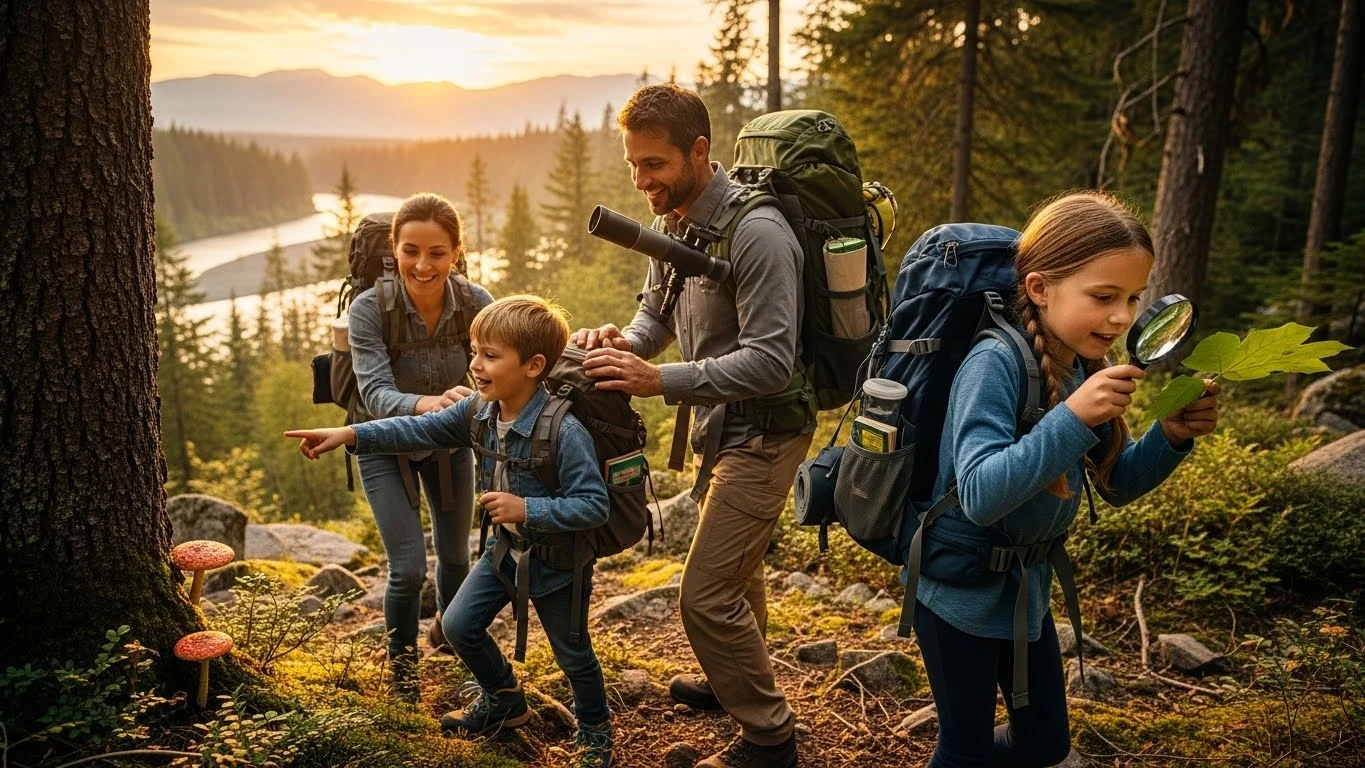
Aside from the basics, I make sure to bring some fun items that can spark curiosity. Binoculars for bird watching, a magnifying glass for examining insects, and a field guide to plants and animals are all great additions. These tools make our hikes more interactive and encourage my kids to explore their surroundings even more. Read Interesting article: Budget Backpacking with Kids: Fun Arts and Crafts Activities
Safety Considerations for Backpacking with Kids
Safety is always at the forefront of my mind when planning a backpacking trip. Kids can be adventurous and curious, which is amazing, but it also means we need to be extra cautious. I always educate my kids about the importance of staying on marked trails and what to do if they get separated. We practice these safety measures before heading out, and I find that it gives both them and me peace of mind.
Another aspect I consider is the weather. I make it a point to check the forecast and pack accordingly. Layering is key; I recommend dressing in layers so we can adjust to changing temperatures throughout the day. When my kids are comfortable, they’re much more likely to enjoy the experience.
First-aid supplies are also a must. I make sure we have a well-stocked first-aid kit that includes items for minor injuries, like band-aids and antiseptic wipes, as well as any necessary personal medications. It’s always better to be prepared, and I’ve found that teaching my kids how to use the kit empowers them and makes them feel more responsible.
Preparing Kids for the Adventure
Getting kids excited about the upcoming adventure is one of my favorite parts of the planning process. I often sit down with my kids and talk about where we’re going, what we’ll see, and what we’ll do. I share my excitement and encourage them to ask questions. This not only gets them engaged but also helps them feel invested in the trip.
We also do a bit of preparation at home. I like to involve them in packing their own gear. It’s a great way for them to learn about responsibility and organization. We create a checklist together to make sure they don’t forget anything important. I’ve noticed that when they help pack, they’re more likely to take ownership of their gear and feel proud of being part of the adventure.
Additionally, I find it helpful to do a few practice hikes before the big trip. We start with shorter trails to build their stamina and confidence. During these practice runs, I incorporate fun challenges related to STEM, like identifying plants or counting different types of wildlife we see. These mini-adventures help my kids understand what to expect and make them even more excited for our backpacking experience.
Engaging STEM Activities While Backpacking
Nature-Based STEM Learning Activities
When we’re out on the trails, I love to integrate fun, nature-based STEM activities that enhance our learning experience. One of my favorite activities is plant identification and ecosystem exploration. Just the other day, while hiking through a vibrant forest, my kids and I stumbled upon a patch of wildflowers. I pulled out a field guide and we started identifying the species. It was amazing to see how excited they got when they recognized a flower they had seen in our backyard before. This connection made their learning feel real and relevant.
Plant Identification and Ecosystem Exploration
We often turn plant identification into a game. I’ll ask my kids to find as many different plants as they can within a certain time while taking notes on their characteristics. This not only sharpens their observational skills but also teaches them about biodiversity. I remember one trip when we spent an hour exploring a small area and ended up identifying over ten different plants. Each discovery led to discussions about how different plants interact within their ecosystem, which further piqued their curiosity about nature.
Weather Observation and Meteorology
Another engaging activity is observing the weather. I usually bring along a simple weather kit that includes a thermometer and a wind gauge. We take measurements throughout the day and discuss what these readings mean. I remember when my kids were fascinated to learn how temperature changes at different elevations. It became a fun science project where they charted our findings and compared them to what they learned about weather patterns in school. It’s a hands-on way to connect real-world observations with scientific concepts.
Incorporating Technology in the Wild
While technology might seem out of place in the great outdoors, I’ve found that it can enhance our learning experience significantly. We often use various apps to identify plants, track our hikes, and even learn about the stars at night.
Using Apps for Star Gazing and Bird Watching
One of my favorite apps for stargazing is SkyView. It allows us to point our phones at the sky and identify constellations. It transforms our camping nights into a fascinating astronomy lesson. We lay on our backs, looking up at the stars, and I can see the wonder in my kids’ eyes as they discover constellations and planets. Similarly, for bird watching, we use apps like Merlin Bird ID. This app helps us identify different species based on their colors and sounds, making each hike feel like a small adventure in discovery.
Digital Photography as a Learning Tool
We also bring along a digital camera, and I encourage my kids to document our journey. They take photos of interesting plants, animals, and landscapes. Later, they create a mini photo book or a digital slideshow. This not only sharpens their photography skills but also allows them to reflect on what they learned during our trip. It’s a creative way to merge art with science and keeps their memories alive in a fun format.
Hands-On Experiments and Challenges
I believe that hands-on experiments are some of the best ways to engage kids in STEM while we’re backpacking. They’re practical and offer a chance to apply what they’ve learned in real-time.
Building a Shelter: Engineering Basics
One of our favorite challenges is building a temporary shelter using natural materials we find along the trail. I explain the basics of engineering and structural stability, and then we work together to create a small fort or lean-to. It’s incredible to see how my kids take charge of the project, using their creativity and critical thinking to design something functional. This experience teaches them not just about physics but also teamwork and collaboration.
Water Filtration: A Science Experiment
Another memorable experiment is creating a simple water filtration system. We gather materials like sand, charcoal, and gravel, and I guide them through the process of building their filter. Afterward, we test it with some creek water (always ensuring it’s safe) to see how clean we can get it. It’s an eye-opening experience that teaches them about the importance of clean water and environmental science. They’re often surprised by the results, and it leads to great discussions about pollution, conservation, and the water cycle.
These engaging activities not only make our backpacking trips educational but also instill a love for learning in my kids. I’ve seen them grow more curious and excited about the world around them. Each trip becomes an opportunity for exploration, and I can’t wait for our next adventure where we can dive into even more STEM activities together!
Best Backpacking Trails for Families
Kid-Friendly Trails with STEM Opportunities
When it comes to finding the perfect trails for families, I’ve discovered that some trails not only offer stunning views but also provide ample opportunities for STEM learning. One of our favorite spots is the Grand Canyon National Park. The trails here are manageable for kids and provide educational ranger programs that delve into geology, wildlife, and conservation. I remember hiking the Rim Trail with my kids, where we learned about the rock layers and the history of the canyon. It was fascinating to see how the geology shaped the landscape, and my kids were captivated by the stories behind each layer.
National Parks and Their Educational Programs
Many national parks have educational programs specifically designed for children. For instance, Yellowstone National Park offers Junior Ranger programs that encourage kids to explore and learn about the park’s unique geothermal features and diverse ecosystems. I’ve seen firsthand how these programs boost my kids’ enthusiasm for nature while reinforcing STEM concepts. The hands-on activities make learning fun and memorable, and my children love earning their badges after completing the requirements.
Local Nature Reserves with Interactive Trails
Local nature reserves can also be goldmines for family-friendly trails. We have a fantastic reserve near us that features an interactive trail with educational signs explaining local flora and fauna. Each stop on the trail reveals something new, and I often find my kids captivated by the information presented. It’s an excellent way to combine walking, learning, and bonding as a family, and I recommend looking for similar spots in your area.
Scenic Routes that Inspire Curiosity
Not all trails are created equal, and some are truly remarkable for inspiring curiosity. I recall a hike we did to a stunning waterfall that sparked my kids’ interest in geology and water cycles. The sound of the rushing water, the mist in the air, and the surrounding lush greenery made the experience unforgettable. It became a wonderful opportunity for us to discuss the importance of water in ecosystems and how it shapes the landscape.
Waterfalls and Geological Formations
Trails that lead to waterfalls are often breathtaking and can be educational. I’ve seen my kids light up as we approached the falls, and it led to discussions about erosion and sedimentation. Watching the water cascade down rocks, we talked about how waterfalls are formed and the role they play in the environment. These moments create lasting memories and learning experiences that go hand-in-hand.
Wildlife Observation Hotspots
Another fantastic way to engage kids is by seeking out trails known for their wildlife. I love taking my kids to places where we can spot birds, deer, and other animals in their natural habitat. Equipped with binoculars and our trusty field guide, we often stop to observe and identify species. I remember a hike where we saw a family of deer grazing. It led to a spontaneous discussion about animal behavior and ecosystems, and my kids’ excitement was contagious.
Integrating STEM Learning into Daily Backpacking Life
Daily Journaling and Reflection
One of the best habits I’ve adopted during our trips is daily journaling. I encourage my kids to document their experiences, observations, and even questions they have. This practice helps them reflect on what they’ve learned and keeps their minds engaged. I often find them excited to share their entries at the end of the day, and it creates a sense of accomplishment.
Creating a Nature Scavenger Hunt
To make our hikes even more interactive, I sometimes organize a nature scavenger hunt. Before we set off, I prepare a list of items they need to find—like specific leaves, rocks, or animal tracks. It turns our hike into a playful adventure, and I’ve noticed it encourages my kids to pay closer attention to their surroundings. They become little explorers, searching for items and learning about nature in the process.
Measuring Distances and Elevations
Lastly, we incorporate some math and measurement into our hikes. I’ve taught my kids how to use a map and compass, and we often measure the distances we hike. Tracking our elevation changes can lead to discussions about geography and landforms. I think it’s important for them to understand navigation skills, which are not only useful for hiking but also for life.
Resources for STEM Learning During Your Trip
Books and Guides for Young Explorers
Before we embark on our adventures, I like to gather some books and guides tailored for young explorers. Nature field guides, books about local wildlife, and even STEM-themed storybooks can enhance our experience. I’ve noticed that having resources handy helps my kids dive deeper into what they’re experiencing.
Online Resources and Apps for Kids
In our digital age, there are countless apps and websites geared toward young learners that can be a great addition to our backpacking toolkit. I recommend downloading a few before heading out. They can offer interactive learning experiences that complement our outdoor adventures.
Local Museums and Educational Centers
Before or after our trips, we often visit local museums or educational centers that relate to what we’ve seen on the trail. This not only reinforces their learning but also allows for exciting discussions about our experiences. I find that connecting our outdoor adventures with indoor learning creates a richer understanding of STEM concepts.
Tips for a Successful Family Backpacking Adventure
Involving Kids in the Planning Process
One of my favorite tips for a successful trip is to involve my kids in the planning process. I let them help choose the destination and what we’ll pack. Their excitement grows when they feel part of the planning, and it makes the entire adventure more meaningful for them.
Setting Realistic Expectations
It’s important to set realistic expectations for the trip. I remind myself that we’re not racing to complete the trail; it’s about enjoying the journey together. Recognizing each child’s limits and being flexible with our plans can make for a more enjoyable experience for everyone.
Encouraging Curiosity and Questions
During our hikes, I always encourage my kids to ask questions. Their curiosity leads to wonderful discussions and deeper learning moments. I believe that fostering an environment where they feel comfortable exploring their thoughts can ignite a lifelong love for learning.
Celebrating Achievements and Learning Moments
Lastly, I make sure to celebrate our achievements and learning moments throughout the trip. Whether it’s reaching a summit or successfully completing a scavenger hunt, acknowledging these accomplishments reinforces the joy of learning. I often say, “Look at what we did together!” to help them realize that every small step counts.
Final Thoughts
Backpacking with kids has truly transformed our family dynamics and enriched our learning experiences. By integrating STEM activities into our hikes, we not only explore nature but also nurture our children’s curiosity and creativity. Each trip is a new adventure filled with discoveries that I cherish deeply. Whether we’re observing wildlife, measuring elevation changes, or building shelters, the moments we share and the lessons we learn together create lasting memories. I encourage every family to embark on their own backpacking adventure—embrace the journey, engage with nature, and enjoy the beautiful learning opportunities that come with it!
Frequently Asked Questions
What is STEM education and how is it related to backpacking with kids?
STEM stands for Science, Technology, Engineering, and Mathematics. It encourages kids to explore these subjects actively while backpacking, allowing them to engage with their surroundings, ask questions, and find answers in a hands-on learning environment.
What are the benefits of incorporating STEM learning during backpacking trips?
Incorporating STEM learning during backpacking trips nurtures critical thinking, problem-solving, and creativity in kids. It helps them develop a curiosity about the world, making learning relevant and exciting as they connect observations on the trail to educational concepts.
How can parents enhance STEM learning when backpacking with children?
Parents can enhance STEM learning by encouraging kids to ask questions about their environment, integrating nature-based activities like plant identification and weather observation, and using technology such as apps for stargazing and bird watching to make learning interactive.
What essential gear should families bring on a backpacking trip with kids?
Families should bring sturdy backpacks, good-quality sleeping bags, tents, and proper footwear. Additionally, fun items like binoculars, magnifying glasses, and field guides can spark curiosity and enhance the learning experience while on the trail.
What safety considerations should be taken into account when backpacking with kids?
Safety considerations include educating kids about staying on marked trails, preparing for weather changes by dressing in layers, and having a well-stocked first-aid kit. Teaching kids how to use the kit can also empower them and promote a sense of responsibility.
How can parents prepare their kids for a backpacking adventure?
Parents can prepare kids by discussing the trip, involving them in packing their gear, and doing practice hikes to build stamina and confidence. Incorporating fun STEM challenges during these practice runs can also enhance their excitement and engagement.
What types of STEM activities can be done while backpacking?
STEM activities while backpacking include nature-based activities like plant identification, weather observation with simple kits, building temporary shelters, and creating water filtration systems. These hands-on experiments make learning practical and engaging.
Are there specific trails recommended for families interested in STEM learning?
Yes, trails like those in Grand Canyon National Park and Yellowstone National Park offer educational ranger programs that delve into geology, wildlife, and conservation. Local nature reserves with interactive trails also provide ample opportunities for STEM learning.
What resources can help enhance STEM learning during a backpacking trip?
Resources include nature field guides, STEM-themed storybooks, and various educational apps. Visiting local museums or educational centers before or after trips can also reinforce learning and create richer experiences.
What tips can help ensure a successful family backpacking adventure?
Involving kids in the planning process, setting realistic expectations, encouraging curiosity and questions, and celebrating achievements throughout the trip can greatly enhance the experience and foster a love for learning.