
Boosting your baby’s communication skills is an exciting journey that lays the foundation for their future learning and social interactions. Let’s explore how we can nurture this vital aspect of development together! Read Interesting article: Essential Communication Skills for Your Newborn’s Growth
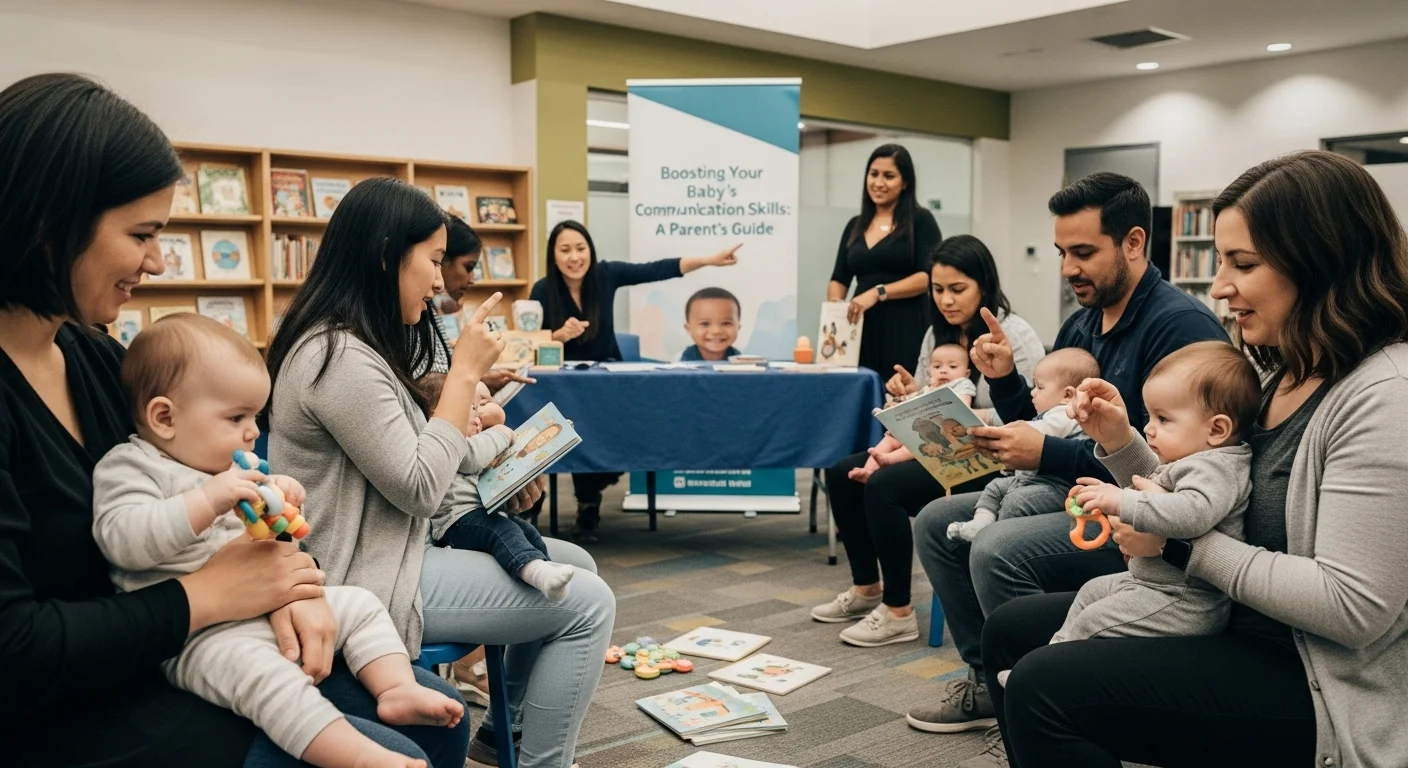
Understanding Baby Communication Development
As parents, we often marvel at our baby’s milestones, from their first smile to their first words. Understanding how babies communicate can help us support and encourage their development. Baby communication is not just about words; it encompasses a range of skills that evolve over time. By recognizing these stages, we can better engage with our little ones and foster their abilities. For more insights, check out our article on Milestones in Communication: What to Expect from Your Baby.
The Stages of Communication Skills in Infants
Communication begins from the moment a baby is born. I remember holding my newborn in my arms, noticing how they would cry to express needs or discomfort. This initial stage of communication is primarily non-verbal, but it lays the groundwork for future interactions. As babies grow, they progress through several stages:
- Birth to 3 months: During this early stage, babies communicate mainly through crying, which signals hunger, tiredness, or discomfort. I found it fascinating how each cry had a different tone, indicating a specific need.
- 3 to 6 months: This is when cooing and gurgling begin. I remember the joy of hearing my baby making those sweet sounds! They start experimenting with their voices, which is essential for language development.
- 6 to 12 months: Babbling kicks in, where babies combine consonants and vowels, creating sounds like “ba-ba” or “da-da.” This phase felt like a delightful conversation, even though I didn’t understand the words yet.
- 12 months and beyond: As they approach their first birthday, many babies will start saying their first words. This was such a thrilling moment for me when my little one finally started to call out “mama”!
Non-Verbal Communication: What to Look For
Non-verbal communication is a crucial part of how babies express themselves. I realized that paying attention to my baby’s body language and facial expressions was just as important as listening to their sounds. Here are some non-verbal cues to notice:
- Eye Contact: Babies often make and hold eye contact to engage with us. I found that maintaining eye contact while talking helps my baby feel connected and understood.
- Facial Expressions: A smile, frown, or pout can convey so much! I loved mimicking my baby’s expressions, which seemed to spark their interest and encourage more interaction.
- Gestures: As they grow, babies will start using gestures to communicate. Pointing to an object or waving goodbye are their early attempts to express ideas or feelings.
Understanding Baby Sounds and Cooing
The sounds babies make are their first attempts at communication. I remember when my little one would coo and gurgle in response to my voice. These sounds are more than just adorable noises; they play a vital role in language development. Here’s what I’ve learned about these early vocalizations:
- Cooing: This soft, vowel-like sound usually starts around 6 to 8 weeks. It indicates that your baby is happy and comfortable. I often cooed back, which encouraged my baby to continue vocalizing.
- Babbling: Around 4 to 6 months, babies begin to combine sounds, creating a babbling language of their own. I would find myself responding to their babbles with excitement, which made our exchanges feel like a real conversation.
- Vocal Play: As babies grow, they experiment with their vocal cords, making different sounds. This playfulness is essential for developing the skills they’ll need for future speech.
Being attentive to these stages and the sounds my baby makes has helped me feel more connected to them. I believe that by understanding their communication journey, we can foster their language development effectively. This is just the beginning of our exploration into how we can enhance our baby’s communication skills! Stay tuned for more insights on why these early skills are so important and how we can support them in their growth.
Importance of Early Communication Skills
Why Communication Skills Matter for Development
From my experience as a parent, I’ve come to realize that early communication skills are far more than just a way for babies to express themselves; they are foundational to their overall development. When babies begin to communicate, whether through sounds, gestures, or eye contact, they are not only sharing their needs but also starting to build connections with the world around them. I remember feeling so proud when my baby would respond to my voice with coos or smiles; it felt like we were forming our unique bond.
These early interactions are crucial because they set the stage for later language development. I’ve learned that children who develop strong communication skills early on tend to have better language skills as they grow, making it easier for them to engage with peers and adults. This early communication helps them understand social cues and navigate their relationships, which I believe is essential for emotional growth.
The Connection Between Communication and Cognitive Skills
As I delved deeper into how communication skills support cognitive development, I found it fascinating that the two are closely linked. When babies communicate, they are not just practicing sounds or gestures; they are also exercising their brains. I often noticed my baby’s eyes lighting up when they made a sound, as if they were discovering something new. This engagement is vital for cognitive growth, as it encourages problem-solving and critical thinking skills.
For example, when my little one reached for a toy and made sounds of excitement, I realized they were not only expressing joy but also beginning to understand cause and effect. The more we engage in conversation—even if it’s mostly one-sided in the beginning—the more we stimulate their thinking processes. In my opinion, this early communication lays the groundwork for literacy skills later on, as it helps children learn about words, sounds, and meanings.
Social Skills and Emotional Intelligence
Early communication also plays a key role in developing social skills and emotional intelligence. I’ve seen how my baby reacts to my emotional expressions and words, which has helped them learn empathy and understanding. For instance, when I comforted my baby with soothing words and a gentle voice during a difficult moment, I noticed they began to mimic that comfort in their interactions with others. This gave me a glimpse into how they were beginning to understand emotions.
Moreover, I believe that the ability to communicate effectively helps children build friendships and navigate social situations. I’ve watched my child blossom socially, and I think this is tied directly to the communication skills they developed early on. As they learn to express themselves, they become more confident in social settings, making it easier for them to connect with others and develop long-lasting relationships. Read Interesting article: Guide to Baby’s Social Development While Traveling
Practical Strategies to Enhance Communication
Engaging in Eye Contact and Facial Expressions
One of the simplest yet most effective strategies I discovered to enhance my baby’s communication skills is engaging in eye contact and using facial expressions. Babies are naturally drawn to faces, and I made it a point to maintain eye contact when talking to my little one. It felt magical to see their eyes widen in response, as if they were truly absorbing everything I was saying. I found that using exaggerated expressions—smiling widely or raising my eyebrows—would elicit giggles and coos, encouraging more interaction.
Reading to Your Baby: Benefits and Techniques
Reading has become one of my favorite activities with my baby. I learned early on that sharing books not only exposes them to new words but also strengthens our bond. I remember snuggling up with my baby, flipping through picture books while pointing at the images and describing them. The more animated I became, the more captivated my baby seemed! I recommend incorporating this into your daily routine, even if it’s just a few minutes a day. It’s a fantastic way to introduce language and spark curiosity.
Using Everyday Activities to Encourage Communication
Incorporating communication into daily routines has been a game-changer for us. Whether it’s during bath time, meal prep, or even grocery shopping, I’ve learned to narrate what we’re doing. For instance, while preparing dinner, I would describe the colors and textures of the vegetables I was chopping. I noticed that my baby would watch me intently, absorbing every word. This not only builds vocabulary but also helps them connect language to real-life experiences.
Responding to Your Baby’s Sounds and Gestures
Lastly, I found that actively responding to my baby’s sounds and gestures has been incredibly rewarding. When my baby babbles, I try to mimic their sounds, which often leads to delightful back-and-forth exchanges. I believe that this teaches them the flow of conversation, showing that their efforts are valued. I remember a moment when my baby pointed at a butterfly outside, and I enthusiastically described it. Their face lit up, and it felt like we were sharing a special secret. This kind of interaction not only boosts language skills but also strengthens our connection.
Interactive Activities to Boost Communication Skills
Games and Songs for Language Development
One of the most joyful aspects of nurturing my baby’s communication skills has been through engaging in games and songs. I’ve discovered that babies respond so well to rhythm and melody, making music an excellent tool for language development. I remember singing simple nursery rhymes and clapping along to the beat. It was incredible to see my baby’s eyes light up, and I felt the joy of watching them move their little hands in sync with the song. These experiences not only made them giggle but also helped them learn new words and sounds.
We also enjoyed playing interactive games like “Peek-a-Boo” and “Pat-a-Cake.” These games incorporate repetition and predictability, which are important for language learning. I noticed that my baby would start anticipating the next part of the game, which seemed to enhance their understanding of communication cues. Each time we played, it felt like we were building our own little world of shared laughter and connection, and it made our bond stronger.
Encouraging Imitation and Turn-Taking
Another effective way to boost communication skills is by encouraging imitation and turn-taking. I’ve found that babies learn a lot by watching and mimicking what we do. I remember making funny faces or repeating sounds, and it was so rewarding to see my baby trying to copy me. This back-and-forth interaction is not only fun but also teaches them about the rhythm and flow of conversations.
Turn-taking games, like tossing a soft ball back and forth, have been a delightful way to get my baby involved in play. I would say phrases like, “Your turn!” or “My turn!” to reinforce the concept of taking turns. I noticed that this simple practice helped my baby understand the give-and-take of communication, which is fundamental as they grow and start interacting with peers. It felt like we were dancing through our conversations, and I cherished every moment!
Creating a Language-Rich Environment at Home
Creating a language-rich environment has been one of the most impactful strategies I’ve implemented to support my baby’s communication development. I realized that the words we use, the stories we share, and even the conversations we have while going about our daily lives contribute significantly to their language exposure. I made it a point to narrate our activities throughout the day. Whether it was talking about the colors of the clothes I was folding or naming the fruits we were eating, I wanted my baby to soak in as much language as possible.
I also incorporated labeling objects around the house. As we moved from room to room, I would point to things like the “door,” “window,” or “chair,” and say those words aloud. This practice helped my baby associate words with objects, aiding in vocabulary growth. I remember seeing my baby’s little face light up as they began to recognize and point to their favorite toys when I would ask, “Where’s the teddy bear?” It felt like we were engaging in a secret language, and I was thrilled to witness their progress.
When to Seek Professional Advice
Signs of Communication Delays in Infants
As much as I’ve enjoyed this journey of nurturing my baby’s communication skills, I also know that early intervention can be crucial. It’s essential to be aware of the signs of communication delays. From my perspective, if a baby isn’t babbling by six months or isn’t using gestures like pointing or waving by twelve months, it might be a good idea to consult a professional. I’ve learned that every baby develops at their own pace, but being proactive can make a significant difference.
Other signs to watch for include limited eye contact or lack of interest in social interactions. If you notice your baby seems disengaged or doesn’t respond to sounds or talking, it’s worth seeking advice. I remember feeling a mix of concern and determination when I noticed these signs in my own experience. It’s essential to trust our instincts as parents and seek help if we feel something isn’t quite right.
Consulting Pediatricians and Speech Therapists
If you do have concerns about your baby’s communication development, consulting a pediatrician is an excellent first step. They can provide guidance and may refer you to a speech therapist if necessary. From my experience, I found that discussing my observations with our pediatrician not only put my mind at ease but also helped me understand what to look for as my baby continued to grow.
Speech therapists can offer specialized strategies tailored to your child’s needs. I’ve heard stories from fellow parents who found therapy incredibly supportive, providing tools and techniques to foster communication skills. It’s inspiring to see how early support can pave the way for successful communication down the line. Seeking help is a sign of strength, and I believe that it’s essential to advocate for our little ones when it comes to their development.
Resources for Parents
Books and Literature on Baby Communication
Over the course of my parenting journey, I’ve discovered that there are so many wonderful books available that focus on baby communication and language development. I remember picking up “The Whole-Brain Child” by Daniel J. Siegel and Tina Payne Bryson, which opened my eyes to how to nurture a child’s brain development in those crucial early years. I found it incredibly enlightening and filled with practical tips on fostering communication skills.
Another favorite of mine is “Baby Talk” by Dr. Susan Jones, which dives deep into the stages of communication and provides insights into how to encourage language development in babies. I often recommend these books to new parents, as they can provide a solid foundation for understanding how to support their little ones’ communication journeys. I believe that having the right resources can really empower us as parents to be more engaged in our child’s development.
Online Courses and Workshops
In addition to reading, I found online courses and workshops to be incredibly helpful. Websites like BabyCenter and The Hanen Centre offer various resources aimed at enhancing communication skills in infants and toddlers. I particularly appreciated interactive workshops that allowed me to learn from experts and connect with other parents facing similar challenges. Sharing experiences and tips in these settings provided a sense of community that I found reassuring.
Engaging in these workshops not only expanded my knowledge but also equipped me with practical strategies I could implement right away. I remember one workshop that focused on “Talking to Your Baby,” which provided me with a treasure trove of ideas on how to incorporate language into our daily routines. I think investing in myself as a parent through these resources has made a significant difference in how I support my baby’s communication development.
Community Support Groups and Forums
As I navigated this journey, connecting with other parents in community support groups and online forums has been invaluable. I’ve learned that sharing experiences can provide not only support but also practical advice that has helped me along the way. Websites like What to Expect and forums like BabyCenter Community are great places to ask questions, share milestones, and seek advice from those who understand the challenges we face.
Attending local parenting groups or playdates has also been a wonderful way to meet other parents and get insights into their experiences. I remember feeling a sense of camaraderie when discussing our babies’ milestones and communication challenges. This support network often reminded me that we’re not alone in this journey, and it really helped me feel more confident as a parent.
Final Thoughts
Nurturing my baby’s communication skills has been one of the most rewarding aspects of parenting. Each coo, babble, and smile feels like a precious milestone, a window into their growing mind and personality. I’ve learned that by actively engaging with them and providing a supportive environment, we can lay a solid foundation for their future communication and social skills. It’s a beautiful journey that we’re all on together, and I believe that every small effort we make will ripple out into their development in profound ways. So let’s celebrate each little victory along the way and continue to foster these vital skills in our little ones!
Frequently Asked Questions
What are the initial forms of communication for babies?
Babies initially communicate through crying, which signals their needs such as hunger, tiredness, or discomfort. This non-verbal communication lays the groundwork for future interactions.
At what age do babies typically start cooing?
Cooing usually begins around 6 to 8 weeks of age, and it indicates that the baby is happy and comfortable.
What are some important non-verbal cues to look for in baby communication?
Key non-verbal cues include eye contact, facial expressions (like smiles or frowns), and gestures such as pointing or waving. These cues help babies express their feelings and ideas.
How can parents enhance their baby’s communication skills?
Parents can enhance their baby’s communication skills by engaging in eye contact, using facial expressions, reading to them, narrating daily activities, and responding to their sounds and gestures.
Why are early communication skills important for a baby’s development?
Early communication skills are foundational for overall development, helping babies express needs, build connections with others, and set the stage for later language and social skills.
What signs may indicate communication delays in infants?
Signs of communication delays may include not babbling by six months, not using gestures like pointing or waving by twelve months, limited eye contact, or lack of interest in social interactions.
When should parents consult a professional about their baby’s communication skills?
Parents should consult a pediatrician if they notice signs of communication delays or have concerns about their baby’s development, such as disengagement or lack of response to sounds.
What resources are available for parents to help with baby communication development?
Parents can access various resources, including books like “The Whole-Brain Child” and “Baby Talk,” online courses from websites like BabyCenter, and community support groups or forums for shared experiences and advice.
How do games and songs contribute to language development in babies?
Games and songs, especially those with rhythm and melody, engage babies and help them learn new words and sounds. Activities like “Peek-a-Boo” and singing nursery rhymes enhance their communication skills through fun interactions.
What role does imitation play in a baby’s communication skills?
Imitation plays a crucial role as babies learn by watching and mimicking others. Encouraging back-and-forth interactions and turn-taking helps them understand the flow of conversation and enhances their communication abilities.