
Childproofing your home is a crucial step in ensuring the safety of your little ones. This guide will empower you with essential techniques for anchoring furniture securely, keeping your children safe from common household hazards. For more detailed information, check out Secure Your Home: Essential Furniture Anchoring Tips.
Understanding the Importance of Childproofing
Why Childproofing is Essential for Safety
As a parent, I’ve always been concerned about keeping my kids safe. I often found myself looking around the house, questioning whether our environment was truly secure. I realized that childproofing is not just a trend; it’s a necessity. Young children are naturally curious and, let’s be honest, pretty adventurous. They explore every nook and cranny, often leading them to climb furniture or pull on items that can fall over. Childproofing helps to minimize risks and provides peace of mind for us as parents.
Common Risks Associated with Unsecured Furniture
I remember the first time my toddler decided to climb our bookshelf. I felt my heart race as I rushed to stop him. Fortunately, he didn’t get hurt, but it made me realize how important it is to secure heavy furniture. Unsecured furniture can tip over, leading to severe injuries, especially for small children. Each year, thousands of children are treated for injuries caused by falling furniture, which could have been prevented with proper anchoring. In addition to physical injuries, the emotional toll of such incidents can be overwhelming for both the child and parent. So, I learned early on that taking proactive steps to ensure safety is invaluable.
Key Furniture Types That Need Anchoring
Bookshelves
Bookshelves tend to be top-heavy, especially when filled with books and decorative items. I’ve seen how a single, curious child can easily pull down a shelf. To prevent this, anchoring is essential. I highly recommend using wall anchors or L-brackets to secure them to the wall. Not only does this ensure stability, but it also keeps those precious books safe from becoming projectiles during a playful moment.
Dressers and Chests of Drawers
Dressers are another major risk. I remember visiting a friend’s house and noticing their tall dresser was unsecured. It made me anxious, thinking about the potential danger. When my kids started to climb, I knew I had to secure our dressers immediately. Heavy drawers can easily tip over, especially if a child tries to climb them. Using anti-tip kits, which usually come with straps that anchor to the wall, can save lives. I’ve installed them on our dressers, and it’s a simple task that brings a lot of reassurance.
TV Stands and Entertainment Centers
Most families have TVs, which are often mounted on stands that can easily tip over. I’ve seen how kids are drawn to the glowing screen, and their excitement can lead to unintended accidents. To secure your TV stand, I found that using furniture straps or brackets is a great option. This not only protects the child but also prevents damage to the television, which can be an expensive loss.
Heavy Desks and Cabinets
In our home office, I was particularly concerned about my heavy desk. I once read a story about a child who was injured when a desk tipped over while they were playing around it. That was enough to motivate me to secure my own desk. Ensure that any heavy furniture, like desks and cabinets, is anchored to the wall. This is especially crucial if you have a small space where kids might run and play. We used L-brackets for our desk, and I felt a huge weight lifted from my shoulders knowing it was safe.
Materials and Tools Required for Anchoring
Types of Anchors (Wall Anchors, L-Brackets, etc.)
When I first started childproofing, I was overwhelmed by the variety of anchors available. Wall anchors are essential for heavy furniture, and L-brackets provide additional support. I found that using a combination of both works well for most types of furniture. If you’re unsure where to start, visit your local hardware store and ask for recommendations based on your specific furniture types. The staff is usually very helpful, and I appreciated their advice when I first began. For more on this topic, see Building Your Support Network During Pregnancy: A Guide.
Tools Needed for Installation (Drill, Screwdriver, etc.)
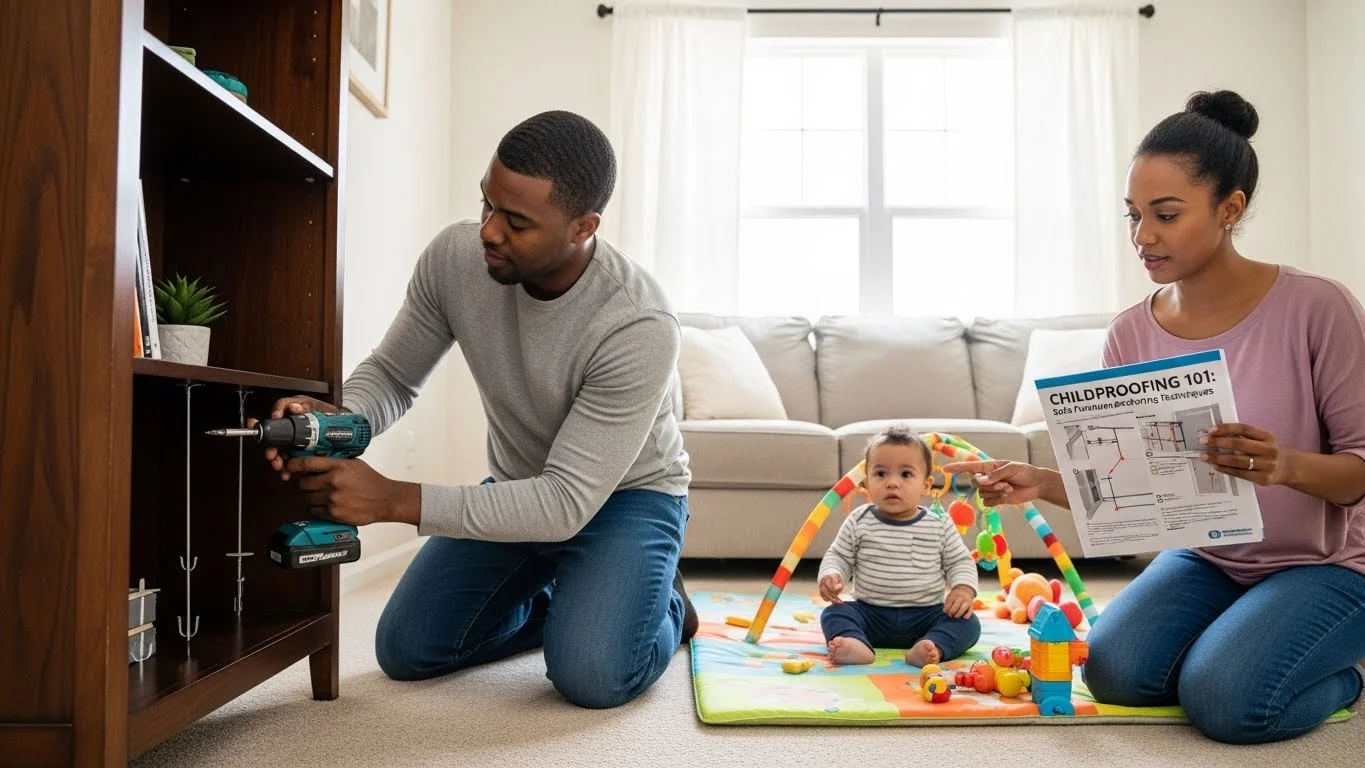
Gathering the right tools makes the installation process smoother. I learned that having a drill and screwdriver on hand is crucial. A level is also helpful to ensure your furniture is installed correctly. I always made sure to double-check my work, often asking my partner for a second opinion. It’s amazing how just a little diligence can make all the difference in ensuring safety.
Types of Furniture-Safe Adhesives and Fasteners
In addition to traditional anchors, I also came across various adhesives and fasteners that can help secure lighter furniture. These can be particularly useful for items that may not be as easy to anchor directly to the wall. I discovered that using strong double-sided tape can help in certain situations, but for best results, I recommend more permanent solutions like brackets and wall anchors. Be sure to follow the manufacturer’s guidelines to ensure everything stays secure.
Step-by-Step Guide to Safe Furniture Anchoring
Assessing Your Space: Where to Anchor
When I first started childproofing my home, I realized that assessing the space around me was a crucial first step. I walked through each room, taking note of all the furniture that might pose a risk. I looked for tall pieces like bookshelves and dressers, as well as heavier items like desks and cabinets. I recommend keeping a notepad handy to jot down what you find. I also paid attention to the layout of each room; it’s important to think about where the furniture is located in relation to play areas. For example, if I had a bookshelf near a play mat, that was a red flag. I found that visualizing the potential hazards in my living space helped me prioritize which pieces needed immediate attention.
How to Choose the Right Anchoring Method
Once I had a list of furniture that needed anchoring, I had to decide how to secure each piece. I learned that the choice of anchoring method can depend on several factors, like the type of furniture, the wall material, and how heavy the item is. For example, heavier pieces like dressers should definitely use wall anchors or L-brackets. In contrast, lighter items might only need adhesive strips or furniture safety straps. The key is to match the method to the specific piece of furniture. I recommend researching the best options for your furniture type, and don’t hesitate to ask for help at your local hardware store if you’re uncertain. I found it useful to get the advice of someone experienced, as it can save you a lot of hassle later on.
Installation Process for Different Furniture Types
Now comes the fun part: installation! I remember my first time anchoring our bookshelf. It felt a bit daunting, but I quickly realized how straightforward it was once I got started. For a tall bookshelf, I first positioned it against the wall, ensuring it was level. Then, I marked where the anchors would go. After drilling holes into the wall and inserting the anchors, I secured the bookshelf with screws. I followed similar steps for the dressers and TV stands, making sure to use the appropriate hardware for each. I made it a point to read the instructions that came with the anchoring kits—following the guidelines ensured that everything was done right. I also enlisted my partner to help; it’s always nice to have a second pair of hands, especially when you’re trying to hold something heavy in place while securing it!
Testing Stability After Installation
Once I had everything anchored, I felt a huge sense of relief, but I knew I wasn’t done yet. The next step was testing the stability of each piece. I gently pushed against the furniture to see if it wobbled or leaned at all. For me, this was an important step because it gave me confidence that the anchors were doing their job. If a piece felt unstable, I went back to double-check that everything was tightened and secure. It’s a simple yet vital process that can prevent potential accidents in the future. I also made a mental note to revisit the anchored items every few months, just to make sure they were still secure.
Best Practices for Childproofing Beyond Anchoring
Securing Cords and Cables
While I was focused on anchoring furniture, I quickly realized that there were other hazards to consider, like cords and cables. I remember tripping over a charging cable while my child was playing nearby—it was a wake-up call. I started by securing all electrical cords to the walls or behind furniture using cord clips. I also bought cord sleeves to cover any exposed wires, which not only tidied things up but also kept my kids from tugging on them. In my opinion, these small changes made a big difference in reducing risk in our home.
Using Furniture Corner Guards
Another step I took was adding corner guards to sharp furniture edges. I found that these little protective pieces could be lifesavers. I purchased foam corner protectors to put on our coffee table and other furniture with sharp edges. I even involved my kids in the process, letting them help stick them on. It turned into a fun little project, and I loved knowing that we were taking extra precautions together. It felt good to make our home safer, and my kids loved the colorful guards!
Creating a Safe Play Area
I believe that creating a designated play area was one of the best decisions I made in terms of childproofing. We cleared out a corner of our living room, moved some furniture, and made it a space where my kids could play freely. I kept it stocked with toys and soft mats to cushion any falls. By having a safe area, I noticed that they were less inclined to climb on furniture that wasn’t meant for play. It provided me with peace of mind, knowing they had a safe spot to explore and enjoy their time without constant worry.
Common Mistakes to Avoid When Childproofing
Neglecting to Anchor All Tall Furniture
When I first started my childproofing journey, I focused heavily on the big pieces of furniture like the bookshelves and dressers, but I soon realized I was overlooking some smaller items. I remember a friend mentioning how she had secured her tall dresser but forgot about a less obvious tall cabinet in the corner. That cabinet was a potential hazard, especially with little ones running around. It dawned on me that every tall piece of furniture, no matter its size or prominence, deserves attention. I recommend taking a thorough inventory of all tall furniture in your home, no matter how insignificant it may seem. It’s better to be safe than sorry!
Using Inadequate Anchoring Solutions
I learned this lesson the hard way. Initially, I thought that a simple adhesive strip would be enough for some of our lighter pieces, but soon after, I noticed them wobbling. That’s when I realized that not all furniture requires the same type of anchoring solution. For me, it became clear that I needed to match the anchoring method with the weight and height of the furniture. If you’re in doubt, always err on the side of caution and use a more robust solution like wall anchors or L-brackets. I can’t stress enough how vital it is to invest in quality materials to ensure your peace of mind.
Overlooking Hidden Hazards Around Furniture
While securing furniture was my primary focus, I noticed that I was overlooking other potential hazards around these areas. For instance, cords from TVs or electronics can easily become tangled in the excitement of play, leading to trips or pulls that could topple furniture. I started to look beyond the furniture itself and consider what could be around it that might pose a risk. I found that keeping play areas clear of clutter and removing items that could be pulled or knocked over was just as important. By doing this, I created a safer environment that allowed my kids to explore without constant supervision.
Frequently Asked Questions (FAQs)
How Often Should I Check Anchored Furniture?
This is a question I often asked myself, especially after I had completed the initial childproofing. I found that it’s a good practice to check anchored furniture every few months or whenever you notice anything unusual, like a wobbly piece or a new climbing trend from your little ones. Kids grow and change, and as they develop new skills, it’s essential to reassess the safety of your environment. I personally make it a routine to check during seasonal changes, as it serves as a reminder to both me and my kids about safety.
What if My Walls Are Not Suitable for Anchoring?
When I moved into my current home, I quickly realized that some walls were made of materials that didn’t support traditional anchoring methods. This can be frustrating, but I discovered that there are alternatives. For example, using freestanding furniture that has a wide base can add stability. Also, specialized anchors for drywall or concrete can be effective. I recommend consulting with someone at a local hardware store who can provide tailored advice based on your wall type. It’s always better to find a solution than to leave furniture unsecured!
Can I Use Anchors for Non-Heavy Furniture?
Absolutely! While heavy furniture is the primary concern, lighter furniture can also benefit from anchoring. I’ve found that securing smaller pieces, like nightstands or lightweight shelves, can help prevent them from tipping over if a child leans against them. Using furniture safety straps or even adhesive fasteners can keep these lighter pieces stable. It’s all about being proactive and thoughtful about the potential risks in your home, no matter the weight of the furniture.
Resources for Further Learning
Child Safety Organizations and Websites
As I dove deeper into child safety, I discovered a wealth of resources that provided valuable insights and tips. Websites like the Consumer Product Safety Commission (CPSC) and SafeKids.org offer great information on childproofing. I found their articles and guides incredibly helpful for understanding the broader safety landscape, from furniture anchoring to general childproofing tips. Bookmarking these sites has become a part of my routine whenever I need to brush up on safety measures.
Recommended Products for Furniture Anchoring
Over time, I’ve become familiar with some excellent products that make childproofing a little easier. I recommend looking into brands that specialize in safety products, such as Safety 1st or KidCo. Their furniture anchoring kits come with all the necessary materials and clear instructions. I’ve used them in my own home and appreciated how user-friendly they are. Having the right products can make all the difference in your childproofing journey. Additionally, for important safety tips, consider reading A Parent’s Guide to CPR for Children: Stay Prepared.
Professional Services for Childproofing
For those who might feel overwhelmed or simply don’t have the time, hiring professional childproofing services can be a great option. I remember considering this when I realized how much I wanted to ensure everything was done correctly. Professionals can assess your home and provide tailored solutions based on your specific needs. It’s an investment, but knowing that your home is as safe as it can be is invaluable, especially for parents with busy schedules.
Frequently Asked Questions
“`htmlHow Often Should I Check Anchored Furniture?
It’s a good practice to check anchored furniture every few months or whenever you notice anything unusual, like a wobbly piece or new climbing trends from your little ones. Regular checks help ensure the safety of your environment as children grow and develop new skills.
What if My Walls Are Not Suitable for Anchoring?
If your walls are made of materials that don’t support traditional anchoring methods, you can use alternatives like freestanding furniture with a wide base for stability. Specialized anchors for drywall or concrete can also be effective, and consulting with someone at a local hardware store can provide tailored advice.
Can I Use Anchors for Non-Heavy Furniture?
Yes, lighter furniture can also benefit from anchoring. Securing smaller pieces like nightstands or lightweight shelves can help prevent them from tipping over. Using furniture safety straps or adhesive fasteners can keep these lighter pieces stable.
Why is Childproofing Essential for Safety?
Childproofing is essential because young children are naturally curious and adventurous, often leading them to explore and climb on furniture. It minimizes risks and provides peace of mind for parents, protecting children from potential injuries.
What Types of Furniture Need Anchoring?
Key furniture types that need anchoring include bookshelves, dressers, TV stands, heavy desks, and cabinets. These pieces can easily tip over, posing significant risks to small children if not properly secured.
What Tools Are Needed for Anchoring Furniture?
The essential tools for anchoring furniture include a drill, screwdriver, and a level. Having these tools on hand makes the installation process smoother and ensures that furniture is securely anchored.
What Materials and Tools Are Used for Anchoring?
Common materials for anchoring furniture include wall anchors and L-brackets for heavy items. Additionally, types of adhesive fasteners can be used for lighter furniture. It’s important to follow the manufacturer’s guidelines for best results.
What Are Common Mistakes to Avoid When Childproofing?
Common mistakes include neglecting to anchor all tall furniture, using inadequate anchoring solutions for different furniture weights, and overlooking hidden hazards around furniture, such as cords or clutter that could pose risks.
How Can I Create a Safe Play Area for My Children?
Creating a designated play area involves clearing a space where children can play freely, moving furniture as needed, and stocking it with toys and soft mats. This helps them enjoy their time safely without climbing on non-play furniture.
Are There Resources for Further Learning About Child Safety?
Yes, there are various resources available, including websites like the Consumer Product Safety Commission (CPSC) and SafeKids.org. These sites provide valuable insights and tips on child safety and childproofing practices.
“`