
Traveling on a budget can be an incredible adventure, but clear communication is key to making the most of your experience. I’ve learned that when we express ourselves effectively, the journey becomes smoother and more enjoyable. Read Interesting article: Unlocking Positive Behavior: Budget Travel Tips for Families
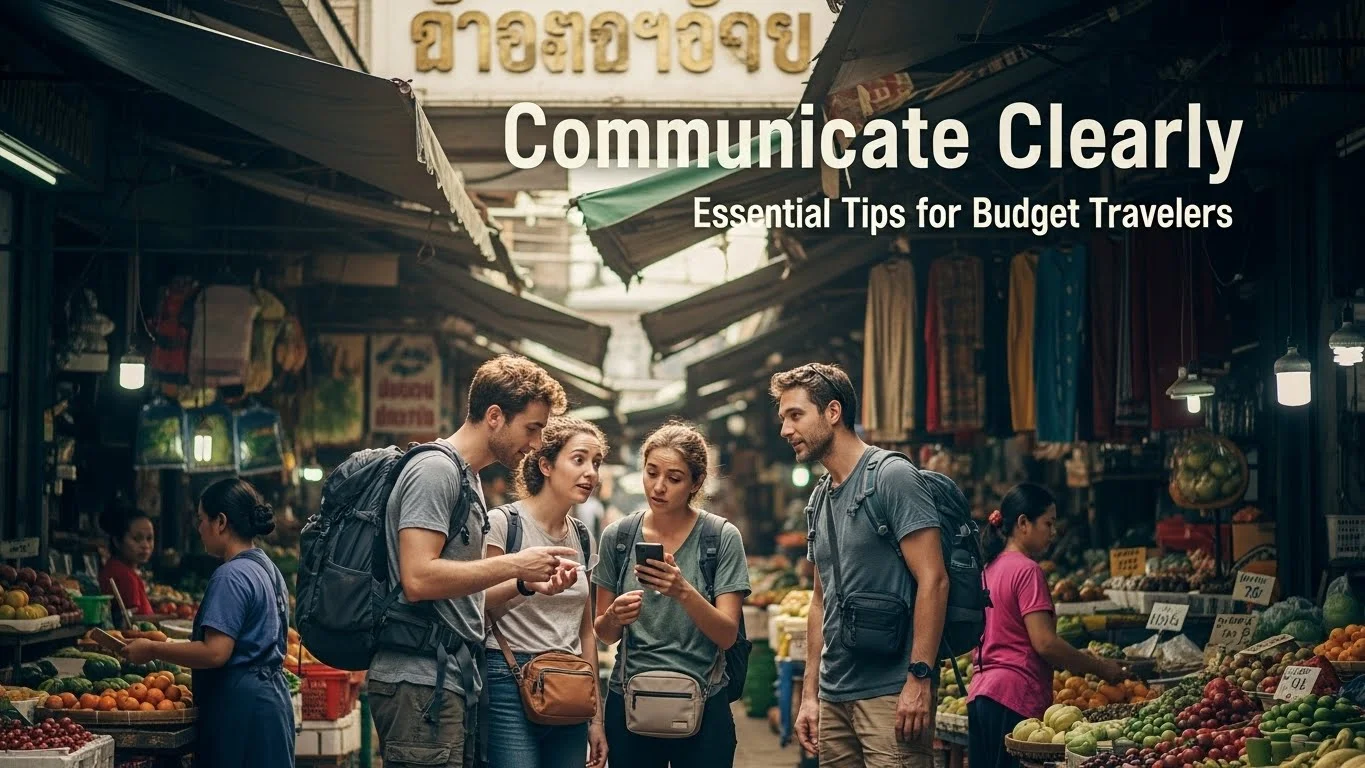
Understanding the Importance of Clear Communication While Traveling
Why Communication Matters for Budget Travelers
When I first started traveling on a budget, I quickly realized that clear communication could save me time, money, and a lot of stress. Whether you’re asking for directions, negotiating prices, or ordering meals, being able to convey your needs and understand others can make a significant difference. I remember one time in a bustling market in Marrakech where I hesitated to ask a vendor about the price of a beautiful handmade carpet. My uncertainty meant I almost missed out on a great deal! Clear communication helps in making informed decisions and allows us to engage more deeply with the culture we are experiencing.
Moreover, when we communicate effectively, we open up opportunities to connect with locals. I can’t emphasize enough how many wonderful friendships I’ve formed just by trying to speak the local language or even using a few key phrases. It’s amazing how a smile and a simple “hello” can break down barriers and lead to some unexpected adventures.
The Role of Language in Budget Travel
Language can be both a bridge and a barrier in our travels. In my experience, understanding even a little of the local language can go a long way. I often find that locals appreciate the effort, even if my pronunciation isn’t perfect. For instance, during a trip to Thailand, I learned just a few basic phrases, and it transformed my interactions. I was not only able to get around more easily, but I also received better service and more genuine interactions.
While it’s true that English is widely spoken in many tourist areas, it’s not always the case in more remote destinations. During a trip to a small village in Italy, I saw how important it was to engage with the local dialect. Many locals were eager to help, but their limited English made it challenging. I found that trying a few phrases in Italian not only helped me navigate but also put smiles on their faces. It felt rewarding to connect with the culture on a deeper level.
Essential Communication Tools for Budget Travelers
Mobile Apps for Translation
In today’s digital age, I can’t recommend mobile apps enough for travelers. There are several excellent translation apps that have been lifesavers for me. Google Translate, for example, offers a text translation feature that works even offline if you download the language pack beforehand. I remember being in a small café in Spain, trying to decipher the menu. With my phone, I was able to translate the dishes and ended up ordering something delicious that I might have otherwise missed. These apps can also translate spoken words in real-time, which can be incredibly helpful during conversations.
Phrasebooks and Language Guides
While I love my smartphone, I also carry a small phrasebook when I travel. There’s something nostalgic about flipping through the pages and the tactile experience of holding a book. I’ve found that having a phrasebook can be reassuring in situations where my phone might not have service, or I want to communicate without any tech distractions. Plus, it’s a fun way to learn a few local phrases! I remember in France, I would practice my phrases, and the locals were always impressed, which made me feel more connected to the culture. Read Interesting article: Explore the World: Budget Travel Tips for STEM Families
Offline Communication Strategies
Sometimes, we find ourselves without our devices or internet access. I’ve learned to adapt by using some offline communication strategies. Drawing pictures, using body language, or even using symbols can help convey my message in a pinch. Once while hiking in the mountains of Peru, I needed to ask for directions but came across a local who spoke no English. I drew a rough map in the dirt, and to my delight, they pointed me in the right direction! Relying on non-verbal communication can lead to some surprisingly fun interactions.
In my travels, I’ve also relied on local guides or hotel staff who often speak multiple languages. They can be invaluable resources for navigating communication challenges. I remember checking into a small guesthouse in Vietnam where the owner spoke great English and was eager to share tips on where to eat and explore, making my stay all the more enjoyable.
Key Phrases Every Budget Traveler Should Know
Basic Greetings and Introductions
One of the first things I like to learn when visiting a new country is some basic greetings. A simple “hello,” “thank you,” or “goodbye” can go a long way in establishing a friendly rapport with locals. For me, saying “hola” in Spain or “salut” in France made me feel more connected to the people. It’s not just about the words; it’s about the warmth and respect shown when we try to engage in the local language. I remember walking into a small bakery in Paris, and when I greeted the baker with “bonjour,” her face lit up, and she responded with a wide smile. It’s moments like these that make traveling so special.
Asking for Directions
Getting lost can be a part of the adventure, but knowing how to ask for directions can help us navigate and discover new places. Phrases like “Where is…?” or “How do I get to…?” became my go-to questions. I learned these phrases in different languages, and they proved invaluable. Once, while exploring the narrow streets of Lisbon, I needed to find a particular viewpoint. I approached a friendly local and asked, “Onde fica o miradouro?” (Where is the viewpoint?). Not only did I get directions, but the person also shared some tips on the best spots to watch the sunset, making my experience even richer.
Inquiring About Prices
As budget travelers, knowing how to ask about prices is essential. I always felt a bit anxious about negotiating, especially in markets. Phrases like “How much is this?” or “Can you give me a better price?” became my allies. I remember haggling in a vibrant market in Istanbul, where I asked, “Bu ne kadar?” (How much is this?). The vendor smiled at my attempt and we ended up laughing while negotiating a fair price. It turned into a fun exchange, and I left with not just a souvenir but a memorable experience!
Ordering Food and Drinks
Food is a massive part of travel, and being able to order confidently is a must. I found that learning phrases related to ordering food was incredibly useful. Knowing how to ask for the menu or request specific dishes made dining out enjoyable. I particularly remember a night in Thailand when I approached a street food stall and asked, “What do you recommend?” in Thai. The vendor beamed with joy and pointed me towards a delicious dish that became one of my favorites. Engaging with locals about their cuisine not only enhanced my meal but also deepened my understanding of their culture.
Emergency Situations
While we all hope for smooth travels, emergencies can happen. Knowing key phrases for emergencies is something I always make a priority. Phrases like “Help!” or “I need a doctor!” can be crucial. I recall one time in a busy market in Morocco when I lost my wallet. I had to ask for help quickly, and thankfully, I had learned how to say, “Help me, please!” in Arabic. The locals were incredibly supportive, and within a short time, I felt reassured that I would find my wallet. It reminded me of the importance of being prepared and equipped with the right phrases. Read Interesting article: Top Budget Travel Tips for Families with Learning Disabilities
Effective Non-Verbal Communication Techniques
Body Language Tips
Sometimes words aren’t enough, and that’s when body language comes into play. I’ve found that gestures, facial expressions, and even posture can communicate a lot. For instance, when I was in Japan, I noticed how bowing is a sign of respect. So, I made it a point to bow slightly when greeting people. It helped me blend in and showed my respect for their culture. Additionally, a friendly smile can go a long way. I remember a time in a crowded market in India; even when language failed me, a smile helped me connect with vendors and fellow travelers.
Using Visual Aids
Carrying visual aids can be a lifesaver, especially in non-English speaking countries. I often bring along pictures or maps to help convey my message. For example, I once needed to find a specific dish in a local food market, so I showed the vendor a photo of it on my phone. Immediate recognition followed, and I was guided to the right stall. Visual aids can create a bridge between language barriers, and I’ve found them to be incredibly helpful in many situations.
Gestures and Their Cultural Significance
Understanding the cultural significance of gestures is something I’ve learned to keep in mind. A thumbs up might mean “good job” in one culture but could be offensive in another. I’ve found myself in some tricky situations because of this! For example, in Greece, I was shocked to learn that what I thought was a friendly wave was not well received. I suggest doing a little research on common gestures before your trip. It’s a small effort that can lead to a much more positive interaction with locals.
Overcoming Language Barriers in Different Regions
Traveling in Non-English Speaking Countries
Traveling in countries where English isn’t widely spoken can be intimidating, but I’ve found it to be one of the most rewarding experiences. I remember my trip to Vietnam, where I encountered countless locals who spoke little to no English. However, I made it a point to learn some basic phrases. It felt empowering to communicate, even if it was just a simple “thank you” in Vietnamese. Engaging with the locals made me feel more immersed in their culture, and I even made a few friends along the way.
Understanding Local Dialects and Accents
Each region can have its own unique dialect or accent, which can add another layer of complexity to communication. I experienced this firsthand in the UK, where terms I was familiar with took on entirely different meanings. For instance, I was confused when a local asked if I wanted “chips” with my meal, thinking they were referring to potato chips. To my surprise, they meant fries! Learning a few key phrases or terms specific to the region can save you from misunderstandings and make conversations much more enjoyable.
Communicating with Locals: Building Rapport
Building rapport with locals can make a huge difference in our travel experience. I’ve found that showing genuine interest in their lives and culture often leads to warm interactions. Asking questions about their customs or sharing a little about my own culture has led to lasting friendships. I remember meeting a local artist in Mexico who shared the stories behind her paintings. We spent hours talking, and I left not just with a piece of art but with a new friend and a deeper appreciation for her culture.
Tips for Budget-Friendly Communication
Utilizing Free Wi-Fi and Internet Cafés
One of the best things about traveling in the modern world is the ability to access free Wi-Fi almost everywhere. I can’t tell you how many times I’ve relied on cafe Wi-Fi to help me communicate efficiently. When I was in Budapest, I stumbled upon a cozy café with free internet. I was able to download translation apps, check maps, and even send messages back home. Free Wi-Fi allows us to look up phrases on the spot, making it easier to connect with locals without the stress of language barriers. Plus, many hostels and public libraries offer free Wi-Fi, which can be a great resource for budget travelers like us.
Using Public Libraries for Resources
I’ve discovered that public libraries can be hidden gems while traveling. They often have resources for learning the local language, including books, audio materials, and sometimes even language exchange programs. I remember spending a rainy afternoon at a library in Oslo, where I picked up a beginner’s guide to Norwegian. Not only did it help me with basic phrases, but it also gave me insights into the culture and history of the country. Libraries also provide a quiet space to study or plan your next adventures, making them a perfect stop along the way.
Engaging with Fellow Travelers
Sometimes, the best way to learn about communication in a new culture is through fellow travelers. When I was in a hostel in Sydney, I met a group of backpackers who were from different parts of the world. We spent an evening exchanging language tips and sharing our experiences. They taught me some useful phrases in Spanish, which helped me later in my travels through South America. Engaging with others not only enhances our communication skills but also builds camaraderie among travelers. Whether it’s over a meal or during a group tour, sharing knowledge can lead to fantastic new friendships and unforgettable memories.
Staying Safe While Communicating Abroad
Recognizing Scams and Fraudulent Communication
While communicating abroad can open doors, it’s essential to stay alert and recognize potential scams. I’ve heard stories from fellow travelers about getting tricked into overpaying for services or giving personal information to strangers. For instance, when I was in a busy market in Istanbul, a friendly local approached me, offering to show me around. While they seemed genuine, I remembered to keep my guard up. I politely declined and instead relied on trusted guides and resources. It’s crucial to trust your instincts and be cautious when engaging with strangers, especially in unfamiliar places.
Privacy and Data Security Tips
In our digital age, data security is a big concern, especially when using public Wi-Fi. I’ve learned the hard way to avoid accessing sensitive accounts or personal information while connected to unsecured networks. Using a VPN (Virtual Private Network) has become a must for me when I’m on the go. It provides an extra layer of security and helps protect my personal data. I can’t stress enough how important it is to be mindful of the information we share and to take steps to safeguard it, ensuring that our travel experiences remain enjoyable and secure.
Trusting Your Instincts
Ultimately, trusting your instincts is key while communicating abroad. I remember a moment in Thailand when a local tried to sell me a tour that seemed too good to be true. Something about the situation felt off, and I chose to walk away. My gut feeling was right! It’s essential to listen to those little voices in our heads that guide us toward safety. Whether it’s deciding whom to engage with or assessing the reliability of information provided, being cautious can help us avoid uncomfortable or unsafe situations.
Resources for Improving Communication Skills
Online Courses and Language Learning Platforms
With so many resources available online, improving our communication skills has never been easier. I personally love using platforms like Duolingo and Babbel, which offer engaging ways to learn new languages. These apps fit perfectly into my travel routine, allowing me to practice phrases while waiting in line or during downtime. I remember using Duolingo diligently before my trip to Italy, and it made a noticeable difference in my confidence while speaking with locals. There are also many free online courses that cover cultural aspects and common phrases, which I highly recommend exploring.
Local Cultural Centers and Language Exchanges
Finding local cultural centers or language exchange programs can be a treasure trove of resources. During my time in Barcelona, I discovered a language exchange event where locals and travelers gathered to practice different languages. I participated, and it was such an enriching experience. Not only did I learn basic Spanish phrases, but I also got to know some amazing people who shared their culture with me. It’s a fantastic way to immerse yourself in the local community while enhancing your communication skills.
Travel Blogs and Forums for Tips and Advice
Before heading to a new destination, I always check out travel blogs and forums. They are filled with tips about communication, local customs, and even specific phrases to use. Websites like Lonely Planet or forums like Reddit allow travelers to share their experiences and advice. When I was preparing for my trip to Japan, I found a blog that included essential phrases and etiquette tips that proved invaluable during my stay. These resources can help us navigate communication challenges and provide insights that we might not find in traditional guidebooks.
Frequently Asked Questions
Why is clear communication important for budget travelers?
Clear communication can save budget travelers time, money, and stress. It helps in asking for directions, negotiating prices, and ordering meals, allowing for more informed decisions and deeper cultural engagement.
How can knowing the local language benefit travelers?
Understanding even a little of the local language can enhance interactions with locals, leading to better service and more genuine experiences. It shows respect and can create opportunities for friendships.
What are some essential communication tools for budget travelers?
Essential tools include mobile translation apps like Google Translate, phrasebooks for offline use, and offline communication strategies like drawing or body language when necessary.
What basic phrases should every budget traveler know?
Travelers should learn basic greetings, how to ask for directions, inquire about prices, order food, and key emergency phrases to navigate effectively during their travels.
How can body language enhance communication while traveling?
Body language, including gestures and facial expressions, can convey messages when words fail. Simple gestures like smiling or bowing can show respect and help connect with locals.
What strategies can travelers use to communicate in non-English speaking countries?
Travelers can learn basic phrases in the local language, use visual aids, and engage with locals to build rapport. Understanding regional dialects can also enhance communication.
How can free Wi-Fi benefit budget travelers?
Free Wi-Fi allows travelers to access translation apps, check maps, and communicate back home without incurring costs, making it easier to connect with locals and navigate new places.
What precautions should travelers take to stay safe while communicating abroad?
Travelers should recognize potential scams, be cautious with personal information, avoid unsecured networks, and trust their instincts when interacting with strangers.
What resources can help improve communication skills for travelers?
Travelers can utilize online courses, language learning platforms, local cultural centers, language exchanges, travel blogs, and forums for tips and language practice before their trips.
How can engaging with fellow travelers enhance communication skills?
Engaging with fellow travelers allows for the exchange of language tips and experiences, which can improve communication skills and create friendships, enriching the overall travel experience.