
STEM activities are not just fun; they’re a gateway to learning! With creativity and a little resourcefulness, we can explore the fascinating world of science, technology, engineering, and mathematics—all on a budget. Let’s dive in!
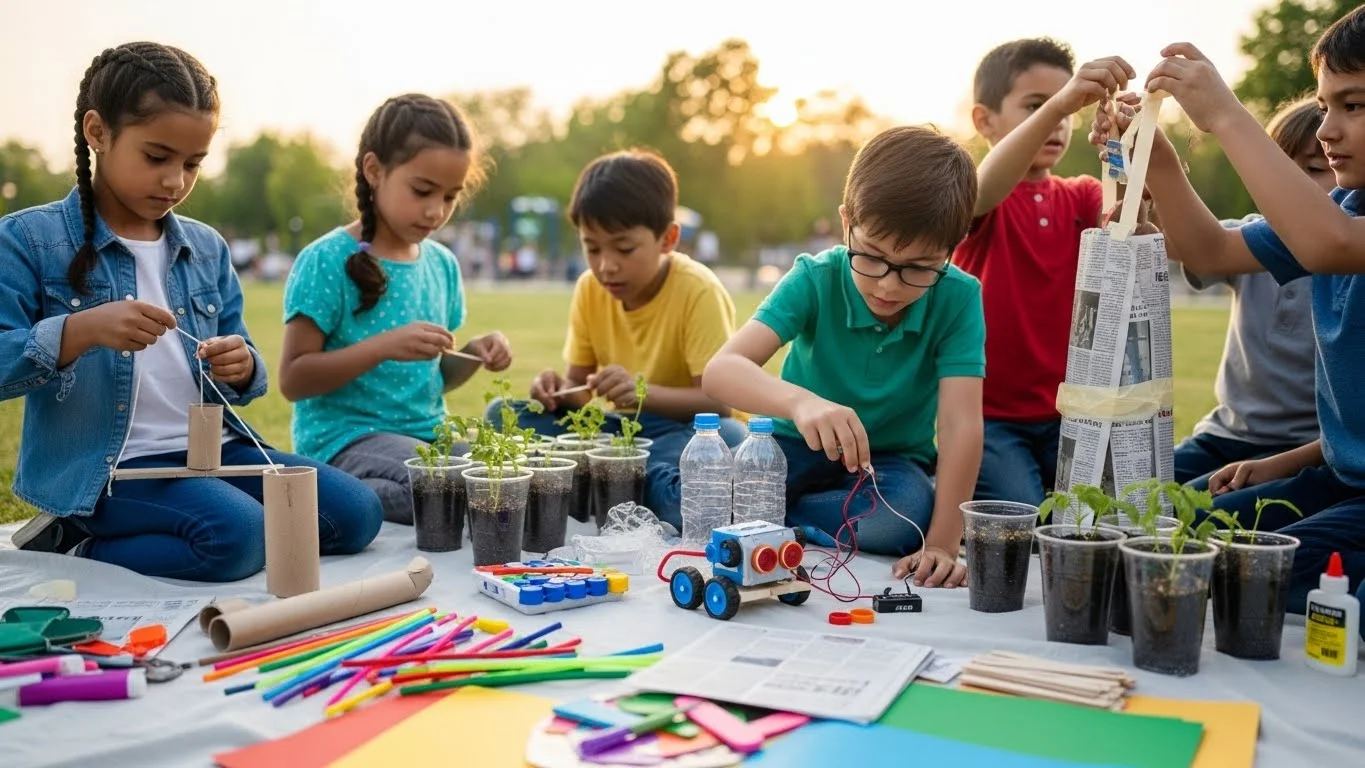
Understanding STEM: What It Is and Why It Matters
Definition of STEM (Science, Technology, Engineering, Mathematics)
When I first heard about STEM, I was curious. What exactly does it encompass? STEM stands for Science, Technology, Engineering, and Mathematics. It’s an educational framework that integrates these four disciplines, focusing on real-world applications and problem-solving. From building rockets to coding simple games, STEM is all about exploring the world through a practical and often hands-on approach.
The Importance of STEM Education for Kids
STEM education is crucial for our kids. I remember when my son first started to show interest in how things worked. It was a lightbulb moment for me; I realized how essential it is to foster that curiosity. In today’s tech-driven world, understanding STEM concepts can open doors to numerous opportunities. It equips children with skills they’ll need in the future job market, which is rapidly evolving. Research shows that early exposure to STEM helps kids develop critical thinking, creativity, and resilience.
Benefits of Engaging in STEM Activities
Engaging in STEM activities offers numerous benefits. From my experience, I’ve seen how these activities can enhance cognitive skills, encourage teamwork, and boost confidence. Watching my kids tackle challenges and celebrate their achievements has been rewarding. STEM fosters a growth mindset, teaching kids that failure is just a stepping stone to success. It also encourages collaboration and communication as they often work in groups to solve problems. These skills are not just vital for STEM fields but for life in general. Read more about budget-friendly STEM activities.
Budget-Friendly STEM Activities for Kids
At-Home Science Experiments
One of my favorite ways to introduce STEM concepts to my kids is through at-home science experiments. They love getting hands-on, and I love that it doesn’t have to cost a fortune. With just a few common household items, we can create a mini-laboratory right in our kitchen!
Simple Chemistry Experiments with Household Items
For example, I recently tried a simple vinegar and baking soda experiment with my kids. It was a hit! They were thrilled to see the fizzing reaction and learned about acid-base reactions in a fun way. We also made homemade slime using glue, baking soda, and contact lens solution. Not only did they enjoy making it, but they also explored the properties of polymers. I discovered that these experiments not only teach science but are also an excellent way to bond with my kids.
Physics Projects Using Recycled Materials
Physics can be just as engaging. We gathered old cardboard boxes, plastic bottles, and rubber bands to create various projects. One memorable activity was building a mini catapult. My kids learned about potential and kinetic energy as they experimented with launching small objects. It amazed me how much they absorbed just by playing and experimenting with recycled materials. The best part? It was all free! We realized that by thinking creatively, we could turn junk into learning opportunities.
Technology Projects Using Free Online Resources
Technology is a huge part of our lives, and I’ve found amazing free resources online that can help kids explore coding and digital creation without breaking the bank. I encourage my kids to dive into these platforms, and they’ve loved every minute of it!
Introduction to Coding with Free Platforms
One fantastic resource is Scratch, a free programming platform designed for kids. My daughter started creating her own interactive stories and games. Watching her problem-solve and debug her code was eye-opening. It was more than just learning to code; it was about developing logical thinking and creativity. I highly recommend trying this out with your children. There’s something satisfying about watching them bring their ideas to life!
Creating Digital Art with Free Software
Another activity we explored was digital art creation using free software like Krita or GIMP. My son loves to draw, and these tools have allowed him to experiment with different techniques and styles without needing expensive materials. It’s been exciting to see how technology enhances their artistic expression while teaching them new skills. Plus, it’s a great outlet for their creativity!
Engineering Challenges with Everyday Materials
Engineering challenges are another excellent way to engage kids. I sometimes set up challenges for my children using only materials we have around the house. It’s fun to watch their minds work as they come up with solutions!
Building Bridges with Popsicle Sticks
For instance, we had a blast building bridges with popsicle sticks. I challenged them to create a bridge that could hold the most weight. They learned about structural engineering principles while collaborating and testing their designs. It’s incredible how much they learned through trial and error, and I enjoyed being a part of their engineering journey.
Creating Catapults from Household Items
Creating catapults from spoons and rubber bands was another memorable project. They had to figure out the best way to launch a marshmallow the farthest. These kinds of engineering challenges not only teach problem-solving but also spark creativity. I loved seeing their excitement with each successful launch!
Mathematics Games and Activities
Math doesn’t have to be boring, either. I’ve discovered that incorporating games into math learning can make it enjoyable for my kids.
Budget-Friendly Math Board Games
We often play board games that involve math concepts. Games like “Monopoly” or “Yahtzee” help reinforce counting and strategy, and they barely cost anything. I noticed that my kids don’t even realize they’re learning while they play, which is the best part!
Outdoor Math Scavenger Hunts
Outdoor math scavenger hunts are another fun way to engage kids in math. I create a list of items they need to find or measure, incorporating math problems along the way. They enjoy running around and figuring out the tasks, and I appreciate how they apply math in real-life scenarios. It’s a win-win!
Group STEM Activities for Kids on a Budget
Community Science Fairs
One of the most exciting group activities we’ve participated in is a community science fair. I remember the thrill in my kids’ eyes when they learned about this event at our local library. It was a perfect opportunity to showcase their projects, and what made it even better was the low cost involved. Most community events are free or require a minimal entry fee. We started planning right away, brainstorming ideas that would not only be fun but also educational.
We decided to create a volcano project. Using simple materials like baking soda, vinegar, and some paint for decoration, my kids could explain the science behind volcanic eruptions to visitors. The best part? They got to interact with other kids and families, sharing their knowledge while learning from others. After the event, I saw a noticeable boost in their confidence and enthusiasm for STEM. I believe community events like this provide a fantastic platform for kids to learn and connect, all while being budget-friendly.
STEM Clubs and Workshops in Local Libraries
Another treasure trove of budget-friendly STEM opportunities is local libraries. I was pleasantly surprised to discover that many libraries offer free STEM clubs and workshops for kids. My kids attended a robotics workshop last summer, and it turned out to be a highlight of their break! The librarian organized hands-on activities, where the kids learned to build simple robots using LEGO kits.
Not only did my children gain valuable skills, but they also made new friends who shared similar interests. I found it heartwarming to see them collaborate on projects, overcoming challenges together. Libraries are often underutilized resources for STEM education, and I wholeheartedly recommend checking them out. You never know what amazing programs might be available right in your neighborhood! Explore more affordable STEM activities for kids.
Collaborative Projects with Friends
Collaboration can be a tremendous motivator for kids, and I’ve seen it firsthand when my children team up with their friends for STEM projects. We often invite friends over for STEM playdates, where we engage in various activities together. This approach not only makes the learning experience more enjoyable but also often leads to even more creative ideas.
For one playdate, we set up a mini engineering challenge where the kids had to build the tallest tower using only spaghetti and marshmallows. It was fascinating to observe how they communicated, shared resources, and learned from each other’s ideas. The laughter and joy that filled the room were priceless. I noticed that when kids work together, they tend to push each other’s boundaries and think outside the box, making the learning process even more enriching.
Resources for Finding Affordable STEM Activities
Online Websites and Platforms for Free STEM Resources
The internet is a goldmine for finding free resources for STEM activities. I remember feeling overwhelmed by the sheer amount of information available, but I found a few go-to websites that have made planning easy. Websites like NASA’s Space Place and National Geographic Kids offer engaging activities and information that inspire kids to delve deeper into science and exploration.
Additionally, platforms like Khan Academy provide free courses on various STEM subjects. I’ve noticed my kids really enjoy interactive lessons where they can learn at their own pace. These online resources have not only made STEM fun but also accessible, allowing us to explore new topics without any financial burden.
Local Nonprofits and Organizations Offering STEM Programs
Many local nonprofits and organizations are dedicated to promoting STEM education for kids. I was fortunate to discover a nonprofit in our area that offers free workshops and events focusing on STEM themes. They host everything from coding boot camps to science experiments at local parks, and the best part? They’re completely free to attend!
Participating in these events has been a fantastic way for my kids to learn from professionals and engage with their peers. The enthusiasm from the volunteers and educators is contagious, inspiring my kids to delve deeper into STEM concepts. I encourage other parents to look for similar organizations in their communities; you might be surprised by what’s available! Check out this guide for engaging STEM activities.
Books and DIY Kits Available at Low Cost
Books can also be a wonderful resource for budget-friendly STEM education. My family has invested in a few STEM-related books that include hands-on activities and experiments. These books often provide step-by-step instructions and explanations that make learning easy and fun. I’ve found local bookstores and thrift stores to be great places to find these gems at low prices.
Moreover, DIY kits are another option for parents looking to engage their kids in STEM learning. While some kits can be pricey, I’ve found plenty of affordable ones online or at local stores. They often come with all the materials needed for experiments or projects, which makes it convenient. I love how these kits spark curiosity and provide an excellent way for my kids to explore STEM concepts independently or with friends.
Tips for Parents to Encourage STEM Learning at Home
Creating a STEM-Friendly Environment
One of the first steps I took to encourage STEM learning at home was to create an environment that promotes exploration and curiosity. I set up a dedicated space where my kids could experiment without the worry of making a mess. I remember transforming a corner of our living room into a mini-lab. We filled it with basic supplies like paper, markers, building blocks, and science kits. I also added a few bookshelves with STEM-related books and resources. This space quickly became their go-to area for creativity and learning.
Another important aspect was to keep our tools and materials organized. We used clear bins to store everything from art supplies to science experiments. This way, my kids could easily find what they needed, which encouraged them to dive into projects independently. It’s amazing how a little organization can spark creativity and reduce frustration. I believe having a designated space can really make a difference in how kids approach learning.
Incorporating STEM into Daily Life
STEM learning doesn’t have to be confined to specific projects or activities. I’ve found that incorporating STEM concepts into our daily life makes it more relatable and engaging for my kids. For example, during our grocery shopping trips, I would ask them to help calculate the total cost of our items or compare prices to determine which product offers the best value. This way, they learned budgeting and basic math skills while helping out.
Cooking is another fantastic way to incorporate STEM. I often involve my kids in meal preparation, allowing them to measure ingredients and understand basic chemistry through cooking reactions. For instance, we discussed why baking soda makes cookies rise or how heat changes the texture of food. This hands-on learning made them more aware of the science behind everyday activities, and they enjoyed tasting the results of their work!
Encouraging Curiosity and Questions in Kids
Encouraging curiosity is vital in nurturing a love for STEM. I’ve learned that instead of simply providing answers, it’s often better to guide my kids to discover them. When they ask a question, I try to respond with another question. For example, if my son asked why the sky is blue, I might say, “What do you think causes that?” This approach not only prompts them to think critically but also fuels their desire to explore the topic further.
I also make it a point to celebrate their questions. Whenever they express curiosity, I acknowledge it and encourage them to research together. We often dive into topics online, watch documentaries, or read related books. I’ve found that this shared exploration strengthens our bond and makes learning an enjoyable adventure. It’s all about fostering a mindset where curiosity is welcomed and celebrated in our home.
Success Stories: Kids Who Thrived through Budget STEM Activities
Case Studies of Successful Projects
One of my favorite success stories comes from our community science fair. My daughter, who was initially hesitant, decided to participate with a project on plant growth. She set up an experiment comparing the growth of plants in soil versus hydroponics using recycled plastic bottles. It was amazing to watch her enthusiasm grow as she meticulously tracked the progress over weeks. By the time the fair arrived, she confidently explained her findings to visitors, and the pride she felt was evident. I could see how much she had learned about biology and the scientific method, and it inspired her to pursue more projects in the future.
Another memorable experience was when my son built a simple robot during a library workshop. The joy on his face when he successfully programmed it to navigate a maze was priceless. He came home buzzing with excitement and immediately wanted to teach me how to code! Watching him share his knowledge with me and others showed me just how impactful these budget-friendly activities could be in igniting a passion for STEM.
Interviews with Parents and Kids
I’ve started connecting with other parents to share our experiences, and the stories have been heartwarming. One mother I spoke to told me about how her son constructed a solar oven from a pizza box for a school project. Not only did he learn about renewable energy, but he also baked cookies in it! She highlighted how inexpensive and straightforward the project was, yet it sparked an interest in environmental science that her son continues to explore today.
Similarly, I interviewed a group of kids who participated in a local STEM club. They shared how working together on projects helped them develop friendships and teamwork skills. One girl mentioned how she had never considered being an engineer until she attended the club, where she discovered her love for building and problem-solving. Hearing these stories reassured me that budget-friendly STEM activities can truly make a difference in children’s lives.
Frequently Asked Questions
What does STEM stand for?
STEM stands for Science, Technology, Engineering, and Mathematics. It is an educational framework that integrates these four disciplines, focusing on real-world applications and problem-solving.
Why is STEM education important for kids?
STEM education is crucial for kids as it fosters curiosity, critical thinking, creativity, and resilience. Early exposure to STEM concepts equips children with essential skills needed in an evolving job market.
What are some benefits of engaging in STEM activities?
Engaging in STEM activities enhances cognitive skills, encourages teamwork, boosts confidence, fosters a growth mindset, and teaches kids that failure is a stepping stone to success.
Can STEM activities be done on a budget?
Yes! There are many budget-friendly STEM activities, such as at-home science experiments, physics projects using recycled materials, and free online resources for technology projects.
What are some examples of at-home science experiments?
Examples of at-home science experiments include vinegar and baking soda reactions, making homemade slime, and exploring properties of polymers with simple household items.
How can parents encourage STEM learning at home?
Parents can encourage STEM learning by creating a STEM-friendly environment, incorporating STEM concepts into daily life, and fostering curiosity by guiding children to discover answers to their questions.
What types of resources are available for finding affordable STEM activities?
Resources for finding affordable STEM activities include online websites offering free STEM resources, local nonprofits and organizations that provide STEM programs, and budget-friendly books and DIY kits.
What are community science fairs?
Community science fairs are events where kids can showcase their STEM projects to the public, often at little to no cost. These fairs provide opportunities for learning, interaction, and boosting confidence.
How can kids benefit from STEM clubs and workshops?
STEM clubs and workshops, often available at local libraries, provide hands-on activities and opportunities for collaboration, allowing kids to learn valuable skills and make friends with similar interests.
Can playing math games be considered a STEM activity?
Yes, playing math games like “Monopoly” or “Yahtzee” can reinforce math concepts while being enjoyable. Incorporating games into math learning makes it relatable and fun for kids.