
Play is more than just fun for toddlers; it’s a vital part of their emotional growth. Join me as we explore how play shapes emotional skills and lays the foundation for a healthy emotional life. Read Interesting article: How Playtime Shapes Your Toddler’s Emotional Growth
Understanding Emotional Skills in Toddlers
Definition of Emotional Skills
When I think about emotional skills in toddlers, I picture those little faces expressing everything from joy to frustration. Emotional skills refer to the ability to recognize, understand, and manage one’s own emotions, as well as to empathize with others. In simple terms, it’s about how well toddlers can express feelings, understand what others feel, and respond appropriately. I’ve noticed that these skills don’t just magically appear; they develop over time through various experiences, with play being a major contributor.
Importance of Emotional Development
Emotional development in toddlers is incredibly important. It’s during this stage that they begin to form their sense of self and learn how to navigate social interactions. I’ve seen firsthand how toddlers who can express their emotions tend to be more confident and resilient. They handle challenges better and are more equipped to build relationships with their peers. This emotional foundation influences their behavior and academic success later on. I believe that fostering emotional skills early on prepares them for a happier, more balanced life.
The Role of Play in Toddler Development
Types of Play: Structured vs. Unstructured
When I consider different types of play, it’s fascinating how both structured and unstructured play contribute to emotional skills. Structured play, like games with rules, teaches children how to follow directions and work as a team. I remember setting up a simple board game with my toddler, and watching how she learned to take turns and express disappointment when she didn’t win. Unstructured play, on the other hand, is free and imaginative. This type of play encourages creativity and self-expression. I’ve seen how my child thrives in free play, whether it’s building a fort with cushions or pretending to be a pirate on a treasure hunt. Both types have their benefits, but together, they create a well-rounded approach to emotional development.
Social Play and Interaction with Peers
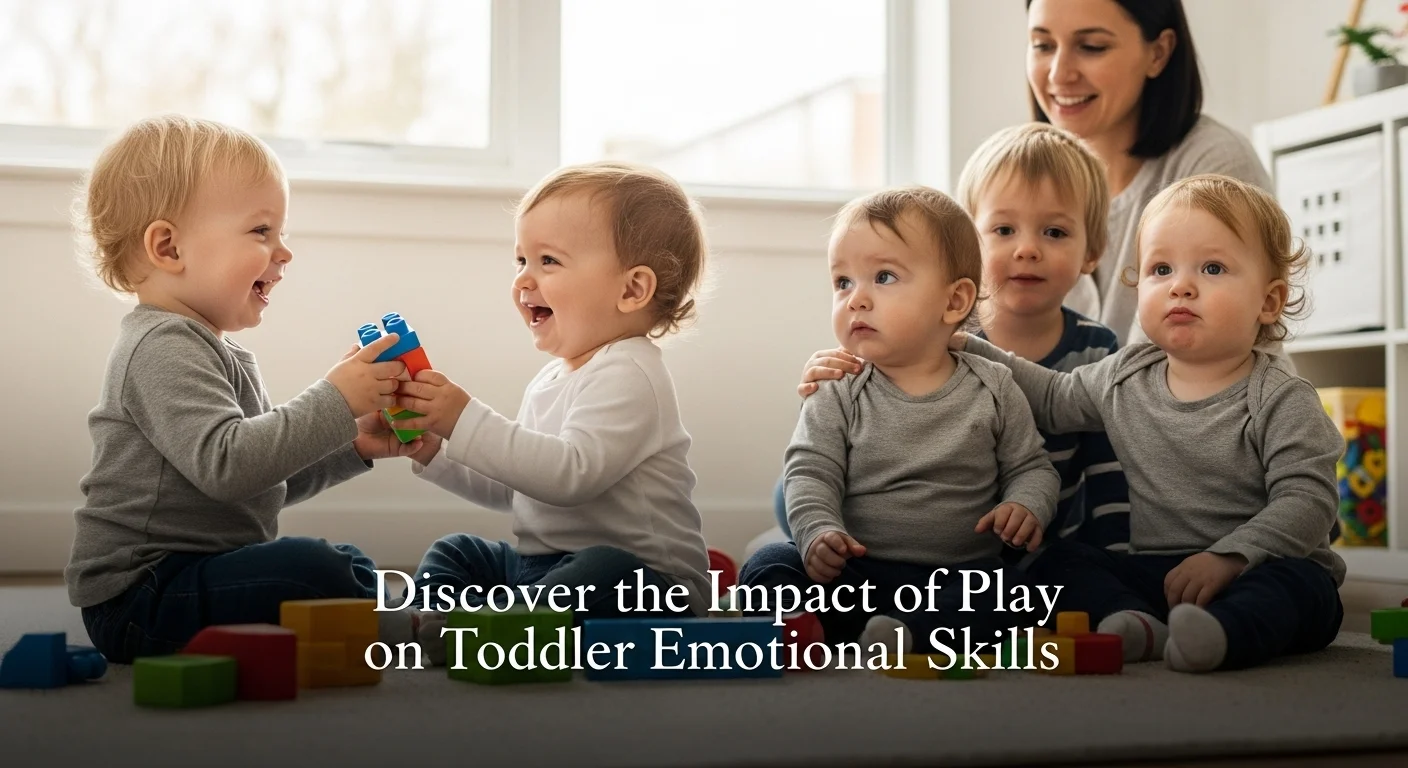
Social play is another critical element of emotional development. When toddlers engage with their peers, they learn to navigate friendships and conflicts. I remember a playdate where my child and her friend fought over a toy. Instead of intervening immediately, I watched them work through their emotions. They learned to share and negotiate, which was a beautiful moment of growth. Through social play, toddlers practice empathy, learn to read social cues, and develop strong bonds with others. It’s amazing to see them grow through these interactions, figuring out how to connect and communicate effectively. Read Interesting article: Backpacking with Toddlers: Foster Empathy Through Experiences
Creative Play: Art, Music, and Imagination
Creative play, such as art and music, has always been a favorite in our house. I’ve noticed that when my toddler engages in painting or singing, she expresses her feelings in ways words sometimes can’t capture. Art allows children to express their emotions visually, while music can evoke feelings and memories. I often see her dancing around the living room, lost in her own world, using movement as a form of expression. This kind of imaginative play not only fosters creativity but also helps toddlers articulate their feelings. It’s been a joy to watch her use these activities as tools for emotional exploration.
How Play Affects Emotional Skills
Building Empathy Through Role-Playing
Role-playing is one of the most effective ways toddlers develop empathy. When they pretend to be someone else, they begin to understand different perspectives. I remember a time when my daughter played doctor with her stuffed animals. She carefully checked their ‘health’ and comforted them when they were ‘sick.’ This act of nurturing not only reinforced her empathy but also allowed her to explore emotions in a safe space. Through role-playing, toddlers learn to put themselves in others’ shoes, which is a valuable skill for life.
Managing Emotions: Learning to Cope with Frustration
Play also provides an outlet for toddlers to manage their emotions. I’ve seen my daughter face challenges in play, whether it’s building a tower that keeps toppling over or losing a game. These moments can be frustrating, but they also offer great learning opportunities. Through play, toddlers learn to cope with frustration, which is crucial for emotional resilience. Instead of giving up, they discover ways to try again or ask for help. I believe these experiences teach them that it’s okay to feel upset, but it’s important to find constructive ways to deal with those feelings.
Developing Communication Skills
Communication is an essential part of emotional skills, and play provides a perfect platform for toddlers to practice. I’ve noticed that during play, my toddler initiates conversations, shares ideas, and expresses her thoughts. These interactions help her learn the nuances of communication, like taking turns in conversation and using appropriate language for different situations. Play encourages her to articulate her feelings and thoughts, which strengthens her emotional vocabulary. I think this development in communication is vital for her overall emotional health.
Enhancing Self-Regulation and Impulse Control
Finally, play helps toddlers enhance their self-regulation and impulse control. I remember playing a game that required waiting my turn and following rules. It was challenging for my daughter at first, but with practice, she learned to manage her impulses. This skill is incredibly important as it lays the groundwork for future interactions at school and beyond. The ability to pause and think before acting is something I value greatly, and I see how play helps toddlers cultivate this vital skill.
Effective Play Activities for Emotional Development
Outdoor Play and Exploration
Outdoor play has always been a favorite in our family. There’s something magical about watching toddlers explore nature. I remember taking my daughter to the park and letting her run freely. The joy on her face as she discovered new things was priceless. Outdoor play encourages kids to take risks, which is essential for building confidence. Climbing on jungle gyms, balancing on beams, or simply running around helps toddlers learn about their limits and capabilities. I’ve seen her express excitement, fear, and triumph, all of which contribute to her emotional development. Plus, being outside allows them to connect with the world around them, fostering curiosity and a sense of wonder.
Interactive Games and Cooperative Play
Interactive games are another fantastic way to enhance emotional skills. I recall introducing my toddler to simple cooperative games where we had to work together to achieve a goal. These games taught her the importance of teamwork and collaboration. I remember one particular game where we had to build a tower with blocks, and it required both of us to communicate and strategize. Through this experience, she learned how to express her ideas and listen to mine. It was a beautiful moment of connection, and I noticed how her ability to cooperate improved. Engaging in cooperative play not only strengthens relationships but also enhances problem-solving skills, which are crucial for emotional intelligence.
Arts and Crafts for Emotional Expression
Arts and crafts have become a staple in our household for emotional expression. Every time my daughter and I sit down with some paper, crayons, and glue, I can see her creativity come alive. I’ve noticed that during these sessions, she often shares her feelings about her day or what’s on her mind. For example, one day she created a drawing of our family, and while she colored, she talked about her love for us and even mentioned how she can feel sad sometimes. These moments are so powerful because they provide a safe space for her to express herself. Art, for her, is not just about creating something beautiful; it’s a way for her to understand and articulate her emotions, helping her navigate her feelings more effectively. Read Interesting article: Empathy Adventures: Teach Your Toddler While Traveling Cheap
The Impact of Play on Social Skills
Making Friends and Social Interactions
Play is an incredible gateway for toddlers to make friends and learn social interactions. I’ve seen my daughter blossom during playdates. Watching her engage with her peers, I realized how important these interactions are for her social skills. She learns how to share, take turns, and even negotiate conflicts. I remember a playdate where she had to share her favorite toy. At first, she was hesitant, but with the encouragement of her friend, she learned to enjoy the joy of sharing. These moments are pivotal, as they lay the groundwork for her future relationships. Each time they play together, she’s not just having fun; she’s developing the social skills necessary for building lasting friendships.
Understanding Social Cues Through Play
Through play, toddlers also gain a deeper understanding of social cues. I’ve noticed how my daughter picks up on non-verbal signals, like facial expressions and body language, during her interactions. For instance, when she plays with other kids, she’s often quick to notice when someone is feeling left out or upset. I remember a time when she invited a quieter child to join in a game, showing her ability to empathize and reach out. This understanding of social cues enhances her emotional intelligence and helps her navigate complex social situations as she grows. It’s fascinating how much they learn about communication and social dynamics just by engaging in play with their peers.
Parental Involvement in Play
Guiding Playtime for Emotional Growth
As a parent, I’ve come to realize that my involvement in playtime can significantly impact my daughter’s emotional growth. I’ve learned to be more than just a bystander; I actively participate and guide her in play. Whether it’s suggesting a new game or joining her in her imaginative adventures, I find that my engagement helps her feel supported. I remember one weekend where we created a makeshift kitchen and cooked up imaginary meals. Not only did we have fun, but it also allowed me to teach her about sharing responsibilities and working together. Being actively involved in her play helps her understand that I’m there to support her emotional journey, reinforcing the bond we share.
Creating a Safe Space for Play
Creating a safe space for play is essential for emotional development. I always strive to ensure that my home feels like a sanctuary where my daughter can explore her feelings freely. This means allowing her the freedom to express herself without the fear of judgment. I remember once when she was upset about a minor issue, and instead of dismissing her feelings, I encouraged her to share them during play. We used dolls to role-play the situation, allowing her to process her emotions safely. This environment not only promotes emotional expression but also teaches her that it’s okay to feel a range of emotions. I believe that having a safe space fosters trust and encourages her to communicate openly, which is vital for her emotional health.
Challenges and Considerations
Screen Time vs. Active Play
As a parent, I often find myself grappling with the balance between screen time and active play. In our digital age, it’s so easy for toddlers to get absorbed in screens, whether it’s watching cartoons or playing games on a tablet. I remember a time when I noticed my daughter spending more time on her tablet than engaging in physical activities. This shift worried me because I know how crucial active play is for emotional and physical development. While there are educational apps that can teach toddlers, I believe nothing compares to the hands-on experiences gained through active play.
To address this, I decided to set limits on screen time in our home. We established a routine where after a certain period of screen use, we would transition to outdoor play or creative activities. I noticed that these transitions brought a noticeable change in her mood and engagement. Active play allowed her to release energy, explore her surroundings, and most importantly, connect with her emotions in a more profound way. I feel that striking a balance is not only about restricting screen time but also about providing enriching alternatives that keep her engaged and emotionally healthy.
Balancing Play and Learning
Another challenge I faced was figuring out how to balance play with structured learning. I often found myself caught in the mindset that every moment needs to be a learning opportunity, especially when it comes to my daughter’s education. I realized, however, that play itself is a form of learning. I recall a day when I set up a themed play area to incorporate basic math concepts through play. While it was fun to see her count blocks while building a tower, I also noticed that she naturally learned more when she was simply allowed to explore and play freely.
Through this experience, I came to understand that the best learning happens in a relaxed environment where children feel free to experiment and play. I try to remind myself that while it’s important to introduce educational activities, it’s equally essential to give her space to play without any pressure. I believe this balance fosters a love for learning and helps my daughter develop a positive relationship with education, allowing her to thrive emotionally and cognitively.
Research and Studies on Play and Emotional Skills
Key Findings on Play and Emotional Development
Research has shown that play significantly influences emotional development in toddlers. I often find myself diving into studies to better understand how play shapes our little ones. One study I came across emphasized that children who engage in play are more equipped to navigate emotional challenges later in life. The findings suggest that through play, children learn to manage their emotions, develop social skills, and even improve their overall mental health.
It struck me how these insights align with what I’ve experienced with my daughter. I think about the countless hours she has spent playing and how those moments have helped her develop skills that will benefit her throughout her life. This research reassures me that the time we spend playing together is not just fun but a vital investment in her emotional health.
Case Studies and Real-World Examples
Real-world examples of how play impacts emotional skills are abundant. I remember reading about a preschool that incorporated play-based learning into their daily curriculum. The educators observed that children who participated in role-playing scenarios showed higher levels of empathy and better emotional regulation compared to those who didn’t. It was fascinating to learn how structured play activities, like dramatic play, provided these kids with opportunities to express emotions and understand others’ feelings.
I couldn’t help but reflect on my daughter’s own experiences. During our home playtimes, when she pretended to be a teacher or a doctor, I saw her not just engage in imaginative play but also practice empathy and communication. This gives me hope and motivation to continue providing her with varied play opportunities. I’ve seen how these experiences have allowed her to build a strong emotional foundation, and I believe that the more we engage in these enriching activities, the better prepared she will be for the emotional challenges life may present.
Frequently Asked Questions
What are emotional skills in toddlers?
Emotional skills refer to the ability to recognize, understand, and manage one’s own emotions, as well as to empathize with others. It encompasses how well toddlers can express feelings, understand what others feel, and respond appropriately.
Why is emotional development important for toddlers?
Emotional development is crucial during toddlerhood as it helps them form a sense of self and learn to navigate social interactions. Toddlers who can express their emotions tend to be more confident, resilient, and equipped to build relationships, influencing their behavior and academic success later on.
What types of play contribute to emotional skills?
Both structured play (like games with rules) and unstructured play (free and imaginative play) contribute to emotional skills. Structured play teaches children to follow directions and work as a team, while unstructured play encourages creativity and self-expression.
How does social play help toddlers develop emotional skills?
Social play allows toddlers to engage with peers, helping them navigate friendships and conflicts. Through these interactions, they practice empathy, learn to read social cues, and develop strong bonds with others.
What role does creative play have in emotional development?
Creative play, such as art and music, allows toddlers to express their feelings in ways words sometimes cannot capture. It fosters creativity and helps them articulate their emotions, enabling emotional exploration.
How does role-playing build empathy in toddlers?
Role-playing enables toddlers to pretend to be someone else, helping them understand different perspectives. This act of nurturing and exploring emotions in a safe space reinforces their empathy.
In what ways does play help toddlers manage emotions?
Play provides an outlet for toddlers to cope with frustration and learn constructive ways to deal with their feelings. Through challenging play situations, they discover resilience and the importance of asking for help or trying again.
How does play enhance communication skills in toddlers?
Play serves as a platform for toddlers to practice communication, as they initiate conversations, share ideas, and express thoughts. This interaction helps them learn the nuances of communication and strengthens their emotional vocabulary.
What is the impact of outdoor play on emotional development?
Outdoor play encourages toddlers to explore nature and take risks, which builds confidence. It allows them to express a range of emotions, including excitement and fear, contributing to their emotional development.
How can parents guide playtime for emotional growth?
Parents can actively participate in their child’s playtime by suggesting new games or joining in imaginative adventures. This involvement provides support and reinforces the bond, ultimately aiding in the child’s emotional growth.