
Effective communication is key to successful positive discipline. By fostering a supportive environment, we can guide our children towards better behavior while nurturing their self-esteem. Let’s explore how effective communication can transform our disciplinary approaches. Read Interesting article: Unlock Positive Discipline Through Effective Communication
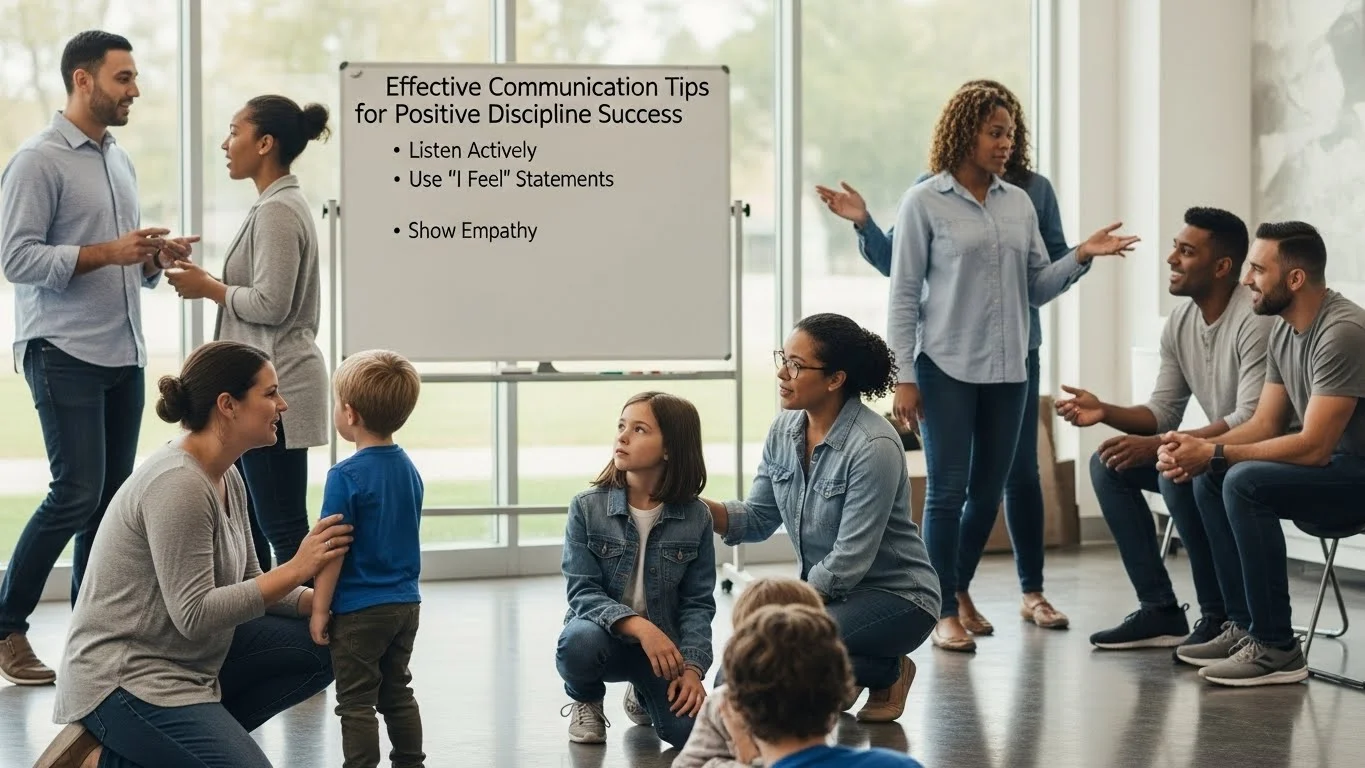
Understanding Positive Discipline
What is Positive Discipline?
Positive discipline isn’t just a buzzword; it’s a philosophy that emphasizes teaching rather than punishing. I remember when I first learned about this approach. Instead of focusing solely on obedience or compliance, positive discipline encourages us to guide our children in understanding the reasons behind their actions. It’s about helping them cultivate self-discipline, responsibility, and empathy. I’ve found that when I apply positive discipline, it creates a more harmonious atmosphere in our home. We focus on solutions and learning from mistakes rather than just consequences. Read Interesting article: Mastering Positive Discipline: Tips for Parents Using Reinforcement
The Importance of Effective Communication in Positive Discipline
Effective communication is the backbone of positive discipline. I’ve noticed that when I communicate clearly and openly, my children respond better. They feel heard and understood, which is crucial for their emotional development. When we engage in meaningful conversations about their behavior, it opens up avenues for learning and growth. I remember a time when my child reacted negatively to a situation. Instead of yelling or shutting down, I sat down and asked what they were feeling. This simple act of communication transformed the moment. It turned a potential conflict into a productive discussion. I believe that when we prioritize communication, we create a foundation where positive discipline can truly thrive.
Core Principles of Effective Communication
Active Listening
Active listening is one of the most important skills I’ve developed as a parent. It’s more than just hearing words; it’s about fully engaging with what the other person is saying. When my children share their feelings or thoughts, I make a conscious effort to listen without interrupting. I nod, maintain eye contact, and sometimes even paraphrase what they say to show that I understand. I’ve found that this practice not only validates their feelings but also encourages them to express themselves more openly in the future.
Empathy and Understanding
Empathy is a game changer in communication. I’ve learned to put myself in my children’s shoes, which has helped me respond in a way that meets their emotional needs. For instance, when my child is upset about a friend situation, I try to recall similar experiences from my own childhood. By acknowledging their feelings, I show them that it’s okay to feel what they’re feeling. This connection fosters trust and encourages them to approach me with their concerns, knowing that I will listen with compassion. Read Interesting article: Fostering Empathy in Kids: Travel Tips for Positive Discipline
Clarity and Conciseness
Being clear and concise in our communication is crucial, especially with children. I used to find myself rambling, thinking I was providing a thorough explanation. However, I soon realized that kids often tune out when the message is too long or complicated. Now, I strive to express my thoughts simply and directly. For instance, when discussing rules or consequences, I outline them clearly and avoid using vague language. This clarity helps my children understand expectations and reduces confusion, making it easier for them to follow through.
Nonverbal Communication
Nonverbal cues are incredibly powerful, and I’ve come to appreciate their role in effective communication. My tone, facial expressions, and body language all play a part in how my message is received. For example, when I’m discussing a difficult topic, I make sure my body language is open and inviting. I’ve noticed that a warm smile or a gentle touch can make my children feel safer and more willing to engage in tough conversations. Understanding and utilizing nonverbal communication has helped me create a more positive and supportive environment for my kids.
Strategies for Implementing Effective Communication
Establishing a Safe Environment
Creating a safe space for communication is something I prioritize in our home. I want my children to feel comfortable sharing their thoughts without fear of judgment. To achieve this, I set aside dedicated time for family discussions, where everyone can express themselves freely. I’ve also established a no-interruption rule during these times, which helps everyone feel valued. This safe environment encourages open dialogue and strengthens our family bond.
Using Positive Language
The language we use can greatly affect our communication. I try to focus on positive language that promotes encouragement rather than criticism. Instead of saying, “Don’t do that,” I might say, “I appreciate it when you play nicely with your sister.” This shift in language not only helps my children understand what behaviors I value but also reinforces their self-esteem. I believe that when we highlight the positive, we pave the way for more constructive interactions overall.
Setting Clear Expectations
Clarity in expectations is something I’ve learned is essential for effective communication. I remember a time when my child was confused about chores and responsibilities. I realized I hadn’t communicated my expectations clearly. After we sat down and outlined specific tasks together, they understood better and felt more accountable. I now make it a point to discuss expectations regularly, ensuring that everyone is on the same page. This approach not only minimizes misunderstandings but also empowers my children to take initiative.
Encouraging Open Dialogues
Encouraging open dialogues has been a transformative strategy in our family. I invite my children to share their opinions and feelings without fear. I often ask open-ended questions, which I’ve found leads to deeper conversations. For example, instead of asking, “Did you have a good day?” I might ask, “What was the best part of your day?” This simple change has led to richer discussions. I believe that fostering an environment where my children can freely express themselves sets the groundwork for healthy communication.
Common Communication Barriers in Discipline
Emotional Barriers
Emotional barriers can often get in the way of effective communication. I’ve noticed that when emotions run high, it’s easy for misunderstandings to occur. For instance, if my child is upset or angry, they might not be able to articulate their feelings clearly. I remember a moment when my child was frustrated about a school project. Instead of addressing the issue, they lashed out at me. In that instance, I realized that I had to acknowledge their emotional state first. By calmly validating their feelings, I created an opening for us to communicate more effectively. Taking a step back to address emotions before diving into problem-solving can make a huge difference in how we connect and resolve issues.
Cultural Differences
Cultural differences can also play a significant role in communication styles and expectations. I’ve had experiences where my upbringing shaped how I view discipline and communication. For example, in some cultures, direct communication is valued, while in others, a more indirect approach is preferred. I’ve found that being aware of these differences is crucial. It allows me to adapt my communication style to better connect with my children. By discussing our cultural backgrounds and their influences on communication, we’ve fostered a deeper understanding in our family. This awareness makes it easier to address and bridge gaps that could lead to confusion or conflict.
Misinterpretations and Assumptions
Misinterpretations often stem from assumptions we make about what others mean or feel. I’ve caught myself jumping to conclusions about my children’s intentions or emotions. For instance, when my child forgets to do their chores, I might assume it’s out of laziness. However, when I take the time to ask, I often discover there’s a valid reason behind it, like they simply lost track of time or were overwhelmed with homework. I’ve learned to approach such situations with curiosity instead of judgment. By asking questions and clarifying assumptions, we create a space for understanding and learning instead of conflict.
Tailoring Communication Styles
Adapting to Different Age Groups
Adapting communication styles to suit different age groups has been a vital part of my parenting journey. I’ve realized that what works for my teenager may not resonate with my younger child. For example, my older child appreciates detailed explanations and discussions, while my youngest thrives on simple and direct messages. I remember a time when I tried to explain a concept I thought was straightforward to my five-year-old, only to find them confused and frustrated. I learned that using analogies or stories that they can relate to often helps convey my message more effectively. Tailoring my approach based on their developmental stage has helped me connect with them in ways that resonate more deeply.
Considering Individual Personality Types
Each of my children has unique personalities that influence how they communicate. One of my children is naturally more introverted and takes time to process their thoughts, while another is extroverted and wants to talk things through immediately. I’ve learned that being sensitive to their individual differences is crucial in fostering effective communication. For instance, with my introverted child, I try to give them space to think before responding, while with my extroverted child, I engage in lively discussions right away. Understanding their personalities not only helps me communicate better, but it also strengthens our bond, as they feel seen and heard for who they truly are.
Practical Examples of Effective Communication in Discipline
Role-Playing Scenarios
Role-playing scenarios have been a fun and effective way to enhance communication in our family. I often set up situations where we act out various scenarios, such as resolving conflicts or discussing feelings. This approach has allowed us to practice how to communicate in a safe space. I remember one particular role-play where my child and I pretended to be friends navigating a disagreement. It was eye-opening for both of us, as we explored different perspectives and practiced articulating our feelings. These role-playing sessions help my children develop essential communication skills that they can use in real-life situations.
Case Studies of Successful Communication
Reflecting on case studies of successful communication in discipline has provided me with valuable insights. I’ve come across stories of parents who transformed their disciplinary approaches by emphasizing communication. One case that resonated with me involved a mother who struggled with her child’s defiance. By implementing regular family meetings where everyone could voice their thoughts and feelings, she saw a significant change in her child’s behavior. This real-life example inspired me to introduce similar practices in our family. It’s encouraging to see that prioritizing effective communication can lead to lasting positive changes in behavior.
Tools and Resources for Improving Communication Skills
Books and Literature on Positive Discipline
Books have been a great resource for me in learning more about positive discipline and effective communication. I’ve explored various titles that delve into these topics, providing practical tips and strategies. One of my favorites is “Positive Discipline” by Jane Nelsen, which has offered me insights into fostering a respectful and cooperative relationship with my children. I often find that reading these books helps me reflect on my own experiences and inspires me to try new techniques in my parenting journey.
Workshops and Training Programs
Participating in workshops and training programs has been incredibly beneficial for my communication skills. I remember attending a local parenting workshop that focused on positive discipline and effective communication strategies. The interactive activities and discussions not only provided me with new techniques but also connected me with other parents facing similar challenges. Sharing experiences and learning from each other has been invaluable in my journey. I highly recommend seeking out local resources or online workshops to enhance your skills.
Online Courses and Webinars
Online courses and webinars have also become essential tools in my learning journey. I’ve found that these platforms offer flexibility and a wealth of information at my fingertips. For example, I took a webinar on emotional intelligence in parenting, which helped me understand the importance of recognizing and validating feelings. The ability to revisit these materials whenever I need has made it easier to continue improving my communication skills. I believe that investing time in these resources ultimately pays off in our family dynamics.
Monitoring and Reflecting on Communication Strategies
Assessing the Effectiveness of Communication
Monitoring and reflecting on the effectiveness of our communication strategies has become a regular part of our family routine. I often take time to evaluate how well we’re connecting and whether our discussions lead to understanding and resolution. For instance, after a family meeting, I ask my children what they felt worked well and what could be improved. I’ve learned that this practice not only provides me with valuable feedback but also empowers them to take ownership of our communication process.
Seeking Feedback from Children and Parents
Seeking feedback from both my children and my partner has been instrumental in refining our communication styles. I’ve created a safe space where we can openly discuss what’s working and what isn’t. Regularly checking in with each other allows us to make adjustments that benefit everyone. I believe that by inviting feedback into our family conversations, we foster an environment of mutual respect and continuous improvement.
Understanding Positive Discipline
What is Positive Discipline?
Positive discipline is more than just a method of guiding behavior; it’s a holistic approach that influences how we interact with our children. When I first delved into this philosophy, I was struck by its focus on connection rather than correction. It’s about teaching kids the “why” behind their actions, helping them develop critical thinking skills that lead to better choices. I remember feeling empowered as a parent when I realized that positive discipline encourages us to be compassionate and consistent, leading to a healthier family dynamic. Instead of merely reacting to misbehavior, we can use these moments as opportunities for growth and understanding.
The Importance of Effective Communication in Positive Discipline
Effective communication plays a vital role in positive discipline. I’ve experienced firsthand how open dialogue can diffuse tension and foster cooperation. When my children feel comfortable expressing their thoughts and feelings, they are more likely to engage in constructive conversations about their behavior. I recall a challenging moment when my child was struggling with a difficult emotion. By taking the time to listen and validate their feelings, I noticed a shift in their attitude. They became more willing to discuss their actions and the impact they had on others. I believe that when we communicate effectively, we cultivate a sense of security that allows our children to thrive.
Core Principles of Effective Communication
Active Listening
Active listening has transformed the way I interact with my children. I’ve learned that truly hearing what they say goes beyond just nodding along. It requires my full attention, which I find is often the most challenging part. I make a conscious effort to eliminate distractions—putting away my phone or turning off the TV—so that I can focus completely on them. This practice has helped my children feel valued and important, which in turn encourages them to open up more. I remember a time when my child was excitedly sharing their day at school. By listening actively, I was able to ask follow-up questions that deepened our conversation and reinforced their confidence in expressing themselves.
Empathy and Understanding
Empathy has been a guiding principle in my parenting. I’ve learned that when my children feel understood, they are more receptive to guidance. I try to remember to validate their feelings, even when I don’t necessarily agree with their perspective. For example, when my child is upset about a particular situation, rather than dismissing their feelings, I reflect back what I see. I might say, “It sounds like you are really frustrated about that,” which opens the door for deeper discussion. This approach fosters a mutual respect in our relationship and helps my children learn emotional intelligence, which is invaluable as they navigate the world.
Clarity and Conciseness
Being clear and straightforward has made a big difference in my communication with my kids. I used to give long-winded explanations, thinking I was being thorough and educational. However, I soon realized that my children often needed messages to be delivered simply and directly. Now, I focus on breaking down instructions or rules into manageable pieces. For instance, when asking my child to complete their homework, I might say, “Let’s tackle this math assignment first before moving on to reading.” This approach not only helps them understand what’s expected of them but also aids in building their confidence in completing tasks.
Nonverbal Communication
Nonverbal communication is a subtle but powerful aspect of how I convey messages to my children. I’ve come to realize that my facial expressions, tone of voice, and even posture can speak volumes. For example, when I praise my child, I make sure to smile genuinely and maintain an encouraging tone. I’ve noticed that this positive nonverbal feedback reinforces their self-esteem. Additionally, when discussing serious topics, I consciously adopt an open posture and soft tone to create a safe environment. This understanding of nonverbal cues has helped me enhance the quality of our interactions, allowing for more meaningful connections.
Strategies for Implementing Effective Communication
Establishing a Safe Environment
Creating a safe environment for communication is essential in our household. I’ve made it a priority to foster an atmosphere where my children feel comfortable sharing their thoughts and feelings without fear of judgment. One way I’ve done this is by scheduling regular family check-ins. During these times, we sit together and talk openly about anything on our minds. I’ve found that this practice not only strengthens our bond but also encourages my kids to be honest and forthcoming about their emotions. Knowing they can share their concerns freely makes a world of difference in our family dynamic.
Using Positive Language
The language we use can have a significant impact on how our messages are received. I consciously try to frame my language positively, focusing on what I want to see rather than what I don’t. For example, instead of saying, “Stop arguing with your brother,” I might say, “I love it when you both share and play nicely together.” This shift in language not only helps my children understand the behaviors I want to encourage but also reinforces a more positive atmosphere in our home. I believe that promoting positivity through our words creates an environment where everyone feels motivated to contribute in a constructive way.
Setting Clear Expectations
Clear expectations are fundamental in our family. I’ve learned that when I articulate my expectations clearly, my children are better equipped to meet them. For instance, when we discuss chores, I outline specific tasks and deadlines, ensuring that they understand what is required of them. I remember a time when I assumed my child knew what to do, only to find that they were confused. After that incident, I made it a point to clarify expectations upfront, and it has greatly reduced misunderstandings in our household. This practice not only fosters accountability but also teaches my children the importance of communication and responsibility.
Encouraging Open Dialogues
Encouraging open dialogues has been a transformative aspect of our family communication. I make it a habit to ask open-ended questions during our conversations, which often leads to deeper discussions. For example, instead of simply asking, “How was school?” I might ask, “What was the most interesting thing you learned today?” This approach has opened up a world of conversation that allows my children to express themselves more freely. I firmly believe that nurturing this openness lays the groundwork for healthy communication and emotional growth.
Frequently Asked Questions
What is Positive Discipline?
Positive discipline is a philosophy that emphasizes teaching rather than punishing. It focuses on helping children understand the reasons behind their actions, cultivating self-discipline, responsibility, and empathy instead of solely focusing on obedience or compliance.
Why is effective communication important in positive discipline?
Effective communication is crucial in positive discipline as it fosters a supportive environment where children feel heard and understood. This openness allows for meaningful conversations about behavior, leading to learning and growth, rather than just consequences.
What are the core principles of effective communication?
The core principles include active listening, empathy and understanding, clarity and conciseness, and nonverbal communication. These principles help create a more engaging and supportive atmosphere for children to express themselves.
How can active listening improve communication with children?
Active listening improves communication by fully engaging with what children are saying. This practice validates their feelings and encourages them to express themselves more openly, leading to deeper conversations and better understanding.
What role does empathy play in communication with children?
Empathy helps parents respond to their children’s emotional needs. By putting themselves in their children’s shoes and acknowledging their feelings, parents foster trust and encourage open communication about concerns and emotions.
How can parents set clear expectations for their children?
Parents can set clear expectations by discussing specific tasks and responsibilities with their children, ensuring that everyone understands what is required. Regular discussions about expectations help minimize misunderstandings and empower children to take initiative.
What is the significance of nonverbal communication in parenting?
Nonverbal communication, including tone, facial expressions, and body language, significantly impacts how messages are received. Positive nonverbal cues create a supportive environment, making children feel safe to engage in discussions.
How can parents create a safe environment for communication?
Parents can create a safe environment by dedicating time for family discussions, establishing a no-interruption rule, and encouraging open dialogue. This approach helps children feel comfortable sharing their thoughts and feelings without fear of judgment.
What strategies can be used to encourage open dialogues with children?
Encouraging open dialogues can be achieved by asking open-ended questions that promote deeper conversations. For instance, instead of asking simple questions, parents can use prompts that invite children to share more about their experiences and feelings.
What resources can help improve communication skills in parenting?
Books on positive discipline, workshops, training programs, and online courses or webinars can provide valuable insights and techniques for enhancing communication skills. These resources offer practical tips and foster connections with other parents facing similar challenges.