
Helping toddlers develop their language skills is a thrilling journey. With the right strategies, we can nurture their communication abilities, paving the way for future success in learning and social interactions. Exploring the World: Language Acquisition Strategies for Toddlers can provide valuable insights into this process.
Understanding Toddler Language Acquisition
When I first became a parent, I was amazed at how quickly my little one started picking up words and phrases. Understanding toddler language acquisition is crucial for us as caregivers, as it helps us support their development effectively. Language acquisition in toddlers typically unfolds in stages, each building upon the last, shaped by their experiences and interactions with the world around them.
The Stages of Language Development
I remember reading about the various stages of language development and how fascinating it is to observe them. Generally, these stages include:
- Pre-linguistic Stage: This stage occurs from birth to around 12 months. Babies communicate through crying, cooing, and babbling. They start to recognize sounds and tones of voices.
- Holophrastic Stage: Between 12 and 18 months, toddlers begin to use single words, or “holophrases,” to express entire ideas. For instance, saying “milk” can mean “I want milk.”
- Two-Word Stage: Around 18 to 24 months, children start combining two words to form simple sentences like “more juice” or “mommy go.” This is when their vocabulary starts expanding rapidly.
- Early Multi-word Stage: By 2 to 3 years, toddlers usually begin to form three or more words, creating more complex sentences. Their understanding of grammar also starts to emerge.
- Later Multi-word Stage: As they approach 3 to 4 years, children become more proficient, using longer sentences and starting to understand the rules of language.
From my experience, it’s incredible to witness these stages unfold and to see how toddlers begin to express their thoughts and feelings. Each new word they learn seems like a mini-celebration!
Importance of Early Language Skills
Early language skills are more than just being able to talk; they play a crucial role in a child’s overall development. I’ve learned that strong language skills contribute to better literacy, social skills, and cognitive abilities. When toddlers can express themselves clearly, they are more likely to form relationships and share experiences with others. This connection to language can also boost their confidence in various settings, from playtime with friends to future classroom environments.
Reflecting on my own journey, I found that engaging with my child during these crucial years made a lasting impact. The earlier we introduce language, the more opportunities we give them to thrive in communication. From Babbling to Words: Understanding Language Milestones is a great resource for parents wanting to learn more about this process.
Engaging Activities to Boost Language Skills
Now that we understand the basics of toddler language acquisition, let’s dive into some fun and engaging activities that I’ve found helpful in boosting our little ones’ language skills. These activities not only promote language development but also foster a love for learning.
Reading Aloud: Benefits and Techniques
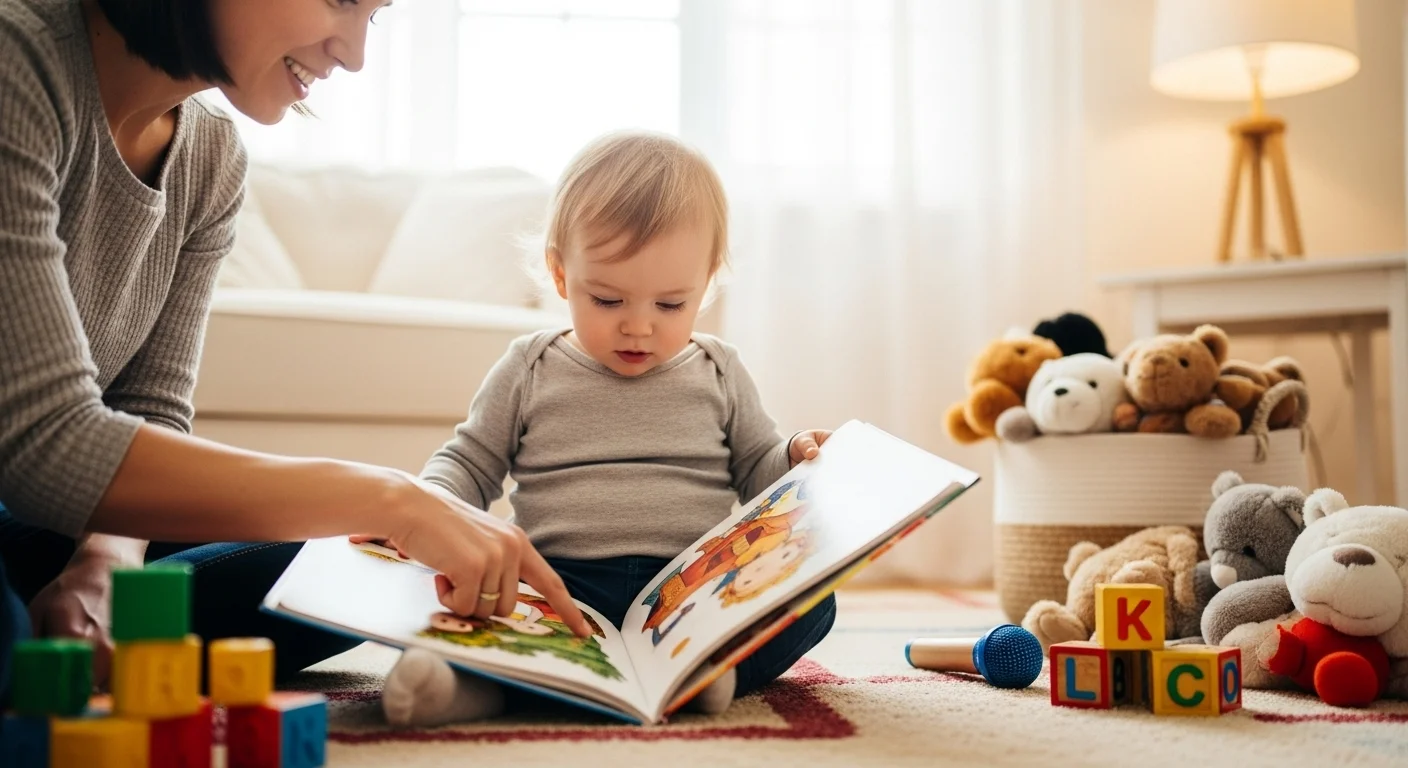
Reading aloud to my child has been one of my favorite activities. It’s a simple yet effective way to introduce new vocabulary and concepts. I’ve discovered that choosing colorful picture books and engaging stories captures their attention beautifully. It’s not just about the words; the illustrations stimulate their imagination and encourage questions.
When I read, I try to use different voices for characters and pause to ask simple questions like, “What do you think will happen next?” This technique keeps them engaged while promoting comprehension and critical thinking.
Interactive Storytelling
Interactive storytelling has become another beloved activity in our home. Instead of just reading a story, I encourage my child to participate. I might ask them to help me create a story or fill in the blanks with their ideas. This not only nurtures their creativity but also allows them to practice language skills in a fun way.
We often take turns making up stories based on pictures from magazines or drawings. I’ve found that children love to be the narrators of their own tales, and it builds their confidence as they express themselves.
Play-Based Learning: Role of Play in Language Acquisition
Play is essential in a toddler’s life, and it’s also a fantastic way to encourage language development. I remember setting up play scenarios where we pretended to be in a store or a restaurant. During these play sessions, I introduced relevant vocabulary and phrases, which my child would eagerly mimic. The beauty of play is that it feels natural and joyful, making learning seamless.
In our experience, cooperative play with other children also offers opportunities for language practice. Watching them negotiate, share, and communicate during playtime enriches their language skills in ways I couldn’t have imagined.
Musical Activities and Rhymes
Music has a special place in my heart when it comes to language acquisition. Singing songs, nursery rhymes, or even creating our own silly songs has proven to be an effective way to enhance vocabulary and rhythm. I love how toddlers naturally respond to melodies and beats, making it easier for them to remember words and phrases.
In my experience, incorporating actions or gestures with songs not only makes it fun but also reinforces comprehension. Watching my child dance and sing along while learning new words is truly a joyful sight.
Creating a Language-Rich Environment
One of the most rewarding experiences I’ve had as a parent is creating a language-rich environment for my child. I’ve realized that the surroundings we set up can significantly influence language development. A rich environment is bursting with opportunities to learn and interact with language daily. Here are some ways I’ve found effective in enhancing this environment.
Importance of Vocabulary Exposure
Exposure to a wide range of vocabulary is vital for toddlers. I remember being intentional about using diverse words in conversations. Instead of just saying “big,” I’d say “enormous” or “gigantic.” This practice not only broadened my child’s vocabulary but also made our conversations more interesting. I believe that the more words they hear, the easier it becomes for them to express themselves later on. I found that using descriptive language during everyday activities, like cooking or playing outside, made a significant difference. For example, I’d point out colors, shapes, and sizes while we played with blocks or had a snack. This not only helped my child learn new words but also made our time together more engaging.
Labeling Objects in the Home
Labeling is such a simple yet powerful tool. I decided to label common objects around our house, like “door,” “table,” and “fridge.” I found that seeing these words consistently helped my child make connections between the object and its name. It was fascinating to see how quickly they began recognizing and even pointing to the labels. This practice not only reinforced vocabulary but also made learning more visual and interactive. I loved how excited my child got when they recognized a labeled item during our daily routine!
Encouraging Conversations and Dialogue
Engaging in conversations with toddlers is essential for their language growth. I made it a point to have back-and-forth dialogues with my child, even when their responses were quite simple. I realized that asking open-ended questions encouraged them to elaborate. For instance, instead of asking if they liked a toy, I’d say, “What do you like about this toy?” This approach often led to delightful exchanges where my child expressed their thoughts and feelings, sometimes in the most unexpected ways! I truly believe that these conversations helped build their confidence and made them feel valued.
Utilizing Everyday Situations for Language Practice
Everyday situations are fantastic opportunities for language practice. I remember going grocery shopping with my child and turning it into a language lesson. Instead of just picking up items, we would talk about colors, prices, and what we were going to make with the ingredients. This not only made shopping more fun but also helped my child understand the context of words in real-life scenarios. I found that using real-life experiences as teaching moments reinforced their learning in a way that felt natural and relevant.
Effective Communication Techniques
As I continued to support my child’s language development, I discovered that the way we communicate also matters greatly. I felt that using effective communication techniques significantly impacted our interactions and shaped my child’s language abilities.
Using Open-Ended Questions
Open-ended questions turned out to be a game-changer for us. Instead of yes or no questions, I often asked questions that required my child to think and respond more fully. For example, I’d ask, “What was your favorite part of the day and why?” This not only encouraged my child to express themselves but also sparked their imagination and critical thinking. I’ve seen how these types of questions lead to richer conversations and deeper connections.
Active Listening Strategies
Active listening has been another essential component of our communication. I made it a priority to listen attentively to what my child said, showing them that their words mattered. I would nod, maintain eye contact, and repeat back what they said to validate their feelings. This practice helped create a safe space for them to express their thoughts without fear of being interrupted or misunderstood. I found that this kind of supportive environment encouraged my child to share more and feel confident in their communication.
Modeling Language: The Importance of Adult Speech
Modeling language is something I took to heart. I realized that children learn a lot from watching and listening to adults. So, I made an effort to speak clearly and correctly around my child. I avoided using baby talk and instead used full sentences. This not only set a good example but also exposed my child to proper grammar and vocabulary. I noticed that they began to mimic my speech patterns, which was both adorable and rewarding. I believe that being a role model in language use is one of the most effective ways to teach.
Using Visual Aids and Gestures
Visual aids and gestures have proven to be incredibly helpful in supporting my child’s language development. I often used pictures, flashcards, or even finger puppets to introduce new words and concepts. Pairing words with gestures made it easier for my child to grasp the meanings behind them. For instance, while singing songs or telling stories, I’d use hand movements to illustrate the actions. I’ve seen how these visual elements not only captivate their attention but also reinforce their understanding in a multi-sensory way.
Leveraging Technology for Language Acquisition
I’ve found that technology can be a powerful ally in supporting our toddlers’ language development. It’s amazing how many resources are available that can make learning not just effective, but also incredibly fun. While I believe that face-to-face interactions are irreplaceable, integrating technology into our routine can enhance language skills in various ways.
Educational Apps and Games
One of the first things I did was explore educational apps designed for toddlers. I was pleasantly surprised by the engaging content that many of these apps offer. They often include interactive stories, vocabulary games, and even puzzles that introduce new words and concepts. I remember downloading a few apps and watching my child become engrossed in them. The colorful graphics and playful characters captured their attention, making learning feel like an adventure.
For instance, there’s this app that allows kids to create their own stories by choosing characters and settings. I love how it encourages creativity while also promoting language skills. As my child narrated their stories, I could see their vocabulary expanding. It was a win-win situation! However, I always made sure to sit with them while they played, asking questions about the characters or what they thought would happen next.
Interactive Videos and Programs
Another fantastic resource has been interactive videos and programs. I’ve noticed that my child responds well to shows that encourage participation, like singing along or answering questions. There’s something about the combination of visuals and music that seems to stick in their minds. I’ve found a couple of educational series that invite children to sing songs and repeat phrases, which has been such a delightful experience for us.
What I particularly love is how these programs often reinforce language skills through repetition and context. My child has picked up new words and phrases just by watching these shows, and sometimes we even find ourselves singing the songs together during playtime. It’s heartwarming to see them excited about learning!
Guidelines for Screen Time Usage
Of course, I’ve thought carefully about screen time and its impact on my child’s development. Setting guidelines has been essential in ensuring that technology serves as a positive tool rather than a distraction. We follow a simple rule in our household: screen time is limited to a certain amount each day, and it’s always accompanied by active participation from me. I believe that this approach helps balance the benefits of technology with the need for personal interaction.
Additionally, I prioritize quality over quantity. I choose educational content that aligns with our learning goals and that I know will engage my child. I’ve found that discussing what we watch afterward helps reinforce those new words and concepts, turning screen time into an interactive experience rather than a passive one.
Encouraging Social Interaction
Social interaction is incredibly important for developing language skills. Through my journey as a parent, I’ve come to appreciate the value of opportunities for my child to engage with their peers. These interactions not only boost their vocabulary but also help them learn about communication in a social context.
Playdates and Group Activities
Setting up playdates has been a game changer for us. I remember organizing small gatherings with friends who have children around the same age. Watching them play together was a joy! They naturally started to communicate, negotiate, and express their feelings. I noticed how my child would pick up new words just by observing and interacting with their friends. It’s amazing how they learn from each other in such a playful environment.
We also participated in group activities like storytime at our local library. These sessions became a wonderful way to connect with other families while exposing my child to different speaking styles and vocabulary. It felt like a mini-community where everyone was invested in learning and growing together.
Role of Daycare and Preschool
If I could go back in time, I would emphasize even more the value of daycare and preschool in language acquisition. I remember when my child started attending preschool; it was like a light bulb went off! They were surrounded by other children and teachers who encouraged language use in an interactive and structured way.
The activities they engaged in—like singing, storytelling, and group discussions—greatly enriched their vocabulary and social skills. I believe that being around peers who are also learning to communicate can create a fun and dynamic environment where children feel inspired to express themselves. I’ve seen firsthand how this setting helps to solidify their language development.
Teaching Turn-Taking and Sharing
One of the key lessons I wanted to instill in my child was the importance of turn-taking and sharing, not just for social skills but for language development too. I remember playing simple games that required them to wait their turn to speak. This encouraged patience and active listening, both of which are essential for effective communication.
Through these activities, I noticed my child becoming more aware of others’ perspectives and feelings. They started to ask questions and show curiosity about what their friends had to say. It was rewarding to see them develop these social skills along with their language abilities, making playtime not just fun but also a valuable learning experience.
Frequently Asked Questions
What are the stages of toddler language development?
The stages of toddler language development include: Pre-linguistic Stage (birth to 12 months), Holophrastic Stage (12 to 18 months), Two-Word Stage (18 to 24 months), Early Multi-word Stage (2 to 3 years), and Later Multi-word Stage (3 to 4 years).
Why are early language skills important for toddlers?
Early language skills play a crucial role in a child’s overall development, contributing to better literacy, social skills, and cognitive abilities. They help toddlers express themselves clearly, form relationships, and boost their confidence in various settings.
What activities can help boost a toddler’s language skills?
Engaging activities that can help boost language skills include reading aloud, interactive storytelling, play-based learning, musical activities, and creating a language-rich environment.
How does reading aloud benefit toddlers?
Reading aloud introduces new vocabulary and concepts, captures toddlers’ attention with colorful picture books, and encourages engagement through questions, promoting comprehension and critical thinking.
How can parents create a language-rich environment for their toddlers?
Parents can create a language-rich environment by exposing toddlers to a wide range of vocabulary, labeling objects in the home, encouraging conversations, and utilizing everyday situations for language practice.
What are effective communication techniques for supporting toddler language development?
Effective communication techniques include using open-ended questions, active listening strategies, modeling language with clear speech, and using visual aids and gestures to enhance understanding.
How can technology be leveraged for language acquisition in toddlers?
Technology can support language acquisition through educational apps and games that engage toddlers, interactive videos that encourage participation, and setting guidelines for screen time to ensure it serves as a positive tool.
What role does social interaction play in toddler language development?
Social interaction is vital for developing language skills as it provides opportunities for toddlers to engage with peers, communicate, negotiate, and express their feelings, enriching their vocabulary and communication skills.
How can playdates and group activities benefit toddler language skills?
Playdates and group activities allow toddlers to naturally communicate and learn from each other, exposing them to different speaking styles and vocabulary while encouraging social skills and language use in a playful environment.
What is the significance of daycare and preschool in language acquisition?
Daycare and preschool provide structured environments where toddlers can engage with other children and teachers, participate in activities that promote language use, and solidify their language development through social interactions.