
Homeschooling can be a beautiful journey, but managing time effectively is crucial for success. I’ve learned that with the right strategies, we can create a balanced and productive learning environment at home. Read Interesting article: Master Time Management: Essential Tips for Homeschooling Success
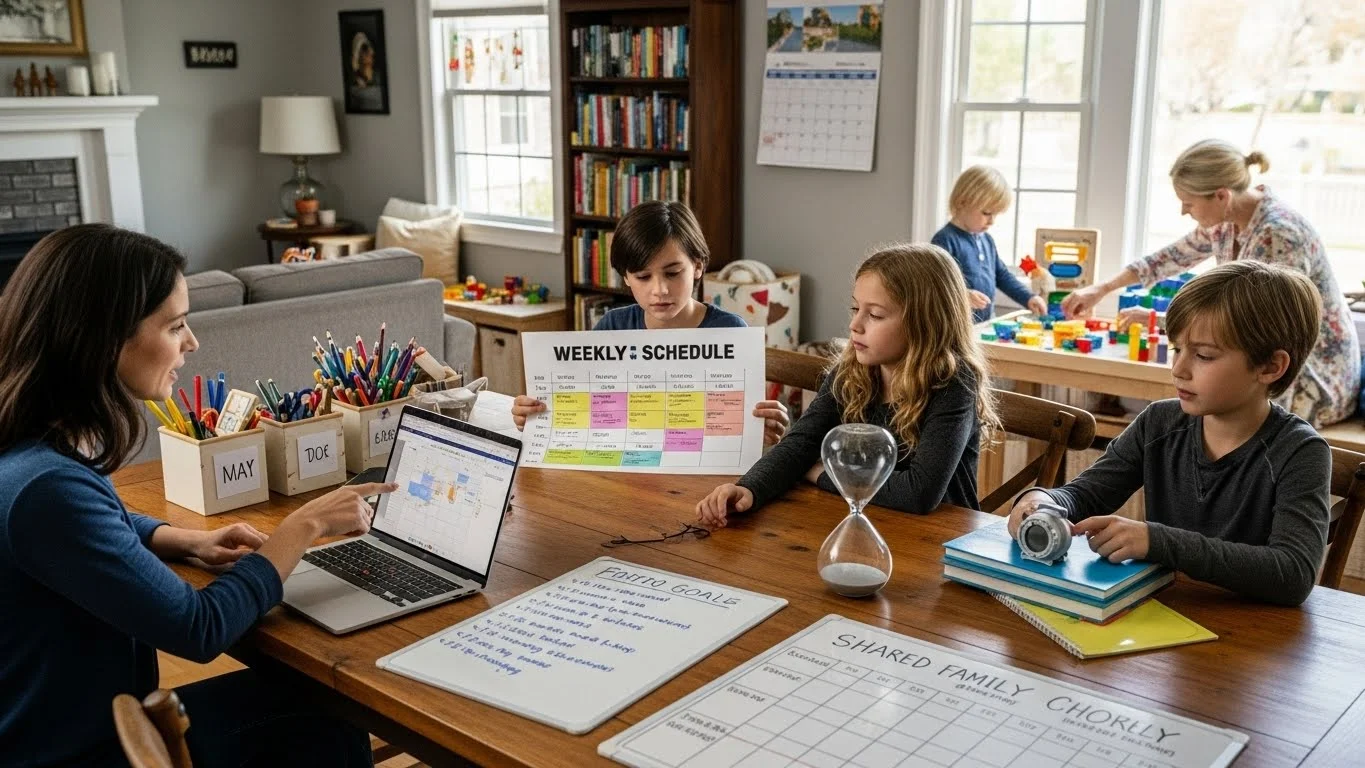
Understanding Time Management in Homeschooling
The Importance of Time Management for Homeschooling Families
Time management is often the backbone of a successful homeschooling experience. I remember when I first started this journey; there were days when I felt overwhelmed by the endless possibilities of teaching. Without a clear plan, I found myself scrambling to cover all the subjects, often missing out on valuable learning experiences. Effective time management allows us to organize our days, ensuring that we cover core subjects while still having time for creativity, exploration, and family activities. It helps us stay focused and reduces stress, allowing us to enjoy the process of learning together.
Common Challenges in Managing Time
In my experience, managing time as a homeschooling family comes with its unique set of challenges. For instance, it can be tough to balance structured learning with the spontaneous moments that make homeschooling special. I’ve also noticed that distractions abound—from chores to phone notifications, the potential interruptions can derail even the best-laid plans. Additionally, when multiple children are involved, it can feel like juggling a circus act, where each child has different needs and learning styles. Recognizing these challenges is the first step towards finding effective solutions.
Key Time Management Strategies
Creating a Flexible Schedule
One of the most effective strategies I’ve adopted is creating a flexible schedule. This doesn’t mean we stick to a rigid timetable; instead, we have a loose framework that allows learning to flow naturally. I found that setting specific blocks of time for subjects gives us structure while still allowing for adaptability. For example, we might aim for math and language arts in the morning but leave the afternoon open for science experiments or outdoor learning. It’s all about finding what works for our family and adjusting as needed.
Setting Realistic Goals
Setting realistic goals is another key component. I remember when I first started, I aimed too high, expecting to cover an entire grade’s curriculum in a year. This led to frustration for both me and my kids. I learned to break down our learning objectives into manageable chunks. I now set weekly or monthly goals instead of overwhelming myself with a year-long plan. This not only keeps us on track but also allows us to celebrate small victories along the way, which I’ve found keeps everyone motivated. Read Interesting article: Supporting Your Mental Health After Baby: Essential Strategies
Prioritizing Learning Activities
Prioritization is essential in our homeschooling routine. Not every subject needs the same amount of attention each day. I’ve come to understand that while core subjects like math and reading are crucial, there’s also value in arts, physical education, and life skills. I prioritize learning activities based on our current focus and the interests of my children. For example, if my child is particularly excited about a science project, I might allocate extra time to that while slightly reducing time in other subjects. This approach keeps the passion for learning alive.
Utilizing Time Blocks for Different Subjects
Utilizing time blocks has been a game changer for us. By dedicating specific periods to different subjects, I can ensure that we cover a variety of topics without overwhelming the kids. I typically start with subjects that require more focus in the morning when everyone is fresh. I’ve found that around 45 minutes to an hour is ideal for each block. After that, we take a short break, allowing them to recharge. This strategy keeps engagement high and helps maintain a steady pace throughout our day.
Incorporating Breaks and Downtime
Incorporating breaks and downtime is equally important. Initially, I thought that more hours meant more learning, but I quickly realized that was not the case. My kids needed time to process what they were learning. We usually take a short break between subjects, but we also schedule longer breaks for outdoor play or creative activities. I’ve noticed that these breaks not only help with retention but also keep our homeschooling experience enjoyable and less stressful. After all, learning doesn’t only happen in front of a textbook.
As I reflect on our homeschooling journey, I see that effective time management is about finding balance and being open to adjustments. Each family’s needs are different, and it’s essential to experiment with various strategies until you find what resonates best with your unique situation. By implementing these time management strategies, I believe we can transform our homeschooling experience into a fulfilling and enriching adventure for everyone involved. Read Interesting article: Smart Strategies for Labor Preparation on a Budget
Tools and Resources for Effective Time Management
Digital Tools and Apps for Scheduling
In our homeschooling journey, I’ve discovered that the right digital tools can make a world of difference in managing our time effectively. There are countless scheduling apps designed specifically for homeschooling families that can help us stay organized. For instance, I started using apps like Trello and Google Calendar to create visual schedules. These tools allow me to drag and drop tasks, which provides a clear overview of our week. I’ve even shared access with my kids, so they can see what’s coming up and feel involved in the planning process. I especially love using reminders to ping us when it’s time to switch subjects, which keeps us on track without me having to constantly check the clock.
Printable Planners and Calendars
While digital tools are fantastic, I also value the tactile experience of using printable planners and calendars. I remember printing out a monthly calendar at the start of our school year and filling it with our learning goals and special projects. This practice not only keeps us organized but also gives my kids a sense of ownership over their learning path. We use color coding to differentiate subjects, making it visually appealing and easy to follow. Plus, there’s something satisfying about crossing off completed tasks that I’ve found can boost motivation for all of us.
Using Timers and Reminders
Another simple yet effective tool I’ve integrated into our routine is the use of timers. I’ve found that setting a timer for each learning block helps everyone stay focused and engaged. For example, when we’re in the middle of a math lesson, I’ll set a timer for 30 minutes. When it goes off, we take a quick break. This not only adds a sense of urgency to our learning but also teaches my kids to manage their time more effectively. I’ve noticed that they often self-regulate better when they see the timer counting down. It’s become a fun challenge to see how much we can accomplish before time runs out!
Involving Children in Time Management
Teaching Kids to Plan Their Own Schedule
One of the most empowering things I’ve done as a homeschooling parent is to involve my children in the planning of their own schedules. Initially, I was hesitant, thinking they might not take it seriously. However, I’ve learned that giving them a say in their daily routine encourages a sense of responsibility. We sit down together at the beginning of each week and discuss what subjects they want to focus on, what projects they’re excited about, and any special events coming up. This collaboration has not only made them more invested in their education but has also led to some amazing discussions about their interests and goals.
Encouraging Independence and Responsibility
As my kids have taken more ownership of their schedules, I’ve noticed a significant shift in their independence. They’ve begun to understand that managing time is a skill that comes with practice. I encourage them to set their own deadlines for projects, which helps them learn how to prioritize tasks. For example, when my eldest wanted to create a science fair project, I guided her to break it down into smaller, manageable steps with timelines. Watching her meet those deadlines independently was rewarding for both of us, and it helped boost her confidence in her abilities.
Adjusting Time Management Strategies as Needed
Recognizing When to Adapt Your Schedule
No matter how well we plan, there are days that just don’t go as expected. I’ve had to learn to be flexible and recognize when it’s time to adapt our schedule. Sometimes, my kids may wake up feeling under the weather or just not in the mood to tackle certain subjects. On those days, I’ve learned to shift our focus to lighter, more engaging activities. Whether it’s a nature walk or a fun documentary, adapting our schedule has become a valuable part of our routine. It’s taught me that learning doesn’t have to be confined to traditional subjects—it can happen anywhere!
Strategies for Different Age Groups
As my children grow, I’ve realized that time management strategies need to evolve as well. Younger kids often thrive on shorter, more structured activities with frequent breaks, while my older ones benefit from longer, more independent study sessions. I make it a point to adjust our daily schedule to reflect this. For instance, while my youngest may work on math for 20 minutes, I encourage my teenager to tackle a more complex topic for an hour. This differentiation has helped each of them engage with their learning in a way that suits their developmental stage.
Handling Unexpected Events and Disruptions
Life is unpredictable, and I’ve learned that unexpected events can throw a wrench in even the best-laid plans. Whether it’s a surprise visitor, a family emergency, or even a spontaneous field trip opportunity, I’ve had to adapt quickly. Embracing a “go with the flow” attitude has been essential. I try to remind myself that these moments can lead to rich learning experiences. For example, when a friend invited us to a local museum on a day we had planned for math, we seized the chance and made it a hands-on learning opportunity. It’s moments like these that remind me of the beauty of homeschooling and the importance of staying open to new adventures.
Balancing Homeschooling with Family Life
Creating Family Time within the Schedule
One of the biggest lessons I’ve learned on this homeschooling journey is the importance of carving out family time. It’s easy to get caught up in lesson plans, grading, and ensuring the kids are on track with their studies. I remember a particularly busy week when I realized we hadn’t spent any quality time together as a family. I felt the strain, and I noticed my kids were getting a bit restless, too. To remedy this, I decided to prioritize family time in our schedule, much like I would prioritize a subject. We now set aside specific times during the week dedicated to family activities—game nights, movie evenings, or even a simple walk in the park. This intentional time together not only strengthens our bond but also rejuvenates us, making our learning moments even more enjoyable.
Incorporating Household Responsibilities
Another way I’ve found balance is by incorporating household responsibilities into our homeschooling routine. I used to think that chores were distractions from our learning, but now I see them as valuable life skills. We’ve included tasks like cooking, cleaning, and laundry into our daily schedule. For example, during our science unit on measurements, my kids practice measuring ingredients while helping to prepare lunch. This approach not only teaches them responsibility but also reinforces their learning in a practical way. I’ve noticed that when we work together on household tasks, it fosters teamwork and communication skills, which are just as important as academic subjects.
Managing Extracurricular Activities
Finding the right balance between academics and extracurricular activities has been another essential aspect of our time management. I used to worry that signing my kids up for too many activities would take away from their schoolwork, but I’ve come to realize that these experiences are equally enriching. Now, I take a proactive approach by evaluating our weekly schedule and incorporating one or two extracurricular activities that align with my children’s interests. Whether it’s a sports team, art class, or a local co-op group, these activities provide social interaction and unique learning opportunities outside of our typical curriculum. We make it a point to discuss which activities they want to pursue, ensuring they remain engaged and excited about their choices.
Tips from Experienced Homeschooling Families
Success Stories and Lessons Learned
One of my favorite things about being part of the homeschooling community is hearing success stories from other families. I’ve learned so much from their experiences, and I often find that they resonate with my own struggles and triumphs. For instance, a fellow homeschooling mom shared how she overcame a particularly challenging year by adopting a theme-based learning approach. This strategy allowed her to weave subjects into a cohesive unit, making learning feel more connected and meaningful. Inspired by her story, I decided to try a similar method with my kids, focusing on a theme like “space exploration,” which ignited their interest across subjects like science, art, and even writing. Hearing about others’ journeys reminds me that we’re all in this together, and it motivates me to keep adjusting and improving our approach.
Community Resources and Support Groups
Another essential tip I’ve gathered is the value of community resources and support groups. Connecting with other homeschooling families has been a lifesaver for me. I’ve joined several local and online groups where we share resources, lesson plans, and even host field trips together. It’s comforting to know I’m not alone in this journey, and having a support network has been incredibly empowering. These groups often organize workshops on time management and homeschooling strategies, which have provided me with fresh insights and practical tools to implement in our own routine. In addition, participating in community events has helped my kids make friends and socialize, which is vital for their development. I highly recommend seeking out local homeschooling groups or online forums; the camaraderie and shared resources can make all the difference.
Final Thoughts
Reflecting on our homeschooling journey, I feel like I’ve grown alongside my children. Time management isn’t just about fitting in lessons; it’s about creating an environment where learning thrives, where curiosity is nurtured, and where family bonds are strengthened. I’ve seen how effective time management allows us to enjoy the journey rather than just complete tasks. The strategies I’ve shared have not only helped us stay organized but also sparked joy in our learning experiences.
One thing I’ve realized is that every family is unique. What works for us may not be the best fit for someone else, and that’s perfectly okay. I encourage you to experiment with different strategies, be flexible in your approach, and always prioritize the well-being of your family. It’s essential to check in regularly with your children about how they feel the schedule is working. We’ve had days where my kids suggested changes that made a significant difference in our routine. Listening to their input has fostered a sense of teamwork in our homeschooling adventure.
As we continue this journey, I’m excited to apply new ideas and learn from fellow homeschooling families. I believe that embracing a community mindset not only enriches our experience but also reminds us that we are not alone. There’s so much support available, and sharing our successes and challenges can be incredibly rewarding.
In the end, time management in homeschooling is about balance—between structure and flexibility, between academics and life skills, and between individual learning and family togetherness. I hope you find your rhythm, celebrate your unique journey, and enjoy every moment spent in the beautiful adventure of homeschooling.
Remember, it’s not just about the education we provide; it’s about the memories we create together. May your homeschooling experience be filled with joy, discovery, and love.
Frequently Asked Questions
1. Why is time management important for homeschooling families?
Time management is crucial for homeschooling families as it allows for organized days, ensuring core subjects are covered while also allowing time for creativity, exploration, and family activities. It helps reduce stress and enhances the overall learning experience.
2. What are some common challenges in managing time while homeschooling?
Common challenges include balancing structured learning with spontaneous moments, dealing with distractions, and managing the different needs and learning styles of multiple children.
3. What is a flexible schedule in homeschooling?
A flexible schedule is a loose framework that allows learning to flow naturally throughout the day. It involves setting specific blocks of time for subjects while allowing for adaptability, such as focusing on math and language arts in the morning and keeping afternoons open for creative activities.
4. How can realistic goals benefit homeschooling families?
Setting realistic goals helps prevent frustration by breaking down learning objectives into manageable chunks. This approach keeps families on track and allows them to celebrate small victories, which can motivate both parents and children.
5. What are time blocks, and how can they be utilized in homeschooling?
Time blocks are specific periods dedicated to different subjects, helping to ensure a variety of topics are covered without overwhelming students. Typically, subjects that require more focus are scheduled in the morning for around 45 minutes to an hour, followed by breaks.
6. Why are breaks and downtime important in a homeschooling schedule?
Incorporating breaks and downtime is important because it allows children to process what they are learning and prevents burnout. Short breaks between subjects and longer breaks for play or creative activities enhance retention and enjoyment of the learning process.
7. How can digital tools assist in time management for homeschooling?
Digital tools and apps like Trello and Google Calendar can help homeschooling families stay organized by creating visual schedules and allowing for easy task management. These tools can involve children in the planning process and provide reminders for subject transitions.
8. What role do children play in managing their own schedules during homeschooling?
Involving children in planning their own schedules encourages responsibility and investment in their education. This collaboration leads to discussions about their interests and goals, making them more engaged in their learning.
9. How should time management strategies change as children grow?
Time management strategies should evolve with the child’s age, with younger kids benefiting from shorter, structured activities and older children thriving on longer, independent study sessions. Adjusting the daily schedule to reflect these developmental needs is essential.
10. How can families balance homeschooling with family life?
Families can balance homeschooling with family life by intentionally scheduling family time and incorporating household responsibilities into the routine. This fosters teamwork and communication skills while also ensuring quality time spent together.