
Traveling with young children can be an adventure filled with unique challenges and rewards. Understanding speech milestones can greatly enhance our experience as parents and caregivers, ensuring our little ones are ready to engage with the world around them.
Understanding Speech Milestones in Young Travelers
The Importance of Speech Development for Travelers
As a parent, I’ve often found myself reflecting on how important speech development is for my children, especially when we travel. Communication is not only about expressing needs but also about connecting with people and experiencing different cultures. I remember our trip to Italy, where my child learned a few key Italian phrases. It wasn’t just about the language; it was a way for her to interact with locals, make friends, and truly immerse herself in the experience. I believe that fostering speech development in young travelers can open up a world of opportunities and enrich their travel experiences in countless ways. Read Interesting article: Mastering Speech Milestones: A Backpacker’s Guide
Key Age Ranges for Speech Development
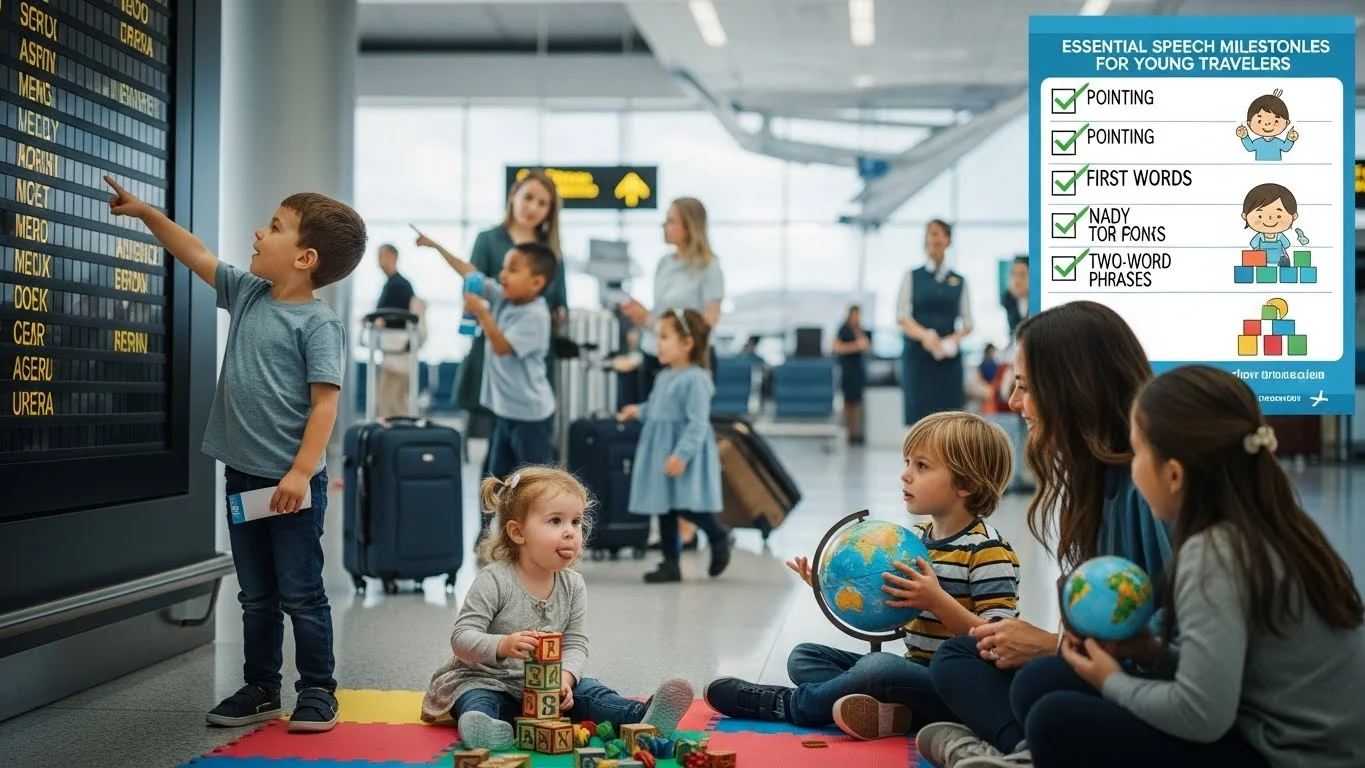
Understanding the key milestones in speech development can help us know what to expect as our children grow. These milestones are especially relevant when we’re on the go. Each age range comes with specific characteristics that can influence how our children communicate while traveling. I’ve noticed that these stages not only affect their ability to express themselves but also their confidence in engaging with others. Here’s a breakdown of those crucial age ranges:
- 0-12 months: Babies start with coos and babbles, laying the groundwork for later speech.
- 1-2 years: This is when I saw my children form their first words, and it was a delightful experience.
- 2-3 years: Vocabulary expands rapidly during this stage, making travel conversations much more enjoyable.
- 3-4 years: Children begin to ask questions and engage in simple conversations, which is exciting for them as they navigate new places.
- 4-5 years: By this age, many kids start telling stories and using complex sentences, enriching their travel narratives.
Essential Speech Milestones by Age
0-12 Months: The Foundations of Communication
In the first year of life, speech development is primarily about listening and experimenting with sounds. I remember sitting with my little one, making funny noises, and watching him mimic me. This stage involves cooing and babbling, which are essential for later speech. Even though it may seem like just playful sounds, these are actually the building blocks for language.
During our travels, I found that exposing my child to various sounds and languages can be beneficial. Whether it’s listening to the chatter of a bustling market or the melodies of different cultures, every auditory experience plays a role in their development. So, I made it a point to engage with different sounds whenever we visited new places.
1-2 Years: First Words and Simple Phrases
By the time children reach one year, they start to form their first words. This was a thrilling time for me as a parent. I can recall the joy of hearing my child say “hello” to a stranger in a new country or “pizza” when we were in Italy. Around this age, children begin to understand that words can represent objects, feelings, and actions, which is crucial for their travel experiences.
During our trips, I encouraged my child to practice these words, whether it was to order food, ask for directions, or greet new friends. I often made a game out of it, where we would point to different items and say their names aloud. This not only helped with vocabulary but also made the experience fun and interactive.
2-3 Years: Expanding Vocabulary and Sentence Structure
As children enter the 2-3 year range, their vocabulary expands tremendously. I remember my child starting to string together simple phrases like, “I want juice” or “Look, a bird!” This is also when we experienced the joy of her expressing her thoughts and feelings more clearly. Traveling during this stage is especially exciting, as children become more curious about their surroundings and want to communicate what they see.
On one trip, we took a bus tour, and my daughter started noticing landmarks and asking questions about them. It was a proud moment for me when she pointed to the Eiffel Tower and exclaimed, “Big tower!” I encouraged her by elaborating on her statements, which helped her build more complex sentences. It’s fascinating how travel can stimulate their desire to learn and communicate.
3-4 Years: Conversational Skills and Asking Questions
At ages three to four, children really start to engage in conversations. They not only ask questions but also begin to understand the structure of dialogue. I remember during our family vacation, my child would ask, “Why is the sky blue?” or “Where are we going next?” This curiosity is a wonderful aspect of traveling; it gives them a chance to explore new concepts and express their thoughts.
This was also the stage when I noticed my child becoming more social with peers. I encouraged her to talk to other kids while we were traveling, whether it was in a park or during a flight. I was amazed at how quickly she adapted to different social settings. For me, the journey became not just about visiting new places but also about watching her grow and connect with others.
4-5 Years: Storytelling and Complex Sentences
By the time children reach four to five years, they begin to tell stories and use more complex sentences. I remember being captivated by my daughter’s recounting of our adventures. She would say things like, “First, we saw a huge elephant, and then we ate ice cream!” This storytelling ability is crucial as it enhances their ability to communicate experiences and engage with others.
During our travels, I encouraged her to describe what she saw and how it made her feel. We would often sit down after a day of exploring and talk about our favorite moments. This not only helped her practice her speech but also created lasting memories for us to cherish together. I’ve learned that encouraging storytelling during travel can make the experience more meaningful and help solidify her language skills.
Interactive Activities to Encourage Speech Development
Storytelling and Reading Aloud
One of the most enjoyable ways I’ve found to support my children’s speech development while traveling is through storytelling and reading aloud. I remember packing a few picture books before a family trip. Each evening, we would gather together, often in a cozy hotel room, and dive into an adventure through the pages. My kids loved hearing stories, and I noticed how it sparked their imagination. They would often engage with the story, asking questions or even trying to guess what would happen next.
Reading aloud not only helps expand their vocabulary but also introduces them to different cultures and experiences. I made it a point to find books related to our travel destination. For instance, when we visited Japan, we read about traditional festivals and local folklore. Discussing these stories allowed my children to connect their reading to the world around them, making their travel experience even richer. Read Interesting article: Traveling Smart: Toddler Developmental Milestones on a Budget
Role-Playing Travel Scenarios
Role-playing has been a fantastic tool for encouraging speech development. Before we embarked on our travels, I would set up little scenarios at home. For example, we pretended to order food at a restaurant or ask for directions in a foreign city. I found that by acting out these situations, my kids became more comfortable with language and communication. It was entertaining to see them role-play as a waiter or a friendly local.
During our trips, we would often revisit these role-playing scenarios in real life. I remember being in a bustling market in Marrakech, and my child confidently approached a vendor to ask for a specific item. The practice we had done at home paid off beautifully. Not only did it build her confidence, but it also solidified her understanding of how to use language in different contexts.
Using Travel-Related Games and Apps
Technology has opened up a world of opportunities for engaging our children in language learning. I discovered some amazing travel-related games and apps that focus on vocabulary and language skills. On long flights or train rides, I’d often pull out these interactive resources. My kids loved playing games that challenged them to match words with pictures or complete sentences. It felt less like learning and more like a fun adventure.
Some of my favorite apps included those that introduce basic phrases in different languages. For instance, while we traveled through Spain, we used an app that helped my children learn how to say essential words like “please” and “thank you” in Spanish. I loved seeing the excitement on their faces when they were able to use these words in real conversations. It made the experience feel more immersive and rewarding for all of us.
Travel Tips for Supporting Speech Development
Choosing Destinations with Language Opportunities
When planning our trips, I learned to choose destinations that offered rich language experiences. Exploring a place where my children could hear and see the local language in action made a big difference. I noticed that cities with vibrant street markets, local performances, or even interactive museums provided the perfect backdrop for language learning. It was fascinating to see how being in an environment where they could hear multiple languages and dialects sparked their interest in communication.
For instance, during a trip to Quebec, we enjoyed conversing with local artists at a festival. My children were intrigued by the bilingual nature of the region. They started picking up French phrases, and it was heartwarming to see them excitedly try out their new skills. I realized that choosing destinations with diverse linguistic environments could significantly enhance our travel experiences and their speech development.
Engaging with Local Cultures and Languages
Engaging with local cultures is another fantastic way to support speech development. I always made a point to involve my children in local customs, whether it was participating in a cooking class or attending a traditional dance performance. These experiences not only enriched our travels but also provided opportunities for them to hear and use the local language.
During one of our trips to Thailand, we joined a local cooking class where everyone spoke Thai. My children were encouraged to repeat words and phrases as they learned about the ingredients. It was a joyful chaos, with laughter and attempts at pronunciation filling the room. I noticed how their willingness to engage with the language grew, and it turned out to be one of the highlights of our trip.
Using Technology to Enhance Language Learning
In today’s digital age, technology can be a wonderful ally in supporting speech development. I regularly searched for educational content that related to our travel destinations. From language learning podcasts to videos featuring native speakers, I found a wealth of resources that made learning fun. Listening to songs in different languages became a favorite activity during our car rides or flights. My kids would sing along, and it was beautiful to see them connect with the language through music.
Using technology also allowed us to keep in touch with the places we visited after our trips. We would watch documentaries or follow travel blogs that focused on the cultures we experienced. This ongoing engagement nurtured their curiosity and kept the language alive in their minds, reinforcing what they had learned while traveling.
Common Speech Challenges for Young Travelers
Dealing with Language Barriers
While traveling, encountering language barriers can be a significant hurdle for young children. I remember a trip to a small village in Greece, where English was not widely spoken. My children were eager to interact but struggled to communicate their needs. This experience made me realize how vital it is to prepare them for situations where they might not understand or be understood. I found that teaching a few essential phrases before the trip, like “please,” “thank you,” and “help,” could empower them. It’s amazing how even a small effort can lead to smiles and connections with locals, despite the language differences.
To tackle language barriers, we also relied on non-verbal communication. Pointing, gestures, and even drawing pictures became part of our interactions. I noticed how my children adapted quickly, using their creativity to fill the gaps in communication. These experiences not only taught them resilience but also helped them understand that there are many ways to connect with others beyond words.
Understanding Accents and Dialects
Another challenge I faced was helping my children understand different accents and dialects. During our travels, I often overheard various regional accents that were different from what we were used to. I remember being in London, and my son struggling to understand the local slang. It was amusing for me but a bit frustrating for him. I realized that introducing them to these accents beforehand could make a big difference.
We started listening to regional accents using online resources, so they could familiarize themselves with the sounds and phrases. I also encouraged them to ask questions when they didn’t understand something. It created an open dialogue about communication and made them feel more comfortable navigating new environments. I found that these lessons turned into fun little adventures, as they would try to mimic different accents or guess the meanings of new words.
Overcoming Anxiety in New Environments
Traveling to new places can be overwhelming for young children, leading to anxiety that may affect their speech development. I remember one trip where my daughter was shy and hesitant to speak to anyone outside our family. It made me reflect on how important it is to create a supportive environment that encourages them to express themselves, even when they are feeling anxious.
To help her overcome this anxiety, I started small. We would practice introducing ourselves to hotel staff or shopkeepers, building her confidence in a safe space. I would praise her efforts, no matter how small, reinforcing that it’s okay to be nervous. Gradually, I noticed her becoming more comfortable, and she began initiating conversations with strangers. It became a heartwarming moment for me as a parent, seeing her grow in confidence and connection.
We also established routines during our travels, which provided a sense of stability. Knowing what to expect each day helped alleviate some of the anxiety associated with new experiences. I’ve learned that being patient and supportive during these challenging moments can lead to significant breakthroughs in their speech development.
Resources for Parents and Caregivers
Books and Apps for Language Development
Finding the right resources for supporting speech development during travel can be a game-changer. I discovered some fantastic books and apps that made learning fun while on the go. Picture books filled with vibrant illustrations have always been a favorite in our family. I remember packing a travel-themed book that helped my kids learn about different countries and cultures. It sparked their curiosity and made them excited about our upcoming trips.
Apps have also been a lifesaver during long travel days. I stumbled upon language learning apps designed specifically for kids, featuring interactive games and engaging lessons in various languages. These resources became a part of our travel routine, keeping my kids entertained while fostering their speech skills. I recommend looking for apps that incorporate fun games, songs, and stories, making language learning feel like a delightful adventure.
Speech Therapy Options for Traveling Families
For families who may have concerns about their children’s speech development, finding a speech therapist who understands the challenges of traveling can be immensely beneficial. I remember speaking to a fellow parent who connected with a therapist who offered virtual sessions during their travels. This flexibility allowed them to continue working on speech goals without interrupting their adventures.
Additionally, some therapists provide tailored exercises that families can practice together while on the road. I’ve found that incorporating these activities into our travel routine created a supportive environment for my kids, allowing them to work on their speech skills while still enjoying the excitement of exploration.
Online Communities and Support Groups
As a parent, I often turned to online communities and support groups for advice and resources on speech development. Connecting with other parents facing similar challenges made me feel less alone in my journey. I found forums where caregivers shared tips, experiences, and recommended resources. It was reassuring to know that there were others out there who understood the intricacies of traveling with young children and the importance of speech development.
Social media platforms also have groups dedicated to speech development, where parents can ask questions, share success stories, and find inspiration. Engaging with these communities not only expanded my knowledge but also provided a space to celebrate the small victories along the way. I encourage other parents to seek out these communities, as they can be a valuable source of support and encouragement in this journey.
Frequently Asked Questions
What are the key age ranges for speech development in young children while traveling?
The key age ranges for speech development are: 0-12 months (coos and babbles), 1-2 years (first words and simple phrases), 2-3 years (expanding vocabulary and sentence structure), 3-4 years (conversational skills and asking questions), and 4-5 years (storytelling and complex sentences).
How can parents encourage speech development during travel?
Parents can encourage speech development during travel by engaging in storytelling and reading aloud, role-playing travel scenarios, and using travel-related games and apps that focus on vocabulary and language skills.
What are some effective activities for enhancing speech development in young travelers?
Effective activities include storytelling and reading books related to travel destinations, role-playing situations like ordering food, and using apps that teach basic phrases in different languages.
How can choosing travel destinations impact a child’s speech development?
Choosing travel destinations that offer rich language experiences, such as vibrant markets and local performances, can enhance a child’s speech development by providing them opportunities to hear and interact with the local language.
What challenges might children face regarding speech while traveling?
Children might face challenges such as language barriers, understanding different accents and dialects, and overcoming anxiety in new environments, which can all impact their ability to communicate.
How can parents help children deal with language barriers during travel?
Parents can help children deal with language barriers by teaching essential phrases before the trip and encouraging non-verbal communication through gestures, pointing, and drawing pictures to aid interactions.
What can be done to help children understand different accents and dialects?
To help children understand different accents and dialects, parents can expose them to various regional accents through online resources and encourage them to ask questions when they don’t understand something.
How can technology support speech development for young travelers?
Technology can support speech development by providing access to language learning podcasts, videos featuring native speakers, and interactive games and apps that make learning fun during travel.
What resources are available for parents concerned about their child’s speech development while traveling?
Parents can explore books and apps designed for language development, consider speech therapy options that offer virtual sessions, and connect with online communities and support groups for advice and shared experiences.
How can storytelling during travel benefit children’s speech development?
Storytelling during travel can benefit children’s speech development by encouraging them to express their thoughts and feelings, practice their speech, and create lasting memories through shared narratives of their experiences.