
Boosting social skills in homeschoolers is crucial for their overall development. With the right strategies, we can help our kids thrive socially, making their educational journey richer and more fulfilling. Read Interesting article: Backpacking with Toddlers: Boosting Social Skills on the Road
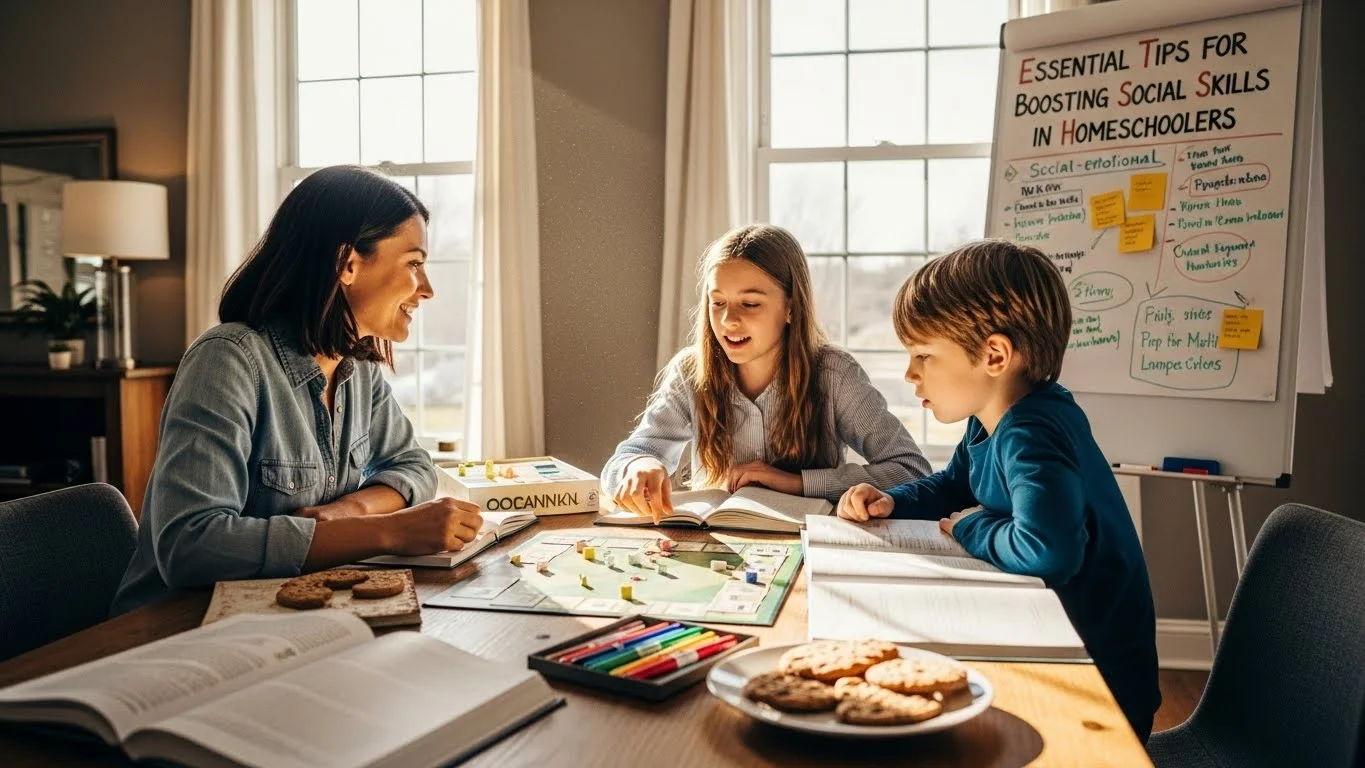
Understanding Social Skills in Homeschooling
Definition of Social Skills
Social skills are the tools we use to communicate and interact with others. They encompass a range of abilities, from verbal communication to non-verbal cues like body language and facial expressions. For our homeschoolers, developing these skills means they can build strong relationships, navigate social situations, and express themselves effectively. I’ve seen firsthand how essential these skills are for my children; they are the foundation of friendships and group dynamics. Without them, kids might struggle to connect with peers, which can be isolating.
Importance of Social Skills for Homeschoolers
In our homeschooling journey, I quickly realized that social skills are just as important as academic knowledge. While we focus on subjects like math and science, I believe that social skills help my kids learn teamwork, problem-solving, and empathy. These skills prepare them for real-world interactions, whether in college, the workplace, or everyday life. I want my children to feel confident in social situations, and developing these skills gives them the tools to do so. Moreover, social skills can lead to better mental health, as having friends and social connections is vital for emotional well-being.
Common Challenges Faced by Homeschoolers
Homeschooling can sometimes lead to fewer opportunities for social interaction, which can be a challenge. I’ve noticed that my kids, while excelling academically, might miss out on the daily interactions that naturally occur in traditional schools. This can lead to feelings of loneliness or anxiety when they face social situations. Additionally, some homeschoolers may struggle with shyness or feel uncomfortable in group settings. I think it’s important to recognize these challenges so we can actively work to overcome them. Understanding the social landscape can help us create a supportive environment where our children feel safe to express themselves.
Creating a Social Skills Development Plan
Assessing Current Social Skills
The first step in enhancing social skills is to assess where our kids currently stand. I found that observing my children in different social settings helped me identify their strengths and areas for improvement. Are they confident in initiating conversations, or do they tend to hang back? Are they able to read social cues effectively? I recommend taking notes on their interactions, which can provide a clearer picture of their social abilities. We can also involve our kids in this assessment process; asking them how they feel about their social skills can surface valuable insights.
Setting Realistic Goals
Once we have a good understanding of their social skills, it’s time to set achievable goals. I remember sitting down with my kids to talk about what they wanted to improve. Maybe they want to make more friends or learn to express their opinions better. Setting specific, measurable goals helps keep them motivated. For instance, we could aim for my child to initiate a conversation with a peer once a week. By breaking down larger goals into smaller steps, we create a manageable path for improvement. This gives our kids a sense of achievement as they reach each milestone.
Incorporating Social Skills into Daily Activities
Integrating social skills practice into everyday activities has worked wonders for our family. When we shop, I encourage my children to interact with cashiers or ask for help finding items. During family meals, we practice sharing thoughts and listening to each other. I believe that these small moments are excellent opportunities for my kids to develop their conversational skills and learn the art of listening. We also discuss current events or books we read together, which opens the floor for dialogue and debate. Making social skills a regular part of our lives has created a natural, low-pressure environment for practice.
Engaging in Group Activities
Finding Local Homeschool Groups
One of the best ways I’ve found to boost my kids’ social skills is by connecting them with local homeschool groups. These groups often provide a fantastic opportunity for our children to meet peers who share similar educational paths. I remember when we attended our first meetup; my kids were initially nervous, but they quickly warmed up to the idea of making new friends. I suggest looking for groups that offer activities such as field trips, art classes, or even book clubs. Each of these events can be a great way for our kids to practice their social skills in a relaxed setting. It’s also a wonderful way for us as parents to connect with others on the same journey. Additionally, Read Interesting article: Backpacking with Kids: Boosting Toddler Social Skills can provide insights into fun ways to enhance social interactions.
Participating in Community Events
Community events can serve as fantastic platforms for social interaction. Our family loves attending local fairs, festivals, and library events. I’ve found that these gatherings not only expose my kids to diverse groups of people but also encourage them to engage in conversations with individuals outside their usual circles. For example, we once joined a community clean-up event, which allowed my children to work alongside others while discussing the importance of caring for our environment. These experiences not only enhance their social skills but also instill a sense of community and belonging.
Joining Sports Teams and Clubs
Sports and clubs have been a game-changer for my children’s social skills. I remember when my daughter joined a local soccer team; she felt a wave of excitement and apprehension at the same time. The team environment fosters camaraderie and teaches children how to work together towards a common goal. It’s not just about the sport; it’s about building friendships, learning to communicate, and understanding teamwork. Likewise, clubs focused on interests like art, coding, or even drama can provide a platform for kids to engage with others who share their passions. I recommend exploring options in your area to see what fits best for your child’s interests and social needs.
Utilizing Technology for Social Interaction
Online Learning Platforms and Forums
In today’s digital age, technology can be a great ally in enhancing our kids’ social skills. Online learning platforms often come with forums or discussion boards where kids can interact with peers. I remember when my son participated in a virtual science fair; he had to present his project online and answer questions from other students. This experience not only honed his presentation skills but also taught him how to engage in discussions in a respectful and constructive manner. I believe that utilizing these online opportunities can help our kids connect with a wider audience while still practicing essential social skills.
Social Media and Networking for Kids
While I think we should be cautious about how we allow our kids to use social media, it can also be a wonderful tool for fostering connections. I’ve introduced my children to age-appropriate platforms where they can chat with friends and share their interests. This way, they learn how to communicate in a digital space, which is increasingly important in our society. We always emphasize the importance of kindness and respect in their interactions online. It’s essential to guide them so they understand the impact of their words, even in a virtual environment.
Video Games as a Social Tool
Surprisingly, video games can also serve as a means for social interaction. My kids have made friends through cooperative or multiplayer games where they team up to achieve goals. I’ve noticed that they develop strategies together, communicate effectively, and even celebrate each other’s successes. I also believe that playing games together can provide a common ground for discussion, enhancing their social skills in a fun way. While moderation is key, I encourage parents to explore this avenue as a way for our children to connect and collaborate with peers.
Encouraging Playdates and Friendships
Organizing Regular Playdates
Playdates have been a cornerstone of my kids’ social development. I remember how scheduling regular playdates made a significant difference in their confidence. These gatherings allow them to interact in a more relaxed atmosphere, where they can be themselves and learn to resolve conflicts. I often coordinate with other parents to set up playdates, and I encourage my kids to invite friends over or visit them. Sometimes, it’s as simple as having a game night or crafting session at home. I’ve seen how these moments help strengthen bonds and teach them the value of friendships.
Teaching Kids to Initiate Friendships
It’s essential for our kids to learn how to initiate friendships. I’ve spent time discussing with my children how to approach new friends or start conversations. Role-playing different scenarios has been beneficial. For instance, I might pretend to be a new kid at school, and they practice introducing themselves and asking questions. I think it’s important to empower them with the confidence to take that first step. This skill will serve them well not just in childhood but throughout their lives.
Balancing Time Between Friends and Family
While cultivating friendships is essential, I also believe in the importance of maintaining a balance between time spent with friends and family. Our family time is sacred; it’s where we bond, share experiences, and learn from each other. I often remind my kids that strong family relationships can provide a solid foundation for their social skills. They can take the lessons learned at home—like respect, empathy, and communication—and apply them when they’re with friends. Finding this balance has been crucial for us, allowing our family to be a support system while also encouraging independent social growth.
Role-Playing and Social Scenarios
Using Role-Playing to Practice Skills
Role-playing has become one of my favorite tools for helping my kids practice their social skills. When I first introduced the idea, I wasn’t sure how they would react, but it turned out to be a fun and engaging way to learn. We would set up different scenarios, such as meeting someone new, resolving a conflict, or even asking for help. I remember one particular session where we pretended to be at a birthday party. My kids took turns being the host and the guests, practicing how to greet people, make small talk, and even how to politely decline an invitation to play a game if they weren’t interested. This hands-on practice not only builds their confidence but also allows them to learn from their mistakes in a safe environment.
Creating Real-Life Scenarios for Practice
In addition to structured role-playing, I’ve found that creating real-life scenarios can also be incredibly beneficial for my kids. For example, when we anticipate a social gathering or a family event, I like to discuss what they might encounter and how they can handle different situations. We might talk about how to introduce themselves to new friends or what to do if they feel left out. I remember preparing for a family reunion where my kids would meet relatives they hadn’t seen in a while. We practiced how to ask questions about things they were interested in, which helped ease their anxiety. They felt more equipped and ready to engage, and it made a noticeable difference when we arrived at the event.
Feedback and Reflection After Role-Playing
After each role-playing session, I make it a point to sit down with my kids and reflect on what we practiced. I find this feedback loop crucial for their learning. We discuss what went well, what they found challenging, and how they felt during the scenarios. Sometimes, I even ask them to suggest alternative ways to handle a situation. This not only reinforces their learning but also encourages critical thinking. For instance, when we’ve practiced handling disagreements, I’ve seen my kids come up with creative solutions that I wouldn’t have thought of myself. It’s amazing to witness their thought processes and see them develop their problem-solving skills.
Teaching Emotional Intelligence
Identifying and Expressing Emotions
Emotional intelligence is a vital part of social skills, and I’ve made it a priority to teach my kids how to identify and express their emotions. I remember one day when my daughter came home feeling frustrated after a difficult day. Instead of dismissing her feelings, I encouraged her to talk about what happened. We discussed different emotions, how to recognize them, and why it’s okay to feel that way. I’ve found that using emotion charts can be helpful; they allow my kids to point out how they feel visually. This practice not only helps them articulate their emotions better but also fosters understanding and communication with others when they encounter similar feelings.
Understanding Non-Verbal Communication
Alongside emotional expression, understanding non-verbal communication has been a key focus for us. I often remind my kids that body language, facial expressions, and tone of voice can say just as much—if not more—than words. We practice this by watching movies or videos together, pausing at key moments to discuss what the characters might be feeling based on their expressions and actions. I remember watching a scene where a character looked disappointed but didn’t say anything. My kids quickly picked up on that and began to understand how powerful non-verbal cues can be. This skill not only enhances their awareness but also helps them respond more empathetically to others.
Empathy and Perspective-Taking Skills
Teaching empathy has been a rewarding experience for all of us. I believe it’s essential for building strong, healthy relationships. One way we cultivate empathy is through storytelling. We read books together and discuss the characters’ feelings and motivations. I often ask my kids how they think a character might feel in a particular situation and what they would do if they were in their shoes. This practice encourages them to think beyond their own experiences and appreciate different perspectives. I’ve noticed that my kids are becoming more sensitive to the feelings of others, which is a beautiful development that I cherish. Additionally, Read Interesting article: Top Budget Destinations for Kids to Learn Social Skills can provide great ideas for enhancing empathy through new experiences.
Encouraging Volunteer Work and Community Service
Benefits of Volunteering for Social Skills
Volunteering has provided my kids with incredible opportunities to develop their social skills while giving back to the community. I remember when we first participated in a local food drive. My children not only learned about the importance of helping those in need but also had to interact with various people, from fellow volunteers to community members. These experiences have taught them teamwork and communication while fostering a sense of responsibility and connection to the community. I’ve seen them become more confident and open in social situations as a result of these experiences.
Finding Opportunities for Kids
Finding the right volunteering opportunities has been a fun journey for us. We explore local events and organizations that align with our family values. For example, we stumbled upon an animal shelter that needed volunteers for a pet adoption day. My kids loved the idea of helping animals find homes while practicing their social skills by interacting with potential adopters. I recommend checking community boards, local charities, or even school initiatives to discover volunteering options that suit your family’s interests and schedule.
Reflecting on Experiences to Enhance Learning
After each volunteering experience, we take time to reflect on what we learned. I ask my kids how they felt during the activities, what they enjoyed the most, and if they faced any challenges. This reflection helps solidify their learning and reinforces the social skills they practiced. For instance, after helping at the food drive, my son mentioned how he felt nervous approaching strangers but realized that most people were friendly and appreciative. These discussions not only boost their confidence but also encourage them to embrace new social experiences in the future.
Monitoring Progress and Adjusting Strategies
Tracking Social Interactions and Growth
As we continue to foster social skills in our homeschooling journey, I find it essential to monitor my kids’ progress. I keep a journal where I note different social interactions they have, whether with friends, family, or during community events. This tracking helps me recognize patterns, strengths, and areas that might need more focus. I’ve noticed that certain situations make my kids shine, while others are more challenging for them. By being aware of these trends, I can tailor our approach to better suit their needs.
Adjusting Goals as Needed
As my kids grow and their social skills evolve, I believe it’s important to adjust their goals accordingly. I regularly sit down with them to discuss how they feel about their progress and if they want to set new challenges. For instance, after successfully initiating conversations with peers, my daughter was excited to raise her hand more often in group discussions. This adaptability keeps things fresh and encourages them to keep pushing their boundaries. I’ve learned that flexibility in our plans can lead to surprising opportunities for growth.
Seeking Feedback from Peers and Parents
Finally, I think seeking feedback from others can be incredibly valuable. Encouraging my kids to ask their friends or family members for input on their social interactions has opened up fruitful discussions. For example, after a playdate, I might suggest they ask their friend how they felt about the day. This not only helps them gain perspective but also reinforces the importance of communication. Additionally, I appreciate feedback from other parents, as they can provide insights into how my kids interact with their peers. It’s all part of the journey to becoming socially adept individuals.
Frequently Asked Questions
Why are social skills important for homeschoolers?
Social skills are crucial for homeschoolers as they help children build strong relationships, navigate social situations, and express themselves effectively. These skills are essential for teamwork, problem-solving, and empathy, preparing them for real-world interactions and contributing to their mental health and emotional well-being.
What challenges do homeschoolers face regarding social skills?
Homeschoolers may face challenges such as fewer opportunities for social interaction, which can lead to feelings of loneliness or anxiety. They may also struggle with shyness or discomfort in group settings, making it important to create supportive environments for social development.
How can parents assess their children’s current social skills?
Parents can assess their children’s social skills by observing them in different social settings, taking notes on their interactions, and discussing their feelings about their social abilities. This process can help identify strengths and areas for improvement.
What strategies can be used to incorporate social skills practice into daily activities?
Integrating social skills practice into daily activities can include encouraging children to interact with cashiers while shopping, sharing thoughts during family meals, and discussing current events or books. These moments provide low-pressure opportunities for kids to develop their conversational and listening skills.
How can local homeschool groups help improve social skills?
Local homeschool groups provide opportunities for children to meet peers with similar educational paths, fostering social interactions through activities like field trips, art classes, and book clubs. These groups can help children practice their social skills in a relaxed environment.
What role does technology play in enhancing social skills?
Technology can enhance social skills through online learning platforms that include forums for peer interaction, age-appropriate social media for communication practice, and video games that promote teamwork and collaboration among friends.
How can parents organize playdates to support social development?
Parents can organize regular playdates by coordinating with other parents and encouraging their kids to invite friends over. These gatherings allow children to interact in a relaxed atmosphere, helping them learn conflict resolution and strengthen friendships.
What is the significance of teaching emotional intelligence in social skills development?
Teaching emotional intelligence is significant as it helps children identify and express their emotions, understand non-verbal communication, and develop empathy and perspective-taking skills. These competencies are essential for building strong, healthy relationships.
How does volunteering contribute to social skills development?
Volunteering provides children with opportunities to develop social skills while giving back to the community. It encourages teamwork, communication, and a sense of responsibility, ultimately fostering confidence and openness in social situations.
Why is it important to monitor social skills progress and adjust strategies?
Monitoring progress is important to recognize patterns and areas that need focus, allowing parents to tailor their approaches to better suit their children’s needs. Adjusting goals as kids grow keeps them motivated and encourages them to continue pushing their boundaries.