
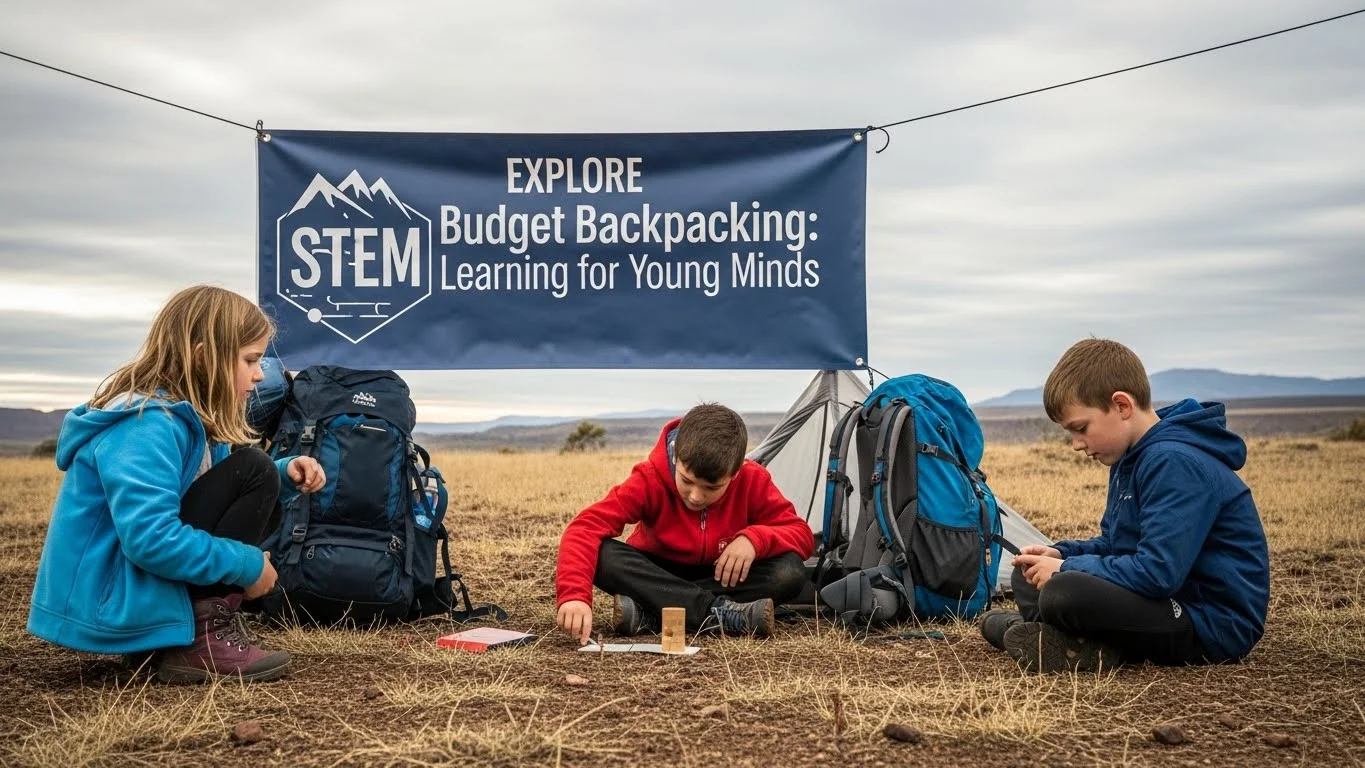
Budget backpacking opens up a world of adventure while offering invaluable learning experiences. By exploring new places, young minds can engage with STEM concepts in a fun and meaningful way. Read Interesting article: Top Budget Backpacking Tips for Early Language Learning
Understanding Budget Backpacking
Definition of Budget Backpacking
When I first stumbled upon budget backpacking, I felt like I had discovered a hidden gem. It’s an affordable way to travel, where the focus is on experiencing the world without breaking the bank. This style of travel encourages flexibility and spontaneity, allowing us to explore diverse environments, cultures, and educational opportunities. It usually involves traveling with minimal gear, staying in budget accommodations like hostels or campsites, and often includes self-catering or eating at local markets. For me, the essence of budget backpacking lies in the journey rather than the destination, making every moment an adventure.
Benefits of Backpacking for Young Minds
Backpacking isn’t just about seeing new places; it’s a fantastic way for young minds to grow. I’ve noticed that traveling on a budget often puts us in situations that challenge our problem-solving skills. Whether it’s navigating public transportation in a foreign city, communicating with locals, or planning our itineraries, we learn to think critically and adapt to new environments. These experiences can foster independence and resilience, especially in children who might be used to more structured environments. I believe that each step taken on a backpacking journey can nurture curiosity, creativity, and confidence in young travelers.
STEM Learning Through Travel
What is STEM Learning?
STEM stands for Science, Technology, Engineering, and Mathematics. I’ve found that this educational approach emphasizes hands-on learning and problem-solving, making it perfect for young explorers. Instead of just sitting in a classroom, children can engage with these subjects through real-world applications. For example, while hiking in a national park, kids can learn about ecosystems and biodiversity firsthand, igniting their passion for science. I think integrating travel with STEM learning enhances retention and sparks a lifelong love for these subjects.
The Importance of STEM Education for Children
In today’s rapidly changing world, I truly believe that a solid foundation in STEM fields is essential. Many careers now require a good understanding of these areas, and fostering an interest in them early can set children on a path to success. I’ve seen firsthand how a hands-on approach can make learning more engaging and relatable for kids. When they solve real problems or explore scientific concepts through travel, the lessons stick with them far beyond the classroom walls.
How Travel Enhances STEM Learning
Traveling can be one of the most effective ways to experience STEM learning in action. I remember visiting a science center while backpacking through a new city and being amazed by how interactive the exhibits were. Kids can experiment with physics concepts by trying out different rides at an amusement park or learn about geology while hiking through a canyon. These immersive experiences allow them to make connections between what they learn in school and the world around them. By engaging with STEM concepts in various environments, children can see the relevance and application of their education in a way that classroom learning sometimes lacks. Read Interesting article: Budget Backpacking with Kids: Fun Play Learning Ideas
Planning Your Budget Backpacking Trip
Setting a Budget for Your Trip
Before embarking on our backpacking adventures, I’ve learned that setting a budget is crucial. It helps to outline potential costs for transportation, food, accommodations, and activities. I like to involve my kids in the planning process, teaching them how to prioritize expenses and make choices based on our budget. This not only prepares them for real-life financial decisions but also makes them more invested in the trip. We often use budgeting apps or spreadsheets to keep track, turning it into a fun family project.
Choosing Destinations with Educational Value
When planning our trips, I always look for destinations that offer rich educational experiences. It’s amazing how many places are both budget-friendly and packed with learning opportunities. For instance, national parks are not only beautiful but also serve as living classrooms where kids can learn about nature, geology, and conservation. I’ve found that these destinations often offer ranger-led programs and workshops that engage children directly with the material.
National Parks and Science Centers
Visiting national parks has become one of our favorite family activities. Each park has unique ecosystems and wildlife, providing endless learning possibilities. Science centers, on the other hand, are fantastic for hands-on experiments and interactive exhibits. I love how they complement our outdoor adventures by reinforcing what we learn in nature through science-focused engagement.
Historical Sites and Museums
Historical sites and museums also offer incredible insights into culture and history. I remember visiting a local museum in a small town and learning about its rich history, which was so different from anything we’d experienced before. These visits help children connect historical events to the present and understand their significance, making learning more meaningful.
Finding Affordable Accommodations
Finding affordable places to stay can be a challenge, but I’ve discovered some great options that allow us to save money while still having a comfortable experience. Hostels are often a go-to for budget backpackers, providing a chance to meet other travelers and share stories. Camping is another fantastic option if you’re looking to immerse yourself in nature while keeping costs low.
Hostels and Camping Options
Hostels have come a long way! Many now offer private rooms and family accommodations, making it a viable choice for families. I love how they foster a sense of community among travelers. Camping, on the other hand, allows us to experience the outdoors fully. Setting up a tent under the stars is an adventure in itself, and it teaches kids valuable skills like teamwork and self-sufficiency.
Staying with Locals: Couchsurfing and Homestays
Staying with locals through platforms like Couchsurfing or opting for homestays has enriched our travel experiences. Not only do we save money, but we also gain unique insights into local cultures and lifestyles. I’ve found that sharing meals with local families often leads to engaging conversations and learning opportunities that you simply can’t get from a hotel stay.
Essential Gear for Budget Backpacking
Backpacks and Packing Essentials
When it comes to budget backpacking, choosing the right backpack is essential. I remember when I first set out, I didn’t think much about this aspect. I quickly learned that a comfortable, well-fitted backpack can make a world of difference. I recommend looking for one that has adjustable straps and enough compartments to keep everything organized. My favorite has a hydration pocket, which is perfect for staying hydrated on the go.
Packing essentials vary depending on the destination and activities planned. I’ve found that packing light saves me a lot of hassle. I usually stick to a few versatile clothing items that can be layered, making it easier to adapt to changing weather. I also pack a compact first-aid kit, a lightweight sleeping bag, and a reliable travel towel. These items have saved me more times than I can count. It’s amazing how much you can simplify your travel experience by packing smartly!
STEM-related Tools and Resources
Incorporating STEM-related tools into our gear has enhanced our travel experience immensely. I often bring along science kits or activity books that align with our destinations. These resources keep my kids engaged and encourage them to explore the science behind what they see. I find that having these tools on hand can turn a simple hike into an educational adventure. For example, bringing a small geology kit encourages kids to identify rocks and minerals as we trek through different terrains.
Field Guides and Educational Kits
Field guides are a treasure trove of information when we’re out exploring. I’ve discovered that having a bird identification book or a plant guide can transform a walk into a fascinating learning experience. My kids love flipping through the pages to see what species they can find, making it a fun scavenger hunt. Educational kits that involve hands-on experiments are also a hit. There are compact kits available for everything from simple chemistry experiments to astronomy activities, allowing us to learn while having fun.
Technology: Tablets and Apps for Learning
While I’m a strong advocate for unplugging during trips, I do use technology to enhance our learning experiences. A tablet loaded with educational apps has proven invaluable for us. Whether it’s a math game or a coding app, my kids can engage with STEM concepts even while on the road. I also love using it to research local attractions or historical sites. For instance, while visiting a historic battlefield, we could pull up videos or articles to deepen our understanding of what we were seeing. Just remember to download content ahead of time, as Wi-Fi can be scarce in some areas!
Engaging STEM Activities on the Road
Science Experiments in Nature
One of the best parts about traveling is the opportunity to conduct spontaneous science experiments right in nature. I recall a trip where we set up a simple water filtration experiment by collecting different soil samples and seeing how effectively they filtered water. It was an engaging way to teach my kids about ecosystems and the importance of clean water. We’ve also done simple physics experiments using sticks and rocks to understand balance and gravity. Nature truly is the best laboratory!
Math Games During Travel
Traveling offers unique opportunities to practice math skills without the kids even realizing they’re learning. I love turning road trips into math games. We often play games like “I Spy” using license plates, where kids add up numbers or figure out how far we’ve traveled by calculating distances. Another fun activity is budgeting for meals. I let them help in deciding how much we can spend, teaching them about addition, subtraction, and even percentages when figuring out tips. It’s entertaining and educational at the same time!
Technology Projects with Local Resources
Whenever we visit a new place, I encourage my kids to find local materials to create something unique. For example, we collected seashells at the beach to create a small art project that highlighted marine biology. We’ve also used leaves, rocks, and other natural materials to create a nature journal, documenting our findings and observations. This hands-on approach not only fosters creativity but also deepens their connection with the environment and the subjects they are learning about.
Safety and Health Considerations
Travel Insurance for Families
When planning our backpacking trips, one of the first things I always check is travel insurance. I remember the first time I traveled without it, and I felt a knot in my stomach the whole time. Having the right insurance can provide peace of mind, especially when traveling with kids. If something unexpected happens, like a medical emergency or a canceled flight, it’s comforting to know we’re covered. I usually look for family-friendly policies that offer comprehensive coverage, including medical expenses, trip cancellations, and lost belongings. It’s a small investment that saves us from potential headaches later on.
Health Precautions While Backpacking
Staying healthy on the road is a priority for us. I’ve learned the hard way that it’s essential to be prepared. Before every trip, I pack a health kit that includes basic medications like pain relievers, allergy medications, and any prescription drugs we might need. I also never leave home without sunscreen and insect repellent, especially when we spend time outdoors. I remember a trip where we underestimated the sun’s strength, and it taught us a valuable lesson about protection. It’s crucial to educate my kids about the importance of staying hydrated and taking breaks, especially during hikes or long travel days.
Safety Tips for Young Travelers
Traveling with kids means we have to be extra vigilant about safety. I often talk to my children about being aware of their surroundings. We come up with safety plans, like what to do if we get separated or how to handle unfamiliar situations. I find it helpful to establish a meeting point in case we lose each other in crowded areas. Carrying a list of important contacts and local emergency numbers is also a good practice. I make sure they know how to identify local authorities like police officers or park rangers, so they feel empowered to seek help if needed. These conversations not only keep them safe but also build their confidence as young travelers.
Incorporating Local Culture and Learning
Connecting with Local Communities
One of the most rewarding aspects of backpacking for us is connecting with local communities. I believe that immersing ourselves in a new culture enriches our travel experience. On a recent trip, we participated in a community event where locals shared their traditions and crafts. It was fascinating to see my kids engage with local artisans and ask questions. I encourage them to learn a few basic phrases in the local language, which often opens doors and creates a warm connection with residents. I’ve noticed that when we show genuine interest in their culture, it fosters incredible interactions that deepen our understanding of the world.
Participating in Workshops and Classes
Whenever we travel, I try to find workshops or classes that allow us to learn something new together. For instance, we once took a cooking class in a small village, where we learned to make traditional dishes. Not only did we get hands-on experience, but we also learned about the history and significance of the ingredients we used. It was a fantastic way for my kids to see the relevance of their culinary science lessons. I think these activities create lasting memories and provide a unique perspective on the culture we’re experiencing.
Volunteering Opportunities for Educational Growth
Another way we’ve incorporated learning into our travels is through volunteering. I remember a trip where we volunteered at a local conservation project. My children learned about the importance of protecting the environment while contributing to something meaningful. Volunteering not only helps local communities but also teaches kids about teamwork and gratitude. It’s a powerful reminder that travel can be about giving back, not just taking in. I recommend looking for family-friendly volunteer opportunities, as they can greatly enhance the educational aspect of our adventures.
Post-Trip Reflection and Learning
Encouraging Kids to Document Their Experiences
After returning from a trip, I always encourage my kids to document their experiences. We often create a scrapbook filled with photos, ticket stubs, and notes about what we learned. It’s a great way for them to reflect on their adventures and solidify all the knowledge they gained along the way. I’ve found that this process of documenting not only fosters creativity but also helps them articulate their thoughts and feelings about the journey. Sometimes, we sit down together and share our favorite moments, which sparks wonderful conversations about what impacted us the most.
How to Discuss and Reflect on Learning
Engaging my children in discussions about our travels is something I cherish. We talk about what they enjoyed, what surprised them, and what they want to learn more about in the future. This reflection helps them connect their experiences to their education. I often ask open-ended questions to encourage deeper thinking. For instance, “What was the most interesting thing you learned about the local culture?” allows them to express their thoughts and feelings. I’ve seen how these conversations enhance their critical thinking skills and foster a love for learning that extends beyond the classroom.
Creating a Travel Journal or Blog
Another fun way to capture our adventures is by creating a travel journal or blog. I’ve found that writing about our experiences helps my kids articulate their thoughts and feelings. They can include drawings, photos, and stories from the trip, which makes it a personal keepsake. I’ve even seen them get excited about sharing their blog posts with friends and family, encouraging them to reflect on their learning while also enhancing their writing skills. It’s a beautiful way to keep the spirit of our travels alive long after we’ve returned home.
Frequently Asked Questions
What is budget backpacking?
Budget backpacking is an affordable way to travel that focuses on experiencing the world without breaking the bank. It encourages flexibility and spontaneity, typically involving minimal gear, budget accommodations like hostels or campsites, and often self-catering or eating at local markets.
How does backpacking benefit young minds?
Backpacking helps young minds grow by challenging their problem-solving skills in diverse environments. It fosters independence and resilience, encouraging curiosity, creativity, and confidence as they navigate new experiences.
What does STEM stand for, and why is it important?
STEM stands for Science, Technology, Engineering, and Mathematics. A solid foundation in STEM fields is essential for success in today’s rapidly changing world, as many careers require a good understanding of these areas.
How does travel enhance STEM learning?
Travel enhances STEM learning by providing immersive experiences where children can engage with real-world applications of scientific concepts. For example, visiting science centers or national parks allows kids to experiment and learn about ecosystems and geology hands-on. Read Interesting article: Affordable Montessori Travel: Budget Backpacking Tips
What are some tips for setting a budget for a backpacking trip?
Setting a budget involves outlining potential costs for transportation, food, accommodations, and activities. Involving children in the planning process teaches them to prioritize expenses and make financial decisions while using budgeting tools to keep track of spending.
What types of accommodations are recommended for budget backpackers?
Recommended accommodations for budget backpackers include hostels and campsites. Hostels often provide affordable lodging and opportunities to meet other travelers, while camping allows for immersion in nature at a lower cost.
What essential gear is needed for budget backpacking?
Essential gear for budget backpacking includes a comfortable, well-fitted backpack, versatile clothing, a first-aid kit, a lightweight sleeping bag, and a reliable travel towel. Incorporating STEM-related tools, like science kits and field guides, can also enhance the experience.
How can families incorporate local culture into their travels?
Families can connect with local cultures by participating in community events, workshops, or volunteering opportunities. Engaging with locals and learning a few basic phrases in the local language can enhance interactions and deepen understanding of the culture.
What are some effective ways to reflect on a trip after returning home?
Effective ways to reflect on a trip include creating a scrapbook, discussing experiences and learnings with family, and writing in a travel journal or blog. This helps solidify knowledge gained and encourages creativity and articulation of thoughts.
What safety considerations should families keep in mind while backpacking?
Families should prioritize health and safety by securing travel insurance, preparing a health kit, and discussing safety plans with children. It’s important to educate kids about being aware of their surroundings and knowing how to seek help if needed.