
Finding the best diaper materials can feel overwhelming, but it’s essential for your baby’s comfort. Let’s dive into the different types of materials and how they impact your little one’s experience. Read Interesting article: The Ultimate Guide to Choosing the Right Diaper Type
Understanding Diaper Materials
What Are Diapers Made Of?
When I first started researching diaper materials, I was surprised by how many different components went into making a simple diaper. Whether you choose disposable or cloth options, understanding what goes into them can really help us make informed decisions. Diapers are primarily made up of layers designed for absorbency, comfort, and protection. The outer layer is usually a waterproof material that keeps moisture inside, while the inner layers are crafted to be soft against your baby’s skin. Then there are the absorbent materials sandwiched in between, which are essential for keeping your baby dry.
The Importance of Diaper Materials for Baby’s Comfort
Comfort is key for our little ones, and the materials we choose can significantly impact their experience. I remember the first time I switched my baby from one brand to another, and I could immediately tell a difference. The right materials can mean fewer rashes, better absorbency, and a more comfortable fit. Babies have sensitive skin, and choosing the wrong type of diaper can lead to discomfort or even skin irritation. That’s why I believe it’s crucial to pay attention to the materials used in diapers. It’s not just about keeping them dry; it’s about ensuring they feel good throughout the day.
Types of Diaper Materials
Disposable Diaper Materials
Disposable diapers are incredibly convenient, especially for busy parents. But what are they made of? Let’s break down the main materials typically found in disposable diapers.
Polypropylene
Polypropylene is a common material used in the outer layer of disposable diapers. It’s lightweight and helps make the diaper waterproof. I’ve noticed that some brands use softer variants of polypropylene, which can feel more gentle against my baby’s skin. It’s great to have options that prioritize comfort!
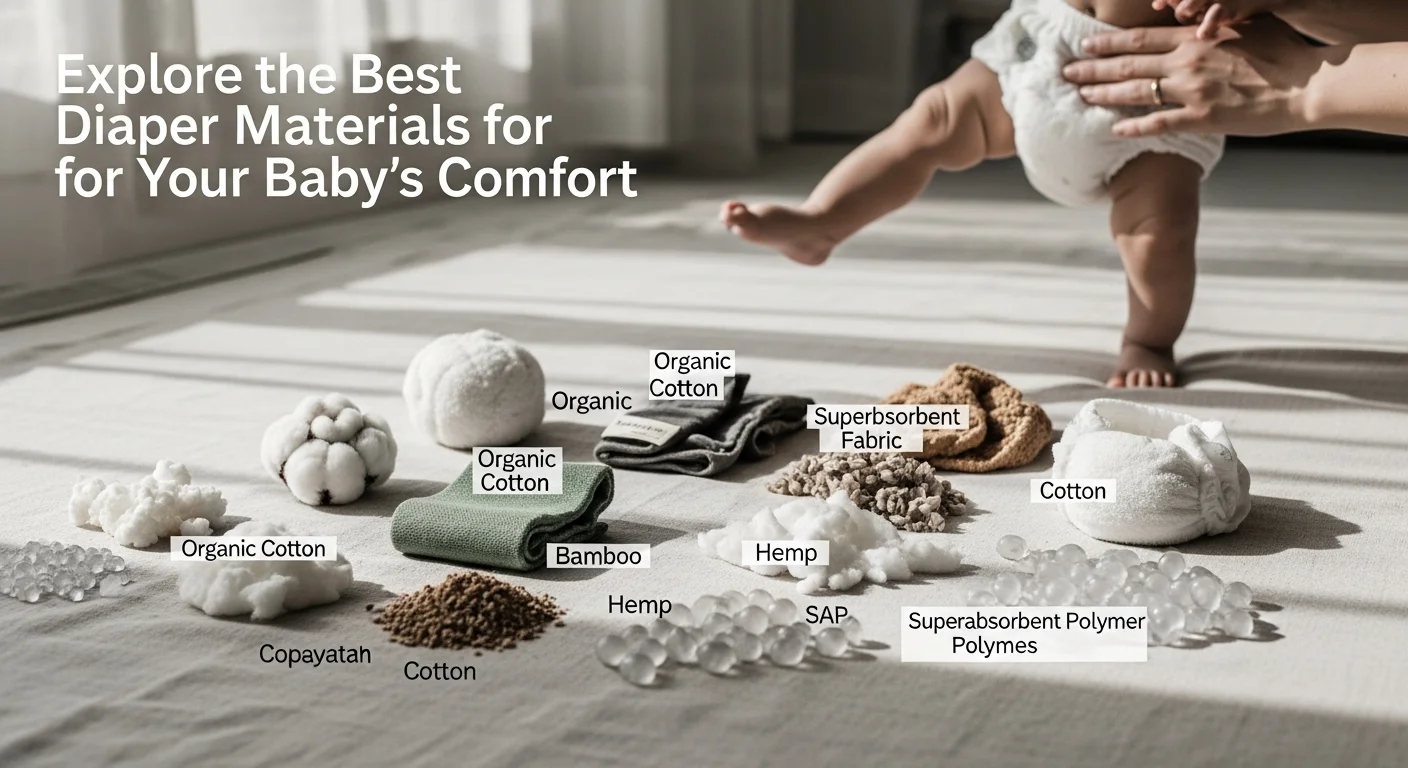
Super Absorbent Polymer (SAP)
This material is a game-changer when it comes to absorbency. SAP can hold many times its weight in moisture, which keeps your baby dry longer. When I switched to diapers with higher SAP content, I found that my baby could go longer between changes without feeling damp. It’s one of the reasons I recommend checking the absorbent core of any diaper you consider.
Fluff Pulp
Fluff pulp is another crucial component of disposable diapers, acting as a cushion layer that absorbs moisture. It’s made from wood pulp, which gives it a soft texture. I remember being amazed at how much fluff pulp could absorb while still feeling so light. Some brands have started using less fluff pulp and more SAP for higher absorbency, but the combination can work wonders.
Cloth Diaper Materials
Cloth diapers are making a comeback, and I can see why. They can be more economical and environmentally friendly in the long run. Let’s look at the various materials used in cloth diapers.
Cotton
Cotton is one of the most common materials for cloth diapers. It’s soft, breathable, and generally hypoallergenic. I love how cotton feels against my baby’s skin. The downside is that cotton tends to retain moisture, so I always make sure to have a good cover to keep my little one dry.
Bamboo
Bamboo is another fantastic option that I discovered during my cloth diaper journey. It’s naturally antibacterial and incredibly absorbent, which is a win-win. I’ve found that bamboo diapers can be a bit pricier, but the comfort and breathability they provide make them worth it.
Hemp
Hemp is a lesser-known option, but it packs a punch when it comes to absorbency. It’s durable and can hold a lot of moisture without feeling heavy. I appreciate that hemp is also a sustainable crop, making it an eco-friendly choice for those of us focused on the environment.
Microfiber
Microfiber is often used in inserts for cloth diapers. It absorbs quickly, which can help prevent leaks. However, I’ve learned through experience that microfiber can become saturated quickly, so I prefer to use it in combination with other materials like cotton or hemp for better performance.
Comfort and Safety Considerations
Breathability of Diaper Materials
When it comes to diapers, breathability is a crucial factor that I learned to prioritize. I remember noticing that some diapers seemed to trap heat, making my baby uncomfortable, especially during hot summer days. Breathable materials allow air to circulate, which can help reduce the risk of rashes and overheating. For instance, I found that cloth diapers made from cotton or bamboo were much more breathable than some disposables I tried. It’s essential to pay attention to how the diaper feels against your baby’s skin. I often check for signs of discomfort, like excessive sweating or redness, which can indicate that the material isn’t breathable enough.
Hypoallergenic Options for Sensitive Skin
Speaking of skin health, I can’t emphasize enough how important hypoallergenic options are for babies with sensitive skin. My little one had a few bouts of diaper rash early on, which led me to explore hypoallergenic diaper choices. I discovered that many disposable brands now offer hypoallergenic options, which are free from fragrances and harsh chemicals. This was a game-changer for us! I also found that cloth diapers made from organic cotton or bamboo are typically gentler on the skin. If your baby has shown any signs of irritation, I recommend trying these materials. It’s reassuring to know that I can choose products that are kinder to their delicate skin. Read Interesting article: Top Hygiene Tips for Newborns: Keeping Your Baby Safe
Absorbency and Leak Protection
Absorbency is another critical aspect that’s closely tied to comfort. I remember feeling a sense of relief when I found brands that boasted high absorbency levels. The last thing I wanted was for my baby to feel wet or uncomfortable. I learned that the right combination of materials can make all the difference. For instance, a diaper that uses a mix of SAP and fluff pulp usually provides excellent leak protection. In my experience, I’ve found that some cloth diapers can also offer fantastic absorbency, especially when layered with inserts made of hemp or bamboo. It’s worth experimenting to find the ideal combination that keeps your baby dry and comfortable for extended periods.
Environmental Impact of Diaper Materials
Disposable vs. Cloth Diapers: A Sustainability Perspective
As I grew more aware of the environmental impact of my choices, I took a closer look at the sustainability of diaper materials. Disposable diapers can take hundreds of years to decompose in landfills, which really made me reconsider my options. I remember the day I learned about the environmental footprint of disposable diapers; it was quite eye-opening. On the other hand, cloth diapers can be reused and washed multiple times, making them a more eco-friendly choice. However, it’s important to factor in the water and energy used to wash them. I personally opted for a combination of both, using disposables for outings and cloth at home. This way, I felt like I was making a responsible choice without sacrificing convenience.
Biodegradable Diaper Options
In my quest for more sustainable options, I stumbled upon biodegradable diapers. These diapers are designed to break down more quickly than traditional disposables, which I found very appealing. They are made from natural materials, which can help reduce environmental impact. I have tried a few brands, and while they can be a bit pricier, I felt they were worth it for the peace of mind they brought. Knowing that I was making a choice that was better for the planet helped ease my mind, especially when I think about the world my child will grow up in. If you’re conscious about the environment, I highly recommend exploring these biodegradable alternatives. Read Interesting article: Essential Hygiene Practices for Newborns: A Complete Guide
Choosing the Right Diaper Material for Your Baby
Factors to Consider When Selecting Diaper Materials
Choosing the right diaper material can feel like a daunting task, but I’ve found that focusing on a few key factors can simplify the process. First, consider your baby’s age and activity level. Infants may have different needs compared to toddlers, especially when it comes to absorbency and fit. I remember switching brands as my baby grew; what worked well for her as a newborn didn’t necessarily work as she became more active. Additionally, think about your lifestyle—if you’re frequently on the go, you might prefer the convenience of disposables, whereas cloth may be more suitable if you’re home most of the time.
Understanding Your Baby’s Skin Sensitivities
It’s also essential to take into account any skin sensitivities your baby may have. I learned this the hard way when my baby developed a rash from a brand that claimed to be gentle. After some trial and error, I started looking for hypoallergenic options and materials that were free from dyes and fragrances. I recommend keeping an eye on how your baby reacts to different brands and adjusting your choices accordingly. A little research can go a long way in ensuring your baby remains comfortable and happy.
Cost vs. Quality of Diaper Materials
Lastly, let’s talk about cost versus quality. I’ve often found myself torn between wanting to save money and wanting the best for my baby. While it can be tempting to go for the cheapest option, I’ve learned that investing in higher-quality materials often pays off in the long run. Diapers that keep my baby dry and comfortable tend to save me from extra laundry, rashes, and even more frequent trips to the store. I recommend looking for deals or bulk purchasing to help manage costs while still prioritizing quality.
Popular Brands and Their Diaper Materials
Top Disposable Diaper Brands
When it comes to disposable diapers, I’ve tried quite a few brands in my quest for the perfect fit and comfort for my baby. Each brand tends to have its unique blend of materials, and I found that some worked better for us than others. For example, Pampers has been a go-to for many parents, including myself. They feature a soft outer layer and great absorbency with a mix of SAP and fluff pulp. I appreciated how they managed to keep my baby dry throughout the night without causing leaks.
Another brand that caught my attention was Huggies. They focus on a snug fit and often use a unique “Double Grip” design. I noticed that this design helped prevent blowouts, which is always a plus in my book! Huggies also offers a line called Little Snugglers, which features softer materials for delicate skin, and I found it worked wonders for my baby’s comfort.
Then there’s Luvs, which are known for being budget-friendly while still offering decent performance. I remember grabbing a pack during a sale and being pleasantly surprised by how well they absorbed moisture. Luvs typically includes a fun design on the diaper too, which made diaper changes a little more enjoyable for both of us!
Lastly, I can’t overlook the eco-conscious brands like Seventh Generation. They emphasize the use of plant-based materials and are free from chlorine bleach and fragrances. I felt good about using these diapers for my baby, knowing they were made with the environment in mind. Even though they are a bit more expensive, I found the comfort and safety they provided were worth it.
Leading Cloth Diaper Brands
Switching gears to cloth diapers, I found that there are several brands out there, each with its unique approach to materials and designs. One of my favorites is BumGenius. Their diapers feature a combination of cotton and microfiber, which provides excellent absorbency without being bulky. I loved how easy they were to adjust as my baby grew, and the variety of colors and patterns made diaper changes a little more fun!
Another reputable brand is FuzziBunz. They focus on a customizable fit with adjustable elastic, which I found to be super helpful. The material is soft yet durable, and I appreciated their use of a quick-dry microfiber insert, which made washing and drying a breeze. I often found myself recommending FuzziBunz to friends who were considering cloth diapering.
Thirsties is another brand I came across that has a solid reputation for quality and comfort. They offer a range of colors and styles, including pocket diapers and all-in-ones. Their materials are often made from organic cotton and hemp, which I found to be incredibly absorbent and gentle on my baby’s skin. Plus, their dual leg gussets helped prevent leaks, which was a huge relief!
Lastly, I can’t forget about Charlie Banana. This brand caught my eye because they offer a hybrid option, allowing parents to use either cloth or disposable inserts. I loved their soft, stretchy materials that provided great comfort for my baby. It’s a fantastic option for parents who want the best of both worlds.
Care and Maintenance of Diaper Materials
Washing Cloth Diapers: Best Practices
After committing to cloth diapers, I quickly learned that proper care is key to maximizing their lifespan and effectiveness. One of the best practices I discovered was to rinse the diapers as soon as I changed them. This helped prevent stains and odor buildup, which can be a challenge with cloth. I would often just toss them in a wet bag until laundry day.
When washing, I recommend using a gentle, fragrance-free detergent to avoid any irritation on my baby’s skin. I found that a hot wash followed by a cold rinse worked wonders. It’s important not to overload the washing machine, as this can prevent the diapers from getting thoroughly cleaned. I learned this the hard way when I noticed lingering odors on my diapers!
After washing, I usually air-dried them in the sun whenever possible. Not only does the sun help to naturally bleach out any stains, but it also helps to kill bacteria. I’ve found that proper drying keeps my diapers in excellent condition for longer.
Storing Disposable Diapers Properly
For disposable diapers, I’ve found that storing them correctly is just as important. I always keep them in a cool, dry place to prevent any damage to the materials. If you buy in bulk, it’s helpful to check for the expiration date on the packaging—yes, they do have one! I learned that using an airtight container can also help keep them fresh and protect them from moisture.
When it comes to organizing, I like to keep different sizes separated, especially as my baby grows. Having a dedicated space in the nursery for each size made it so much easier during diaper changes, which I always appreciated during those chaotic moments!
Expert Tips for Ensuring Diaper Comfort
Signs Your Baby May Be Uncomfortable
As a parent, I’ve learned to pay close attention to my baby’s cues. Babies can’t tell us when they’re uncomfortable, so I’ve had to rely on subtle signs. For instance, if my little one starts fussing more than usual or seems restless during diaper changes, I know something might be off. I also watch for signs like redness or irritation around their diaper area. I remember a time when my baby developed a rash after trying a new brand. It was a wake-up call that reminded me to be observant. Keeping an eye on these signs can help us ensure our babies are comfortable and happy.
Another indication of discomfort can be excessive crying, especially after a diaper change. If I notice my baby crying consistently after I put a new diaper on, it often means the fit isn’t right or the material isn’t suitable for their sensitive skin. I’ve also found that if my baby is constantly tugging at their diaper, it might be too tight or too loose. Adjusting the fit can make a world of difference!
Adjusting Diaper Fit for Maximum Comfort
Getting the diaper fit just right can be a bit of an art, and I’ve had my share of trial and error. I’ve discovered that a snug but not too tight fit is crucial. The diaper should sit comfortably around my baby’s waist without digging into their skin. I often check the leg openings to make sure there’s no gaping, which can lead to leaks. If I can fit two fingers comfortably between the diaper and my baby’s skin, I know it’s just right.
When trying new diapers, I recommend doing a little test run. I often keep an eye on the fit for the first few hours after putting a new diaper on. If it seems to shift or bunch up, I adjust it or consider switching brands. Some brands have adjustable tabs that I’ve found to be incredibly helpful in achieving a perfect fit. It’s all about finding what works best for our little ones!
Final Thoughts
Choosing the right diaper materials is a journey filled with discoveries and adjustments. Each baby is unique, and what works for one might not work for another. I feel that being informed about the materials and their impact on comfort can help us make better choices for our little ones. From my experience, it’s essential to stay observant, flexible, and willing to experiment with different brands and types of diapers. Whether you opt for disposable or cloth, focusing on comfort, safety, and sustainability can lead to happier diapering days. Remember, we’re all in this together, and every parent’s experience adds to our collective knowledge. Let’s keep supporting each other in finding what’s best for our babies!
Frequently Asked Questions
What materials are disposable diapers typically made of?
Disposable diapers are generally made of polypropylene for the outer layer, super absorbent polymer (SAP) for moisture retention, and fluff pulp as a cushioning layer. These components work together to provide absorbency, comfort, and protection.
Why is the choice of diaper materials important for my baby’s comfort?
The materials used in diapers can significantly impact a baby’s comfort by affecting absorbency, fit, and the likelihood of skin irritation. Choosing the right materials can help prevent rashes and ensure a comfortable experience for your baby.
What are some common materials used in cloth diapers?
Common materials used in cloth diapers include cotton, bamboo, hemp, and microfiber. Each material has its benefits, such as breathability, absorbency, and hypoallergenic properties.
What should I consider when selecting diaper materials for my baby?
When selecting diaper materials, consider your baby’s age, activity level, skin sensitivities, and your lifestyle. Each of these factors can influence the type of diaper that will work best for your baby.
How can I ensure the diaper I choose is breathable?
To ensure breathability, look for diapers made from materials known for air circulation, such as cotton or bamboo. Monitoring for signs of discomfort, like excessive sweating or redness, can also indicate whether the diaper is breathable enough.
What are hypoallergenic diaper options?
Hypoallergenic diaper options are designed for babies with sensitive skin and are typically free from fragrances and harsh chemicals. Many disposable brands now offer hypoallergenic choices, and cloth diapers made from organic cotton or bamboo are also often gentler on the skin.
What are biodegradable diaper options?
Biodegradable diapers are designed to break down more quickly than traditional disposables and are made from natural materials. They are an appealing option for environmentally conscious parents looking to reduce their ecological footprint.
How should I care for cloth diapers to maximize their lifespan?
To care for cloth diapers, rinse them immediately after use to prevent stains, use a gentle, fragrance-free detergent, and wash with hot water followed by a cold rinse. Air-drying in the sun can also help keep them in excellent condition.
What signs might indicate my baby is uncomfortable in their diaper?
Signs of discomfort in a diaper may include fussiness, excessive crying, redness or irritation around the diaper area, and tugging at the diaper. Observing these cues can help ensure your baby remains comfortable.
How can I adjust the fit of a diaper for maximum comfort?
To adjust the fit of a diaper, ensure it sits snugly but not too tightly around the waist and check that the leg openings don’t gap. If the diaper shifts or bunches, consider adjusting it or trying a different brand for a better fit.