
STEM education is evolving rapidly, and 2024 promises to bring exciting advancements. As we explore the latest trends, we’ll uncover how these changes can shape our kids’ learning experiences and prepare them for the future. Top 5 STEM Trends Transforming Children’s Education in 2024 highlights some of the most significant shifts we can expect.
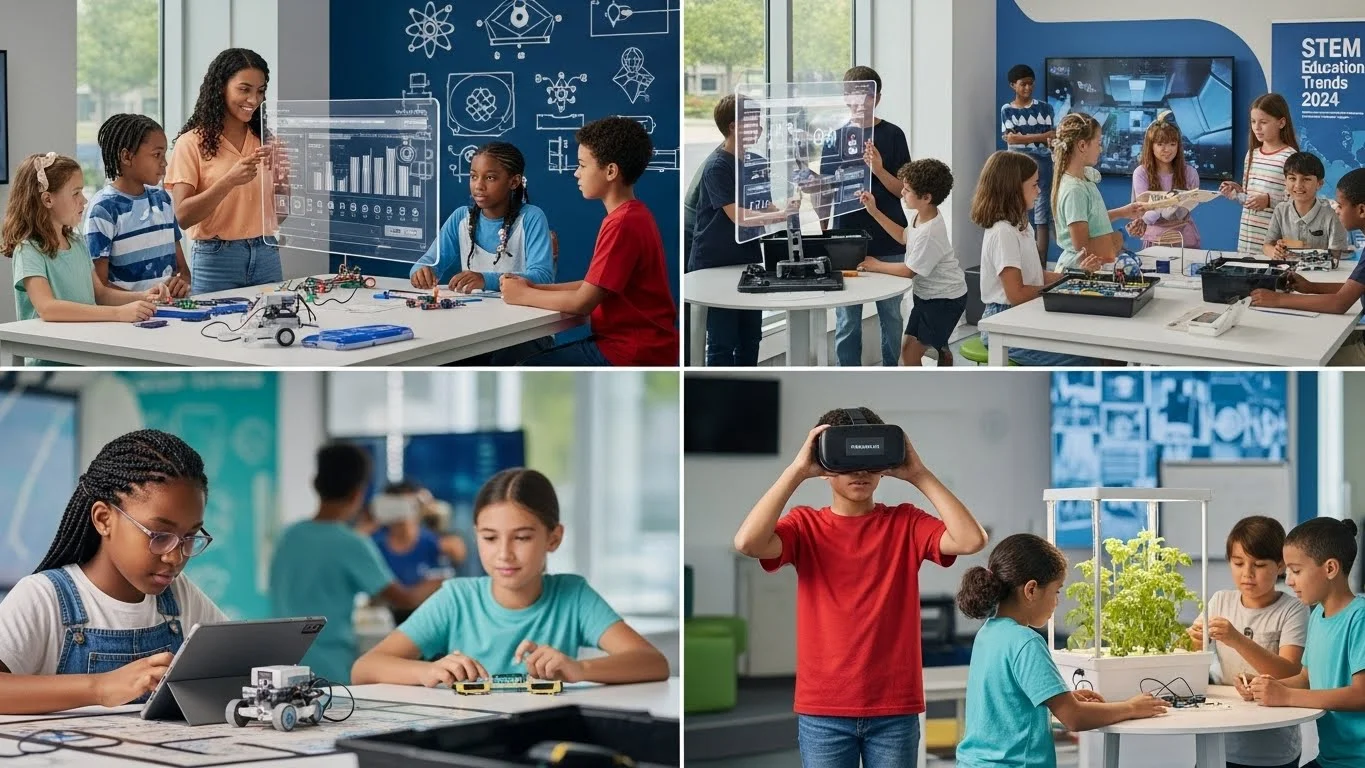
Overview of STEM Education in 2024
Definition of STEM Education
STEM stands for Science, Technology, Engineering, and Mathematics. It’s an educational approach that integrates these disciplines into a cohesive learning paradigm. I’ve seen firsthand how this approach encourages kids to think critically, solve problems, and collaborate effectively. It’s not just about memorizing facts; it’s about understanding how these subjects relate to the world around us. I remember when my child worked on a group project that combined physics and engineering—watching them apply what they learned in real-time was eye-opening.
Importance of STEM for Kids
In today’s technology-driven society, STEM education is more vital than ever. I believe that equipping our kids with STEM skills prepares them for future challenges and opportunities. These subjects foster creativity and innovation, essential traits in any career path. I’ve noticed that kids engaged in STEM activities often develop a passion for learning, as they see immediate applications for their knowledge. Additionally, STEM education promotes teamwork and communication—skills that are crucial in any field. As I reflect on the importance of STEM, I feel excited about the doors it opens for our children.
Current Trends in STEM Education
Incorporating Artificial Intelligence
Artificial Intelligence (AI) is making waves in education, and I think it’s a trend we can’t ignore. In 2024, we’re seeing more educational tools that use AI to personalize learning experiences for kids. For instance, I’ve tried platforms where AI adapts the curriculum based on a child’s progress, making learning more effective and engaging. This technology can identify areas where a student struggles and offer resources tailored to their needs. It’s like having a personal tutor available 24/7, and I find that incredibly exciting!
Hands-On Learning and Maker Spaces
Hands-on learning has always been a favorite of mine, especially when it comes to STEM. In 2024, more schools are establishing maker spaces—creative environments where kids can tinker, build, and experiment. I remember visiting a local school that had set up a maker space, filled with 3D printers, robotics kits, and art supplies. Kids were not just learning theories; they were applying what they learned in real projects. I believe these spaces ignite curiosity and foster innovation, and they are essential for nurturing the next generation of problem solvers.
Project-Based Learning Approaches
Project-based learning (PBL) is another key trend I’ve noticed gaining traction. In this approach, students engage in real-world projects that require critical thinking and collaboration. I’ve seen how my child and their peers thrive when they can connect their learning to tangible outcomes. For example, a project where they designed a sustainable garden not only taught them about biology and ecology but also about teamwork and perseverance. PBL encourages kids to take charge of their education, which I believe is incredibly empowering. Read Interesting article: Empowering Parents: Advocacy Tips for Special Education
Emphasis on Coding and Robotics
The emphasis on coding and robotics in education continues to grow. In 2024, we’re seeing more kids getting involved in programming at younger ages. I’ve introduced my child to simple coding apps, and it’s fascinating to watch them create their own games. Schools are also integrating robotics into the curriculum, allowing students to build and program robots. I feel that these skills are fundamental for the future job market, and it’s exciting to see kids develop a foundation in technology that will serve them well.
The trends in STEM education in 2024 are not just shaping how kids learn; they are redefining what it means to be a learner. As I look forward to the future, I’m hopeful that these innovations will lead to even more engaging and enriching educational experiences for our children.
Popular STEM Programs and Initiatives
After-School STEM Clubs
After-school STEM clubs have become a hotbed for creativity and learning. I’ve seen how these clubs not only provide a space for kids to explore their interests but also foster a sense of community. My child joined an after-school robotics club where they collaborated with peers to build and program robots for competitions. Watching them work together, sharing ideas, and troubleshooting problems was inspiring. These clubs often offer hands-on projects that might not be possible during regular class hours, allowing kids to dive deeper into subjects they’re passionate about. I believe these experiences can cultivate a love for STEM that stays with them for years to come.
Online STEM Learning Platforms
Online STEM learning platforms have exploded in popularity, and I can see why. They provide a wealth of resources that kids can explore at their own pace. I remember when my child discovered a platform with interactive coding exercises. They were so engaged that they spent hours learning new concepts and building projects. These platforms often include gamified elements, which make learning fun and rewarding. I think the accessibility of these resources means that kids from various backgrounds can find something that resonates with them. As we move further into 2024, I’m excited to see how these online tools continue to evolve and support STEM education. Read Interesting article: Exploring the World: Travel Tips for Special Needs Education
Summer STEM Camps
Summer STEM camps have become a fantastic way for kids to immerse themselves in science, technology, engineering, and math during their break from school. I remember signing my child up for a week-long camp focused on environmental science. They engaged in hands-on experiments, field trips, and collaborative projects, all while making new friends. These camps not only reinforce what they learn in school but also allow them to explore new interests in a fun and relaxed environment. I truly believe that summer camps can spark a lifelong passion for STEM, as kids have the freedom to experiment and discover without the pressures of grades.
Role of Technology in STEM Learning
Virtual Reality (VR) and Augmented Reality (AR) in Education
Virtual Reality (VR) and Augmented Reality (AR) are transforming the educational landscape. I’ve experienced how these technologies can bring abstract concepts to life. For instance, I remember visiting a science museum where my child stepped into a VR simulation of a human heart. They were able to explore its chambers and learn about blood flow in a way that was engaging and memorable. In classrooms, AR can overlay digital information onto the physical world, making learning more interactive. I feel that these tools can deepen understanding and make complex subjects much more approachable for kids.
Gamification of Learning
Gamification has made its way into STEM education, and it’s a trend I wholeheartedly support. By incorporating game-like elements into lessons, educators can increase motivation and engagement. I’ve seen this work wonders in my own home when my child played educational games that challenged them to solve math problems or scientific puzzles to earn rewards. These experiences often feel less like traditional learning and more like an exciting adventure. I believe that turning learning into a game can help kids develop a growth mindset, allowing them to embrace challenges and learn from mistakes without fear.
Mobile Apps for STEM Education
Mobile apps are another powerful tool in the realm of STEM education. With the convenience of smartphones and tablets, kids can access a plethora of educational content wherever they are. I’ve downloaded a few coding apps for my child, and they’ve been able to learn programming fundamentals through interactive puzzles and challenges. The flexibility of mobile learning means that kids can explore STEM topics during downtime, like while waiting for an appointment or on a car ride. I think this on-the-go learning is vital in helping kids stay engaged with STEM concepts outside of the classroom.
Benefits of STEM Education for Kids
Enhancing Critical Thinking Skills
One of the most significant benefits of STEM education is the enhancement of critical thinking skills. I’ve noticed that kids engaged in STEM activities often learn to analyze situations and think on their feet. For example, when my child encountered a problem during a science experiment, they had to assess the situation, brainstorm solutions, and test different approaches. This kind of problem-solving fosters resilience and adaptability—qualities that are essential in life. I believe that by encouraging kids to tackle complex challenges, we’re equipping them with the tools they need to navigate an ever-changing world.
Encouraging Creativity and Innovation
STEM education naturally encourages creativity and innovation. I’ve seen how kids are inspired to think outside the box when they’re given the freedom to explore and create. In one project, my child designed a prototype for an eco-friendly product, and it was amazing to see their imaginative ideas come to life. This creative process is crucial, as it helps cultivate a mindset that embraces experimentation and new ideas. I feel that empowering kids to innovate in STEM can lead to breakthroughs that benefit society as a whole.
Preparing for Future Careers
Finally, STEM education is pivotal in preparing kids for future careers. As technology continues to advance, the demand for STEM professionals is growing. I often remind my child that many of the jobs they might pursue in the future will require a solid foundation in these subjects. By engaging in STEM experiences now, they’re not just learning— they’re building a skill set that will be invaluable in the job market. I believe that investing in STEM education today will open doors to exciting career opportunities for our children tomorrow.
Challenges in Implementing STEM Education
Lack of Resources and Funding
One of the biggest hurdles we face in STEM education is the lack of resources and funding. I’ve seen schools struggle to provide the necessary tools and materials for effective STEM programs. For instance, when my child’s school wanted to implement a new robotics curriculum, they faced budget constraints that delayed the project. It made me realize how critical funding is to foster innovation and provide quality education. Without proper resources—like updated technology, lab equipment, and even basic supplies—teachers can find it challenging to create engaging learning experiences. I believe that advocating for funding in STEM education is crucial for ensuring that all kids have access to these vital learning opportunities.
Need for Trained Educators
Another challenge is the need for trained educators who are comfortable and confident in teaching STEM subjects. I’ve spoken to teachers who want to incorporate more hands-on learning but feel underprepared to do so. It’s not just about knowing the content; they need to have the skills to inspire and engage students effectively. I remember attending a workshop where we discussed the importance of professional development for teachers. Investing in training programs can equip educators with the latest teaching strategies and tools. I genuinely believe that when teachers feel supported and knowledgeable, they can create a more dynamic and interactive learning environment, helping students thrive in STEM.
Access and Equity Issues
Access and equity are significant concerns in STEM education. I’ve noticed disparities in resources available to different schools, particularly between urban and rural areas. Some kids have access to advanced technology and extracurricular STEM programs, while others are left behind. This inequality can limit opportunities for many bright young minds. I remember volunteering at a local community center, where we tried to bridge this gap by offering free coding workshops for kids who might not otherwise have access. It was heartwarming to see their excitement as they learned something new. I feel that we need to work together as a community to ensure all children have equal opportunities to explore and excel in STEM, regardless of their background.
Parental Involvement in STEM Education
Supporting STEM Learning at Home
As parents, we play a vital role in supporting our children’s STEM education. From my experience, incorporating STEM-related activities at home can significantly enhance what they learn in school. I’ve started simple projects with my child, like building a volcano using baking soda and vinegar. Not only was it fun, but it also sparked discussions about chemical reactions and scientific principles. I believe that creating a STEM-friendly environment at home encourages curiosity and a love for learning. Whether it’s through educational apps, science kits, or even visits to science museums, I’ve found that actively participating in STEM projects fosters a deeper understanding and appreciation for these subjects.
Engaging in School STEM Activities
Getting involved in school STEM activities can also make a big difference. I remember when my child’s school hosted a STEM night, where parents were encouraged to participate in different stations focused on science experiments, engineering challenges, and coding activities. Being there and collaborating with other families not only allowed me to connect with my child’s interests but also to meet other parents and teachers who share a passion for STEM. I think these events are essential for building a supportive community around STEM education. By showing our support, we can help cultivate an environment where kids feel excited about learning and exploring new concepts.
Future Predictions for STEM Education Beyond 2024
Potential Innovations on the Horizon
As we look ahead, I can’t help but wonder about the potential innovations that might shape STEM education beyond 2024. Technology is advancing rapidly, and I believe that we’ll see even more immersive learning experiences, perhaps through enhanced VR and AR applications. Imagine a classroom where students can virtually visit distant planets, explore the human body, or walk through historical events! I think these innovations could transform how kids engage with complex subjects, making them more tangible and relatable. I’m excited to see how educators will harness these technologies to create richer educational experiences.
Shifting Educational Policies
We may also witness shifting educational policies that prioritize STEM education even more. I’ve noticed a growing awareness among policymakers about the importance of preparing future generations for careers in science and technology. As discussions around STEM funding and curriculum development continue, I believe we’ll see more initiatives designed to support schools in integrating STEM effectively. I think that as parents and community members, we can advocate for these changes by voicing our support for strong STEM programs in our local schools.
Global Trends in STEM Education
Finally, I believe that global trends will influence how we approach STEM education in the coming years. Countries around the world are investing heavily in their STEM programs, and it’s inspiring to see different educational models emerge. For instance, Finland’s education system emphasizes hands-on learning and collaboration, which has shown impressive results. I think we can learn a lot from these international approaches and adapt them to our own educational contexts. By embracing a global perspective, we can enrich our kids’ learning experiences and prepare them for a world that is increasingly interconnected.
Final Thoughts
Looking back at the evolution of STEM education, I’m genuinely thrilled about where we’re headed. It’s clear that the innovations we’re witnessing are not just passing trends; they are reshaping the educational landscape for future generations. I believe that by embracing these advancements, we’re creating a more dynamic and engaging environment for our children to learn and grow.
One of the most exciting aspects is how our approach to teaching is becoming more holistic. I’ve noticed that as schools begin to integrate various subjects and technologies in creative ways, students are not only acquiring knowledge but also developing essential skills such as collaboration, communication, and critical thinking. These skills are increasingly vital in our interconnected world, and I feel fortunate that my child is part of this transformative era in education.
As we support our kids in their STEM journeys, I think it’s essential to maintain a balance between structured learning and exploration. I’ve found that when kids are given the freedom to experiment and explore their interests, they often surprise us with their creativity and passion. Encouraging them to pursue their curiosities can lead to unexpected and exciting discoveries that go beyond the classroom. For me, fostering a sense of wonder is just as important as the academic skills they are developing.
Moreover, the role of parents in this process cannot be understated. By actively engaging in STEM activities, whether it’s through supporting school initiatives or creating learning opportunities at home, we can help our children see the relevance of STEM in their everyday lives. I’ve witnessed how these shared experiences strengthen our bond and create lasting memories while instilling a love for learning that lasts a lifetime.
I also feel a sense of responsibility to advocate for equitable access to STEM education. The disparities that exist today should motivate us to work collectively towards change. It’s a reminder that every child, regardless of their background, deserves the opportunity to explore and excel in STEM fields. I believe that by fostering inclusivity and supporting initiatives that aim to bridge these gaps, we can ensure that all kids have a chance to thrive in this exciting future.
As we look to the future, I’m optimistic that the world of STEM will continue to evolve, presenting new challenges and opportunities. I encourage all parents, educators, and community members to stay engaged and informed about these changes. After all, we are the ones who will help pave the way for the next generation of innovators, problem solvers, and thinkers. I believe that our involvement today will shape a brighter, more innovative tomorrow for our children and the world.
In closing, I feel grateful for the advancements in STEM education and the potential they bring. Let’s continue to explore, support, and celebrate the amazing journey our kids are on as they navigate the world of science, technology, engineering, and mathematics. Together, we can inspire them to dream big and reach for the stars.
Frequently Asked Questions
What does STEM stand for?
STEM stands for Science, Technology, Engineering, and Mathematics. It is an educational approach that integrates these disciplines into a cohesive learning paradigm.
Why is STEM education important for kids?
STEM education is vital as it equips kids with essential skills for future challenges and opportunities. It fosters creativity, innovation, teamwork, and communication—traits crucial in any career path.
What are some current trends in STEM education for 2024?
Current trends in STEM education for 2024 include incorporating Artificial Intelligence to personalize learning, establishing hands-on learning and maker spaces, project-based learning approaches, and emphasizing coding and robotics.
How do after-school STEM clubs benefit children?
After-school STEM clubs provide a space for kids to explore their interests creatively and foster a sense of community. They offer hands-on projects and collaborative opportunities that may not be available during regular class hours.
What role does technology play in STEM learning?
Technology enhances STEM learning through tools like Virtual Reality (VR), Augmented Reality (AR), and gamified learning, making complex subjects more interactive and engaging for kids.
How can parents support their children’s STEM education at home?
Parents can support STEM education by incorporating STEM-related activities at home, such as science projects, educational apps, and visits to science museums, thus fostering curiosity and a love for learning.
What challenges exist in implementing STEM education?
Challenges in implementing STEM education include lack of resources and funding, the need for trained educators, and access and equity issues that limit opportunities for some students.
What benefits does STEM education provide for critical thinking skills?
STEM education enhances critical thinking skills by encouraging kids to analyze situations, brainstorm solutions, and test various approaches when faced with problems, fostering resilience and adaptability.
What future innovations are anticipated in STEM education beyond 2024?
Future innovations in STEM education may include enhanced VR and AR applications for immersive learning experiences, as well as shifting educational policies that prioritize STEM integration in schools.
How can communities ensure equitable access to STEM education?
Communities can advocate for equitable access to STEM education by supporting initiatives that bridge resource gaps and ensuring that all children, regardless of background, have opportunities to explore and excel in STEM fields.