
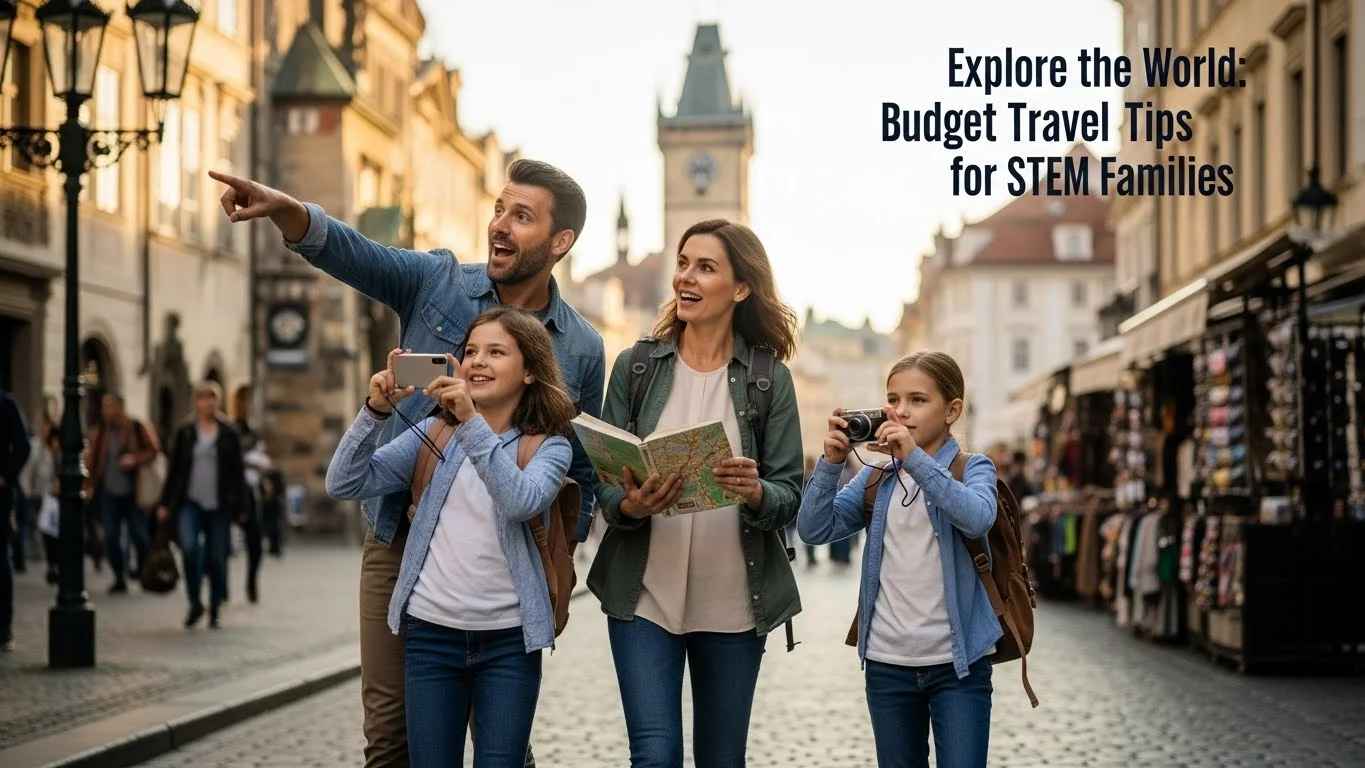
Traveling as a STEM family on a budget can be an incredible adventure filled with learning and bonding experiences. Let’s dive into how we can make this journey both memorable and affordable! Read Interesting article: Top Budget Travel Tips for Families with Learning Disabilities
Understanding Budget Travel for STEM Families
Why STEM Families Should Travel
As a STEM family, I believe that traveling opens up a world of possibilities for learning and growth. There’s something magical about exploring new places, cultures, and ideas together. When we travel, we bring the concepts we’ve learned in school to life. For instance, visiting a science museum or a national park allows us to see firsthand the principles of biology, physics, and chemistry in action. I remember when my family visited the Grand Canyon; standing on the rim, I felt the true scale of geological processes that we had studied in textbooks.
Moreover, travel can strengthen family bonds. The shared experiences, whether it’s hiking in a national park or experimenting with local cuisine, create lasting memories. I often find that the conversations we have while traveling, discussing what we see and how it relates to our interests in science and technology, are some of the most enriching moments we share. Traveling also encourages curiosity and exploration, key elements of the STEM mindset.
Benefits of Budget Travel
Budget travel might seem daunting at first, but it has many benefits that can enhance your family’s experience. For one, it encourages creativity and resourcefulness. I’ve learned to find innovative ways to save money while still enjoying amazing experiences. This often means discovering local eateries rather than dining at tourist traps or finding free activities that are just as enriching as paid attractions. Read Interesting article: Top Budget Travel Tips for Low-Sugar Diets
Traveling on a budget also teaches valuable life skills to kids. Understanding how to plan a trip, manage expenses, and make choices based on priorities can bolster their problem-solving abilities and financial literacy. In our case, planning our itinerary together has become a fun family activity where everyone contributes ideas based on our interests and budget constraints.
Additionally, budget travel often leads to more authentic experiences. We’ve found that when we opt for less touristy destinations, we get to interact more with locals, learn their stories, and immerse ourselves in their communities. This has provided us with unique learning opportunities that we wouldn’t have experienced otherwise.
Planning Your Budget Travel Adventure
Setting a Travel Budget
Setting a budget for your trip is crucial and can be a fun process. I usually sit down with my family and we discuss how much we can realistically spend. We look at all potential expenses, including transportation, accommodation, food, and activities. I recommend using a budgeting app or a simple spreadsheet to keep track of everything. This not only helps in managing expenses but also creates excitement as we see our plan taking shape.
Once we have a figure in mind, we prioritize our spending. For instance, if we’re traveling to visit a science fair, we might decide to spend a bit more on tickets while saving on meals by packing snacks or choosing picnic lunches. I’ve learned that being flexible with our plans allows us to take advantage of last-minute deals, like discounted museum tickets or local workshops.
Choosing the Right Destinations for STEM Learning
When it comes to selecting a destination, it’s important to consider places that have a strong STEM focus. I’ve found that places with rich natural resources, vibrant scientific communities, or historical significance in technology often provide the best experiences. For example, visiting places like Washington D.C. not only exposes us to amazing museums but also to the history of science and technology in our nation.
Another great option is national parks, which offer stunning landscapes and numerous opportunities for learning about ecology, geology, and conservation. I remember a trip we took to Yellowstone, where we learned about geothermal features and wildlife management, combining fun with education. This kind of destination keeps everyone engaged and excited about the journey.
Researching Affordable Travel Options
Research is key to finding affordable travel options. I usually start by looking for deals on flights and accommodations. Websites like Skyscanner and Google Flights help me compare prices and find the best times to travel. Flexibility with our travel dates can lead to significant savings, so I try to keep an open mind about when we can go.
For accommodations, I often explore alternatives to hotels. Renting a vacation home or using platforms like Airbnb can save us money and give us a home-like atmosphere. Cooking some of our meals can also be a fun family activity, allowing us to try local ingredients and recipes. I’ve found that sharing accommodations with other families can also be a great way to cut costs while adding to the fun with new friends!
Best Budget Travel Destinations for STEM Exploration
National Parks and Outdoor Activities
One of my favorite types of budget-friendly adventures is exploring national parks. These natural wonders not only provide breathtaking views but also serve as living laboratories for STEM learning. I’ve taken my family to several national parks, and each time, we’ve come away with a deeper appreciation for the environment and how it works.
For example, on our visit to the Grand Teton National Park, we hiked up to a viewpoint and were amazed by the geological features created by glacial activity. We spent our time identifying different rock formations, learning about the ecosystem, and even spotting wildlife. National parks often offer ranger-led programs that are both fun and educational, covering topics like animal tracking, plant identification, and conservation efforts. I highly recommend checking the park’s schedule ahead of time to see what programs are available during your visit.
Moreover, many parks have junior ranger programs that engage kids in learning about the park’s natural and cultural history. Completing the activities gives them a sense of accomplishment and a badge to take home, which makes for a perfect souvenir. These experiences allow us to bond as a family while also nurturing our love for science and nature.
Science Museums and Educational Centers
Science museums are another great destination for STEM exploration on a budget. They often have special family days with reduced admission fees, and some even offer free entry on certain days of the month. Last summer, we visited the California Science Center in Los Angeles, where we marveled at the Space Shuttle Endeavour and participated in hands-on exhibits.
What I love about science centers is that they make learning interactive and fun. From experimenting with physics at the hands-on exhibits to exploring biology in the living classroom, there’s something for everyone. We spent hours there, and I noticed how engaged my kids were, asking questions and trying out everything they could. It was wonderful to see them so excited about science, and it sparked some great conversations about topics we had covered at home.
Historic Sites with STEM Relevance
Visiting historic sites with STEM relevance can be incredibly enriching. Not only do they tell the story of our past, but they also highlight significant scientific advancements. I recall a trip we took to Thomas Edison’s home in New Jersey. The guided tour showcased his inventions and how they changed the world. My kids were fascinated by the lightbulb demonstration and how it connected to what they had learned in school about electricity and energy.
Other sites, like the Wright Brothers National Memorial in North Carolina, teach us about aviation and engineering. Standing at the very spot where the first powered flight took place was awe-inspiring. I encourage families to look for local historical sites that have STEM connections related to science, technology, engineering, and mathematics. These sites can provide rich narratives that make history come alive while fostering curiosity.
International Destinations on a Budget
Traveling internationally doesn’t have to break the bank, especially when focusing on budget-friendly STEM destinations. I remember when my family visited Costa Rica, a country known for its biodiversity and commitment to conservation. We managed to find reasonably priced accommodations and enjoyed local food, all while exploring the lush rainforests and stunning volcanoes.
In Costa Rica, we learned about ecosystems, sustainable practices, and even got to participate in a turtle conservation project. The hands-on experience of seeing how scientists protect these incredible creatures was unforgettable. I also found that many countries have educational programs aimed at families, often at little to no cost. By researching beforehand and being flexible with travel dates, you can often find budget deals for flights and accommodations.
Other international destinations worth considering are places like the UK, where we visited the Science Museum in London for a minimal fee. The museum offered free admission to many exhibits, making it easy to explore without spending a fortune. From my experience, planning a trip around educational events or festivals in your chosen destination can enhance the experience and provide unique learning opportunities. Read Interesting article: Essential Play Activities for Toddlers: Budget Travel Tips
Traveling on a Budget: Tips and Tricks
Finding Affordable Accommodations
When it comes to finding affordable places to stay, I’ve learned that flexibility and creativity can go a long way. Instead of always opting for hotels, I enjoy exploring various accommodation options. For instance, I’ve had great success with vacation rentals through platforms like Airbnb or Vrbo, where we can find entire homes or apartments that fit our family size and budget. Having a kitchen not only helps us save money on meals but also allows us to cook together, making it a fun family bonding experience.
Another option I’ve explored is house swapping. This can be a fantastic way to stay somewhere new without the cost. We’ve even swapped homes with families in different states, which gave us a chance to experience a new area through the eyes of locals. Plus, there’s something special about having a home-like setting while traveling. Just be sure to read reviews and communicate with hosts to ensure a smooth experience.
Using Public Transportation Effectively
I remember our first trip to a big city, and the thought of navigating public transportation felt daunting. However, I quickly learned that using buses, trains, or subways can save us a lot of money compared to taxis or rental cars. In fact, I find that public transportation often provides a more authentic experience of the city. I can recall riding the subway in New York City, where my kids were fascinated by the different stops and the bustle of daily commuters.
Before our trips, I usually research the public transportation system of our destination. Many cities offer day passes that allow unlimited travel within a certain timeframe, which helps us explore more without worrying about costs. Plus, it’s an opportunity to teach my kids about maps, schedules, and navigating a new environment, all of which are valuable skills in their STEM toolkit.
Cheap Eats: Budget-Friendly Dining Options
Food can add up quickly, especially when traveling with a family. I’ve found that exploring local markets and street vendors can be a fun and affordable way to eat. Instead of dining at expensive restaurants, we often seek out food trucks or local diners that offer delicious meals at a fraction of the cost. I still remember trying the best tacos from a local stand during our trip to San Diego; it was not only tasty but also an enriching experience as we chatted with the vendor about the ingredients he used.
We also make a habit of packing snacks and light meals for our travels. I’ll prepare sandwiches or trail mix for our day outings, which saves both time and money. Having some food on hand can also be a lifesaver during long travel days. Plus, it gives us the chance to try local ingredients when we do eat out. I encourage families to check out local grocery stores or markets to pick up fresh produce and unique snacks that make our dining experience special without draining our budget.
Free and Low-Cost Activities for Families
One of the best parts about traveling is discovering free or low-cost activities that can be just as enjoyable as pricier attractions. I often look for community events, free museum days, or outdoor festivals happening in the area during our visit. Parks often host educational programs, and many cities have free walking tours led by knowledgeable locals. For example, during our trip to Chicago, we stumbled upon a free concert in a park, which became one of the highlights of our trip.
We also make a point to explore nature wherever we go. Hiking, beachcombing, or simply visiting local parks can provide endless opportunities for exploration and learning without costing a dime. I remember taking a nature walk at a local preserve and finding various plant species; it turned into an impromptu biology lesson as we identified what we saw. I’ve learned that sometimes the most memorable experiences are the simplest ones.
Engaging STEM Activities While Traveling
Hands-On Science Experiments in Nature
While on the road, I love incorporating hands-on STEM activities that connect to our surroundings. For instance, we often bring along a small kit of supplies for simple experiments like creating a DIY volcano using baking soda and vinegar or testing pH levels with litmus paper from a local water source. These activities not only reinforce what we’ve learned at home but also spark new interests based on our experiences in various environments.
During a trip to the beach, we conducted a mini oceanography session by collecting water samples and observing marine life in tide pools. It was amazing to see my kids engaged in scientific inquiry, asking questions, and making observations. This kind of learning is exciting because it’s not confined to a classroom; it’s right there in front of us, and each trip becomes a unique science project.
Visiting Local Science Exhibitions
I always keep an eye out for local science exhibitions or fairs that might be happening during our travels. Some cities host traveling exhibits that showcase fascinating topics in STEM. When we visited Toronto, we stumbled upon a traveling exhibit about space exploration, and my kids were enthralled by the interactive displays. These exhibitions often make learning so engaging that it encourages kids to explore their interests further.
It’s also a wonderful opportunity to meet local experts and broaden our understanding of different scientific fields. I remember my kids excitedly chatting with a scientist about their work, and it inspired them to think about their own future careers in STEM. Such interactions can leave a lasting impact, showing them the possibilities that await in the world of science and technology.
Participating in STEM Workshops and Camps
If our travel schedule allows, I always look for workshops or camps that focus on STEM subjects. Many museums and educational centers offer short programs for families, where kids can dive deeper into specific topics, such as robotics or environmental science. One year, during our summer road trip, we found a local science camp that had a day program focused on engineering concepts, and my kids loved every minute of it.
These workshops not only enhance their skills but also give them a chance to meet other children with similar interests. I think it’s important for kids to see that their passion for science is shared by others, and participating in these activities can be a great way to build confidence and make new friends. Plus, we get to take home new knowledge and skills that we can continue exploring together as a family.
Frequently Asked Questions
Why should STEM families consider traveling together?
Traveling as a STEM family opens up opportunities for learning and growth by allowing families to explore new places, cultures, and ideas together. It brings educational concepts to life, strengthens family bonds, and encourages curiosity and exploration.
What are the benefits of budget travel for families?
Budget travel fosters creativity and resourcefulness, teaches valuable life skills to children, and often leads to more authentic experiences. It allows families to plan together and prioritize spending while exploring local cultures.
How can families set a travel budget effectively?
Families should discuss their spending limits and potential expenses, including transportation, accommodation, food, and activities. Using budgeting apps or spreadsheets can help track expenses and create excitement about the trip planning process.
What types of destinations are best for STEM learning?
Destinations with a strong STEM focus, such as science museums, national parks, and historic sites with STEM relevance, provide enriching experiences. Places like Washington D.C. and various national parks offer opportunities to engage with science and technology in meaningful ways.
What tips can help find affordable travel options?
Researching deals on flights and accommodations, being flexible with travel dates, and exploring alternatives to hotels, such as vacation rentals or house swapping, can significantly reduce costs and enhance the travel experience.
What are some budget-friendly dining options while traveling?
Families can explore local markets, street vendors, and food trucks for affordable meals. Packing snacks and light meals can also save money and time, allowing families to enjoy local ingredients when they do dine out.
How can families engage in free or low-cost activities while traveling?
Families can look for community events, free museum days, or educational programs in parks. Nature walks and exploring local parks can also provide enriching experiences at no cost.
What hands-on STEM activities can families do while traveling?
Families can incorporate hands-on experiments related to their surroundings, such as creating simple science projects with local materials. Conducting observations in nature, like collecting water samples, can turn trips into unique science lessons.
How can families find local science exhibitions during their trips?
Families can research local science exhibitions or fairs happening in their destination cities. These events often showcase engaging STEM topics and provide opportunities to meet experts in various fields.
What benefits do STEM workshops or camps offer during travel?
STEM workshops and camps enhance children’s skills, allow them to meet peers with similar interests, and offer hands-on learning experiences. Participating in these activities can build confidence and provide valuable knowledge to continue exploring as a family.