
Traveling with little ones can be a whirlwind of excitement and challenges, especially when it comes to feeding them. Introducing solid foods on the road adds a new layer of adventure for families. Let’s dive into how to make this experience enjoyable and stress-free! Read Interesting article: Traveling with a Newborn: Formula Feeding Made Easy
Understanding the Transition to Solids
What Are Solid Foods for Babies?
When I first started thinking about introducing solids to my baby, I felt a mix of excitement and confusion. Solid foods are simply any foods that are not liquids or purees, and they provide essential nutrients for growing babies. Typically, solid foods include fruits, vegetables, grains, and proteins. I remember pureeing sweet potatoes and mixing in some rice cereal for my little one. The look of curiosity on their face was priceless! Transitioning to solids is an important milestone, as it can help develop their chewing skills and introduce them to new flavors and textures.
When to Introduce Solids: Age Guidelines
Deciding when to introduce solids can be tricky. Most health experts, including pediatricians, recommend starting solids around six months of age. This was the age I chose for my baby, and it felt right. At this point, babies typically have better head and neck control, can sit up with support, and show interest in food. I recall feeling nervous but also excited as I prepared those first few bites. I found that starting with simple purees made it less intimidating for both of us. Of course, it’s essential to consult your pediatrician for personalized advice, but the six-month mark is a great guideline for many families. Read Interesting article: Complete Guide to Formula Feeding While Backpacking with Baby
Signs Your Baby is Ready for Solids
There are several signs that indicate your baby may be ready for solids. One of the most noticeable signs is when they can sit up with minimal support and have good head control. I remember my baby practically lunging toward our plates during dinner, showing a keen interest in what we were eating. Other signs include the ability to reach for food, showing excitement when they see food, or even mimicking chewing motions with their mouth. I felt a sense of pride when I noticed my baby reacting positively to new tastes. If you observe these signs, it might be time to embark on the solid food adventure together.
Essential Gear for Traveling Families
Portable High Chairs: Options and Recommendations
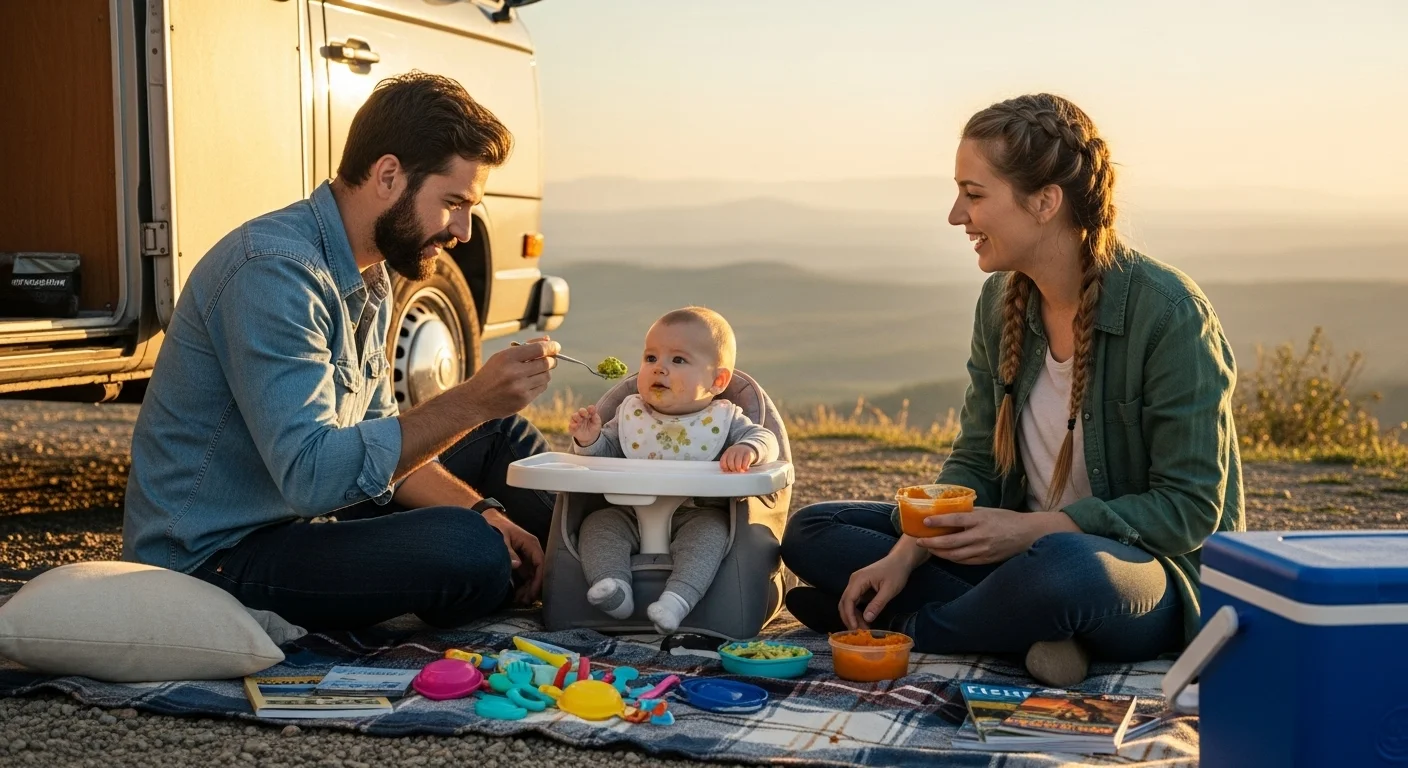
When we first hit the road with our baby, I quickly realized that a portable high chair was a game-changer. I didn’t want to compromise on meal times, especially for my little one. There are several options out there, like travel booster seats or compact high chairs that fold easily. I found a lightweight booster that attached securely to restaurant chairs, allowing my baby to join us at the table. It’s so important for me to keep meal times consistent, even while traveling. I recommend looking for a chair that’s easy to clean and comfortable for your baby, as this can make a world of difference on the go.
Travel-Friendly Utensils and Feeding Supplies
When my baby started solids, I quickly learned that having the right utensils was crucial for feeding on the go. I invested in a set of soft-tipped spoons that were gentle on my baby’s gums, and I always kept a couple of bibs handy to manage spills. I also discovered that spill-proof containers were a blessing for carrying snacks. I remember packing a little cooler with yogurt and fresh fruit for day trips. It was refreshing to see my baby enjoy a nutritious snack without the mess! I recommend looking for utensils and supplies that are BPA-free and easy to clean, as they’ll make your traveling experience smoother.
Best Baby Food Containers for Travel
Finding the right containers for baby food can make life so much easier when traveling. I learned the hard way that not all containers are created equal! I recommend using leak-proof containers that can withstand being tossed around in a diaper bag. I found some fantastic glass jars that kept my homemade purees fresh and safe during our trips. Additionally, consider reusable pouches for snacks, which are perfect for on-the-go feeding. Having everything organized helped me feel less stressed about meal times while traveling, and I could focus more on enjoying our adventures together.
Best Foods for On-the-Go Meals
Nutritious Baby-Friendly Snacks
When we hit the road, I quickly realized that packing nutritious snacks was essential for keeping my little one happy and satisfied. I discovered a variety of baby-friendly snacks that are both healthy and easy to pack. Soft fruits like bananas and avocados became staples for us. They’re not only nutritious but also super easy to prepare—just peel and serve! I remember the first time I packed sliced bananas for a trip; my baby loved them so much that I wished I had packed more.
Another favorite was homemade oatmeal bars. They’re simple to make and can be tailored to include ingredients like mashed bananas or applesauce for sweetness. I found that these bars kept well in a cooler, making them perfect for snacking while driving or during a picnic stop. I also recommend packing some whole-grain crackers or puffs, which are great for little hands to grasp and munch on. Having these nutritious snacks on hand helped me avoid stressful moments when hunger hit unexpectedly.
Homemade Purees: Easy Recipes to Prepare Ahead
One of the joys of traveling with a baby is knowing exactly what they’re eating, and homemade purees are the best way to manage that. I started preparing purees in bulk before our trips. Sweet potatoes, peas, and carrots became my go-to combinations. I loved roasting sweet potatoes and blending them with a little water or breast milk to achieve the right consistency. I found that freezing these purees in ice cube trays was a game-changer. It allowed me to pop out just the right portion size for each meal while on the go.
During our travels, I would simply thaw a few cubes in the morning, and by lunchtime, we had a nutritious meal ready to go. I also experimented with mixing flavors, like combining peas with avocado for a tasty and healthy lunch option. This creativity not only kept my baby engaged with different tastes but also made me feel good about what I was feeding them.
Store-Bought Baby Food: What to Look For
While I loved making homemade purees, there were times when store-bought baby food saved the day. I learned to look for high-quality options that contained organic ingredients and minimal additives. Reading labels became a new habit for me; I focused on products with no added sugars or preservatives. I found some brands that offered pouches with a variety of flavors, which made them a hit during our outings.
When we were out exploring, I would pack a few pouches in the diaper bag for convenience. My baby enjoyed the flavors, and it was such a relief to have something healthy at my fingertips when we were in a pinch. I also appreciated that many of these pouches were designed for on-the-go feeding, featuring easy-to-use spouts that minimized mess. I recommend checking local grocery stores or health food shops for their baby food selections; you might be surprised at the variety available!
Feeding Strategies While Traveling
Establishing a Routine on the Road
One of the most important lessons I learned while traveling with my baby was the value of maintaining a feeding routine, even when we were on the move. I noticed that sticking to a consistent schedule for meal times helped my baby feel secure and less cranky during our travels. We would plan our trips around my baby’s feeding schedule, allowing us to stop for meals at regular intervals.
For example, if we were on a road trip, I made sure to set aside time for a proper meal rather than just grabbing snacks. I found that taking breaks for meals not only helped my baby but also allowed us to stretch our legs and enjoy our surroundings. I remember one trip where we stopped at a scenic park for a picnic—my baby happily munched on purees while watching the ducks, and it became one of our favorite memories.
Tips for Feeding in Restaurants and Cafés
Eating out with a baby can be daunting, but I found that being prepared made all the difference. Whenever we decided to dine in a restaurant, I would call ahead to find out if they had high chairs or if they were accommodating to families. This little step helped ease my anxiety about our dining experience.
When we arrived, I would bring along a favorite bib and my baby’s utensils to keep things familiar. I also learned to ask for simple menu alterations, like steamed vegetables or plain rice, which could be perfect for my little one. I remember one time when I ordered mashed potatoes for my baby; the waiter was more than happy to oblige, and I felt relieved to see my baby enjoying a meal just like us.
Dealing with Picky Eaters While Traveling
As every parent knows, babies can be picky eaters, and traveling can sometimes amplify that. I found that introducing new foods in a relaxed environment helped ease my baby into trying different things. I would often offer small bites of what we were eating, but if my baby refused, I wouldn’t stress. Instead, I would have a few backup snacks on hand that I knew they loved.
During our travels, I learned that it’s okay for babies to have off days when it comes to food. I remember a day when my baby turned their nose up at everything I offered, but I didn’t let it ruin our experience. Instead, I offered some of their favorite snacks, and they eventually came around when they saw us enjoying our meals. The key for me was patience and flexibility, allowing my baby to explore different flavors at their own pace while still ensuring they got enough nutrition.
Travel Destinations and Food Availability
Family-Friendly Destinations with Good Food Options
As we began our adventures as a family, I quickly realized that choosing the right destinations made a huge difference in our feeding experience. Some places are just more accommodating to families with young children. I remember visiting a beach town that had a number of family-friendly restaurants. Not only did they offer high chairs, but many places also had children’s menus that included simple, nutritious options. I found that planning our trips with kid-friendly dining in mind allowed us to enjoy our meals a lot more.
Another favorite spot of ours became the national parks. Many parks have visitor centers with cafes that offer healthy snacks and meals for families. It was a joy to picnic surrounded by nature, with my baby happily munching on avocado toast while we took in the stunning views. I recommend looking up family-friendly destinations beforehand, making sure they have good food options that cater to little ones. It can really enhance your travel experience when you know you have a variety of safe meals available for your baby.
Understanding Local Cuisine: What’s Safe for Babies?
When we ventured into new places, I found it fascinating to explore local cuisine. However, it was essential to understand what foods were safe for my baby. I learned that in some cultures, certain spices or ingredients might not be suitable for little ones. For example, when we traveled to Mexico, I was excited to introduce my baby to fresh avocado and soft tortillas, but I was careful to avoid anything too spicy.
Before trying local dishes, I would often research or ask locals about baby-friendly options. I remember one time in Italy, where fresh pasta was abundant. I ordered a simple pasta with olive oil for my baby, and it was a hit! I felt a wave of relief knowing I was providing something both safe and delicious. If you’re traveling abroad, consider brushing up on the local cuisine before you go to ensure you can find suitable foods for your little one while exploring.
Finding Baby Food in Supermarkets Abroad
One of the best discoveries during our travels was how easy it could be to find baby food in supermarkets, even in foreign countries. I remember walking into a local grocery store in France and being pleasantly surprised by the variety of baby food available. From pureed fruits to organic vegetable mixes, I felt like I hit the jackpot! It was comforting to know that I could quickly stock up on essentials for my baby, giving me peace of mind while we explored.
While traveling, I always kept my eyes open for baby food aisles in supermarkets or local markets. I found that many countries have their own versions of baby food that are both nutritious and affordable. Plus, it was a fun way to experience the culture! If you’re traveling with a baby, I highly recommend checking out local stores for baby food; it can be an adventure in itself.
Health and Safety Considerations
Allergies and Introducing New Foods
Traveling with my baby also meant being extra cautious about food allergies. I remember my pediatrician advising me to introduce new foods one at a time, especially when we were on the road. This way, I could monitor my baby for any potential allergic reactions. I found it helpful to keep a food journal during our trips, noting what my baby ate and how they reacted. This practice not only gave me peace of mind, but it also helped me identify any food sensitivities early on.
While enjoying local cuisines, I was always careful to avoid common allergens. For instance, I made sure that when we tried nut-based snacks, it was under controlled circumstances. I recommend being vigilant and erring on the side of caution, especially in unfamiliar settings. If your baby has already been introduced to a variety of foods at home, it’ll make it easier to navigate new options while traveling.
Maintaining Hygiene While Feeding on the Go
One of the challenges I faced while traveling was keeping everything clean during mealtimes. Babies seem to attract messes like magnets! I learned to always carry sanitizing wipes and hand sanitizer to keep our feeding space as clean as possible. Whenever we stopped for a meal, I would wipe down surfaces before my baby sat down to eat. I also made it a habit to wash my hands and my baby’s hands before meals, especially when dining out.
In restaurants, I would often inquire about the cleanliness of the high chairs and utensils. I remember one instance when I saw a high chair that looked a bit dirty; I kindly asked the staff if they could clean it before we used it. Taking these extra steps really made me feel more comfortable about our eating environment, and it allowed my baby to enjoy their meals without any worries.
Dealing with Food Reactions While Traveling
If I ever noticed my baby having a reaction to a new food while we were away from home, I learned to stay calm and assess the situation. I remember a minor incident where my little one had a bit of a rash after trying a new fruit. I immediately stopped giving that fruit and kept a close eye on them. Knowing what to do in these situations was crucial. I always made sure to have a small first aid kit with allergy medication, just in case.
It’s also helpful to familiarize yourself with the local healthcare options when traveling. I made it a point to know where the nearest hospital or clinic was in case of an emergency. The more prepared you are, the more relaxed you can be, allowing you to enjoy your trip while keeping your baby safe and healthy.
Frequently Asked Questions
What are solid foods for babies?
Solid foods are any foods that are not liquids or purees and provide essential nutrients for growing babies. They typically include fruits, vegetables, grains, and proteins.
When should I introduce solids to my baby?
Most health experts recommend starting solids around six months of age when babies have better head and neck control, can sit up with support, and show interest in food.
What signs indicate that my baby is ready for solids?
Signs that your baby may be ready for solids include sitting up with minimal support, good head control, reaching for food, showing excitement when seeing food, and mimicking chewing motions.
What essential gear do I need for feeding my baby while traveling?
Essential gear includes portable high chairs, travel-friendly utensils like soft-tipped spoons, bibs, spill-proof containers for snacks, and leak-proof baby food containers.
What are some nutritious baby-friendly snacks for travel?
Nutritious baby-friendly snacks include soft fruits like bananas and avocados, homemade oatmeal bars, whole-grain crackers, and puffs that are easy for little hands to grasp.
How can I prepare homemade purees for traveling?
You can prepare homemade purees in bulk, freeze them in ice cube trays for portion control, and thaw them as needed while traveling for nutritious meals on the go.
What should I look for in store-bought baby food?
When choosing store-bought baby food, look for high-quality options with organic ingredients and minimal additives, avoiding products with added sugars or preservatives.
How can I maintain a feeding routine while traveling?
Establishing a consistent feeding schedule helps your baby feel secure. Plan trips around meal times, allowing for proper breaks for meals instead of just grabbing snacks.
What are some tips for feeding in restaurants with a baby?
Call ahead to check for high chairs, bring familiar utensils and bibs, and ask for simple menu alterations like steamed vegetables or plain rice that are suitable for your baby.
How do I deal with food allergies while traveling with my baby?
Introduce new foods one at a time and monitor for allergic reactions. Keep a food journal to note what your baby eats and any reactions, and be cautious with common allergens.