
Every backpacker knows that adventure comes with its share of risks. Understanding first aid essentials can be the difference between a minor mishap and a serious emergency. Let’s dive into the basics every backpacker should know.
Understanding First Aid Basics
What is First Aid?
First aid is the immediate care given to someone who is injured or suddenly ill. It involves a range of techniques and skills designed to preserve life, prevent further injury, and promote recovery. I remember my very first backpacking trip. I was excited and nervous, and I realized that having basic first aid knowledge would empower me. It could mean the difference between a fun hike and a disaster. First aid isn’t just about bandaging wounds; it encompasses everything from assessing a situation to performing CPR. To learn more about essential skills, check out Essential First Aid Tips for Backpacking Adventures.
The Importance of First Aid for Backpackers
When we venture into the great outdoors, we’re often far from medical facilities. I learned this firsthand during a solo trip in the mountains. I twisted my ankle about three miles from the nearest road. Thankfully, I had a first aid kit and some basic knowledge to manage the situation. Understanding first aid is crucial for backpackers because we face unique challenges. We hike on uneven terrain, expose ourselves to weather elements, and sometimes encounter wildlife. All these factors increase the likelihood of injuries from cuts and scrapes to more serious conditions like altitude sickness. Knowing how to respond can maintain our safety and well-being while enjoying nature.
Essential First Aid Supplies for Backpacking
First Aid Kit Components
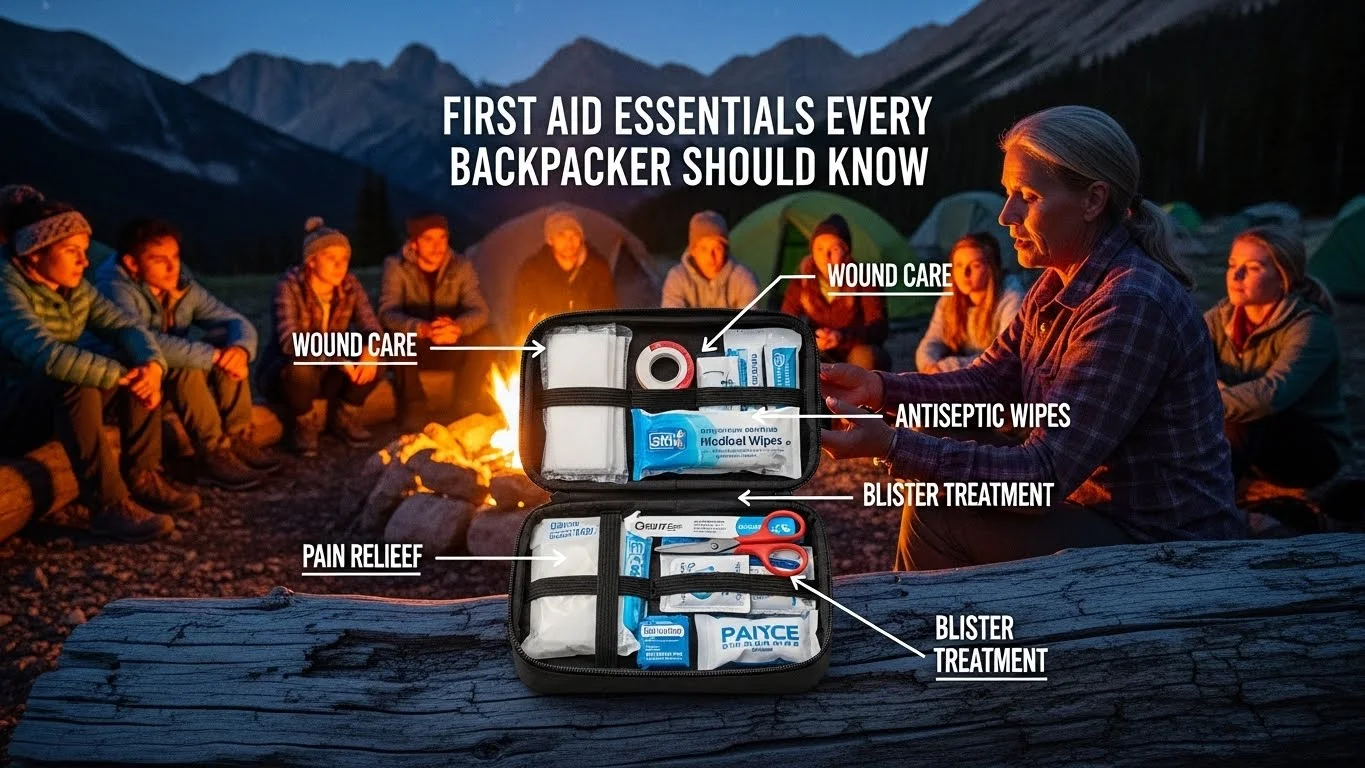
When packing for a backpacking trip, having a well-stocked first aid kit is essential. I’ve learned that not all first aid kits are created equal, so I often customize mine based on the specific needs of my trip. Here’s a breakdown of the must-have items in a backpacker’s first aid kit:
Bandages and Dressings
Bandages are the cornerstone of any first aid kit. I always keep a variety of sizes on hand—from adhesive bandages for small cuts to larger sterile dressings for bigger wounds. It’s surprising how often I’ve needed them. Whether it’s a blister from new boots or a scrape from a fall, having the right bandages can help protect the area and prevent infection.
Antiseptics and Antibiotics
Antiseptic wipes or sprays are crucial for cleaning wounds. I usually carry individual packets of antiseptic wipes because they’re lightweight and easy to pack. If you’re venturing into more remote areas, consider packing a small tube of antibiotic ointment. I once got a small cut on my hand, and applying antibiotic ointment helped prevent an infection that could have ruined my trip.
Pain Relief Medications
For those inevitable aches and pains, over-the-counter pain relief medications like ibuprofen or acetaminophen are lifesavers. I’ve had days when I’ve pushed my limits, and a little pain relief made all the difference. It’s also smart to carry any personal medications you might need, like those for allergies or chronic conditions. If you have kids with allergies, you may want to refer to Backpacking with Allergic Kids: Safety and First Aid Guide for tailored advice.
Allergy Medications
Speaking of allergies, I can’t stress enough how important it is to carry antihistamines if you have allergies. During one hike, I encountered a patch of poison ivy. Having my antihistamines handy helped me manage my symptoms until I could get to a pharmacy.
Emergency Tools (Scissors, Tweezers)
Sometimes, you need more than just bandages and ointments. A good pair of scissors can help cut tape or clothing away from a wound, while tweezers are essential for removing splinters or ticks. I always keep a small multitool in my kit; it has saved me more times than I can count.
Choosing the Right First Aid Kit
When selecting a first aid kit, consider your experience level and the type of trips you take. I’ve found that pre-packaged kits can be convenient, but they often lack specific items I like to have. I recommend looking for kits that provide a comprehensive range of supplies and then adding personal items based on your needs. Tailoring your kit can give you peace of mind, knowing you’re prepared for whatever comes your way.
Customizing Your Kit for Specific Trips
Every backpacking trip is different. I always customize my first aid kit based on where I’m going and what I’ll be doing. For example, if I’m hiking in a heavily wooded area, I make sure to include extra supplies for tick removal. On the other hand, if I’m headed to a high-altitude destination, I’ll pack additional medications for altitude sickness. By tailoring my kit, I feel more secure, ready to tackle any minor emergencies that may arise.
Common Injuries and Illnesses
Wound Care and Management
Wound care is a vital skill for any backpacker. I’ve dealt with my fair share of cuts and scrapes, whether from branches snagging my skin or missteps on rocky terrain. The first step in wound care is to clean the area thoroughly with antiseptic wipes. I remember one trip where I thought a small scrape wasn’t worth worrying about, but it became infected. Lesson learned! After cleaning, I apply antibiotic ointment and cover it with a bandage. It’s important to change the dressing daily or if it gets wet or dirty. Keeping an eye on the wound for any signs of infection—like increased redness or swelling—can save you from a bigger issue later on.
Dealing with Sprains and Strains
Sprains and strains are common on backpacking trips, especially when we’re pushing ourselves on difficult trails. I recall one hike when I twisted my ankle while stepping on an uneven rock. The pain was immediate, but I remembered the R.I.C.E method: Rest, Ice, Compression, and Elevation. I stopped hiking, found a comfortable spot, and elevated my ankle while applying a cold compress. It made a world of difference! Having an elastic bandage in my kit helped me wrap my ankle for support. If you ever find yourself in a similar situation, just remember to stay calm and give your body the time it needs to heal.
Recognizing and Treating Insect Bites
Insect bites can be more than just an annoyance; they can lead to allergic reactions or infections. I’ve been bitten by mosquitoes, and while the itch is annoying, I’ve learned to treat it with antihistamines and anti-itch cream. However, when it comes to ticks, I’ve discovered that it’s crucial to remove them as soon as possible to prevent tick-borne diseases. I always carry tweezers in my first aid kit for this reason. Grasping the tick as close to the skin as possible, I pull upward with steady, even pressure. After removal, I clean the area with antiseptic and monitor it for any signs of rash or illness. It’s a small step that can make a big difference.
Sunburn Prevention and Treatment
Sunburn is another sneaky hazard for backpackers. I once underestimated the sun’s strength during a long hike and paid the price with painful, peeling skin. Now, I always apply sunscreen before heading out and reapply every couple of hours, especially if I’m sweating. Hats and UV-protective clothing are also my best friends. If I do end up with sunburn, I treat it by hydrating and using aloe vera gel to soothe the skin. Staying cool and avoiding further sun exposure is key to recovery. Remember, prevention is always better than treatment!
Understanding Altitude Sickness
Altitude sickness is something I became familiar with during a trip to a high-altitude mountain range. I started feeling dizzy and nauseous after just a short hike, which was alarming. When hiking at elevations above 8,000 feet, it’s essential to ascend slowly and give your body time to acclimate. Staying hydrated and avoiding alcohol can help too. If you or someone in your group shows signs of altitude sickness, descending to a lower elevation is often the best remedy. I learned that listening to your body is crucial; if you feel unwell, don’t push through it.
Handling Allergic Reactions
Allergic reactions can escalate quickly, so I always keep an eye on any known allergies, especially to foods or insect stings. I remember one hike where a friend accidentally ate something containing nuts, which he was allergic to. Luckily, he had his EpiPen and managed to use it immediately. It’s a good reminder that if you have life-threatening allergies, always let your hiking buddies know and ensure they understand how to use your medications if needed. Having a plan in place can truly be lifesaving.
First Aid Techniques Every Backpacker Should Know
CPR Basics
Cardiopulmonary resuscitation (CPR) is one of those skills that I believe everyone should know, especially when adventuring in remote areas. I remember hearing a story about a hiker who collapsed from a heart issue on a trail far from help. Knowing CPR can be lifesaving in those critical moments. The basics are quite simple: if someone is unresponsive and not breathing, call for emergency services immediately if possible. Then, begin chest compressions by placing your hands in the center of their chest and pushing down hard and fast—aim for a rate of about 100 to 120 compressions per minute. After 30 compressions, give two rescue breaths, if you’re trained. I always carry a CPR face shield in my first aid kit for added safety and hygiene when performing rescue breaths. It’s a small item that can make a huge difference in an emergency.
How to Use an AED (Automated External Defibrillator)
Automated External Defibrillators (AEDs) are becoming more common in public areas, and knowing how to use one can be incredibly helpful during emergencies. I once came across an AED in a park while hiking, and it made me realize how crucial it is to be familiar with these devices. If you find someone who is unresponsive and not breathing, after calling for help, grab the AED if one is available. Turn it on, and it will provide voice instructions. Simply attach the pads to the person’s bare chest as indicated and follow the prompts. The device will analyze the heart’s rhythm and tell you if a shock is needed. It’s comforting to know that these devices guide you step-by-step, making it easier for anyone to help save a life.
Choking Relief Techniques
Choking is a frightening situation I hope we never face, but being prepared can help. I have learned the Heimlich maneuver, which can be performed on yourself or someone else. If someone is choking, encourage them to cough forcefully if they can. If they can’t breathe or speak, stand behind them, wrap your arms around their waist, and make a fist just above their navel. Thrust inward and upward until the object is dislodged. I practiced this technique at a first aid training session, and it gave me a sense of control over a potentially chaotic situation. It’s crucial to remain calm and act quickly, as every second counts when someone is choking.
Managing Shock
Shock can occur after any significant injury or trauma, and recognizing the signs is vital. I’ve seen people become pale, sweaty, and disoriented after a bad fall. If you suspect someone is in shock, I remember the steps I learned: lay them down and elevate their legs if possible, keep them warm with a blanket, and reassure them. Avoid giving them anything to eat or drink, as that could complicate things if they need medical attention. Monitoring their breathing and pulse is also important while waiting for help. It’s about keeping them stable until professional assistance arrives, and it’s something every backpacker should be aware of.
How to Stabilize a Fracture
Fractures can happen on the most adventurous trails, and stabilizing the injury is crucial until help can be reached. I had a friend who broke her arm while climbing, and I learned a lot from that experience. To stabilize a fracture, immobilize the injured area using splints or any rigid material you can find—like a stick or even a rolled-up magazine. Secure it with bandages or cloth strips, but be careful not to cut off circulation. Keeping the area as still as possible helps prevent further injury and pain. I always keep a triangular bandage in my first aid kit, as it can be useful for creating a sling if someone has an arm injury. Making sure the injured person is comfortable and reassured is just as important as the physical care.
Preparing for Emergencies
Creating a Communication Plan
Being prepared for emergencies means having a solid communication plan in place. I’ve learned the hard way that cell service can be spotty in remote areas. On one trip, we got turned around on a trail and felt uneasy about our situation. Having a plan for how to communicate in case of an emergency is essential. Before heading out, I always make sure to inform someone about my itinerary and expected return time. I also carry a whistle, which can be a lifesaver if I need to signal for help. Having a backup plan gives me peace of mind, knowing that someone is aware of my whereabouts.
How to Identify Your Location in Case of Emergency
Knowing how to identify your location is crucial if something goes wrong. I always carry a map and compass, even when I have my phone. I’ve had my phone die on me unexpectedly. Learning to read a map and use a compass has helped me feel more self-sufficient. I remember a time when I had to navigate a thick forest with just my map and compass. It was a little daunting at first, but I felt accomplished once I found my way back. Even if you’re using GPS, make sure to know how to read the terrain and landmarks around you. These skills can guide you back to safety in an emergency.
Knowing When to Seek Professional Help
Finally, understanding when to seek professional help is crucial. Sometimes, injuries can appear minor but can lead to serious complications. I’ve had moments where I hesitated to seek help because I thought I could handle it myself. After a bad fall where I thought my knee was just bruised, I later learned it was more serious. If something doesn’t feel right, or if symptoms worsen, it’s always better to err on the side of caution. Knowing when to call for help can make a significant difference in recovery and safety.
Safety Tips for Backpacking
Travel Insurance and Emergency Services
Having travel insurance is something I always prioritize before embarking on any backpacking adventure. I remember a time when I sprained my ankle during a remote hike and had to be airlifted to the nearest hospital. Thankfully, I had travel insurance that helped cover the costs. It’s important to research and choose a plan that includes emergency services, especially when exploring areas where medical facilities are far away. Knowing that I have coverage gives me peace of mind, allowing me to focus on enjoying my trip instead of worrying about potential costs related to accidents or emergencies.
Staying Informed About Local Health Risks
Each destination comes with its own set of health risks, and I’ve learned the hard way how crucial it is to stay informed. Before I travel, I always check for any health advisories, such as disease outbreaks or necessary vaccinations. For example, I found out about a recent outbreak of Lyme disease in an area I planned to hike. This knowledge helped me prepare by packing extra insect repellent and protective clothing. Additionally, I often speak with locals or park rangers to get the scoop on any specific risks in the area. It’s all about being proactive and aware, so we can enjoy nature without unnecessary worry.
Practicing Leave No Trace Principles
As backpackers, I believe it’s our responsibility to protect the beautiful places we explore. Practicing Leave No Trace principles not only helps preserve nature but also reduces our chances of accidents. For instance, when we camp, we choose established campsites to minimize our impact on the environment. I always pack out what I pack in, including any trash or leftover food, to keep the area clean. By following these principles, we not only ensure our safety by avoiding potential hazards but also contribute to the preservation of the wilderness for future generations.
Essential Apps and Resources for Backpackers
In this digital age, I find that having the right apps and resources can significantly enhance our backpacking experience. I always download offline maps and trail apps, which help me navigate even without cell service. One of my favorites is AllTrails; it provides detailed trail information, including user reviews and photos. Additionally, I keep emergency contacts and vital information stored in my phone for easy access. I also recommend carrying a portable battery charger, as it can be a lifesaver when you rely on your device for navigation or emergencies. Technology, when used wisely, can make our adventures safer and more enjoyable.
When to Refresh Your First Aid Knowledge
First Aid Courses and Certifications
Taking a first aid course is something I highly recommend. I attended a basic first aid and CPR class a few years ago, and it was one of the best decisions I made. Those refresher courses can be eye-opening and help reinforce our knowledge. Even if you’re already familiar with first aid basics, I believe it’s beneficial to participate in a course periodically. Many organizations offer classes tailored to outdoor enthusiasts, which is a great way to learn specific skills relevant to our adventures.
Staying Updated on First Aid Guidelines
First aid guidelines can evolve, and it’s essential to stay updated on the latest recommendations. I regularly check resources like the Red Cross or other reputable organizations to learn about new techniques or changes in protocols. Sometimes, what I learned a few years ago may not be the best practice today. Being informed makes me feel more confident and prepared when heading into the wilderness.
Regularly Checking Your First Aid Kit
Finally, I can’t stress enough the importance of regularly checking and restocking my first aid kit. I make it a point to review its contents before each trip, replacing any expired medications and ensuring I have all the necessary supplies. It’s always a little nerve-wracking to think about what could happen during an adventure, but knowing that my kit is complete and ready gives me peace of mind. Plus, I often discover new items that could be beneficial for my upcoming trip.
Final Thoughts
Backpacking is one of life’s greatest joys, but being prepared for emergencies is essential to ensure those experiences remain positive. By understanding first aid basics, customizing our first aid kits, and staying informed, we can create safer adventures. I’ve learned from my own experiences that preparation and knowledge are key to enjoying the great outdoors. So, let’s embrace the beauty of nature while also taking the necessary precautions to protect ourselves and each other. Happy trails!
Frequently Asked Questions
What is first aid?
First aid is the immediate care given to someone who is injured or suddenly ill. It involves techniques and skills designed to preserve life, prevent further injury, and promote recovery.
Why is first aid important for backpackers?
First aid is crucial for backpackers because they often venture far from medical facilities and face unique challenges such as uneven terrain, weather elements, and potential wildlife encounters. Knowing how to respond to injuries can maintain safety and well-being during outdoor adventures.
What are the essential components of a backpacker’s first aid kit?
A well-stocked first aid kit should include bandages and dressings, antiseptics and antibiotics, pain relief medications, allergy medications, and emergency tools like scissors and tweezers.
How can I customize my first aid kit for specific trips?
To customize your first aid kit, consider the location and activities of your trip. For instance, include extra supplies for tick removal in wooded areas or additional medications for altitude sickness in high-altitude destinations.
What should I do in case of a sprain or strain?
For sprains and strains, remember the R.I.C.E method: Rest, Ice, Compression, and Elevation. Stop hiking, find a comfortable spot, elevate the injured area, and apply a cold compress. Having an elastic bandage can also help provide support.
How do I recognize and treat insect bites?
Insect bites can lead to allergic reactions or infections. For general bites, antihistamines and anti-itch cream can help. For ticks, remove them promptly with tweezers by pulling upward with steady pressure and then clean the area with antiseptic.
What should I do if someone is choking?
If someone is choking and cannot breathe or speak, perform the Heimlich maneuver by standing behind them, wrapping your arms around their waist, and thrusting inward and upward just above their navel until the object is dislodged.
What is the best way to manage shock?
If someone is suspected of being in shock, lay them down, elevate their legs if possible, keep them warm with a blanket, and reassure them. Avoid giving them anything to eat or drink while waiting for help.
How can I prepare for emergencies while backpacking?
Create a communication plan by informing someone of your itinerary, carrying a whistle for signaling help, and knowing how to identify your location using a map and compass. Understanding when to seek professional help is also essential.
Why is it important to regularly check my first aid kit?
Regularly checking your first aid kit ensures that all supplies are stocked, expired medications are replaced, and you have everything you need for your upcoming trips. This preparation provides peace of mind during your adventures.