
Mastering nonverbal communication can transform your travel experiences, allowing for deeper connections and enriching interactions. Let’s dive into how understanding body language, gestures, and facial expressions can elevate your adventures around the globe.
Understanding Nonverbal Communication
Definition and Importance
Nonverbal communication is the silent language we all speak, whether we realize it or not. It includes everything from our body language and facial expressions to gestures and posture. I’ve often found that while words can sometimes fail, our nonverbal cues communicate so much more. In my travels, I’ve noticed that mastering this form of communication can create a unique bond with locals, often leading to more authentic experiences. It’s like having a secret key to unlock deeper interactions.
Types of Nonverbal Communication
There are several types of nonverbal communication that I’ve encountered and tried to master over the years. Some of the most significant include:
- Body Language: This includes posture, gestures, and overall body movements. For instance, crossing your arms might signal defensiveness, while open arms can denote friendliness.
- Facial Expressions: Our faces can convey a wealth of emotions. A simple smile can break barriers, while a frown may indicate disapproval.
- Gestures: Hand movements can emphasize what we say or even communicate messages on their own. However, I’ve learned that gestures can vary widely between cultures, so being mindful is essential.
- Eye Contact: This can express confidence, sincerity, or even aggression, depending on the context. I’ve sometimes felt more connected with someone by simply maintaining eye contact during a conversation.
- Proxemics: This relates to personal space and how close we stand to others. I remember feeling uncomfortable standing too close to someone in a different culture, only to realize later that it was perfectly acceptable for them.
Cultural Variations in Nonverbal Cues
One of the most fascinating aspects of nonverbal communication is how it varies across different cultures. During my travels, I’ve witnessed some striking differences. For example, in many Western cultures, maintaining eye contact is seen as a sign of honesty. However, in some Asian cultures, too much eye contact can be considered rude. I learned this firsthand when I was in Japan and noticed how my attempts to maintain eye contact made my local friends a bit uncomfortable.
Similarly, gestures that are friendly in one culture may be offensive in another. I recall a time in Greece when I innocently used a hand gesture that I thought was harmless, only to learn later that it was considered quite rude. This taught me to be more observant and to research cultural norms before I travel. Understanding these variations can not only help you avoid misunderstandings but also show respect for the culture you’re engaging with.
The Role of Nonverbal Communication in Travel
Enhancing Interactions with Locals
When I travel, I find that nonverbal communication enhances my interactions with locals immensely. A warm smile can open doors that words cannot. I remember sitting at a café in Barcelona, where my limited Spanish vocabulary could not convey my excitement about the local cuisine. But the friendly nods and smiles from the staff created an instant connection. It made me feel welcomed and encouraged me to explore the menu further.
Building Rapport Through Body Language
Building rapport is essential when traveling, and body language plays a crucial role in that. I’ve always believed that showing genuine interest in a culture can be reflected through our nonverbal cues. Leaning slightly forward when engaging in conversation indicates attentiveness, while mirroring someone’s gestures can create a sense of familiarity and comfort. During my time in Southeast Asia, I often found myself adopting local gestures, which not only made interactions smoother but also brought smiles and laughter from locals. Read Interesting article: Enhance Your Communication Skills with Active Listening
Interpreting Nonverbal Signals in Different Cultures
Learning to interpret nonverbal signals can greatly improve our travel experiences. For instance, I learned to pay attention to personal space in different cultures. In some places, standing close is a sign of friendship, while in others, it could be perceived as invasive. I remember being in Brazil, where I noticed how locals enjoyed standing close during conversations, which made me feel warm and included. However, when I traveled to Scandinavia, I had to adjust my distance, as people there appreciated a bit more personal space. This adaptability not only made my travels smoother but also helped me connect more meaningfully with people.
Key Nonverbal Communication Skills for Travelers
Reading Body Language
One of the most valuable skills I’ve developed as a traveler is the ability to read body language. I remember a time in Italy when I was trying to ask for directions. The person I approached didn’t speak much English, but I noticed how they stood—open posture, leaning slightly forward, and nodding as I spoke. These cues told me they were engaged and willing to help. I learned that by being observant, I could gauge interest, comfort, and willingness to interact, even without spoken words. It felt empowering to interpret these signals and adjust my approach accordingly.
Facial Expressions and Their Meanings
Facial expressions can be quite universal, and I’ve found that they often transcend language barriers. A genuine smile can instantly make people feel at ease, and it’s one of my go-to tools when meeting new people. For example, in Thailand, I encountered a mix of shy and friendly faces. I noticed that smiling back at someone who looked hesitant often encouraged them to open up. On the other hand, frowns or raised eyebrows can convey confusion or disapproval. I’ve made it a habit to pay close attention to these subtle cues, as they often provide context to the words being spoken.
The Importance of Eye Contact
Maintaining eye contact has been a crucial aspect of my travel interactions. While I mentioned earlier how it varies from culture to culture, I’ve learned to adapt my approach depending on the situation. In many Western cultures, eye contact shows confidence and sincerity, but in some Asian countries, too much eye contact can feel confrontational. I remember a moment in India when I was chatting with a local vendor. I tried to strike a balance—looking at him enough to show I was listening but not so much that it became overwhelming. This gave our conversation a comfortable flow, and it helped me connect with him on a personal level.
Gestures: Do’s and Don’ts Globally
Gestures can be a tricky area of nonverbal communication. I’ve made my fair share of mistakes with hand signals that I thought were harmless. For instance, during my travels in Brazil, I learned that a thumbs up is a positive affirmation, but it can be seen as rude in some cultures. I now make it a point to research common gestures before I arrive at a destination. This preparation helps me avoid misunderstandings. Moreover, I’ve discovered that using local gestures can help me bond with the community. For example, while in Japan, I learned a few basic hand movements that locals used, which made my interactions much warmer and more engaging.
Proxemics: Understanding Personal Space
Understanding proxemics, or personal space, has significantly influenced my travel experiences. Different cultures have varying norms regarding how close we stand to one another. For a while, I was unsure about how to approach this. In some cultures, like in the Middle East, standing close is a sign of friendliness and openness, while in Northern Europe, it can make people uncomfortable. I remember feeling a bit awkward in Norway when I stood too close to someone while chatting; their body language shifted, and I realized I needed to adjust my distance. Learning to read these spatial cues has not only made my travels smoother but has also deepened my understanding of local customs.
Practical Tips for Mastering Nonverbal Communication
Observational Techniques
One of the best ways to enhance my nonverbal communication skills is through observation. I often take a moment to watch how locals interact, especially in social settings. Whether it’s a bustling market, a quiet café, or a festive gathering, observing body language, gestures, and facial expressions can provide invaluable insights. I often jot down notes in my travel journal about what I see—how people greet one another, how they express agreement or disagreement, and the space they maintain during conversations. These observations have taught me subtle nuances that I wouldn’t have grasped otherwise.
Practicing Active Listening
Active listening is another vital skill I’ve honed during my travels. It’s not just about hearing words but fully engaging with the speaker. I make a conscious effort to nod, maintain eye contact, and respond with encouraging facial expressions. This has helped me connect with people on a deeper level. I recall a beautiful conversation with a woman I met in a small village in Peru. By actively listening, I was able to understand her stories about local traditions, and it made her feel valued and respected. It’s amazing how much more meaningful our interactions can be when we truly listen. Read Interesting article: Setting Boundaries: Travel Smart with Effective Communication
Using Your Own Body Language Effectively
Being aware of my own body language has been a game changer. I try to be mindful of how I present myself—standing tall with an open posture and using gestures that invite conversation. I’ve noticed that when I radiate positivity, it often elicits a warm response from others. For instance, while hiking in the Andes, I made a point to smile and greet fellow trekkers. This small gesture opened up conversations that led to shared experiences and newfound friendships.
Adapting to Cultural Norms
Lastly, adapting to cultural norms has been essential in my travels. I make it a priority to learn about the customs and nonverbal communication styles of the places I visit. Whether it’s understanding local greetings or adjusting my gestures, being flexible and respectful has helped me navigate various situations more gracefully. Each new place I visit provides a learning opportunity, and I’ve found that being adaptable enhances my travel experiences and leads to richer connections with others.
Nonverbal Communication in Specific Travel Scenarios
At Airports and Train Stations
Airports and train stations can be overwhelming places, filled with people from all walks of life. I’ve often found that nonverbal communication plays a huge role in navigating these bustling environments. When I’m in a foreign airport and can’t find my way, I rely on simple gestures to ask for help. A smile and a thumbs-up can go a long way. I remember being in a busy train station in Paris, looking lost while trying to decipher the schedule. I approached a staff member, and even though we didn’t share a common language, her warm smile and nods reassured me that she understood my confusion. Her body language was inviting, and it made me feel more at ease asking for assistance.
In Restaurants and Cafés
Dining out is one of my favorite ways to engage with local culture, and nonverbal communication is key in these settings. When I’m at a restaurant, I’ve learned that observing how staff interact with guests can guide my behavior. For instance, in Italy, I noticed that dining is a leisurely affair, and the waitstaff often use open body language and warm gestures to make patrons feel welcomed. I remember a time when I pointed to a dish on the menu I didn’t fully understand. The waiter, noticing my hesitation, smiled and gestured ‘try it’ with both hands, encouraging me to go for it. His enthusiasm and positive gestures made the meal even more enjoyable.
During Tours and Activities
Participating in tours is another excellent opportunity to observe and engage in nonverbal communication. Tour guides often rely on their body language to convey excitement about the sites they’re presenting. I recall joining a guided tour in Egypt, where the guide used expressive gestures while explaining the history of the pyramids. His animated movements not only captured our attention but also helped us absorb the information better. I felt more connected to the story he was telling, and it made the experience memorable. I’ve learned that when guides use their bodies to express enthusiasm, it invites us to share in that excitement, creating a more immersive experience.
Engaging with Street Vendors and Local Artisans
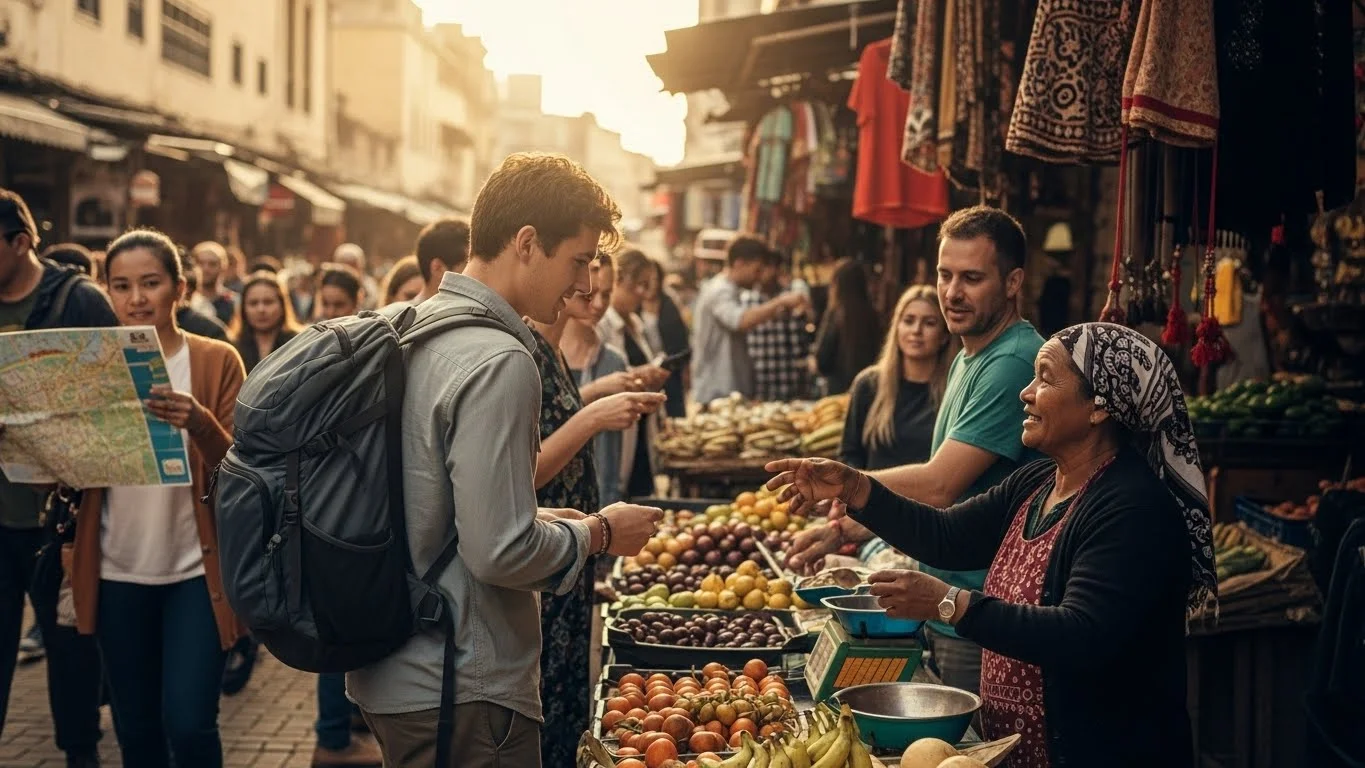
Street markets are vibrant hubs of nonverbal communication. I’ve always loved exploring these places, as they provide the perfect backdrop for genuine interactions. When I approach a vendor, I often start with a smile and a friendly wave. In many cultures, this simple gesture breaks down barriers and shows respect. I remember shopping at a bustling market in Marrakech, where I wanted to buy some handmade pottery. The vendor’s broad smile and open stance made it easy for me to approach him. As we chatted, I noticed how he used hand gestures to showcase the quality of his products. It was fascinating to see how our nonverbal cues facilitated a dialogue that went beyond words. I felt a sense of trust and connection that made my purchase even more meaningful.
Common Misunderstandings and How to Avoid Them
Misinterpretation of Gestures
Misunderstandings can easily arise from misinterpreted gestures, especially when traveling. I learned this the hard way during my time in Brazil. I enthusiastically gave a thumbs-up to a local while chatting, thinking it was a friendly gesture. To my surprise, I later learned that this sign can be offensive in certain contexts. This experience highlighted the importance of being aware of cultural nuances. I now make it a point to research common gestures in the countries I’m visiting. Even a simple look into local customs can save you from potentially awkward or even offensive situations.
Cultural Sensitivities in Body Language
Body language is deeply rooted in cultural norms, and what feels comfortable in one culture may be uncomfortable in another. I’ve noticed that in some cultures, being too expressive can come off as insincere or overwhelming. For instance, during a visit to Scandinavia, I observed how locals often keep their personal space larger than what I’m used to. Initially, I didn’t know how to approach conversations without invading their space. By being mindful and observing how others interacted in those settings, I learned to keep a respectful distance, which helped foster more comfortable interactions.
Avoiding Stereotypes in Nonverbal Communication
One of the most significant pitfalls in nonverbal communication is falling into stereotypes. I’ve seen travelers make assumptions about people based on preconceived notions. During my travels in Asia, for instance, I noticed a fellow traveler assuming that everyone would respond to direct eye contact in the same way they do back home. This resulted in uncomfortable situations that could have easily been avoided. I’ve learned that approaching each interaction with an open mind and without assumptions allows for a more genuine connection. It’s essential to treat individuals as unique rather than representing a stereotype, which has deepened my understanding and appreciation for diverse cultures.
Resources for Learning More About Nonverbal Communication
Books and Articles
For anyone looking to dive deeper into the world of nonverbal communication, I’ve found several books and articles that have enriched my understanding. One of my favorites is “The Definitive Book of Body Language” by Allan and Barbara Pease. This book offers practical insights into reading nonverbal cues and has helped me refine my skills. Additionally, I recommend exploring articles on nonverbal communication in various cultural contexts, which can help prepare you for your travels. Read Interesting article: Guide to Effective Communication in Positive Discipline
Online Courses and Workshops
Taking online courses can be a fantastic way to learn about nonverbal communication. Websites like Coursera and Udemy offer courses that cover the basics and advanced topics. I took a course on cross-cultural communication that provided me with valuable tools for understanding differences in nonverbal cues across cultures. These courses often include interactive elements, allowing you to practice what you learn in real-life scenarios.
Useful Apps for Travelers
In our tech-savvy world, there are also numerous apps designed to aid travelers in understanding cultural differences. I’ve found apps like “CultureSmart!” particularly helpful, as they offer quick insights into local customs, including nonverbal communication. These resources are invaluable for anyone looking to enhance their travel experiences and build meaningful connections with the people they meet.
Frequently Asked Questions
What is nonverbal communication?
Nonverbal communication is the silent language we all speak, encompassing body language, facial expressions, gestures, and posture. It plays a crucial role in conveying emotions and intentions, often more effectively than words.
How can mastering nonverbal communication enhance travel experiences?
Mastering nonverbal communication can create deeper connections with locals, leading to more authentic interactions. It acts as a secret key to unlock unique bonds and enrich travel experiences.
What are some types of nonverbal communication?
Key types of nonverbal communication include body language, facial expressions, gestures, eye contact, and proxemics (personal space). Each type plays a distinct role in conveying messages without words.
How do cultural variations affect nonverbal communication?
Cultural variations can significantly impact nonverbal communication, as gestures and expressions can have different meanings across cultures. For example, eye contact may signify honesty in Western cultures but can be perceived as rude in some Asian cultures.
What role does body language play in building rapport while traveling?
Body language is essential for building rapport, as showing genuine interest through nonverbal cues can enhance interactions. Leaning in, maintaining an open posture, and mirroring gestures can create familiarity and comfort with locals.
How can travelers effectively read body language?
Travelers can effectively read body language by being observant and noting cues such as posture, gestures, and facial expressions. This skill enables them to gauge interest and willingness to interact, even without spoken words.
What are some practical tips for mastering nonverbal communication?
Practical tips include observing local interactions, practicing active listening, being mindful of your body language, and adapting to cultural norms. These techniques can enhance communication and connection during travels.
How can nonverbal communication be applied in restaurants and cafes?
In restaurants and cafes, observing staff interactions and using nonverbal cues like smiles and gestures can enhance the dining experience. Understanding local dining customs can also help navigate social norms effectively.
What are common misunderstandings that can arise from nonverbal communication?
Common misunderstandings include misinterpreting gestures, which may vary in meaning across cultures, and failing to recognize cultural sensitivities in body language. Being aware of these nuances can help avoid awkward situations.
What resources are available for learning more about nonverbal communication?
Resources for learning about nonverbal communication include books like “The Definitive Book of Body Language,” online courses on platforms like Coursera and Udemy, and apps such as “CultureSmart!” that provide insights into local customs.