
Having kids in the house brings joy, but it also requires us to think about their safety. One of the trickiest spots for little ones is the staircase. Let’s dive into how we can make our homes safer.
Understanding Stair Safety
The Importance of Stair Safety in Homes
Every parent knows that children are naturally curious and active. When I first became a parent, I quickly realized that every corner of my home needed to be childproofed, especially the stairs. Stairs can be both a fun place to play and a dangerous area if not handled properly. Ensuring stair safety is essential because it’s all too easy for a child to trip or fall while exploring. Like most parents, I wanted to create an environment where my kids could roam freely without constant worry. For more information on making your home safer, check out the Essential Guide to Childproofing from Hazardous Materials.
Statistics on Stair-Related Injuries
According to various studies, stair-related injuries are surprisingly common among children. I remember reading a report that highlighted that falls from stairs are among the top causes of emergency room visits for kids under five. These statistics were eye-opening for me, as I never realized just how vulnerable my little ones were. With every step, I thought about how easily an accident could happen. Understanding these statistics helped me prioritize stair safety in my home, making it a non-negotiable part of our daily routine.
Childproofing Basics
What is Childproofing?
Childproofing refers to the process of making a home safer for children by identifying and eliminating hazards. I remember the first time I walked around my house with a fresh perspective, looking for anything that could pose a risk to my kids. It felt overwhelming at times, but I quickly learned that simple changes could make a huge difference. Childproofing is not just about locking away dangerous items but also about creating an environment where kids can explore without constant supervision.
Why Childproofing is Essential for Stair Safety
Childproofing is crucial for stair safety because stairs represent both a challenge and an opportunity for little explorers. I’ve experienced firsthand how a child can go from being cautious to daring in a split second, which makes it necessary to prepare for the unexpected. By childproofing our stairs, we reduce the risk of falls and injuries, allowing kids to navigate their environment with more freedom and less risk. It’s all about balance—giving them the chance to learn while keeping them safe.
Assessing Your Stairs
Types of Stair Designs
When it comes to stair safety, understanding the different types of stair designs can help us identify potential hazards. My house has a traditional straight staircase, but I’ve seen spiral and L-shaped stairs in friends’ homes. Each design presents unique challenges. For example, spiral staircases can be trickier to navigate for little legs, while straight stairs might be easier but can still lead to falls if not properly secured. I always recommend taking a good look at your stairs and considering how your child interacts with them based on their age and mobility.
Identifying Potential Hazards on Stairs
As I began assessing my own stairs, I started to notice things I hadn’t considered before. Loose railings, slippery steps, and even toys left on the stairs can all pose risks. I found myself going up and down the stairs multiple times, checking for anything that could trip up my kids. It’s amazing how quickly a seemingly safe area can become a hazard if we’re not paying attention. I suggest making a checklist of potential hazards so that we can address them systematically.
Age-Appropriate Considerations for Child Safety
Children grow and develop at different rates, and their ability to navigate stairs changes over time. I remember when my youngest started to crawl; I suddenly had to rethink our whole house layout. For infants and toddlers, even a few steps can be daunting. As they grow into toddlers and beyond, they may want to explore and climb. I found that adjusting our safety measures as they grew was essential. What worked for a crawling baby wasn’t sufficient for a more mobile toddler. Regularly evaluating their abilities and adjusting our safety measures accordingly kept them safe as they matured.
Effective Childproofing Solutions for Stairs
Installing Stair Gates
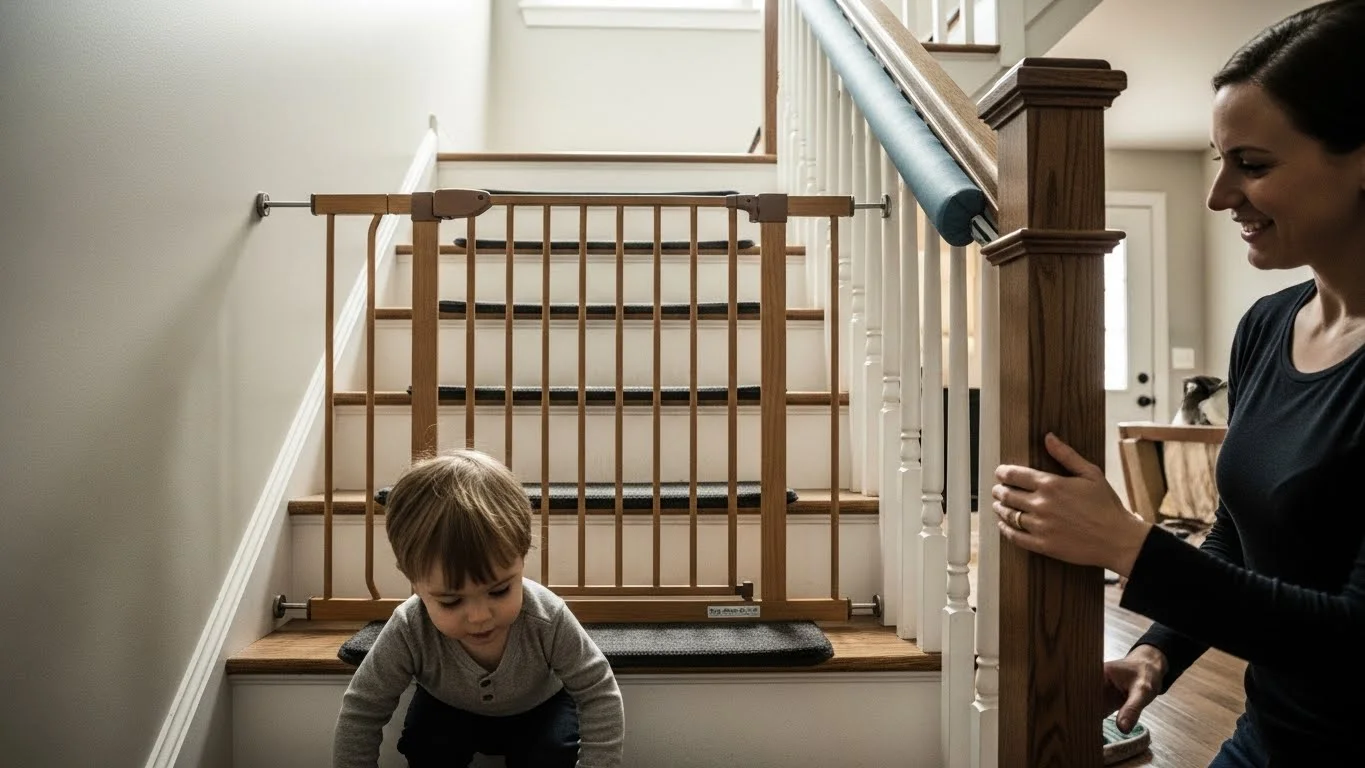
One of the first things I did to enhance our stair safety was to install stair gates. These gates provide a reliable barrier, preventing little ones from wandering onto the stairs unsupervised. I found that having a stair gate gave me peace of mind, especially when I needed to step away or focus on something else. There are many options available, including those reviewed in Childproofing Essentials: Best Safety Gates Reviewed, but it’s essential to choose one that fits securely and is easy for adults to operate.
Types of Stair Gates
When I started researching stair gates, I was surprised by the variety available. There are pressure-mounted gates, which are easy to install and remove, making them perfect for temporary use or for places where we need flexibility. Then there are hardware-mounted gates, which are more permanent and provide extra security, especially at the top of the stairs. I personally opted for the hardware-mounted gate for the top of our staircase, as I wanted to ensure it would hold strong against any little attempts to climb over. It made me feel much safer knowing that it was firmly attached and wouldn’t budge easily.
Placement and Installation Tips
Correct placement is crucial for stair gates. I learned that gates should be installed at the top and bottom of the stairs to maximize safety. When installing a gate at the top, I made sure it was positioned at least a few inches back from the edge of the stairs to prevent any accidental falls. I also discovered that using a level during installation is helpful; it ensures that the gate swings open smoothly without any obstructions. It’s all about making things as safe and convenient as possible for both us and our kids.
Using Non-Slip Treads
Another solution I found effective was adding non-slip treads to our stairs. I noticed that our stairs, while not overly steep, could become slippery, especially if they were wet or if my kids had just come in from outside. I decided to invest in non-slip treads, which come in various materials and designs. These treads provide extra grip, significantly reducing the risk of slips and falls. They are a simple yet effective addition that enhances safety without taking away from the aesthetic of our home.
Ensuring Adequate Lighting
Lighting is often overlooked when considering stair safety, but I learned firsthand how important it is. I remember one evening when my child was heading upstairs after dinner; it was dimly lit, and I felt a wave of anxiety. I quickly decided to install motion-sensor lights along the stairway. These lights automatically turn on as soon as someone approaches, ensuring that the stairs are well-lit at all times. Having adequate lighting made a significant difference, especially during nighttime or early mornings when visibility is low. It’s a small change that can have a big impact on safety.
Removing Tripping Hazards
As I evaluated our stairs, I realized how cluttered they could get at times. Toys, shoes, and even laundry baskets often ended up on the stairs, creating potential tripping hazards. I made a conscious effort to keep the stairs clear and tidy. I designated a specific spot for shoes and encouraged my kids to put their toys away. It was a learning process for everyone, but I noticed that when the stairs were clutter-free, it gave everyone more confidence to move up and down safely. It’s a simple yet effective way to maintain stair safety that we all have to commit to as a family.
Teaching Children About Stair Safety
Beyond physical solutions, I found that teaching my children about stair safety was just as important. I made it a point to talk to them about how to use the stairs safely. We practiced holding onto the handrail and taking one step at a time. I remember the first time I explained why they shouldn’t run on the stairs; my child’s eyes widened with understanding. I believe that when kids understand the ‘why’ behind the rules, they are more likely to follow them. Making stair safety a part of our daily conversations helped instill a sense of responsibility in my kids, and it empowered them to be cautious when navigating stairs.
Monitoring and Supervision
The Role of Adult Supervision
Despite all the childproofing measures we put in place, I’ve learned that active supervision is irreplaceable. I can’t count how many times I thought I could just step away for a moment, only to find my kids testing their limits. I realized that as they grew more independent, it was vital to keep an eye on their activities, especially around the stairs. I always make it a habit to be nearby when they are playing near the stairway. I think of it as an essential part of parenting—balancing freedom with safety.
Using Technology for Safety (Baby Monitors, Cameras)
To assist with supervision, I decided to incorporate technology into our safety measures. Baby monitors and cameras have become invaluable tools for us. I installed a camera near the stairs that allows me to monitor my kids while I’m in another room. This way, I can keep an eye on them without hovering. I feel it gives me an added layer of security, particularly when they are older and more mobile. Knowing they are safe while I handle other tasks gives me peace of mind.
Regular Maintenance and Safety Checks
Inspecting Staircases for Wear and Tear
As a parent, I quickly learned that safety is not a one-time fix; it’s an ongoing process. I remember the first time I decided to give our stairs a thorough inspection. I was surprised by how much wear and tear they had accumulated over time. Loose boards, worn-out carpet edges, and even minor cracks can create serious hazards for little feet. I now make it a point to check our staircases regularly, looking for any signs of damage. This routine has become a part of our household chores, and I often involve my kids, teaching them to be aware of their surroundings. It’s a great way to reinforce the importance of safety while making it a family activity.
Updating Safety Measures as Children Grow
Children change rapidly, and so do their capabilities. What worked when my kids were toddlers often needed to be adjusted as they grew. I remember transitioning from using baby gates to teaching them how to safely navigate the stairs independently. It was a bittersweet moment—seeing them grow up, but also knowing I had to adapt our safety measures. Regularly evaluating their developmental stages and adjusting our strategies kept them safe and allowed for more freedom. For instance, as they became more stable on their feet, I started reinforcing safe habits rather than relying solely on physical barriers. I believe it’s about finding that balance between encouraging independence and ensuring safety.
Additional Resources and Support
Consulting with Child Safety Experts
There’s a wealth of information available out there regarding child safety, but sometimes it’s best to get advice from the experts. I found it incredibly helpful to consult with child safety professionals who specialize in home safety. They provided insights into potential hazards I hadn’t considered and recommended tailored solutions for our home. I remember one expert telling me about common mistakes parents make regarding stair safety, and it opened my eyes to new perspectives. I think it’s worth reaching out to professionals if you feel uncertain about your childproofing measures. They can offer personalized advice that can make a significant difference.
Recommended Products for Stair Safety
Over my journey of ensuring stair safety, I’ve come across various products that I believe are essential. First and foremost are the stair gates we discussed earlier. I also found that investing in safety harnesses for toddlers can provide extra security when using stairs. Non-slip treads were a game-changer in our home, and I can’t recommend them enough. Additionally, I discovered safety corner guards for sharp edges on stair railings—this extra layer of protection was especially helpful when my kids were still learning to navigate those tricky corners. I often share these recommendations with fellow parents because I know firsthand how overwhelming it can be to choose the right products. For budget-friendly options, check out Budget-Friendly Safety Gates: Secure Your Home Today.
Community Resources for Child Safety Education
Sometimes, the best resources come from our local communities. I’ve noticed that many communities offer workshops and seminars focused on child safety. These events often feature experts who can provide valuable tips and hands-on demonstrations about making our homes safer. I remember attending a local seminar that focused specifically on stair safety and childproofing. It was not only informative but also a great way to connect with other parents who shared similar concerns. I encourage everyone to look for these local resources; they can be incredibly beneficial and reassuring as we navigate the challenges of parenting.
Final Thoughts
Reflecting on my journey to ensure stair safety, I realize just how crucial it is for all of us parents to be proactive. Each step we take in making our homes safer can significantly impact our children’s well-being. I often think about how simple changes—like adding a stair gate or ensuring adequate lighting—can make a world of difference in preventing accidents. It’s not just about protecting them from immediate dangers; it’s also about fostering an environment where they can learn and grow with confidence.
Every family is unique, and what works for one might not work for another. I encourage you to assess your own home with a fresh perspective, as I did. Pay attention to how your children interact with your stairs and consider their ages and abilities. Embrace the process of childproofing as an opportunity to connect with your kids, involving them in discussions about safety. This not only teaches them responsibility but also helps them understand the importance of being cautious.
As we navigate the challenges of parenting, let’s not forget the valuable resources available to us. Consulting with experts, attending local workshops, and sharing experiences with fellow parents has enriched my understanding and provided new insights. We don’t have to do this alone; there’s a whole community out there ready to support us in our quest for safety.
In the end, it’s about finding that balance—allowing our children the freedom to explore while ensuring their safety. I believe that by being vigilant and proactive, we can create a safe haven in our homes, one where our kids can thrive without fear. Remember that every small effort counts, and together, we can make a significant impact on our children’s lives.
Frequently Asked Questions
What is stair safety, and why is it important for homes with children?
Stair safety refers to the measures taken to prevent accidents involving stairs, which can be a fun yet dangerous area for children. It’s important because children are naturally curious and active, making them vulnerable to tripping or falling while exploring.
What are some statistics related to stair-related injuries in children?
Falls from stairs are among the top causes of emergency room visits for kids under five, highlighting the commonality and seriousness of stair-related injuries.
What does childproofing entail?
Childproofing involves making a home safer for children by identifying and eliminating potential hazards, enabling kids to explore their environment with reduced risk of injury.
How can I assess the safety of my stairs?
Assessing stair safety involves identifying potential hazards such as loose railings, slippery steps, and clutter like toys or shoes that can cause tripping. Creating a checklist can help systematically address these risks.
What types of stair gates are available, and how do they enhance safety?
There are pressure-mounted gates, which are easy to install and remove, and hardware-mounted gates, which provide more permanent security. Installing stair gates prevents children from wandering onto the stairs unsupervised.
Why is adequate lighting important for stair safety?
Adequate lighting is crucial as it helps to prevent accidents, especially in low-light conditions. Installing motion-sensor lights can ensure that stairs are well-lit when someone approaches, reducing the risk of falls.
What steps can I take to keep stairs clear of tripping hazards?
To keep stairs clear, designate specific spots for items like shoes and encourage children to put toys away. Maintaining a clutter-free environment on the stairs increases safety for everyone.
How can I teach my children about stair safety?
Teaching children about stair safety involves discussing safe practices, such as holding onto handrails and taking one step at a time. Reinforcing the reasons behind these rules helps them understand and follow them better.
What role does adult supervision play in stair safety?
Active adult supervision is irreplaceable, as even the best childproofing measures cannot fully eliminate risks. Parents should keep a close eye on their children, especially when they are near stairs.
How can consulting with child safety experts benefit parents?
Consulting with child safety professionals can provide valuable insights into potential hazards and tailored solutions for home safety, helping parents address concerns they may not have considered.