
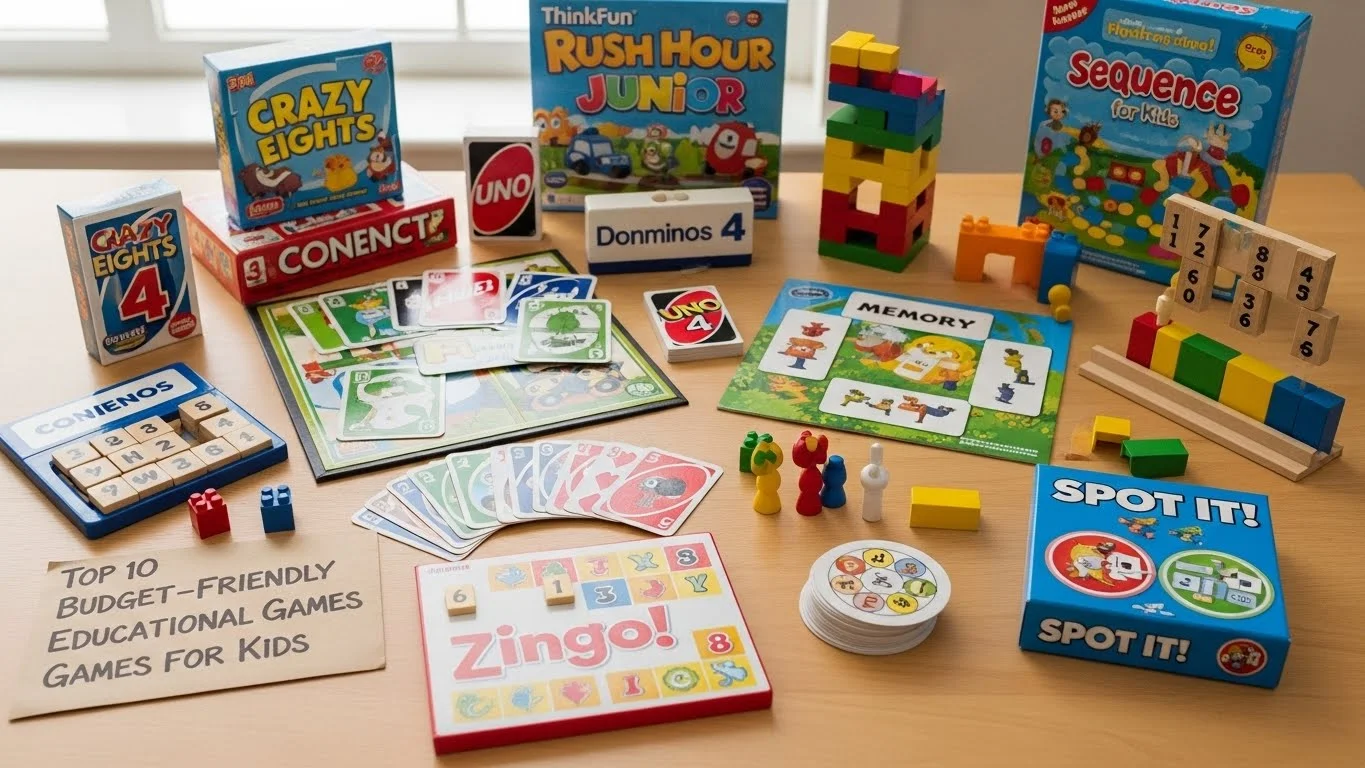
Finding engaging, educational games for kids that don’t break the bank can be a challenge. Luckily, there are plenty of budget-friendly options that make learning fun without emptying your wallet! Read Interesting article: Top 10 Budget-Friendly Games to Boost Toddler Learning
Understanding Budget-Friendly Educational Games
What Are Educational Games?
Educational games are designed to teach children various skills while they play. I remember the first time I introduced my kids to these kinds of games; I was amazed at how quickly they absorbed new concepts without even realizing they were learning! These games can range from board games that teach math and language skills to interactive apps that encourage critical thinking. They blend fun and education seamlessly, allowing kids to learn in a relaxed and enjoyable environment.
Benefits of Educational Games for Kids
In my experience, educational games offer a host of benefits. First and foremost, they promote active learning. Unlike traditional methods that may involve rote memorization, these games encourage kids to engage, experiment, and explore various concepts. For instance, when my daughter played a game centered around vocabulary, I noticed she started using new words in her everyday conversations!
Another benefit is the development of critical thinking and problem-solving skills. Many games require kids to think ahead, strategize, and make decisions. I’ve seen my son become a little more confident in his decision-making after consistently playing a logic game. These skills are essential not just for school, but for life.
Additionally, educational games can foster social skills. When kids play together, they learn to communicate, collaborate, and resolve conflicts. I cherish the evenings when my kids gather around the table for game night, teaching them the value of teamwork and sportsmanship while they’re having fun. Read Interesting article: Top 10 Budget-Friendly Activities for Toddler Growth
Why Choose Budget-Friendly Options?
Choosing budget-friendly educational games is essential, especially for families like mine who want to ensure that learning remains accessible and practical. There are several reasons to opt for more affordable options. First, kids grow and change interests quickly. Investing a lot in expensive games that may not hold their attention for long can feel wasteful. I’ve learned to look for games that are not only cost-effective but also durable enough to withstand the enthusiastic play of my children.
Another reason is the opportunity to try out a variety of games without a hefty price tag. I love exploring different themes and learning objectives, and budget-friendly games allow me to do just that! I can introduce new concepts and skills without the stress of overspending. Plus, it’s often surprising how much value you can find at a lower price point. Some of my favorite games were budget finds that turned out to be educational gems! Read Interesting article: Affordable STEM Activities for Kids: Fun and Educational Ideas
Criteria for Selecting Budget-Friendly Educational Games
Age Appropriateness
When I’m choosing educational games, age appropriateness is always at the top of my list. Games designed for the right age group ensure that kids are both challenged and engaged. I’ve made the mistake of getting games that were too advanced for my little ones, leading to frustration rather than fun. I recommend looking for games that are specifically labeled for your child’s age range, as they often come with guidelines for skill levels.
Learning Objectives
Understanding the learning objectives of a game is crucial. What skills does it teach? Is it reinforcing literacy, math, or social skills? When I look at games, I think about what my kids need to work on or what subjects they are interested in. Games that align with their learning goals tend to be more effective and enjoyable. For example, if my child struggles with addition, I might choose a game that focuses on that specific skill, making practice feel like play.
Gameplay Mechanics
Gameplay mechanics can significantly influence whether kids enjoy a game. I’ve found that games with simple rules that can be explained quickly tend to keep my children engaged longer. If a game is too complicated, it can lead to disengagement, and I’ve seen that firsthand. I tend to prefer games that have a mix of luck and strategy, as they tend to keep things exciting and competitive, which my kids love!
Availability and Accessibility
Finally, availability and accessibility are key factors. I often check both online and local stores to find good deals on educational games. Sometimes the best options are in local toy stores, where you can ask staff for recommendations. I’ve also explored online marketplaces and second-hand shops where I’ve found fantastic games at a fraction of the original cost. The thrill of hunting for budget-friendly educational games can be just as fun as playing them!
Top 10 Budget-Friendly Educational Games for Kids
1. Scrabble Junior
Scrabble Junior is a fantastic choice for early readers and spellers. I remember the first time my kids played it; they were so excited to create words on the colorful board. The game is designed for ages 5 and up, making it perfect for my younger ones to develop their vocabulary and spelling skills. The double-sided board keeps things fresh, as one side is for beginners, while the other is more challenging. It’s like getting two games in one!
2. Rush Hour Traffic Jam Logic Game
This game has become a staple in our household! Rush Hour is a single-player game that challenges kids to solve traffic jams by moving cars and trucks around the board. I love how it encourages critical thinking and problem-solving skills. Plus, it’s compact and perfect for travel, which means we can take it along on family road trips. My kids often compete to see who can clear the traffic the fastest—it’s a great way to sneak in some learning while having a blast.
3. Qwirkle
I stumbled upon Qwirkle at a local game night, and it quickly became one of our family favorites. It combines elements of strategy and matching colors and shapes, which makes it engaging for all ages. I appreciate that it encourages kids to think ahead and plan their moves. The game is easy to learn, but there’s enough depth to keep it interesting for older players, too. We often find ourselves laughing and strategizing around the table, making it a memorable experience.
4. The Game of Life Junior
The Game of Life Junior offers a fun way for kids to learn about making choices and managing resources. I love how it introduces concepts like earning money and planning for future adventures. My kids enjoy spinning the wheel and making decisions about their paths. It’s an excellent way for them to understand consequences in a light-hearted context. Plus, it sparks great conversations about what they want to be when they grow up!
5. BrainBox
BrainBox is a fantastic game for boosting memory and retention skills. Each card features a different topic, and players have to memorize the information in a minute before answering questions. I appreciate how it covers a range of subjects, from science to history. I’ve noticed my children’s knowledge expand as they enjoy playing it. It’s quick to set up and can be played in short bursts, which is perfect for busy afternoons.
6. Zingo!
Zingo! is a delightful game that combines bingo with word recognition. It’s been a hit with my kids, especially during family game nights. The game encourages literacy skills while keeping everyone engaged with its fast-paced play. I love watching my kids cheer as they match their tiles and shout “Zingo!”—it’s filled with excitement! The visuals are vibrant, and the game is easy to understand, making it suitable for younger children.
7. Math Dice Junior
I never thought math could be this much fun until we tried Math Dice Junior! My kids roll the dice and use the numbers to create equations that match the target number. It’s a great way to practice addition and subtraction skills without feeling like they’re doing homework. I’ve seen my children grow more confident in their math abilities while enjoying friendly competition. Plus, it’s a game that can easily be adapted for different skill levels.
8. Ticket to Ride: First Journey
Ticket to Ride: First Journey is a simplified version of the classic board game that introduces kids to strategy and planning. I appreciate how it teaches geography while keeping my kids engaged with its colorful trains and map. We often spend hours connecting cities, and I find myself just as invested as they are! It’s a wonderful way to spark interest in travel and geography, all while having fun together.
9. Bananagrams
Bananagrams has become a staple in our home for its fast-paced word-building fun. With no board required, it’s easy to set up, and the kids can play anywhere! I love how it promotes spelling and vocabulary skills in a way that feels competitive and exciting. It’s a perfect game for family gatherings, and I often find myself challenged by my kids’ creativity. Plus, the banana-shaped pouch makes it easy to store and carry around!
10. Osmo – Genius Starter Kit for iPad
The Osmo Genius Starter Kit is an innovative way to combine screen time with hands-on learning. It includes games that teach math, spelling, and creative problem-solving. I was initially hesitant about screen-based learning, but Osmo has proven to be interactive and engaging. My kids love watching their physical creations come to life on the iPad, making it a unique experience. It’s a fantastic option for tech-savvy learners looking for educational content.
How to Make the Most of Educational Games
Setting Up a Learning Environment
Creating the right environment can significantly enhance the experience of playing educational games. I’ve found that setting up a dedicated space for game time really helps my kids focus. It doesn’t have to be anything fancy—a simple table in the corner of the living room or a cozy spot in their playroom works perfectly. I like to keep the area organized with easy access to the games and some comfy seating. This way, my children can dive right into play without distractions. Sometimes, I even decorate the space with learning-themed posters or a whiteboard where we can jot down ideas or scores. It makes the experience feel special and encourages them to take it seriously while still having fun.
Encouraging Cooperative Play
Cooperative play is something I value a lot in our family. While competitive games can be exciting, I’ve noticed that working together on challenges can be even more rewarding. Games that promote teamwork help kids learn to communicate and collaborate effectively. I encourage my children to help each other when they’re stuck or cheer on their siblings during a tough round. This not only fosters a sense of community but also builds strong relationships. I remember one evening when my kids teamed up to tackle a challenging game of BrainBox, and the excitement they shared when they finally got it right was priceless! It’s those moments that make playing educational games so meaningful.
Integrating Game Time with Learning Goals
Integrating game time with specific learning goals has become a strategy that works wonders for us. I often sit down with my kids and discuss what subjects they want to focus on. Whether it’s practicing math skills or expanding their vocabulary, I tailor our game nights accordingly. For example, if my son expresses that he wants to improve his spelling, I’ll pull out games like Bananagrams or Zingo! I’ve found that when kids see the connection between play and their learning, they become more motivated. It turns game time into an exciting opportunity for growth, and they’re often surprised at how much they actually learn while enjoying themselves!
Where to Find Budget-Friendly Educational Games
Online Retailers
Online retailers have become my go-to for finding great deals on educational games. Websites like Amazon and Target often have sales, and I love browsing through customer reviews to get a sense of how different games are received by other parents. It’s also convenient to compare prices across different platforms. I remember finding a fantastic deal on the Osmo Genius Starter Kit during a holiday sale, and it felt great to snag such an innovative game at a fraction of the usual price. Plus, many websites offer free shipping or discounts for first-time buyers, which can help save even more!
Local Toy Stores
Don’t underestimate the charm of local toy stores! I’ve had wonderful experiences visiting small shops in my area. The staff are often passionate about the products they sell and can provide valuable recommendations based on what they’ve seen work for other families. I’ve discovered hidden gems that are both educational and affordable just by talking to the store owners. Plus, it’s a great way to support local businesses. I remember stumbling upon a unique game called Qwirkle in a tiny shop, and it has since become a family favorite!
Second-Hand Shops and Online Marketplaces
Second-hand shops and online marketplaces like eBay or Facebook Marketplace can be treasure troves for budget-friendly educational games. I love going on scavenger hunts in thrift stores or garage sales, where I’ve found gently used games that still have tons of life left in them. One of my best finds was a complete set of Scrabble Junior for just a couple of bucks! It’s a fantastic way to save money while introducing new games into our collection. Plus, it feels good to give these games a new home where they can be enjoyed again.
Tips for Parents on Using Educational Games
Balancing Screen Time and Physical Games
As a parent, I often grapple with the balance between screen time and traditional physical games. While I appreciate the educational value of digital games, I also know the importance of hands-on interaction. I try to set specific days for physical game nights, like our weekly board game night, while allowing for some screen-based learning throughout the week. For instance, we might play Osmo one day and then switch to a classic board game like Scrabble Junior the next. This balance keeps things fresh and engaging for my kids, ensuring they get the best of both worlds.
Incorporating Games into Daily Routines
Incorporating educational games into our daily routines has made learning feel like a natural part of our lives. I’ve started keeping a game or two accessible in our living space, so whenever there’s a lull in the day or a break from homework, we can jump into a quick game. It’s amazing how easily we can transform a mundane afternoon into a fun learning session with just a simple game. I’ve found that these spontaneous moments can often lead to the most memorable experiences!
Monitoring Progress and Engagement
Lastly, I believe it’s essential to monitor progress and engagement with educational games. I often check in with my kids to see what they enjoy and what skills they feel they’re improving upon. This open dialogue helps me decide which games to introduce next. I’ve also noticed that keeping a simple chart of their accomplishments—like new words they’ve learned or math skills they’ve practiced—can motivate them further. Celebrating these milestones is a fantastic way to reinforce the idea that learning can be both fun and rewarding.
Frequently Asked Questions
What are educational games?
Educational games are designed to teach children various skills while they play, ranging from board games that teach math and language skills to interactive apps that encourage critical thinking. They blend fun and education seamlessly, allowing kids to learn in a relaxed and enjoyable environment.
What are the benefits of educational games for kids?
Educational games promote active learning, develop critical thinking and problem-solving skills, and foster social skills. They encourage kids to engage, experiment, communicate, collaborate, and resolve conflicts while having fun.
Why should I choose budget-friendly educational games?
Budget-friendly educational games are essential for families wanting to ensure learning remains accessible and practical. They allow for trying out various games without overspending and can provide significant value at a lower price point.
What factors should I consider when selecting budget-friendly educational games?
When selecting budget-friendly educational games, consider age appropriateness, learning objectives, gameplay mechanics, and availability. It’s important to choose games that are suitable for your child’s age, align with their learning goals, and are easy to understand and access.
Can you provide examples of budget-friendly educational games?
Some examples of budget-friendly educational games include Scrabble Junior, Rush Hour Traffic Jam Logic Game, Qwirkle, The Game of Life Junior, BrainBox, Zingo!, Math Dice Junior, Ticket to Ride: First Journey, Bananagrams, and Osmo – Genius Starter Kit for iPad.
How can I set up a learning environment for educational games?
Creating a dedicated space for game time can enhance the experience. A simple table in the living room or a cozy spot in the playroom works well. Keeping the area organized and accessible, along with some comfy seating, helps kids focus on play.
What is the importance of encouraging cooperative play in educational games?
Cooperative play promotes teamwork, communication, and collaboration among kids. It helps build strong relationships and fosters a sense of community, making the gaming experience more rewarding and meaningful.
How can I integrate game time with learning goals?
Integrating game time with specific learning goals involves discussing subjects your kids want to focus on and selecting games that align with those goals. This connection between play and learning can enhance motivation and make the experience more enjoyable.
Where can I find budget-friendly educational games?
You can find budget-friendly educational games through online retailers, local toy stores, and second-hand shops or online marketplaces. Each option offers unique benefits, including sales, expert recommendations, and treasure hunts for gently used games.
What tips do you have for parents on using educational games?
Parents should balance screen time and physical games, incorporate games into daily routines, and monitor progress and engagement. Setting specific game nights, keeping games accessible, and maintaining open dialogue about improvement can enhance the learning experience.