
Helping kids manage impulsivity can be a game-changer for their development. By implementing effective strategies, we can empower our children to navigate their emotions and actions with greater control. For instance, establishing healthy boundaries is crucial, as outlined in our article on Essential Tips for Setting Healthy Boundaries with Children.
Understanding Impulsivity in Children
Definition of Impulsivity
When I first started noticing my child’s impulsivity, I wasn’t entirely sure what it meant. Impulsivity is often defined as the tendency to act without thinking about the consequences. It can manifest in various ways, from interrupting conversations to making hasty decisions that lead to trouble. I think it’s important to understand that impulsivity is a natural part of childhood. Children, especially younger ones, are still learning how to regulate their feelings and actions. However, when impulsivity becomes frequent or disruptive, it can signal a need for intervention.
Common Causes of Impulsivity
Through my experience, I’ve learned that there are several factors that can contribute to impulsive behaviors. One major cause is developmental stage. Young children often lack the maturity to pause and think before they act. Additionally, environmental factors, such as high-stress home situations, can exacerbate impulsive behavior. I’ve noticed that when my child is overwhelmed or anxious, their impulsivity tends to spike. Other causes might include attention disorders, such as ADHD, where the brain struggles with self-control. Understanding these causes can help us respond to our children’s needs more effectively.
Signs and Symptoms of Impulsivity
Recognizing the signs of impulsivity in children has been crucial for my parenting journey. Some common symptoms include difficulty waiting for their turn, blurting out answers in class, and engaging in risky behaviors without considering the consequences. I remember attending a parent workshop where the facilitator emphasized the importance of looking for patterns in behavior. Is your child frequently interrupting others? Are they often getting into trouble for acting without thinking? By identifying these signs, we can tailor our strategies to help them manage their impulses better.
Importance of Managing Impulsivity
Impact on Social Interactions
From my observations, impulsivity can significantly affect a child’s social life. Kids who struggle with impulsivity may find it hard to make and keep friends. I’ve seen my child get into conflicts because they interrupted others or took toys without asking. These behaviors can lead to misunderstandings and feelings of rejection. Teaching kids how to navigate social interactions is vital, as it helps them build meaningful relationships. I recommend encouraging them to practice waiting their turn during conversations or games. It can make a world of difference!
Effects on Academic Performance
I’ve noticed that impulsivity doesn’t just impact social interactions; it can also take a toll on academic performance. Children who act impulsively may struggle with focused attention during lessons or rush through assignments, leading to careless mistakes. I remember a time when my child would blurt out answers before the teacher finished asking questions, which not only disrupted the class but also made them miss out on learning opportunities. By helping them develop self-control, we can enhance their learning experience and academic success.
Long-Term Consequences
As I reflect on the long-term consequences of unmanaged impulsivity, I realize how crucial it is to address this behavior early on. Kids who fail to learn self-regulation skills may face challenges in adolescence and adulthood. They might struggle with relationships, career success, and even mental health issues. I believe that helping children understand the importance of thinking before acting can set them up for a more successful future. It’s a gift that keeps on giving, as they carry these skills into adulthood.
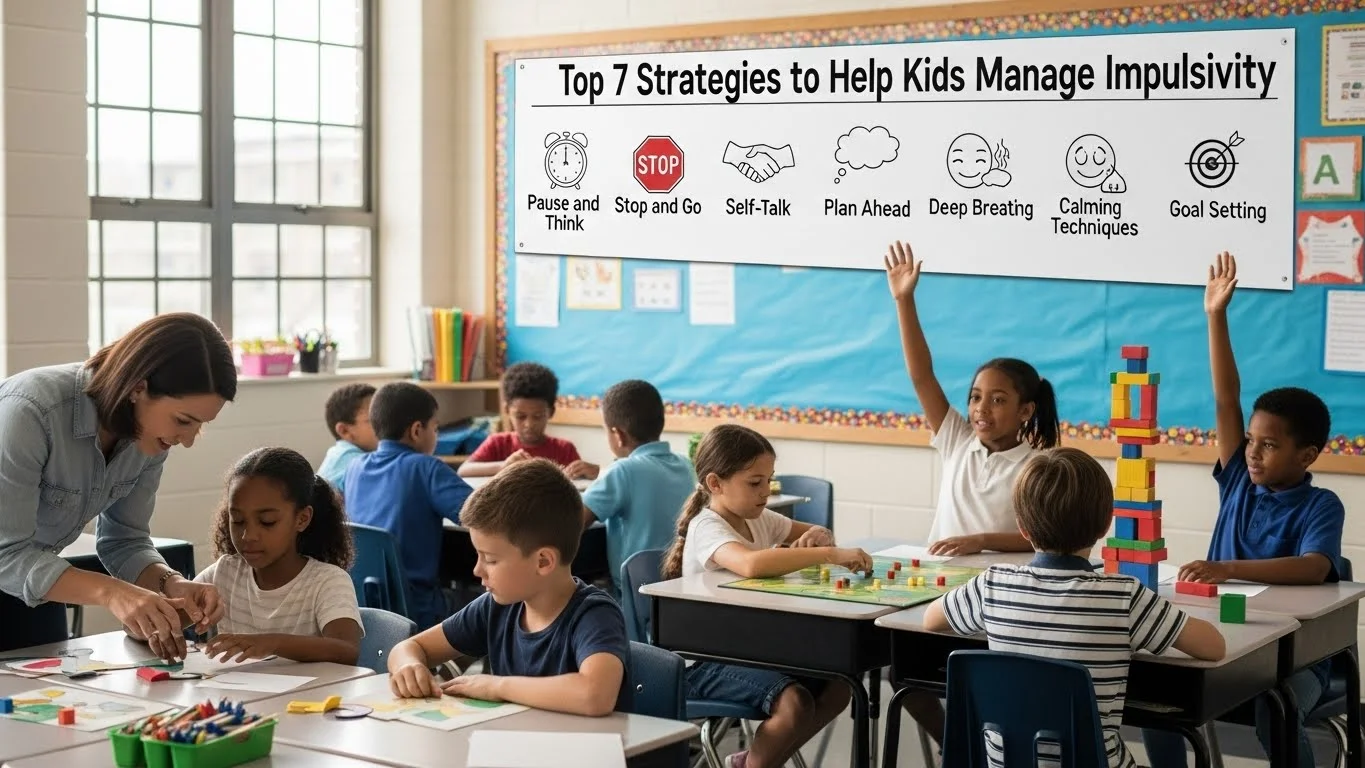
Top 7 Strategies to Help Kids Manage Impulsivity
1. Establishing Routines
One of the most effective strategies I found is establishing routines. Kids thrive on predictability, and having a structured daily routine can help minimize impulsive behavior. I started creating a visual schedule for my child, outlining daily activities and expectations. By knowing what to expect, they feel more secure, which reduces impulsivity. I noticed that when we follow a consistent routine, my child is more willing to cooperate and think before acting.
2. Teaching Problem-Solving Skills
I’ve learned that teaching kids how to solve problems can significantly curb impulsivity. When faced with a situation, I encourage my child to pause and think through possible solutions. We practice asking questions like, “What could happen if I do this?” and “Is there a better way to handle this?” Through role-playing various scenarios, I’ve seen them start to weigh their options before acting. This practice not only helps with impulsivity but also builds their confidence in decision-making.
3. Implementing Mindfulness Practices
Incorporating mindfulness practices into our daily lives has been transformative. I remember discovering simple mindfulness exercises, such as deep breathing and body scans, that are easy for kids to grasp. We set aside a few minutes each day to practice together, and I noticed a difference in my child’s ability to remain calm and composed. Mindfulness teaches kids to become more aware of their thoughts and feelings, allowing them to pause before acting on impulse.
4. Using Visual Aids and Reminders
Visual aids have become a cornerstone of our approach to managing impulsivity. I created colorful charts and images that remind my child of the rules and expectations. For instance, we made a “Wait Your Turn” poster and placed it in their room. Every time they see it, it serves as a gentle reminder to think before they act. I’ve found that these visual cues help reinforce the lessons we’re teaching, making them more memorable.
5. Encouraging Physical Activity
Physical activity has been a powerful tool in our journey. I noticed that when my child has ample opportunities to release energy, their impulsivity decreases significantly. We make it a point to engage in daily physical activities, whether it’s biking, dancing, or just playing outside. Exercise not only helps burn off excess energy but also boosts mood and improves focus. I genuinely believe that staying active has helped my child develop better self-regulation skills.
6. Setting Clear Expectations and Boundaries
Setting clear expectations and boundaries has been a game-changer in our household. I realized my child needed to understand what behaviors are acceptable and what aren’t. We often sit down together and discuss our family rules, making sure they know the consequences of impulsive actions. This transparency has fostered a sense of accountability and helped my child think twice before acting impulsively. I always remind them that it’s okay to make mistakes, but it’s important to learn from them. For more insights, check out our article on Essential Tips for Setting Healthy Boundaries with Children.
7. Seeking Professional Support
In some cases, seeking professional support is essential. If you feel overwhelmed or unsure about how to help your child manage their impulsivity, don’t hesitate to reach out for guidance. I remember when we consulted a child psychologist who provided us with valuable strategies tailored to our specific situation. Professional insights can be incredibly beneficial and provide you with the support you need to navigate this journey effectively. Remember, asking for help is a sign of strength.
Additional Tools and Resources
Books and Literature on Impulsivity
As I delved deeper into understanding impulsivity, I found that reading books on the subject was incredibly helpful. One title that stands out for me is “The Explosive Child” by Ross W. Greene. This book offers insights into why some children struggle with self-control and provides practical strategies for parents. I remember feeling a sense of relief after reading it, realizing that I wasn’t alone in this journey. Another great resource is “Smart but Scattered” by Peg Dawson and Richard Guare, which focuses on executive functioning skills and how to help kids manage their impulses. It’s filled with actionable advice and has truly enriched my toolkit as a parent.
Apps and Technology for Managing Impulsivity
In today’s tech-savvy world, we can leverage apps to help manage impulsivity. I discovered a few apps that have made a difference in our daily routine. For example, “Breathe, Think, Do with Sesame” is a fun app designed for younger children that teaches them problem-solving skills through engaging scenarios. I’ve seen my child enjoy using it and learn to pause and think from different perspectives. Another app I recommend is “Mindfulness for Children,” which offers guided meditation tailored for kids. It’s a simple way to incorporate mindfulness into our day, and my child loves the soothing sounds and visuals.
Support Groups and Online Communities
Finding a community of parents who understand the challenges of managing impulsivity can be invaluable. I joined a local support group where we share experiences and strategies. It’s comforting to hear stories from others who are navigating similar paths. Online forums, such as those on Facebook or parenting websites, can also provide a wealth of resources and emotional support. I’ve found that being part of a community helps me stay motivated and reassured that we’re all doing our best for our kids.
When to Seek Professional Help
Recognizing Severe Impulsivity Issues
There have been moments when I felt unsure about my child’s impulsivity. It’s crucial for us as parents to recognize when impulsivity goes beyond typical childhood behavior. If our child’s impulsivity leads to frequent accidents, harming themselves or others, or severely disrupting their daily life, it might be time to seek professional guidance. I remember the day I realized my child was struggling more than I could handle alone. It was a mix of fear and determination that pushed me to reach out for help. Trusting my instincts about my child’s well-being was essential.
Types of Professionals to Consult
When considering professional help, I found it useful to explore various types of specialists. Child psychologists can provide meaningful insights and assessments to understand the root causes of impulsivity. I consulted one who helped us identify specific triggers and offered tailored strategies. Pediatricians can also guide parents in navigating the complexities of impulsivity, especially concerning any underlying health issues. Additionally, school counselors can be a great resource, as they often have experience working with children who exhibit impulsive behaviors in academic settings.
Potential Treatment Options
In our case, after consulting with a psychologist, we explored several treatment options. Therapy, particularly cognitive-behavioral therapy (CBT), can be effective in helping children develop coping strategies for impulsive behaviors. We also discussed the possibility of behavioral interventions at school, which could provide my child with the structured support they needed during the day. I learned that medication might be an option for some families, but it’s essential to weigh the pros and cons with a healthcare professional. The goal is to find the right combination of support that empowers our children to thrive.
Frequently Asked Questions
What is impulsivity in children?
Impulsivity is defined as the tendency to act without thinking about the consequences. It can manifest in various ways, from interrupting conversations to making hasty decisions that lead to trouble. While it is a natural part of childhood development, frequent or disruptive impulsivity may indicate a need for intervention.
What are common causes of impulsivity in children?
Common causes of impulsivity include developmental stage, where young children often lack the maturity to pause before acting, and environmental factors such as high-stress home situations. Other causes may include attention disorders, like ADHD, which can affect self-control.
What signs and symptoms should parents look for regarding impulsivity?
Signs of impulsivity in children can include difficulty waiting for their turn, blurting out answers in class, and engaging in risky behaviors without considering the consequences. Recognizing these patterns can help in tailoring strategies to manage impulsive behavior.
How does impulsivity affect a child’s social interactions?
Impulsivity can significantly impact a child’s social life, making it difficult for them to make and keep friends. Impulsive behaviors, such as interrupting others or taking toys without asking, can lead to conflicts and feelings of rejection.
What effects can impulsivity have on academic performance?
Impulsivity can adversely affect academic performance by causing children to struggle with focused attention during lessons or rush through assignments, leading to careless mistakes. This can disrupt the learning process and result in missed educational opportunities.
What are some effective strategies to help kids manage impulsivity?
Effective strategies for managing impulsivity may include establishing routines, teaching problem-solving skills, implementing mindfulness practices, using visual aids and reminders, encouraging physical activity, setting clear expectations and boundaries, and seeking professional support when needed.
Why is establishing routines beneficial for children with impulsivity?
Establishing routines provides predictability for children, helping them feel more secure and reducing impulsive behavior. Routines can enhance cooperation and encourage children to think before acting.
When should parents consider seeking professional help for their child’s impulsivity?
Parents should consider seeking professional help if their child’s impulsivity leads to frequent accidents, harms themselves or others, or severely disrupts their daily life. Recognizing these signs is crucial for ensuring the child’s well-being.
What types of professionals can help with impulsivity issues?
Professionals such as child psychologists, pediatricians, and school counselors can provide valuable insights and guidance for addressing impulsivity. They can assess the root causes and suggest tailored strategies for management.
What treatment options are available for children with impulsivity?
Treatment options for impulsivity may include therapy, particularly cognitive-behavioral therapy (CBT), behavioral interventions at school, and, in some cases, medication. It’s essential to weigh the pros and cons of these options with a healthcare professional.