
Planning a family trip can be exciting, but ensuring your children eat a balanced diet during the journey is equally vital. Let’s explore how to keep their meals nutritious, even on the go!
Understanding the Importance of a Balanced Diet for Children
When I think about family trips, I often recall how easy it is to slip into unhealthy eating habits. With fast food at every rest stop and sugary snacks beckoning from the backseat, maintaining a balanced diet for our kids can feel like a challenge. However, understanding the importance of nutrition can help us make better decisions for their well-being. For more insights, check out Travel-Friendly Foods: Balanced Diet for Kids on the Go.
Nutrition Basics for Growing Kids
From my experience, one of the first things to grasp is the basic nutritional needs of children. Kids are growing, both physically and mentally, and they require a variety of nutrients to thrive. A balanced diet typically includes:
- Fruits and Vegetables: These should make up a large portion of their meals. They provide essential vitamins and minerals.
- Protein: This is crucial for growth and development. It can come from sources like meat, beans, and dairy.
- Whole Grains: Foods like whole grain bread and brown rice offer sustained energy, especially important during active days.
- Dairy: Essential for strong bones and teeth, dairy products are a great source of calcium.
I remember packing various snacks for a road trip and ensuring they included these food groups. It made me feel good knowing I was giving my kids the fuel they needed to enjoy our adventures.
Impact of Diet on Children’s Health and Well-Being
I’ve seen firsthand how a balanced diet can positively affect children’s behavior and energy levels. When my kids eat well, they seem happier and more engaged in activities. Conversely, I noticed that after indulging in too many sweets or greasy foods, they often felt sluggish or irritable. Studies show that a nutritious diet promotes better cognitive function and emotional health, which is particularly important for children who are still developing. Therefore, prioritizing a balanced diet not only supports physical growth but also enhances their overall experience while traveling. For more tips, read Essential Balanced Diet Tips for Healthy Traveling Kids.
Planning Balanced Meals for Family Trips
As we gear up for our next family adventure, I’ve learned that meal planning is key to ensuring my kids eat well while on the move. Here are some thoughtful strategies I’ve developed over the years.
Considerations for Meal Planning on the Go
When planning meals for travel, I take into account how easy they will be to prepare and eat in the car or at a picnic. Here are some things I keep in mind:
- Preparation Time: I prefer meals that can be made ahead of time. For instance, I’ll often prepare sandwiches or wraps the night before.
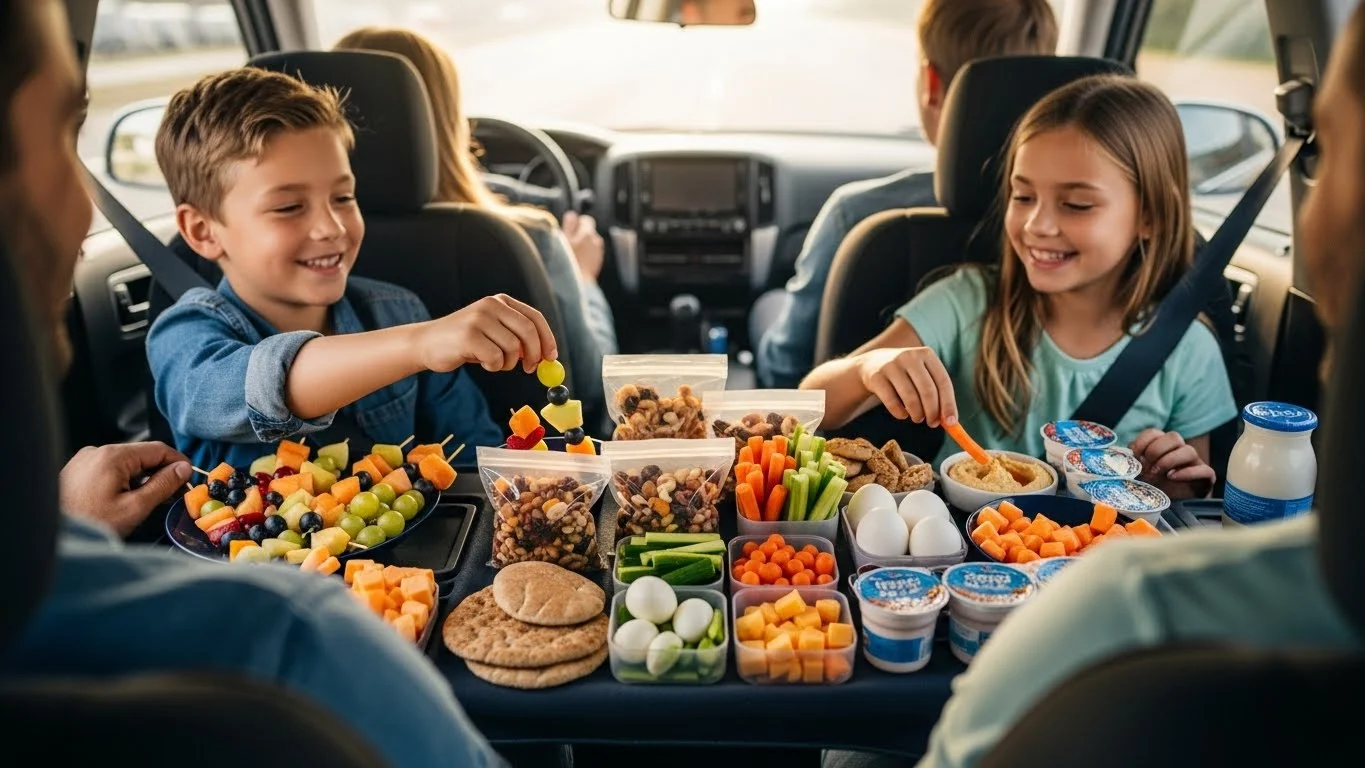
- Mess-Free Options: Finger foods are great for kids. I try to pack items that are easy to eat without causing a mess, such as cheese sticks, carrot sticks, or granola bars.
- Storage: I invest in good-quality containers. They help keep food fresh and prevent spills during travel.
By considering these factors, I can create a meal plan that’s both practical and nutritious for our journey.
Portion Control and Nutritional Needs
During our travels, I’ve found that portion control is crucial. Kids often have smaller appetites, but they still need regular meals and snacks to keep their energy levels up. I usually pack smaller portions of various foods in separate containers. For instance, I might include half a sandwich, a small handful of nuts, and some fruit in one container. This way, they can eat when they’re hungry without feeling overwhelmed by large servings.
It’s also important to remind myself that kids may not eat as much during a busy day of exploring. I’ve learned to be flexible and offer snacks or meals based on their hunger cues rather than sticking strictly to a schedule. This approach helps them feel more in control of their eating and encourages them to listen to their bodies.
On our last trip, I noticed that having a variety of options helped keep the kids interested in eating. They enjoyed the freedom to choose what they wanted, and it led to healthier choices overall. I felt much better knowing that I was providing them with wholesome food that supported their growth and kept their spirits high during our adventures. You might also find it helpful to check out Top Vegan Nutrient Sources for Healthy Kids’ Diets.
Frequently Asked Questions
Why is a balanced diet important for children during family trips?
A balanced diet is crucial for children’s well-being as it supports their physical growth, cognitive function, and emotional health. During family trips, maintaining nutritious meals helps keep kids happy, engaged, and energized.
What are the key components of a balanced diet for children?
A balanced diet for children typically includes fruits and vegetables, protein sources like meat and beans, whole grains, and dairy products. These food groups provide essential nutrients needed for growth and development.
How can I prepare meals for children while traveling?
When preparing meals for travel, consider making items ahead of time, choosing mess-free options like finger foods, and using good-quality containers to keep food fresh and prevent spills.
What types of snacks are suitable for kids on the go?
Suitable snacks for kids during travel include cheese sticks, carrot sticks, granola bars, and other finger foods that are easy to eat and do not create a mess.
How can portion control be managed for kids during trips?
Portion control can be managed by packing smaller servings of various foods in separate containers, allowing kids to eat based on their hunger cues rather than strict meal schedules.
What should I consider when planning meals for family trips?
When planning meals, consider preparation time, the ease of eating in the car or at a picnic, and the need for mess-free options. This helps create a practical and nutritious meal plan.
How does diet affect children’s behavior and energy levels?
A nutritious diet positively affects children’s behavior and energy levels. Eating well can make children feel happier and more engaged, while poor eating habits can lead to sluggishness and irritability.
Is it important to offer variety in food options for kids during travel?
Yes, offering a variety of food options is important as it keeps kids interested in eating and encourages healthier choices. It also gives them a sense of control over their eating.
What are some practical meal ideas for a family road trip?
Practical meal ideas for a family road trip include sandwiches or wraps made ahead of time, along with a mix of fruits, nuts, and other finger foods that are easy to eat on the go.
How can I ensure my kids listen to their hunger cues while traveling?
To help kids listen to their hunger cues, offer snacks or meals based on their appetite rather than sticking strictly to a schedule. This approach encourages them to eat when they are hungry.