
Traveling with family on a budget can be a challenge, especially when it comes to meal planning. But with the right strategies, you can eat well without breaking the bank while exploring new places together. For more insights, check out Backpacking on a Budget: Family Meal Planning Essentials.
Understanding Family Meal Planning on a Budget
The Importance of Meal Planning for Travelers
I’ve often found that meal planning is the backbone of a successful travel experience, particularly for families. When we’re on the road, the last thing I want is to scramble for food at the last minute, especially when kids are hungry. Planning meals ahead not only helps us save money but also ensures we eat healthier options. I remember a trip where we didn’t plan well; we ended up spending a fortune on convenience foods and unhealthy snacks. It was a lesson learned! Meal planning provides structure and helps us make the most of our travel budget.
Benefits of Budget-Friendly Meal Plans
Creating a budget-friendly meal plan has multiple benefits, especially when you’re traveling with kids. First, it reduces stress. Knowing what we’ll eat each day lets us focus on enjoying our trip rather than worrying about where our next meal will come from. Second, it can lead to healthier eating habits. I’ve noticed that when we pack our meals or prepare our own food, we tend to eat more fruits and vegetables. Plus, it’s also a great way to involve the kids. They love helping with meal prep, and it becomes a fun bonding activity for us as a family.
Another significant advantage is cost savings. Eating out can quickly add up, particularly in touristy areas. By planning meals, we can allocate a portion of our budget for local dining experiences while still enjoying home-cooked meals. I’ve learned to make the most of local markets, where fresh ingredients are often more affordable than in grocery stores. This approach not only helps us save money but also gives us a taste of local culture. For more on this topic, see Balanced Meals: Perfect Portion Control for Kids.
Essential Tips for Creating Travel-Friendly Meal Plans
Choosing the Right Ingredients
Selecting the right ingredients is crucial when planning meals for travel. I usually opt for versatile items that can be used in multiple recipes. For instance, rice and pasta are staples that can pair well with various proteins and vegetables. Canned beans are another favorite of mine; they are inexpensive, nutritious, and easy to incorporate into many dishes.
When choosing foods, I look for items with a longer shelf life. Dried fruits, nuts, and granola bars make for great snacks and are easy to carry. For perishable items, I try to buy them closer to our cooking days to minimize waste. I’ve found that planning meals around what I can easily find at local markets or stores makes the process smoother.
Meal Prep Techniques for Backpackers
Meal prepping is an art I’ve come to appreciate over the years. When we travel, I like to set aside a couple of hours before our trip to prepare meals. We often make large batches of dishes that can be easily reheated, like soups or casseroles. I recommend using lightweight, portable containers to store meals. This makes it easy to carry food, whether we’re hiking or exploring a new city.
Another technique I’ve found helpful is assembling ‘make your own’ meals. For example, I’ll prepare taco ingredients separately, so everyone can build their own taco according to their preferences. This not only makes meal times more enjoyable but also reduces the stress of cooking at the end of a long day of exploring.
Storing Food While Traveling
Storage is a critical aspect of traveling with food. I typically bring a small cooler for perishables, especially during road trips. For air travel, I prefer using insulated bags that can keep food fresh for several hours. It’s also essential to have a reliable way to pack snacks for day trips. I’ve learned to use resealable bags to keep things organized and prevent spills in our backpacks.
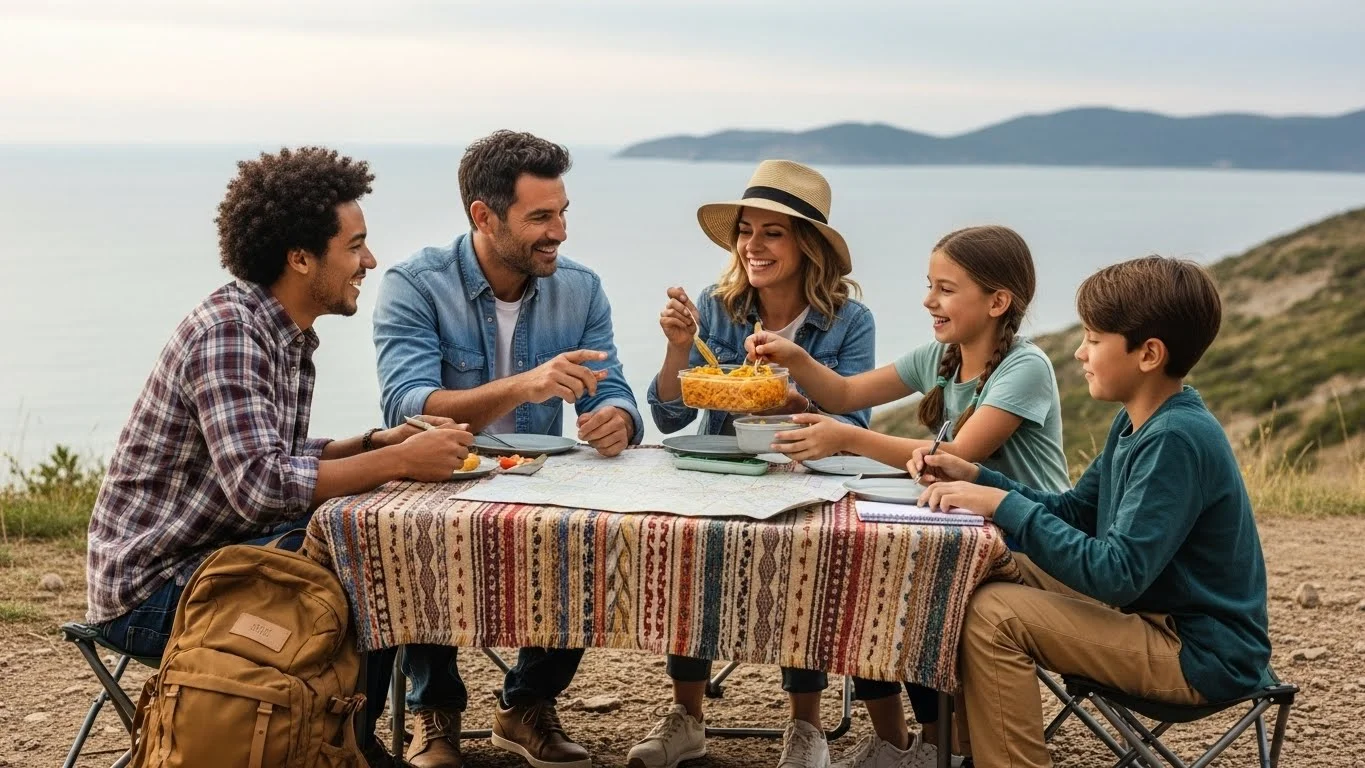
When it comes to cooking while on the road, having the right gear makes a world of difference. I usually carry a small cooking pot, a portable stove, and some basic utensils. This allows us to prepare meals wherever we are, whether it’s a campsite or a hostel kitchen. I remember one memorable evening when we set up our portable stove by the beach and cooked a simple pasta dish. It turned into a delightful family dinner with a stunning view!
Overall, creating travel-friendly meal plans is all about preparation and flexibility. I’ve found that the more I plan ahead, the more enjoyable our trips become. It saves us time, money, and stress, allowing us to focus on making lasting memories together as a family. For additional tips, check out Effortless Meal Planning for Busy Families with School Kids.
Best Travel-Friendly Meal Ideas for Families
Quick Breakfast Options
Breakfast can sometimes feel like a rush, especially when we’re eager to hit the road or explore a new city. I’ve found that quick breakfast options can be both filling and nutritious. One of my favorite go-to meals is overnight oats. I simply combine rolled oats with milk or yogurt, add some fruits, nuts, and a drizzle of honey, and let them sit overnight in the fridge. The next morning, it’s ready to go! The kids love customizing their oats with different toppings.
Another easy breakfast idea is smoothies. I often pack a portable blender and some frozen fruits, spinach, and yogurt. Just a few minutes of blending in the morning gives us a refreshing and healthy start to the day. If we’re short on time, I sometimes grab granola bars or whole grain muffins for a quick bite as we head out. I’ve learned that having these options on hand keeps everyone happy and energized without needing to stop for pricey breakfasts on the way.
Easy Lunch Recipes
When it comes to lunch, I prefer meals that are easy to assemble and satisfying. One of my family’s favorites is a hearty pasta salad. I cook pasta ahead of time and mix it with a variety of veggies, some cheese, and a light dressing. It’s a great way to use whatever we have on hand, and it’s perfect for picnics in the park or meals on the go.
Wraps are another fantastic option. We love using tortillas to wrap up deli meats, cheeses, and plenty of veggies. The kids enjoy helping to make their own wraps, which also adds some fun to meal prep. On days when we’re exploring, I often pack these with some fruit and nuts, ensuring that we have a balanced lunch without spending too much time looking for food.
Dinner Dishes for the Whole Family
Dinner is where we can really relax and enjoy a meal together after a day of adventures. I like to keep it simple yet delicious. One dish that has become a staple for us is one-pot meals, like stir-fry. We can throw in whatever protein and vegetables we find, add some soy sauce or seasoning, and let it cook. It’s quick, easy to clean up, and the kids love it.
I also prepare foil packet dinners, where I layer protein, veggies, and spices, then wrap everything in foil and cook it over a campfire or in the oven. It’s a fun way to make dinner feel special, and the cleanup is a breeze. I remember one night at a campground where we made foil packets filled with chicken and colorful veggies. We sat around the fire, sharing stories and enjoying the meal, creating a lovely family moment that I cherish.
Healthy Snacks for On-the-Go
Snacking while traveling can be tricky, but I’ve found that packing healthy snacks keeps everyone satisfied and energized. I often bring along fresh fruits like apples or bananas, which are portable and nutritious. Another favorite is homemade trail mix, which we create by mixing nuts, seeds, dried fruits, and a bit of dark chocolate. It’s a hit with the kids and provides a great energy boost during long days of exploration.
Veggie sticks with hummus are also a fantastic snack. I cut up carrots, celery, and bell peppers and pack them in containers with a small portion of hummus. It’s a refreshing and healthy snack that we can enjoy on the go. I’ve noticed that when I offer these kinds of snacks, the kids are less likely to ask for unhealthy junk food.
Sometimes, we treat ourselves to local snacks as well, allowing us to experience the culture more deeply while satisfying our cravings. Whether it’s a local pastry or street food, these moments often turn into delightful memories of our travels.
Budgeting for Food While Traveling
Setting a Daily Food Budget
Setting a daily food budget is one of the most crucial steps in ensuring we stick to our financial goals while traveling. I remember a trip where we didn’t have a clear budget, and we ended up overspending on food, which affected other parts of our trip. Now, I sit down before a trip and figure out how much we can realistically spend each day on food. This includes meals, snacks, and treats.
By breaking it down daily, it feels more manageable. I also try to involve the kids in this process. We discuss what we want to eat and how we can enjoy meals within our budget. This not only teaches them about budgeting but also makes them feel part of the planning process, which is always a plus!
Finding Affordable Grocery Stores and Markets
During our travels, I’ve discovered that local grocery stores and markets are my best friends. They not only offer fresh and often cheaper ingredients but also allow us to experience the local culture. I always research beforehand to find the nearest grocery stores or farmer’s markets at our destination. Visiting these places can be an adventure in itself!
I’ve found that shopping at local markets is often a more authentic experience compared to touristy shops. It’s a great way to meet locals and find unique ingredients that we can use in our meals. Plus, it’s always fun to try out new foods that we wouldn’t find back home.
Cost-Effective Dining Options
While I love cooking, there are times when we want to eat out and try local cuisine. To keep costs down, I’ve learned to look for cost-effective dining options. I often search for restaurants that offer lunch specials, which are usually cheaper than dinner menus. Food trucks and hole-in-the-wall eateries can also be fantastic for affordable and delicious meals.
Another tip I’ve found helpful is to avoid eating in highly touristy areas. Instead, we look for places where locals go. Not only do they usually have better prices, but the food tends to be more authentic. I remember one time in a foreign city, we wandered into a small family-run restaurant that served the best traditional dishes at a fraction of the cost of tourist spots. It turned out to be one of the highlights of our trip!
Meal Planning for Specific Destinations
Travel-Friendly Meals for Europe
Traveling through Europe has been one of the most delightful experiences for my family, but it can be expensive, especially when it comes to food. I’ve learned that with a bit of meal planning, we can enjoy the local flavors without blowing our budget. One of my favorite meals to prepare while in Europe is a simple pasta dish. We can find fresh pasta in local markets, and with just a few ingredients like olive oil, garlic, and seasonal vegetables, we create a delicious meal that feels truly authentic.
Another fantastic option is to make picnic lunches. Many European cities have beautiful parks where we can sit and enjoy our food. I often pack a baguette, some cheese, and cured meats, along with fresh fruits. It’s a fun way to experience the local culinary culture while keeping costs down. Plus, the kids love the adventure of eating outdoors!
Family Meal Ideas for Southeast Asia
Southeast Asia is a treasure trove of flavors and culinary experiences. I remember my family’s trip there, where we embraced the local street food scene. However, to balance our budget, we also planned some meals ourselves. A favorite dish that we prepared was fried rice. It’s not only easy to make but also allows us to use whatever ingredients we find at the local markets, like fresh vegetables and eggs.
We also enjoyed making spring rolls filled with veggies and proteins. We could buy rice paper wrappers and fill them with local produce, making it a fun hands-on activity with the kids. They loved rolling their own spring rolls, and it felt like a mini culinary lesson in the midst of our travels. Plus, it was a great way to keep everyone involved in the meal prep!
Budget Meals for South America
When we traveled to South America, I was amazed by the abundance of fresh ingredients available. I found that creating budget meals was both easy and enjoyable. One meal that became a staple was quinoa salad. Quinoa is not only nutritious but also inexpensive when bought in bulk. I’d mix it with black beans, corn, diced bell peppers, and avocado for a vibrant and filling meal.
Another dish we loved was empanadas. We’d buy pre-made dough and fill them with whatever ingredients we could find, like cheese, chicken, or vegetables. They were perfect for on-the-go meals and made for delicious snacks while exploring the beautiful landscapes. The kids had a blast helping to fill and fold the empanadas, which turned meal prep into a fun family activity.
Tools and Apps for Meal Planning on the Road
Meal Planning Apps to Consider
In this tech-savvy age, I’ve found that using meal planning apps can simplify our travel experience significantly. One app I love is Mealime. It allows me to create meal plans based on dietary preferences and even generates a grocery list. This is particularly helpful when we arrive at a new destination and need to quickly figure out what to buy. I appreciate the user-friendly interface and the fact that it helps me stay organized while on the go.
Another great app is Paprika, which not only helps with meal planning but also allows me to save recipes I find online. I can categorize meals and create shopping lists, which makes grocery shopping so much easier. It’s fantastic for keeping everything in one place, especially when we’re juggling multiple destinations.
Essential Kitchen Gear for Backpackers
When it comes to traveling with food, having the right kitchen gear makes a huge difference. I usually pack a lightweight camp stove, which is super handy for cooking meals in various locations. It’s reliable and can be used for everything from boiling water to sautéing veggies. I also carry a set of nesting pots and pans that are compact and easy to pack.
Another must-have for us is a portable blender. It’s great for making smoothies or sauces, and it’s surprisingly small. I also recommend bringing a good-quality knife and a cutting board. Having these basic tools allows us to prepare a variety of meals no matter where we are. I remember one time when we set up our little kitchen at a campsite and whipped up a delicious stir-fry—it felt amazing to cook together as a family while surrounded by nature!
Incorporating Local Ingredients into Your Meal Plans
How to Discover Local Markets
One of the most exciting aspects of traveling is discovering local markets. I make it a priority to visit these markets whenever we arrive at a new destination. Not only can we find fresh ingredients, but they also provide a glimpse into the local culture. I often stroll through the market, chatting with vendors and trying samples, which is a fun way to connect with the community.
To find local markets, I usually do a quick online search or ask locals for recommendations. Many cities have weekly farmers’ markets that offer seasonal produce, meats, and cheeses. These visits often lead to unexpected culinary experiences, like discovering a new fruit or spice that we can bring back to our meals. It’s always a joy to incorporate local flavors into our cooking!
Cooking with Local Ingredients for Authentic Experiences
When we have the chance to cook with local ingredients, it transforms our meals into something truly special. I love experimenting with regional recipes and adapting them to what we find. For instance, while in Italy, we took advantage of fresh basil and tomatoes to make a simple caprese salad. Using local mozzarella made it taste even better.
Cooking with local ingredients not only enhances our meals but also provides a cultural experience that we cherish as a family. I find that sharing these moments—like preparing a meal from scratch with local produce—creates lasting memories. It’s a delightful reminder that food is a universal language that connects us, no matter where we are in the world.
Frequently Asked Questions
What is the importance of meal planning for families while traveling?
Meal planning is essential for families traveling as it helps avoid last-minute scrambles for food, ensures healthier eating options, and allows families to stick to their budget. It provides structure and reduces stress, allowing families to focus on enjoying their trip.
How can meal planning lead to cost savings during travel?
By planning meals ahead, families can avoid the high costs of eating out, especially in touristy areas. Meal planning allows families to allocate part of their budget for local dining experiences while still enjoying home-cooked meals, often using affordable fresh ingredients from local markets.
What are some quick breakfast options for traveling families?
Quick breakfast options include overnight oats, which can be customized with fruits and nuts, and smoothies made with a portable blender. Granola bars and whole grain muffins are also great for quick bites when time is short.
What are some easy lunch ideas for families on the go?
Easy lunch ideas include hearty pasta salads made with various veggies and cheese, and wraps using tortillas filled with deli meats, cheeses, and vegetables. These meals are easy to assemble and perfect for picnics or meals on the go.
What are some budget-friendly dinner options for families?
Budget-friendly dinner options include one-pot meals like stir-fry, where families can use whatever protein and vegetables they find, and foil packet dinners that require minimal cleanup. These meals are simple yet enjoyable for family bonding.
How should families budget for food while traveling?
Families should set a daily food budget that includes meals, snacks, and treats. By breaking it down daily, it feels manageable, and involving kids in the budgeting process can teach them about financial responsibility.
What tools can families use for meal planning while traveling?
Families can use meal planning apps like Mealime for creating meal plans and generating grocery lists, or Paprika for saving recipes and organizing shopping lists. These tools help keep meal planning organized while on the go.
What are some tips for discovering local markets while traveling?
To discover local markets, travelers can conduct a quick online search, ask locals for recommendations, or look for weekly farmers’ markets. Visiting these markets provides fresh ingredients and an authentic cultural experience.
How can cooking with local ingredients enhance the travel experience?
Cooking with local ingredients allows families to experience regional flavors, making meals special and authentic. It provides a cultural experience and creates lasting memories, as food connects people across different cultures.
What are some healthy snack options for families while traveling?
Healthy snack options include fresh fruits like apples and bananas, homemade trail mix with nuts and dried fruits, and veggie sticks with hummus. These snacks keep everyone satisfied and energized without resorting to unhealthy junk food.