
Traveling with kids is an adventure filled with excitement, but before you hit the road or take to the skies, it’s vital to ensure your home is safe from electrical hazards. Let’s dive into how to keep your family safe.
Understanding Home Electrical Safety
Why Electrical Safety is Crucial When Traveling with Kids
As parents, we often focus on packing, planning itineraries, and making sure we have snacks for the journey. However, I believe that home safety should be at the top of our list, especially when we leave our children behind or even when they are with us. Electrical safety is crucial because children are naturally curious and may not understand the dangers that lurk within our homes. I remember when my kids were younger; I often worried about what they might get into while I was away. That’s why I made it a point to ensure everything was secure and safe before we traveled. For more information on keeping your home safe, check out Childproofing Your Home: Electrical Safety Must-Knows.
Common Electrical Hazards in Homes
In my experience, there are several common electrical hazards that we might overlook in our busy lives. Here are a few to consider:
- Exposed Wires: Loose or damaged wires can pose serious risks, especially for little ones who may pull or chew on them.
- Overloaded Outlets: Plugging in too many devices can lead to overheating and fires. I’ve seen it happen when we’re in a rush and plug in everything at once.
- Uncovered Outlets: Outlets without covers are like open invitations for small fingers to poke around. I always made sure to have childproof covers on all accessible outlets.
- Extension Cords: While they can be useful, they can also become trip hazards, especially if they’re not secured properly.
As we prepare for our travels, being aware of these hazards can help ensure a safe environment for our children, whether they are home or on the road with us.
Preparing Your Home Before Traveling
Conducting a Home Electrical Inspection
One of the first things I do before any trip is to conduct a home electrical inspection. It might sound tedious, but it’s so worth it. I take a walk through each room, checking outlets, cords, and appliances. I look for signs of wear and tear, such as frayed wires or scorch marks on outlets. I’ve found that taking the time to inspect my home helps me feel more at ease during our travels. If I notice anything concerning, I make sure to address it before we leave. For more tips on ensuring safety while traveling, read Essential Electrical Safety Tips for Family Travel.
Childproofing Electrical Outlets
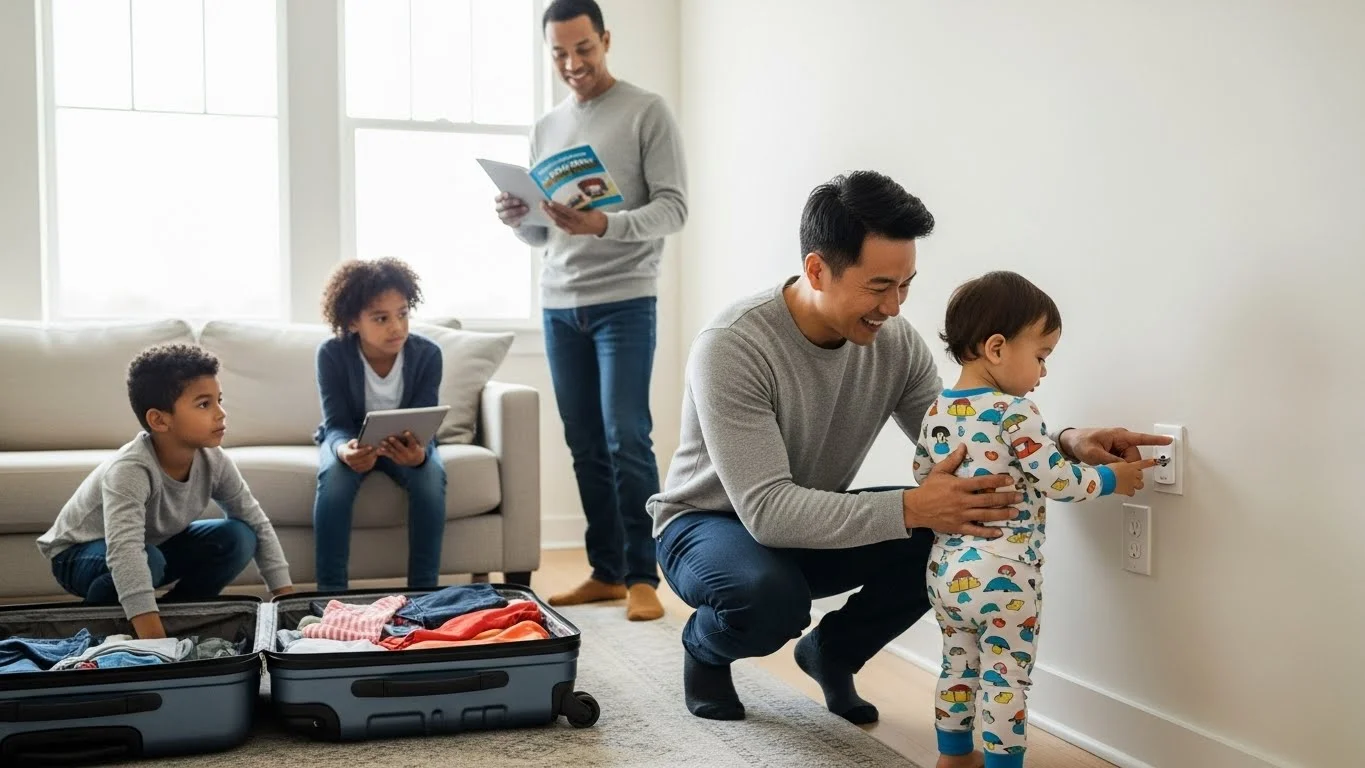
Childproofing is one of those tasks I always prioritize. I remember the first time I childproofed my home; it felt like I was preparing a fortress! I installed outlet covers on all accessible outlets and even used safety plugs on ones that were less frequently used. It gave me peace of mind knowing that my kids couldn’t easily access these hazards. If you’re unsure where to start, I recommend looking for kits specifically designed for childproofing. They usually include all the necessary tools and instructions.
Securing Loose Wires and Cords
Loose wires and cords can be a trip hazard as well as a tempting target for curious kids. I learned this the hard way when my youngest decided to tug on a charging cord, causing my laptop to nearly topple off the table. Since that incident, I’ve made it a point to secure all cords. I use cord clips or ties to keep them neatly organized and out of reach. If I have any cords running along the floor, I make sure they’re tucked away or covered with cord covers. This small step has made a significant difference in our home safety.
Essential Electrical Safety Tips for Families
Using Surge Protectors and Power Strips
Power surges can happen at any time, and I’ve learned the importance of using surge protectors. When we travel, I always recommend using surge protectors for devices that are more susceptible to damage. It’s a simple step that can save you a lot of trouble later on. I remember a time when my kids and I were away for a week, and a storm knocked out power in our area. Thankfully, the surge protector saved our TV and other electronics from damage.
Unplugging Non-Essential Appliances
Unplugging appliances that aren’t in use is another habit I’ve adopted. It might seem like a hassle, but I think it’s worth it for the added safety and energy savings. Before a trip, I make a checklist of things to unplug, like the toaster, coffee maker, and any other devices we won’t need. This not only reduces the risk of electrical fires but also saves on our electricity bill.
Labeling Circuit Breakers and Fuses
Labeling circuit breakers and fuses is something I wish I had done sooner. It’s incredibly helpful, especially if you have to deal with an electrical issue while away. I took the time to label each breaker, which has saved us from confusion and potential disasters. If something goes wrong, I can quickly identify which breaker to switch off, giving me peace of mind. I encourage everyone to take this simple step; it could be a lifesaver in an emergency.
What to Do in Case of an Electrical Emergency
Identifying Electrical Emergencies
When I think about electrical emergencies, I realize that they can happen at the most unexpected moments. It’s important to know how to identify these situations so we can act quickly. Some signs that you might be facing an electrical emergency include:
- Flickering or Dimming Lights: I once had a light that flickered on and off, and I ignored it for a while, thinking it was just a bulb issue. However, it turned out to be a sign of wiring problems that could have led to something much worse.
- Burning Smell: If you ever smell something burning, especially near electrical outlets or appliances, take it seriously. I remember feeling a sense of panic when I caught a whiff of something strange coming from our living room. It turned out to be an overheated power strip that I quickly unplugged.
- Odd Sounds: If you hear buzzing or crackling noises coming from your outlets or wires, that’s a red flag. I’ve had moments when I dismissed such sounds, but trust me, investigating right away is key.
- Tripped Circuit Breakers: If you notice your circuit breaker tripping frequently for no apparent reason, it could indicate an underlying issue. I learned this the hard way when I had to reset the breaker multiple times in one night. It’s best to call in a professional to check it out.
Recognizing these signs can help prevent potential disasters and keep our families safe.
Emergency Contact Information for Electricians
Having emergency contact information for electricians readily available can be a huge relief during an electrical emergency. I’ve made it a habit to have a list of local electricians and their contact numbers stored on my phone and also written down in a visible spot at home. When we had a minor electrical issue a while back, I was so grateful to have that information at my fingertips. I recommend gathering contact details for at least two or three electricians—this way, if one isn’t available, you have backups.
It’s also a good idea to find out if they have emergency services or after-hours support. Many electricians offer 24/7 service, which can be a lifesaver in urgent situations. Another tip I’ve learned is to keep a notepad or a digital note where you can jot down any issues you notice with your electrical system. This way, when you do contact an electrician, you’ll be prepared with all the relevant information.
Traveling with Kids: What to Communicate
Teaching Kids About Electrical Safety
While we take steps to ensure our homes are safe, I believe it’s equally important to educate our kids about electrical safety. My approach has always been to have open conversations with my children about the dangers of electricity. I remember how I used to explain to them that electricity is powerful and can be dangerous if not treated with respect. It’s not about scaring them, but rather empowering them with knowledge.
I often use real-life examples and scenarios they can understand. For instance, I would tell them that just like we stay away from hot stoves, we should also avoid touching outlets and wires. We even created a fun game where they had to identify safe and unsafe electrical practices around the house. This interactive approach made it easier for them to grasp the concepts and remember the rules.
Discussing Emergency Plans with Kids
When I’m preparing for a trip, I always make sure to sit down with my kids to discuss our family emergency plan. I think it’s essential for them to understand what to do in case of an electrical emergency, even when we’re not home. We talk about what signs to look for and who to call if something goes wrong. I remember how serious they became when we practiced our plan; it showed me that they were really listening and absorbing this important information.
We also discuss the importance of staying calm and not being afraid to ask for help. Creating a family safety plan together not only gives me peace of mind but also fosters a sense of responsibility in my kids. They feel like they’re part of the solution, and I think that’s a valuable lesson.
Resources for Home Electrical Safety
Safety Guidelines from the National Fire Protection Association (NFPA)
One of my go-to resources for electrical safety is the National Fire Protection Association (NFPA). They provide a wealth of information on how to prevent electrical fires and keep homes safe. I remember spending a cozy afternoon going through their guidelines and checking them against our home’s safety measures. Their website is user-friendly and offers practical tips that are easy to implement.
They also have resources tailored for families, which I found particularly helpful. I printed out some materials and hung them on our refrigerator as a constant reminder of safety practices. It’s a great way to keep everyone informed and engaged.
Local Electrical Safety Programs and Workshops
Another fantastic resource I discovered in our community is local electrical safety programs and workshops. Many communities offer free or low-cost classes focused on electrical safety that families can attend together. I took my kids to one last summer, and it turned out to be a fun and educational experience for all of us. We learned about basic electrical principles and how to stay safe in various situations.
These workshops often include hands-on activities, which I found made the learning process even more engaging. Plus, it’s a great way to meet other families who share similar concerns about safety. I recommend checking your local community center or fire department to see what’s available near you. It’s a wonderful way to invest in your family’s safety while also enjoying quality time together.
Final Checklist for Safe Travels
Creating a Family Safety Plan
As I gear up for our family trips, one of the most important tasks on my list is creating a family safety plan. This plan isn’t just about what to do in case of an electrical emergency; it encompasses everything from fire safety to first aid. I remember when I first introduced this idea to my kids; they were a bit skeptical but quickly got into it. We sat together and talked about potential emergencies and how to handle them. It felt empowering for them to know they had a role in our family’s safety.
I recommend starting by discussing different scenarios that could arise. For example, we talked about what to do if there’s a fire, how to safely evacuate, and where to meet outside the house. I also included electrical emergencies in the conversation, linking it to the lessons we’ve learned about avoiding outlets and knowing when to call for help. Having this open dialogue made my kids feel included and responsible. Plus, it was a great way to reinforce important safety lessons in a relaxed environment.
We also made a visual plan that included drawings and simple instructions. It’s something I can easily hang on the wall in a common area for everyone to see. When we go on trips, I can point back to it and remind them of our discussions. Making it a family project not only strengthens our bond but also ensures that everyone knows their role in keeping each other safe.
Ensuring All Safety Measures Are in Place Before Departure
Before I close the door behind us for a trip, I always run through a final checklist to make sure all safety measures are in place. I learned the hard way that it’s easy to forget something in the hustle and bustle of packing and preparing for the journey. That’s why I’ve created a systematic approach that I follow religiously.
First, I check that all appliances are unplugged, particularly those that can heat up or pose a risk. I make a habit of walking through the kitchen, living room, and any other areas with appliances. I often remind myself of that one time I forgot to unplug the iron, and it kept me awake all night with worry! Now, I triple-check everything, from the coffee maker to the toaster.
Next, I ensure that all windows and doors are securely locked. I make sure that any potential entry points are closed and safe. I’ve read stories about break-ins occurring when families are away, and that’s something I’d never want to face. I also double-check that any outdoor equipment, like grills or tools, is stored properly to prevent accidents while we’re gone.
Lastly, I do a quick review of our emergency contact list. This includes not only the numbers of trusted electricians and family members but also our neighbors. I find it comforting to know that someone can keep an eye on our house while we’re away. I give them a heads-up about our travel plans and remind them they can reach out if they notice anything unusual.
By following this checklist, I feel more at ease during our travels. It gives me the reassurance that I’ve done everything possible to keep our home safe, allowing me to focus on creating beautiful memories with my family.
Final Thoughts
Reflecting on our family’s journey with electrical safety, I’ve come to realize just how vital it is to take these precautions seriously. Traveling with kids is a whirlwind of activity, but ensuring our home is safe creates a strong foundation for peace of mind. I genuinely believe that by implementing these practices, we can prevent accidents and create a secure environment, whether we’re at home or on the road.
Every family is different, and I encourage you to customize your safety measures based on your specific needs and circumstances. For instance, I’ve found that involving my kids in safety discussions not only educates them but also reinforces our family bond. It’s amazing how a little bit of knowledge and preparation can empower them to be more responsible and aware of their surroundings.
As we plan our next adventure, I remind myself that safety doesn’t have to be a burden; it can be a shared family project. By turning these tasks into fun activities—like inspecting outlets or creating our emergency plan together—we make it an opportunity for learning and engagement. This approach has not only helped keep our home safe but has also instilled a sense of responsibility in my children.
When we return home after a trip, I love knowing that everything is in order, thanks to our careful planning. I feel that it’s worth taking the time to double-check everything before we leave. It allows us to focus on the joy of our travels, making memories together without the nagging worry of what might be going on back home.
So, as you prepare for your next journey, I hope you’ll take these insights to heart. Let’s prioritize electrical safety and create a secure space for our families, allowing us to explore the world with confidence. Safe travels and happy adventures await!
Frequently Asked Questions
Why is electrical safety important when traveling with kids?
Electrical safety is crucial because children are naturally curious and may not understand the dangers present in our homes. Ensuring everything is secure before traveling helps protect them from potential hazards.
What are some common electrical hazards in homes?
Common electrical hazards include exposed wires, overloaded outlets, uncovered outlets, and unsecured extension cords. These can pose serious risks, especially for children.
What steps can I take to conduct a home electrical inspection?
To conduct a home electrical inspection, walk through each room checking outlets, cords, and appliances for signs of wear and tear, such as frayed wires or scorch marks on outlets.
How can I childproof electrical outlets?
Childproofing can be done by installing outlet covers on all accessible outlets and using safety plugs on less frequently used ones. Kits designed for childproofing usually include all necessary tools and instructions.
What are some essential electrical safety tips for families?
Essential tips include using surge protectors for sensitive devices, unplugging non-essential appliances when not in use, and labeling circuit breakers and fuses to identify them easily in case of an emergency.
What should I do if I notice signs of an electrical emergency?
Signs of an electrical emergency include flickering or dimming lights, a burning smell near electrical outlets or appliances, odd sounds like buzzing or crackling, and frequently tripped circuit breakers. These should be addressed immediately.
How can I prepare for an electrical emergency?
Keep emergency contact information for electricians readily available, and consider gathering details for at least two or three electricians for backup. It’s also helpful to note any electrical issues you’ve noticed for when you contact them.
How can I teach my kids about electrical safety?
Educate your children through open conversations about the dangers of electricity, using real-life examples. Engaging them in games or discussions about safe and unsafe electrical practices can reinforce their understanding.
What should be included in a family emergency plan regarding electrical safety?
Your family emergency plan should include what to do in case of an electrical emergency, signs to look for, and who to call for help. Practicing this plan can ensure everyone knows their role in an emergency.
What resources can I use for home electrical safety?
Resources include safety guidelines from the National Fire Protection Association (NFPA) and local electrical safety programs or workshops that families can attend together for practical learning experiences.