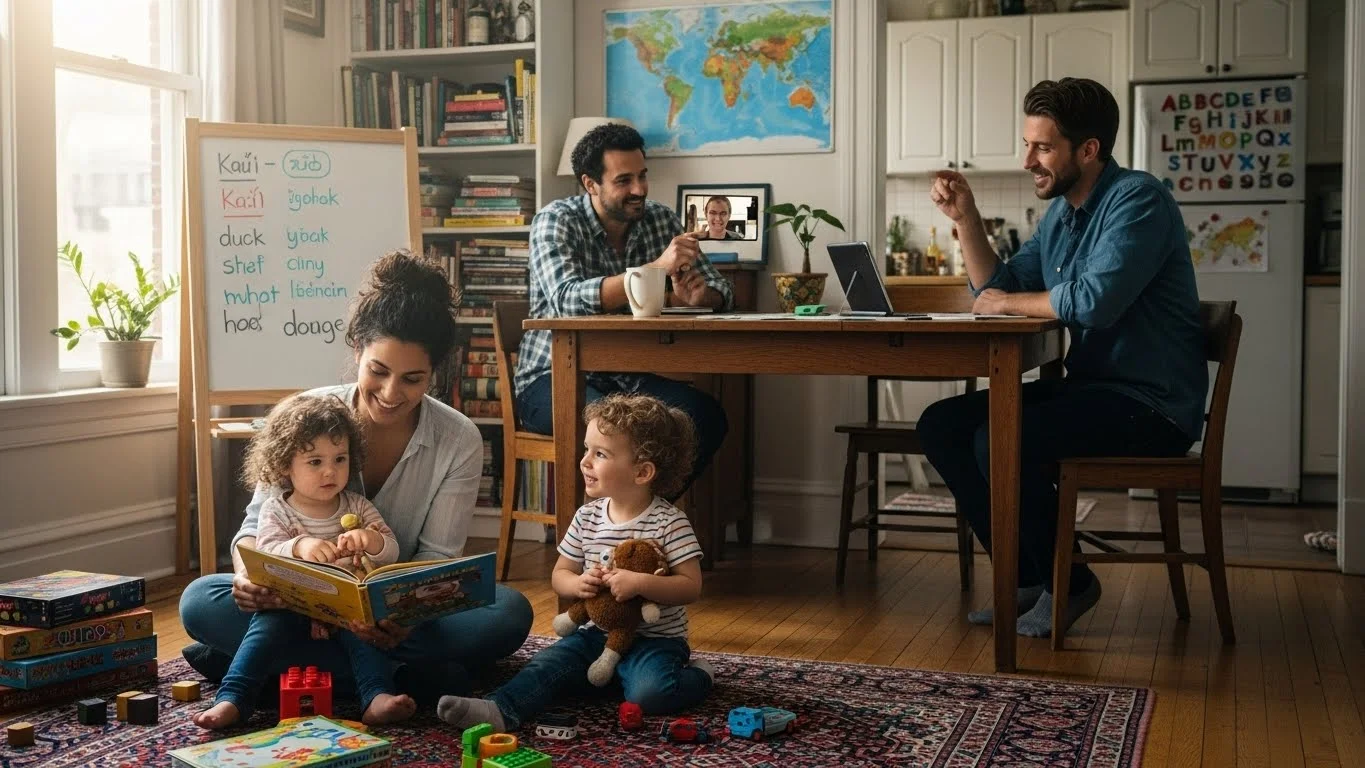
Raising multilingual kids is a rewarding journey that opens doors to diverse cultures and perspectives. As a parent, I’ve experienced the joys and challenges of nurturing bilingualism in my children, and I’m excited to share insights that can help you on this path. Read Interesting article: Top 5 Destinations for Bilingual Toddler Adventures
Unlocking Bilingualism: Tips for Raising Multilingual Kids
Understanding Bilingualism and Multilingualism
Definition of Bilingualism
Bilingualism refers to the ability to communicate fluently in two languages. This can manifest in various forms: a person might speak both languages equally well, or they may be more proficient in one than the other. I remember when I first came across this concept; it made me realize that many people, including my own family members, were bilingual without even knowing it. They would switch between languages seamlessly during conversations, which sparked my interest in raising my children to embrace multiple languages.
Definition of Multilingualism
Multilingualism expands on bilingualism, encompassing the ability to communicate in three or more languages. This can be a bit more complex, as it involves juggling different languages and cultural nuances. I often find myself amazed at how some families manage to navigate multiple languages in their daily lives. It’s not just about knowing the words; it’s about understanding the cultural context and using the right language at the right time.
Benefits of Raising Multilingual Children
The benefits of raising multilingual children are profound and far-reaching. From my experience, multilingualism enhances cognitive abilities. Children who learn multiple languages often show improved problem-solving skills and creativity. For instance, I’ve noticed that my kids approach challenges with a unique perspective, likely influenced by their exposure to different languages and cultures.
Socially, being multilingual opens up a world of connections. My kids have made friends from various backgrounds, enriching their social interactions. They’ve learned to appreciate diverse cultures and perspectives, which I believe is invaluable in today’s global society. Plus, there’s something heartwarming about hearing my children express themselves in different languages, seeing their confidence grow as they communicate with friends and family worldwide.
Academically, studies show that multilingual children often perform better in school. They tend to excel in language-related subjects and develop a deeper understanding of their primary language. I’ve observed this firsthand; my children’s vocabulary and comprehension skills have soared as they navigate between languages. In my opinion, this dual language exposure has given them a solid foundation for lifelong learning.
Another benefit I cherish is the cultural richness that comes with multilingualism. Celebrating heritage and traditions has become part of our family’s identity. We often gather for cultural events, where my kids practice their language skills while enjoying delicious traditional foods. It’s a beautiful way to keep our roots alive while embracing our diverse community.
However, it’s essential to recognize that raising multilingual children isn’t without its challenges. Countries, societies, and even schools can place emphasis on one language over another, which can create pressure to conform. I’ve felt this as a parent, particularly when my kids were faced with peers who primarily spoke English. But I’ve come to believe that with the right strategies and mindset, we can nurture their multilingual skills even in a predominantly monolingual environment.
In summary, understanding bilingualism and multilingualism is foundational to raising multilingual children. It goes beyond mere language acquisition; it’s about fostering cognitive, social, and emotional growth. As parents, we have the unique opportunity to shape our children’s experiences, helping them thrive in an increasingly interconnected world.
Choosing the Right Languages
Factors to Consider When Selecting Languages
Choosing the right languages for our children can feel like a daunting task, but it’s also one of the most exciting parts of our multilingual journey. There are several factors to consider, and I found it helpful to reflect on what my family values and our unique circumstances. For example, I thought about the languages spoken by our family members. It’s important to me that my kids feel a connection to their heritage, so we made sure to include our native language in their learning.
Another factor I considered was the languages spoken in our community. Being in an environment where other kids speak the same language can encourage my children to use it more. I remember when we moved to a neighborhood with a large Spanish-speaking population; the opportunity for my kids to interact with peers in Spanish was invaluable. It reinforced their learning and made the language come alive in their daily interactions.
Heritage Languages vs. Community Languages
I often hear parents debate whether to prioritize heritage languages or community languages. In our case, we chose to embrace both. Our heritage language is a vital part of our identity, connecting us to our roots and family traditions. I’ve seen how my children’s understanding of our culture deepens when they learn the language. For instance, they enjoy family gatherings where we speak our heritage language, and they get to share stories and customs.
On the other hand, community languages can provide practical benefits. They open up more social opportunities and help build friendships. My children love making friends at school who speak English, and it’s heartwarming to see them blend their heritage with the new language. I believe finding a balance between the two types of languages is key to helping them feel connected and engaged.
Language Popularity and Global Influence
When selecting languages, I’ve also considered their global influence. Languages like Mandarin, Spanish, and French can offer my kids broader opportunities in the future. I often remind myself that learning a language is not just about communication; it’s about understanding different cultures and perspectives. I remember discussing with my kids how learning Mandarin could be beneficial considering China’s growing global presence. It got them excited about the possibilities!
However, I found that focusing solely on language popularity can sometimes overshadow the importance of personal connection. While a widely spoken language can be useful, a language that resonates with my family’s history can be equally enriching. I encourage my kids to explore languages that spark their interest, whether it be through music, movies, or books. It’s all about making the learning process fun and meaningful! Read Interesting article: Traveling Abroad: Encourage Bilingualism in Your Toddler
Effective Strategies for Raising Multilingual Kids
Creating a Language-rich Environment at Home
One of the most effective strategies I’ve implemented is creating a language-rich environment at home. I wanted our space to reflect the diversity of languages we’re learning, so I decorated with bilingual books and labeled household items in both languages. It’s amazing how a simple label on a door or a cupboard can spark curiosity and conversation. My kids often find themselves asking, “What does this mean?” and it opens the door for more learning.
We also regularly engage in language games and activities. From board games that require using different languages to storytelling sessions where we take turns narrating stories in various languages, I’ve seen how play can make language learning enjoyable. It’s a way for us to bond as a family while also reinforcing their language skills.
Consistent Language Exposure
Consistency is key when raising multilingual children, and I’ve learned that maintaining regular exposure to each language is essential. I try to create a routine that incorporates all the languages seamlessly. For instance, we designate specific days for each language, or we might have a “language hour” where only one language is spoken. I’ve noticed that my children respond well to this structure, as it helps them compartmentalize their learning.
Implementing the One Parent, One Language (OPOL) Approach
We decided to adopt the One Parent, One Language (OPOL) approach. This method involves each parent consistently speaking a different language to the children. I speak our heritage language, while my partner speaks English. Initially, I was concerned about how it would work, but I’ve found that it really helps reinforce both languages. The kids have learned to switch between languages depending on who they are talking to, which is truly fascinating to witness.
Using Media and Technology to Enhance Language Learning
In today’s digital age, media and technology can be fantastic tools for language learning. We’ve embraced apps, audiobooks, and educational videos in the languages we’re focusing on. I found that my kids are more inclined to engage with content on devices, so I made sure to fill their screens with enriching language resources. Watching their favorite cartoons in another language or listening to music has made language learning feel less like a chore and more like an adventure.
Incorporating Cultural Activities and Traditions
Lastly, incorporating cultural activities has been a rewarding way to enhance language learning. We celebrate holidays from our heritage culture, cook traditional recipes together, and participate in community events. For me, these activities create a joyful connection to the language, making it more than just a means of communication. I’ve seen my children’s eyes light up during celebrations when they can use the language they’ve learned while engaging in fun traditions.
Educational Resources for Multilingual Families
Books and Storytelling in Multiple Languages
One of my favorite ways to support my children’s multilingual journey is through books and storytelling. There’s something magical about curling up with a good story, and it becomes even more special when those stories are in different languages. I’ve made it a point to fill our home with bilingual books that feature engaging stories and colorful illustrations. I remember when my kids first picked up a bilingual fairy tale – their eyes lit up as they recognized familiar words while discovering new ones. It sparked their curiosity and encouraged them to ask questions about the story’s context and characters.
Storytelling has become an integral part of our family routine. We often take turns narrating stories in different languages, which not only makes it fun but also reinforces their language skills. I’ve found that using props or acting out the stories adds another layer of excitement. It transforms a simple read-aloud into an immersive experience, making the languages come alive. I truly believe that these shared moments of storytelling are helping to create lasting memories while deepening their understanding of both languages.
Language Classes and Tutoring Options
As my children grew, I started considering more structured learning opportunities. Enrolling them in language classes became an exciting venture for us. I found that many local community centers or schools offer language programs specifically designed for children. Watching my kids interact with peers in a classroom setting, learning new vocabulary, and practicing pronunciation was heartwarming. It also gave them a chance to meet others on the same multilingual journey.
If formal classes weren’t an option, I sometimes turned to tutoring. Hiring a tutor who specializes in the languages we focus on allowed for personalized attention. My kids thrived during these sessions, as they could ask questions freely and engage in conversation at their own pace. I’ve learned that finding the right fit is essential; a tutor who makes learning enjoyable can spark a love for the language that extends beyond the lessons.
Online Resources and Mobile Apps
In our tech-driven world, online resources and mobile apps have been game-changers in our language learning adventure. I’ve discovered a treasure trove of interactive websites and apps that offer engaging activities, games, and lessons in multiple languages. For instance, my children love using language-learning apps that make practice feel like play rather than a chore. I’ve noticed that they’re often more inclined to pick up their tablets when there’s an exciting game involved!
Additionally, streaming platforms have become a fantastic resource for us. I let my kids watch shows and movies in the target languages, which helps them develop listening skills and comprehension in a relaxed setting. It’s been a delight to see them singing along to songs or quoting their favorite characters in another language. It’s a reminder that language learning doesn’t have to be limited to formal education; it can be woven into our everyday activities.
Socialization and Language Practice
Finding Multilingual Playgroups and Communities
Connecting with other families who are on a similar multilingual path has been invaluable for us. I actively sought out local playgroups or community events where different languages were spoken. These gatherings provided a fun environment for my kids to interact with others who share their language interests. I remember one playgroup where the kids played games that encouraged them to use their language skills; it was incredible to watch them engage and grow more comfortable in their usage.
Socializing in these groups has not only reinforced their language learning but also created friendships that span different cultures. Seeing my children play, laugh, and communicate in multiple languages with peers is a joy I cherish. It’s amazing how their confidence flourishes in these supportive environments, and I believe it strengthens their language retention as they practice in real-life scenarios.
Encouraging Language Use with Friends and Family
Encouraging my children to use their languages with friends and family has been another key strategy. I’ve always emphasized the importance of speaking our heritage language with relatives, especially during family gatherings. It’s heartwarming to see my kids converse with their grandparents or cousins, sharing stories and jokes in the language we’ve nurtured at home.
Additionally, I encourage my children to invite friends over for playdates where they can practice speaking in the languages we’re learning. I’ve noticed that when they interact with friends in a playful context, they’re more likely to experiment with their language skills. It’s all about creating a safe space where they feel comfortable exploring new vocabulary and phrases without fear of making mistakes.
Traveling to Language-Speaking Countries
Traveling to countries where the languages we are learning are spoken has been a dream of mine for our family. I believe there’s no substitute for immersion when it comes to language learning. I remember our first trip to a Spanish-speaking country; it was eye-opening for my kids. They quickly realized that the language skills they had been practicing at home came to life in real conversations with locals. Read Interesting article: Exploring the World: Language Acquisition Strategies for Toddlers
During our travels, I encouraged them to order food, ask for directions, and interact with children their age. Watching them engage in language practice while exploring new places was a proud moment for me as a parent. It reinforced their learning and gave them a sense of accomplishment. Traveling has become a part of our language journey, and I hope to create more opportunities for immersion as my kids continue to grow.
Challenges in Raising Multilingual Kids
Addressing Language Interference
One of the challenges I’ve encountered in raising multilingual children is language interference. This happens when my kids mix languages within sentences or use vocabulary from one language while speaking another. I remember a funny moment when my youngest, in a mix of English and our heritage language, asked for “pancakes con syrup.” At first, I was concerned that they might struggle to separate the languages. But then I realized that this mixing is a natural part of the bilingual journey. It’s a sign that they’re experimenting and figuring out how to navigate their multilingual world.
To help them, I focus on gently correcting them when they mix languages, encouraging them to express their thoughts clearly in the appropriate language. By providing consistent support and modeling correct usage, I’ve seen their language skills strengthen over time. It’s all about patience and understanding that language learning is a process filled with little hiccups along the way.
Managing Language Attrition
Language attrition is another hurdle I’ve faced. This phenomenon occurs when children lose proficiency in a language they don’t regularly use. I noticed it when my kids showed signs of forgetting words in our heritage language after spending more time in English-speaking settings. It made me realize how vital it is to keep both languages alive in our daily lives. To combat this, we’ve made a conscious effort to incorporate our heritage language into daily conversations, even if it’s just little snippets throughout the day.
Regularly engaging with family members who speak our heritage language has also been beneficial. We schedule video calls with relatives, encouraging my kids to converse in the language. I’ve found that real-life interactions, even virtual ones, really help reinforce their language skills and keep the vocabulary fresh in their minds.
Dealing with Societal Attitudes Towards Multilingualism
Societal attitudes towards multilingualism can be quite varied, and at times, it can feel discouraging. I remember when my children faced questions from peers about why they spoke a different language. Some kids didn’t understand and would tease them, which left my children feeling self-conscious. I’ve learned that addressing these situations head-on is essential. We often talk about the beauty of different cultures and languages at home, reinforcing pride in our multilingual identity.
Additionally, I find it helpful to involve my children in discussions about the importance of diversity and inclusion. By fostering an open dialogue about how languages connect us to our heritage, we’re building their confidence. I also encourage them to share their language experiences with friends, turning potential teasing into opportunities for education and connection.
Monitoring Progress and Encouraging Language Use
Setting Language Goals for Children
Monitoring my children’s progress in their language skills has been an essential part of our multilingual journey. We’ve set specific language goals together, making it a collaborative process. For instance, we decided that they would learn a certain number of new words each week or practice reading a book in our heritage language. I’ve found that involving them in setting these goals gives them ownership of their learning, making it feel more rewarding.
Assessing Language Proficiency
Regularly assessing their language proficiency has also helped us stay on track. I often ask them to explain new concepts or share stories in both languages to gauge their understanding. This informal assessment allows me to see where they might need extra support or practice. I’ve noticed that when they can comfortably switch between languages, it boosts their confidence and reinforces their skills.
Encouraging Language Use in Daily Life
Encouraging my children to use their languages in daily life is one of the most rewarding aspects of our journey. We incorporate language practice into fun activities, such as cooking together using recipes in our heritage language or playing board games that require language use. I’ve discovered that the more they can use their languages in enjoyable situations, the more naturally it comes to them. It’s a beautiful cycle of learning and practicing that has helped solidify their skills.
Resources for Parents
Books on Bilingualism and Multilingualism
As a parent, I’ve found that reading about bilingualism and multilingualism has provided me with insights and strategies that I can apply to our family. I highly recommend exploring books that delve into the science behind language learning, as they can offer practical tips and encouragement. Some of my favorites include “Raising a Bilingual Child” by Barbara Z. Kroll and “The Bilingual Family: A Handbook for Parents” by Edith Harding-Esch. These reads have inspired me and made me feel more equipped for the challenges we face.
Websites and Online Communities for Support
Engaging with online communities has been a lifeline during our multilingual journey. Websites and forums dedicated to bilingualism provide a wealth of resources where parents share their experiences, tips, and advice. I’ve found tremendous support from groups on social media where I can connect with other parents navigating similar paths. This sense of community has been invaluable in reminding me that we’re not alone in this journey.
Local and National Organizations Supporting Multilingual Families
Lastly, I encourage exploring local and national organizations that support multilingual families. Many of these organizations offer workshops, resources, and events designed to foster multilingual education. I’ve found local language schools and community centers that host events celebrating cultural diversity, which not only enrich my children’s language exposure but also connect us with other multilingual families in our area.
Final Thoughts
Raising multilingual children is a journey filled with challenges, joys, and countless learning opportunities. Through the ups and downs, I’ve seen how embracing multiple languages enriches not only my children’s lives but our entire family’s experience. It’s about more than just learning words; it’s about fostering connections, understanding cultures, and building a sense of identity that transcends borders. I believe that as we navigate this path, we’re not just teaching our children languages; we’re equipping them with tools to thrive in an interconnected world. I encourage every parent on this journey to embrace the beauty of multilingualism and cherish the unique experiences it brings.
Frequently Asked Questions
What is the difference between bilingualism and multilingualism?
Bilingualism refers to the ability to communicate fluently in two languages, while multilingualism encompasses the ability to communicate in three or more languages. Bilingualism can manifest in varying degrees of proficiency, whereas multilingualism involves juggling multiple languages and their cultural nuances.
What are some benefits of raising multilingual children?
Raising multilingual children enhances cognitive abilities, improves problem-solving skills, fosters social connections, and often leads to better academic performance. Additionally, it enriches cultural understanding and helps children appreciate diverse perspectives.
How can parents choose the right languages for their children?
Parents can consider factors such as family heritage, the languages spoken in their community, and the global influence of certain languages. Balancing heritage languages with community languages can help children feel connected while also providing practical benefits.
What is the One Parent, One Language (OPOL) approach?
The One Parent, One Language (OPOL) approach involves each parent consistently speaking a different language to their children. This method helps reinforce both languages and allows children to learn to switch between languages based on who they are communicating with.
What strategies can help create a language-rich environment at home?
Creating a language-rich environment can include decorating with bilingual books, labeling household items in multiple languages, engaging in language games and activities, and incorporating storytelling sessions that involve different languages.
How can parents address language interference in multilingual children?
Parents can address language interference by gently correcting their children when they mix languages and encouraging them to express their thoughts clearly in the appropriate language. Patience and consistent support are essential as children navigate their multilingual journey.
What is language attrition and how can it be managed?
Language attrition occurs when children lose proficiency in a language they don’t regularly use. To manage this, parents can incorporate the heritage language into daily conversations and engage with family members who speak that language to keep vocabulary fresh.
How can socialization and playgroups benefit multilingual children?
Socializing in multilingual playgroups allows children to practice their language skills in a fun environment, fostering friendships and boosting confidence. It helps reinforce their learning and encourages them to use their languages in real-life scenarios.
What resources are available for parents raising multilingual children?
Parents can explore books on bilingualism, engage with online communities for support, and connect with local and national organizations that offer resources and events to foster multilingual education and celebrate cultural diversity.
What are some effective ways to encourage language use in daily life?
Encouraging language use can involve incorporating language practice into enjoyable activities, such as cooking with recipes in the target language, playing language-based games, and setting language goals together with children to make learning feel rewarding.
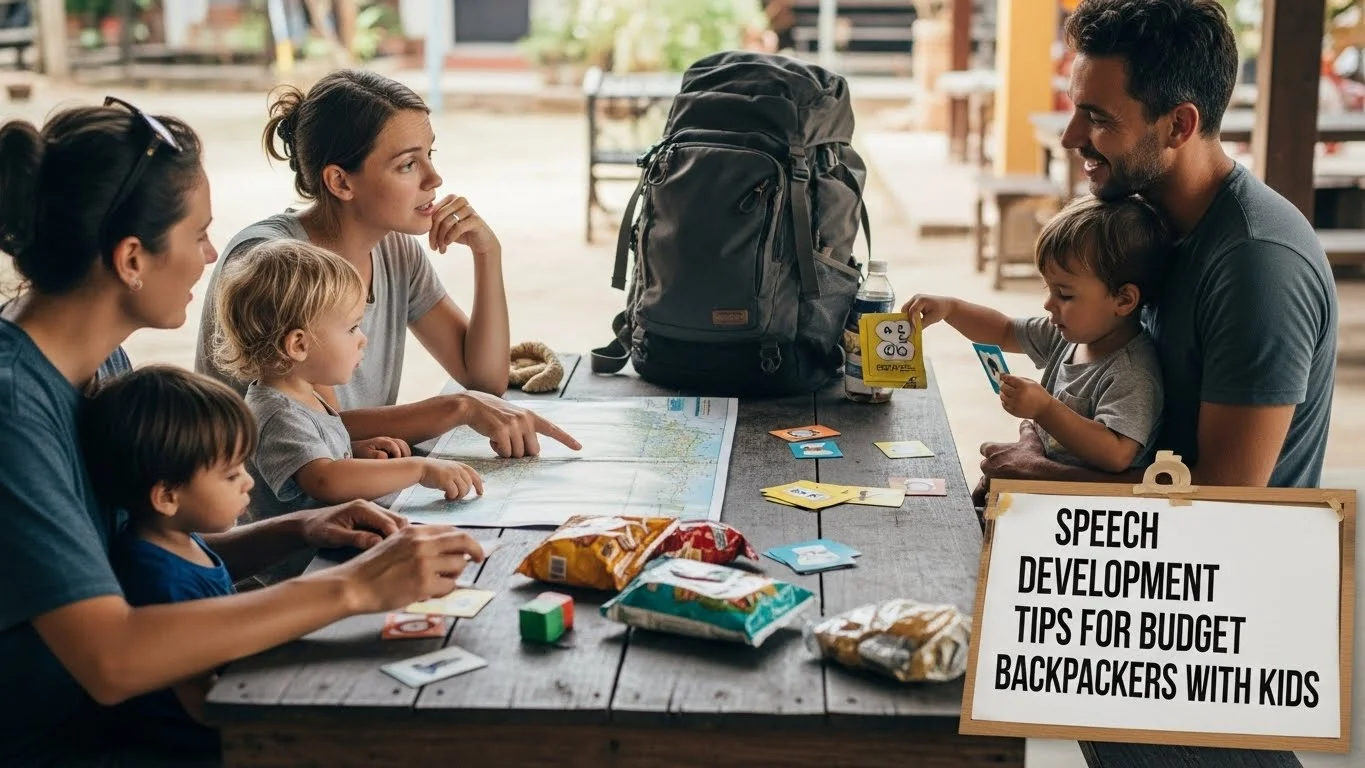
Traveling with kids can be an adventure filled with learning, especially when it comes to developing their speech skills. For budget backpackers, finding creative and cost-effective ways to enhance language development is key. Read Interesting article: Backpacking Around Speech Milestones: What to Expect
Speech Development Tips for Budget Backpackers with Kids
Understanding Speech Development in Children
As a parent, I’ve often found myself curious about how my kids learn to communicate. Speech development is such a fascinating journey, and understanding it can help us nurture our children in the best way possible. I’ve learned that children typically progress through several stages of speech development, and being aware of these can guide us in our interactions during our travels.
The Stages of Speech Development
Children’s speech development generally unfolds in stages. I remember when my first child was babbling away, and I couldn’t help but celebrate every little sound that came out of their mouth. Here’s a breakdown of those stages:
Pre-linguistic Stage (0-12 months): At this stage, babies communicate through cooing and babbling. I found that mimicking these sounds encouraged my kids to experiment with their voices.
One-Word Stage (12-18 months): Here, kids start using single words. I would often label objects around us, especially during our travels, to help my kids associate words with things they see.
Two-Word Stage (18-24 months): This is when children start forming simple sentences. I would prompt my kids to combine words, like “more juice” or “big truck,” especially when we encountered exciting things on our trips.
Early Multi-word Stage (2-3 years): Children begin to form short sentences. I remember having simple conversations about our day, which helped them build longer phrases.
Complex Speech Stage (3+ years): Kids start using more complex sentences. I would encourage them to tell stories about our adventures, which sparked their imagination and vocabulary.
Factors Influencing Speech Development
While these stages provide a framework, I’ve realized that various factors influence how and when children progress through them. For example:
Environment: The surroundings play a huge role. During our travels, I’ve noticed that exposure to new languages and cultures enriched my kids’ vocabulary.
Parental Interaction: Engaging with my kids through conversations made a significant impact. I often find that asking open-ended questions encourages them to think and respond more creatively.
Social Interaction: Meeting new people and playing with other children contributed to their speech skills. I’ve seen how friendships formed during our travels led to richer language experiences for them.
Ultimately, I’ve come to believe that the more we, as parents, engage with our children, the more they learn. It’s a beautiful cycle of communication that I cherish and want to nurture, especially while we’re out exploring the world.
Budget-Friendly Activities to Enhance Speech Skills
Traveling on a budget doesn’t mean compromising on our kids’ speech development. I’ve discovered numerous activities that can enhance their language skills without breaking the bank. Here are some of my favorites:
Storytelling on the Road
Storytelling has been a powerful tool in our family. During long bus rides or train journeys, I often tell stories from our travels. I encourage my kids to create their own tales as well. They can describe what they see outside the window or invent characters based on our experiences. I noticed this not only improves their vocabulary but also strengthens their imagination.
Interactive Games for Language Learning
Games are a fantastic way to keep our children engaged while learning. I love playing word games like “I Spy” or “20 Questions” during our travels. These games stimulate their curiosity and prompt them to think critically. I’ve found that making learning fun encourages my kids to express themselves more freely.
Using Nature for Vocabulary Building
Nature is an incredible classroom. I often take my kids on hikes or walks in parks, pointing out different plants, animals, and natural phenomena. I encourage them to describe what they see and ask questions. This exploration helps them build their vocabulary in a hands-on way, connecting words to real-life experiences.
By integrating these activities into our travels, I’ve seen my children thrive in their speech development. It’s rewarding to witness their progress, and I believe that being mindful of these opportunities can make a difference for other parents as well. Read Interesting article: Essential Speech Milestones for Young Travelers
Traveling Tips for Engaging Conversations
As we journey through different places, I’ve found that engaging conversations with my kids not only enhances their speech skills but also deepens our bond. Here are some tips I’ve used to spark those meaningful discussions while we travel.
Encouraging Questions and Curiosity
I believe that curiosity is the gateway to learning, and I’ve made it a point to encourage my kids to ask questions about everything they encounter. Whether we’re exploring a new city or hiking up a mountain, I invite them to share what they’re curious about. I often say things like, “What do you think that building is used for?” or “Why do you think the trees look different here?” I’ve noticed that this practice not only boosts their confidence in speaking but also encourages them to think critically. When they ask questions, I try to provide answers that are age-appropriate and sometimes even delve deeper, asking them follow-up questions to keep the conversation flowing.
For instance, while visiting a historical site, my daughter once asked, “Why did they build it this way?” This led to a fascinating discussion about architecture and history, making her feel involved and valued. I’ve found that when kids see their questions as important, it motivates them to express themselves more often.
Practicing Pronunciation with Simple Songs
Music has always been a part of our travels. I often play simple songs that are catchy and easy to sing along with. These songs usually have repetitive phrases that make it fun for my kids to practice their pronunciation. Sometimes, we even make up our own travel songs about the places we’re visiting, which adds a personal touch to our journey.
During one memorable trip, we created a little song about the different animals we saw at a wildlife park. It was a joy to hear them sing and laugh, and I noticed that they were more willing to try out new words and sounds. Songs have a magical way of sticking in our minds, and I’m convinced that this method not only enhances their speech skills but also makes our travels more enjoyable.
Essential Resources for Parents on the Go
Finding the right resources while traveling can be challenging, but I’ve discovered some fantastic tools that can support my kids’ speech development on the go. These resources have made a significant difference in our travels.
Books and Audiobooks for Language Exposure
Books have always been a staple in our family, especially during long journeys. I make it a point to carry a selection of picture books and storybooks that are age-appropriate for my kids. Reading together not only helps with vocabulary but also sparks conversations about the stories. I love asking them about their favorite characters or what they think will happen next in the story.
In addition to physical books, audiobooks have been a game changer for us. They turn travel time into storytime, and I find that my kids are often engrossed in the tales being told. We’ve listened to everything from classic fairy tales to modern adventures, and I’ve noticed they pick up new words and phrases effortlessly. It’s like having a portable library that brings stories to life, making our travel experiences richer.
Mobile Apps for Speech Development
Technology can be our ally when it comes to learning. I’ve explored several educational apps that focus on speech development, and I’m always on the lookout for new ones. These apps often include interactive games that make learning engaging and fun. I let my kids play these apps during downtime, like waiting at the airport or during a long train ride.
Some apps feature storytelling activities, vocabulary games, and pronunciation exercises. I’ve found that they love competing with each other to see who can get the highest score or finish a level first, which motivates them to practice without realizing it. It’s a great way to blend learning with play, and it feels good knowing that they’re developing their skills even while we’re on the move.
Finding Local Opportunities for Language Interaction
One of the beauties of traveling is the chance to meet new people and experience different cultures. I’ve learned to seek out local opportunities that allow my kids to interact with others, which can be incredibly beneficial for their speech development.
Playgroups and Meetups in Different Locations
Before we head to a new destination, I often look for local playgroups or family meetups. These gatherings are great for my kids to play with other children, and they provide a natural setting for them to practice their speech skills. I remember visiting a park in Barcelona where we stumbled upon a playgroup. My kids quickly made friends and began chatting and laughing, and I was amazed at how quickly they picked up on the local language through play.
Participating in these activities not only enhances their language skills but also helps them learn social cues and develop friendships across cultures. It’s heartwarming to see them bond with kids from different backgrounds, sharing stories and experiences through their newfound friendships.
Language Exchange with Local Families
Another rewarding experience has been arranging language exchanges with local families. I’ve found that many parents are eager to share their language and culture. We often arrange playdates where we speak a mix of our languages, helping each other learn. I feel it’s a wonderful way to immerse my kids in a new language while also fostering friendships.
During a recent trip to Mexico, we connected with a local family who had children around the same age as mine. We spent afternoons together, playing games and cooking meals. My kids picked up Spanish words while teaching their new friends some English. This exchange was not only educational but also culturally enriching, creating lasting memories for all of us.
Creating a Language-Rich Environment While Traveling
One of the most important aspects of supporting my kids’ speech development is creating a language-rich environment, even while we’re on the go. I’ve learned that this doesn’t require a lot of resources; it just takes a little creativity and intention. Here are some methods that have worked well for us.
Incorporating New Words into Daily Routine
As we travel, I’ve made it a point to incorporate new words into our daily routines. For instance, when we visit a new location, I try to learn a few key phrases in the local language and teach them to my kids. I remember the time we traveled to Italy, and we learned simple greetings and food-related words. Every time we ordered gelato, I would encourage them to say “gelato” or “per favore” (please). It made the experience so much more engaging for them, and I noticed they felt proud using these words.
Additionally, I try to use descriptive language when talking about our surroundings. For example, instead of just saying, “Look at the mountain,” I might say, “Look at that tall, majestic mountain with the snow on top!” This not only enriches their vocabulary but also helps them understand how to use adjectives and adverbs. I’ve found that when I make a conscious effort to use varied language, my kids are more likely to pick up on it and use it in their own speech.
Encouraging Imaginative Play
Imaginative play has been another fantastic way to enhance my kids’ speech skills. I’ve learned that when they engage in pretend play, it opens up a world of vocabulary and storytelling. Whether it’s pretending to be explorers in a jungle or chefs in a kitchen, I encourage them to use whatever language they can to describe their adventures.
For instance, during one of our camping trips, we created a “camping restaurant” where they took turns being the chef and the customer. This involved them creating a menu, taking orders, and even describing their “specials.” I noticed that they were not only practicing their speaking skills but also using new vocabulary related to cooking and hospitality. It was heartwarming to see their creativity flourish, and it reinforced their language skills in a fun, meaningful way.
Challenges and Solutions for Backpacking Families
Traveling with kids is not without its challenges, especially when it comes to maintaining their speech development. I’ve faced a few hurdles along the way, but I’ve also found solutions that have worked for us.
Dealing with Limited Resources
One of the biggest challenges we encounter is the limited access to educational resources while backpacking. Sometimes, we find ourselves in remote places with little to no access to books or technology. In these moments, I’ve learned to get creative. I often rely on the environment around us, using natural elements for vocabulary building.
For instance, when we were hiking in a national park, I turned the experience into a learning opportunity by encouraging my kids to identify different plants, animals, and natural features. We would play games like naming all the colors we saw in the landscape or describing the sounds of the forest. These spontaneous lessons helped fill the gap when traditional resources weren’t available. I’ve found that nature can be the best classroom if we let it.
Maintaining Consistency in Speech Practices
Another challenge I’ve faced is maintaining consistency in our speech practices. With the excitement of traveling, it can be easy to slip into routines that don’t prioritize language development. To combat this, I’ve established certain “speech rituals” that we integrate into our travel schedule.
For example, every evening, we sit down together and share “highs and lows” of the day. This simple practice encourages my kids to reflect on their experiences and express themselves verbally. I’ve noticed that it helps them articulate their thoughts and feelings, which is so important for their speech development. Even if we’re in a tent or a small hotel room, making time for these conversations has become a cherished part of our travels.
In addition to daily reflections, I try to create a small travel journal for each of my kids. They can draw pictures and write down new words or phrases they’ve learned throughout our journey. It keeps them engaged and serves as a fun way to document their adventures while reinforcing their language skills.
When to Seek Professional Help
While I believe that travel and immersive experiences can greatly enhance speech development, there are times when professional help is necessary. I’ve learned to recognize the signs that my child might need additional support.
Signs of Speech Delays
As a parent, I’ve always kept an eye out for signs of speech delays. If I notice that my child isn’t progressing through the typical speech stages or is struggling to communicate effectively, it raises a red flag for me. Some signs include difficulty pronouncing words, limited vocabulary, or not engaging in conversations with peers. If I see these signs, I start documenting specific instances and patterns to share with a professional.
Trusting my instincts has been key. For me, being proactive means reaching out to a speech therapist who can provide guidance and intervention if needed. I’ve learned that early intervention can make a significant difference, and it’s always better to seek help sooner rather than later.
Finding Speech Therapists While Traveling
When we’re on the road, finding a speech therapist can be daunting, but I’ve discovered that there are many resources available. I often use online directories to find local specialists or look for community health centers that offer speech services. Social media groups for traveling families can also be a great help; I’ve seen parents recommend therapists in various locations based on their experiences.
In one instance, while visiting a major city, I found a local speech clinic that offered drop-in sessions for children. It was a relief to know that my child could receive support even while we were traveling. I believe having access to these resources allows parents to feel more confident in nurturing their children’s speech development, no matter where their adventures take them. Read Interesting article: Empowering Parents: Advocacy Tips for Special Education
Frequently Asked Questions
What are the stages of speech development in children?
The stages of speech development generally include:
1. Pre-linguistic Stage (0-12 months) – babies communicate through cooing and babbling.
2. One-Word Stage (12-18 months) – children start using single words.
3. Two-Word Stage (18-24 months) – kids begin forming simple sentences.
4. Early Multi-word Stage (2-3 years) – they form short sentences.
5. Complex Speech Stage (3+ years) – children start using more complex sentences.
How can travel influence a child’s speech development?
Travel exposes children to new languages and cultures, enriching their vocabulary. Engaging in conversations, meeting new people, and interacting with other children during travels also contribute significantly to their speech skills.
What are some budget-friendly activities to enhance speech skills while traveling?
Some budget-friendly activities include storytelling during travel, playing interactive language games like “I Spy” or “20 Questions,” and using nature for vocabulary building by pointing out various plants and animals.
How can parents encourage their kids to ask questions while traveling?
Parents can encourage curiosity by inviting kids to ask questions about their surroundings and experiences, such as asking about buildings or natural features. This practice boosts their confidence in speaking and promotes critical thinking.
What role does music play in enhancing speech skills?
Music helps with practicing pronunciation through catchy songs with repetitive phrases. Making up travel songs about experiences can also enhance speech skills while making the travel experience more enjoyable.
What resources can parents use to support speech development on the go?
Parents can utilize books and audiobooks for language exposure, educational mobile apps for speech development, and seek local opportunities for language interaction such as playgroups or language exchanges with local families.
How can parents create a language-rich environment while traveling?
Parents can incorporate new words into daily routines, use descriptive language, and encourage imaginative play, which opens up vocabulary and storytelling opportunities for children.
What challenges do families face regarding speech development while traveling?
Challenges include limited access to educational resources and maintaining consistency in speech practices. Creative solutions include using the environment for learning and establishing speech rituals like daily reflections.
When should parents consider seeking professional help for speech delays?
Parents should consider seeking professional help if they notice signs of speech delays, such as difficulty pronouncing words, limited vocabulary, or lack of engagement in conversations with peers.
How can parents find speech therapists while traveling?
Parents can use online directories to find local speech therapists, look for community health centers offering speech services, or seek recommendations from social media groups for traveling families.
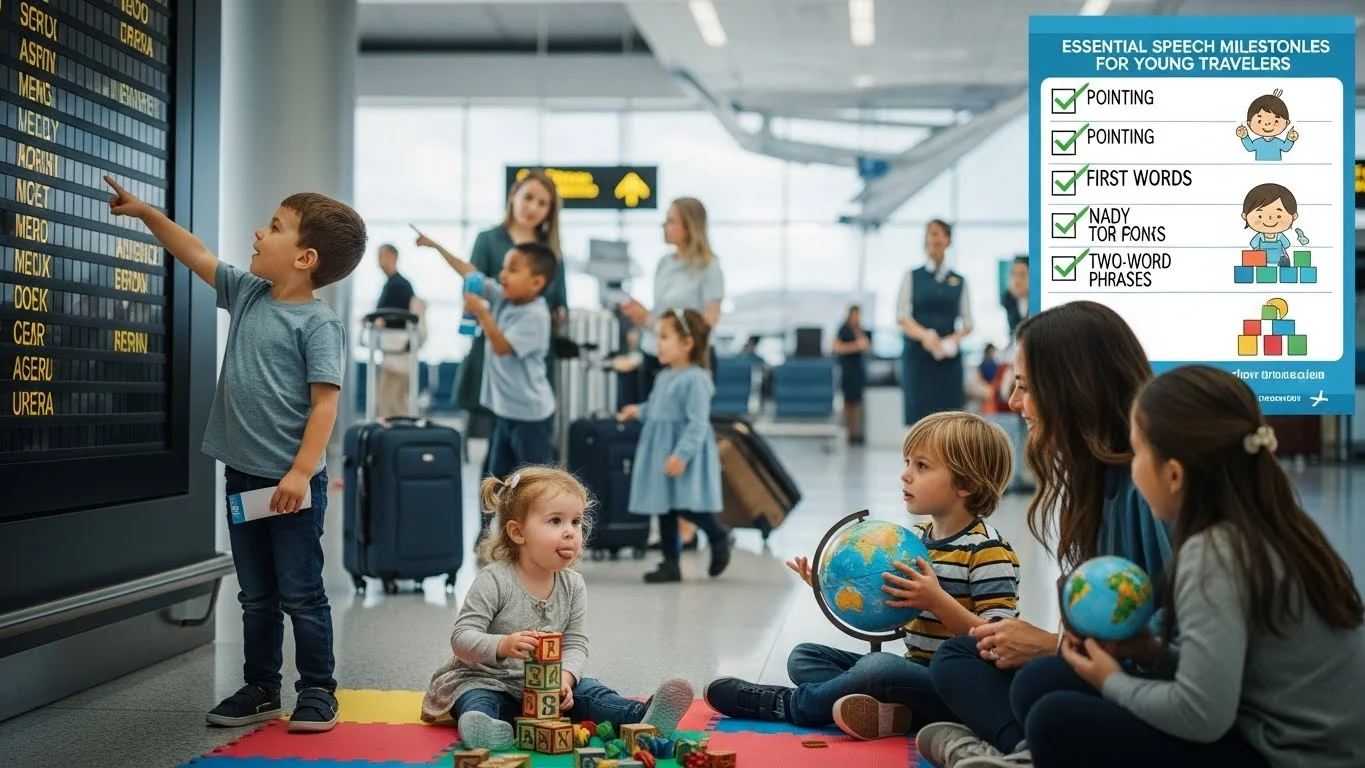
Traveling with young children can be an adventure filled with unique challenges and rewards. Understanding speech milestones can greatly enhance our experience as parents and caregivers, ensuring our little ones are ready to engage with the world around them.
Essential Speech Milestones for Young Travelers
Understanding Speech Milestones in Young Travelers
The Importance of Speech Development for Travelers
As a parent, I’ve often found myself reflecting on how important speech development is for my children, especially when we travel. Communication is not only about expressing needs but also about connecting with people and experiencing different cultures. I remember our trip to Italy, where my child learned a few key Italian phrases. It wasn’t just about the language; it was a way for her to interact with locals, make friends, and truly immerse herself in the experience. I believe that fostering speech development in young travelers can open up a world of opportunities and enrich their travel experiences in countless ways. Read Interesting article: Mastering Speech Milestones: A Backpacker’s Guide
Key Age Ranges for Speech Development
Understanding the key milestones in speech development can help us know what to expect as our children grow. These milestones are especially relevant when we’re on the go. Each age range comes with specific characteristics that can influence how our children communicate while traveling. I’ve noticed that these stages not only affect their ability to express themselves but also their confidence in engaging with others. Here’s a breakdown of those crucial age ranges:
0-12 months: Babies start with coos and babbles, laying the groundwork for later speech.
1-2 years: This is when I saw my children form their first words, and it was a delightful experience.
2-3 years: Vocabulary expands rapidly during this stage, making travel conversations much more enjoyable.
3-4 years: Children begin to ask questions and engage in simple conversations, which is exciting for them as they navigate new places.
4-5 years: By this age, many kids start telling stories and using complex sentences, enriching their travel narratives.
Essential Speech Milestones by Age
0-12 Months: The Foundations of Communication
In the first year of life, speech development is primarily about listening and experimenting with sounds. I remember sitting with my little one, making funny noises, and watching him mimic me. This stage involves cooing and babbling, which are essential for later speech. Even though it may seem like just playful sounds, these are actually the building blocks for language.
During our travels, I found that exposing my child to various sounds and languages can be beneficial. Whether it’s listening to the chatter of a bustling market or the melodies of different cultures, every auditory experience plays a role in their development. So, I made it a point to engage with different sounds whenever we visited new places.
1-2 Years: First Words and Simple Phrases
By the time children reach one year, they start to form their first words. This was a thrilling time for me as a parent. I can recall the joy of hearing my child say “hello” to a stranger in a new country or “pizza” when we were in Italy. Around this age, children begin to understand that words can represent objects, feelings, and actions, which is crucial for their travel experiences.
During our trips, I encouraged my child to practice these words, whether it was to order food, ask for directions, or greet new friends. I often made a game out of it, where we would point to different items and say their names aloud. This not only helped with vocabulary but also made the experience fun and interactive.
2-3 Years: Expanding Vocabulary and Sentence Structure
As children enter the 2-3 year range, their vocabulary expands tremendously. I remember my child starting to string together simple phrases like, “I want juice” or “Look, a bird!” This is also when we experienced the joy of her expressing her thoughts and feelings more clearly. Traveling during this stage is especially exciting, as children become more curious about their surroundings and want to communicate what they see.
On one trip, we took a bus tour, and my daughter started noticing landmarks and asking questions about them. It was a proud moment for me when she pointed to the Eiffel Tower and exclaimed, “Big tower!” I encouraged her by elaborating on her statements, which helped her build more complex sentences. It’s fascinating how travel can stimulate their desire to learn and communicate.
3-4 Years: Conversational Skills and Asking Questions
At ages three to four, children really start to engage in conversations. They not only ask questions but also begin to understand the structure of dialogue. I remember during our family vacation, my child would ask, “Why is the sky blue?” or “Where are we going next?” This curiosity is a wonderful aspect of traveling; it gives them a chance to explore new concepts and express their thoughts.
This was also the stage when I noticed my child becoming more social with peers. I encouraged her to talk to other kids while we were traveling, whether it was in a park or during a flight. I was amazed at how quickly she adapted to different social settings. For me, the journey became not just about visiting new places but also about watching her grow and connect with others.
4-5 Years: Storytelling and Complex Sentences
By the time children reach four to five years, they begin to tell stories and use more complex sentences. I remember being captivated by my daughter’s recounting of our adventures. She would say things like, “First, we saw a huge elephant, and then we ate ice cream!” This storytelling ability is crucial as it enhances their ability to communicate experiences and engage with others.
During our travels, I encouraged her to describe what she saw and how it made her feel. We would often sit down after a day of exploring and talk about our favorite moments. This not only helped her practice her speech but also created lasting memories for us to cherish together. I’ve learned that encouraging storytelling during travel can make the experience more meaningful and help solidify her language skills.
Interactive Activities to Encourage Speech Development
Storytelling and Reading Aloud
One of the most enjoyable ways I’ve found to support my children’s speech development while traveling is through storytelling and reading aloud. I remember packing a few picture books before a family trip. Each evening, we would gather together, often in a cozy hotel room, and dive into an adventure through the pages. My kids loved hearing stories, and I noticed how it sparked their imagination. They would often engage with the story, asking questions or even trying to guess what would happen next.
Reading aloud not only helps expand their vocabulary but also introduces them to different cultures and experiences. I made it a point to find books related to our travel destination. For instance, when we visited Japan, we read about traditional festivals and local folklore. Discussing these stories allowed my children to connect their reading to the world around them, making their travel experience even richer. Read Interesting article: Traveling Smart: Toddler Developmental Milestones on a Budget
Role-Playing Travel Scenarios
Role-playing has been a fantastic tool for encouraging speech development. Before we embarked on our travels, I would set up little scenarios at home. For example, we pretended to order food at a restaurant or ask for directions in a foreign city. I found that by acting out these situations, my kids became more comfortable with language and communication. It was entertaining to see them role-play as a waiter or a friendly local.
During our trips, we would often revisit these role-playing scenarios in real life. I remember being in a bustling market in Marrakech, and my child confidently approached a vendor to ask for a specific item. The practice we had done at home paid off beautifully. Not only did it build her confidence, but it also solidified her understanding of how to use language in different contexts.
Using Travel-Related Games and Apps
Technology has opened up a world of opportunities for engaging our children in language learning. I discovered some amazing travel-related games and apps that focus on vocabulary and language skills. On long flights or train rides, I’d often pull out these interactive resources. My kids loved playing games that challenged them to match words with pictures or complete sentences. It felt less like learning and more like a fun adventure.
Some of my favorite apps included those that introduce basic phrases in different languages. For instance, while we traveled through Spain, we used an app that helped my children learn how to say essential words like “please” and “thank you” in Spanish. I loved seeing the excitement on their faces when they were able to use these words in real conversations. It made the experience feel more immersive and rewarding for all of us.
Travel Tips for Supporting Speech Development
Choosing Destinations with Language Opportunities
When planning our trips, I learned to choose destinations that offered rich language experiences. Exploring a place where my children could hear and see the local language in action made a big difference. I noticed that cities with vibrant street markets, local performances, or even interactive museums provided the perfect backdrop for language learning. It was fascinating to see how being in an environment where they could hear multiple languages and dialects sparked their interest in communication.
For instance, during a trip to Quebec, we enjoyed conversing with local artists at a festival. My children were intrigued by the bilingual nature of the region. They started picking up French phrases, and it was heartwarming to see them excitedly try out their new skills. I realized that choosing destinations with diverse linguistic environments could significantly enhance our travel experiences and their speech development.
Engaging with Local Cultures and Languages
Engaging with local cultures is another fantastic way to support speech development. I always made a point to involve my children in local customs, whether it was participating in a cooking class or attending a traditional dance performance. These experiences not only enriched our travels but also provided opportunities for them to hear and use the local language.
During one of our trips to Thailand, we joined a local cooking class where everyone spoke Thai. My children were encouraged to repeat words and phrases as they learned about the ingredients. It was a joyful chaos, with laughter and attempts at pronunciation filling the room. I noticed how their willingness to engage with the language grew, and it turned out to be one of the highlights of our trip.
Using Technology to Enhance Language Learning
In today’s digital age, technology can be a wonderful ally in supporting speech development. I regularly searched for educational content that related to our travel destinations. From language learning podcasts to videos featuring native speakers, I found a wealth of resources that made learning fun. Listening to songs in different languages became a favorite activity during our car rides or flights. My kids would sing along, and it was beautiful to see them connect with the language through music.
Using technology also allowed us to keep in touch with the places we visited after our trips. We would watch documentaries or follow travel blogs that focused on the cultures we experienced. This ongoing engagement nurtured their curiosity and kept the language alive in their minds, reinforcing what they had learned while traveling.
Common Speech Challenges for Young Travelers
Dealing with Language Barriers
While traveling, encountering language barriers can be a significant hurdle for young children. I remember a trip to a small village in Greece, where English was not widely spoken. My children were eager to interact but struggled to communicate their needs. This experience made me realize how vital it is to prepare them for situations where they might not understand or be understood. I found that teaching a few essential phrases before the trip, like “please,” “thank you,” and “help,” could empower them. It’s amazing how even a small effort can lead to smiles and connections with locals, despite the language differences.
To tackle language barriers, we also relied on non-verbal communication. Pointing, gestures, and even drawing pictures became part of our interactions. I noticed how my children adapted quickly, using their creativity to fill the gaps in communication. These experiences not only taught them resilience but also helped them understand that there are many ways to connect with others beyond words.
Understanding Accents and Dialects
Another challenge I faced was helping my children understand different accents and dialects. During our travels, I often overheard various regional accents that were different from what we were used to. I remember being in London, and my son struggling to understand the local slang. It was amusing for me but a bit frustrating for him. I realized that introducing them to these accents beforehand could make a big difference.
We started listening to regional accents using online resources, so they could familiarize themselves with the sounds and phrases. I also encouraged them to ask questions when they didn’t understand something. It created an open dialogue about communication and made them feel more comfortable navigating new environments. I found that these lessons turned into fun little adventures, as they would try to mimic different accents or guess the meanings of new words.
Overcoming Anxiety in New Environments
Traveling to new places can be overwhelming for young children, leading to anxiety that may affect their speech development. I remember one trip where my daughter was shy and hesitant to speak to anyone outside our family. It made me reflect on how important it is to create a supportive environment that encourages them to express themselves, even when they are feeling anxious.
To help her overcome this anxiety, I started small. We would practice introducing ourselves to hotel staff or shopkeepers, building her confidence in a safe space. I would praise her efforts, no matter how small, reinforcing that it’s okay to be nervous. Gradually, I noticed her becoming more comfortable, and she began initiating conversations with strangers. It became a heartwarming moment for me as a parent, seeing her grow in confidence and connection.
We also established routines during our travels, which provided a sense of stability. Knowing what to expect each day helped alleviate some of the anxiety associated with new experiences. I’ve learned that being patient and supportive during these challenging moments can lead to significant breakthroughs in their speech development.
Resources for Parents and Caregivers
Books and Apps for Language Development
Finding the right resources for supporting speech development during travel can be a game-changer. I discovered some fantastic books and apps that made learning fun while on the go. Picture books filled with vibrant illustrations have always been a favorite in our family. I remember packing a travel-themed book that helped my kids learn about different countries and cultures. It sparked their curiosity and made them excited about our upcoming trips.
Apps have also been a lifesaver during long travel days. I stumbled upon language learning apps designed specifically for kids, featuring interactive games and engaging lessons in various languages. These resources became a part of our travel routine, keeping my kids entertained while fostering their speech skills. I recommend looking for apps that incorporate fun games, songs, and stories, making language learning feel like a delightful adventure.
Speech Therapy Options for Traveling Families
For families who may have concerns about their children’s speech development, finding a speech therapist who understands the challenges of traveling can be immensely beneficial. I remember speaking to a fellow parent who connected with a therapist who offered virtual sessions during their travels. This flexibility allowed them to continue working on speech goals without interrupting their adventures.
Additionally, some therapists provide tailored exercises that families can practice together while on the road. I’ve found that incorporating these activities into our travel routine created a supportive environment for my kids, allowing them to work on their speech skills while still enjoying the excitement of exploration.
Online Communities and Support Groups
As a parent, I often turned to online communities and support groups for advice and resources on speech development. Connecting with other parents facing similar challenges made me feel less alone in my journey. I found forums where caregivers shared tips, experiences, and recommended resources. It was reassuring to know that there were others out there who understood the intricacies of traveling with young children and the importance of speech development.
Social media platforms also have groups dedicated to speech development, where parents can ask questions, share success stories, and find inspiration. Engaging with these communities not only expanded my knowledge but also provided a space to celebrate the small victories along the way. I encourage other parents to seek out these communities, as they can be a valuable source of support and encouragement in this journey.
Frequently Asked Questions
What are the key age ranges for speech development in young children while traveling?
The key age ranges for speech development are: 0-12 months (coos and babbles), 1-2 years (first words and simple phrases), 2-3 years (expanding vocabulary and sentence structure), 3-4 years (conversational skills and asking questions), and 4-5 years (storytelling and complex sentences).
How can parents encourage speech development during travel?
Parents can encourage speech development during travel by engaging in storytelling and reading aloud, role-playing travel scenarios, and using travel-related games and apps that focus on vocabulary and language skills.
What are some effective activities for enhancing speech development in young travelers?
Effective activities include storytelling and reading books related to travel destinations, role-playing situations like ordering food, and using apps that teach basic phrases in different languages.
How can choosing travel destinations impact a child’s speech development?
Choosing travel destinations that offer rich language experiences, such as vibrant markets and local performances, can enhance a child’s speech development by providing them opportunities to hear and interact with the local language.
What challenges might children face regarding speech while traveling?
Children might face challenges such as language barriers, understanding different accents and dialects, and overcoming anxiety in new environments, which can all impact their ability to communicate.
How can parents help children deal with language barriers during travel?
Parents can help children deal with language barriers by teaching essential phrases before the trip and encouraging non-verbal communication through gestures, pointing, and drawing pictures to aid interactions.
What can be done to help children understand different accents and dialects?
To help children understand different accents and dialects, parents can expose them to various regional accents through online resources and encourage them to ask questions when they don’t understand something.
How can technology support speech development for young travelers?
Technology can support speech development by providing access to language learning podcasts, videos featuring native speakers, and interactive games and apps that make learning fun during travel.
What resources are available for parents concerned about their child’s speech development while traveling?
Parents can explore books and apps designed for language development, consider speech therapy options that offer virtual sessions, and connect with online communities and support groups for advice and shared experiences.
How can storytelling during travel benefit children’s speech development?
Storytelling during travel can benefit children’s speech development by encouraging them to express their thoughts and feelings, practice their speech, and create lasting memories through shared narratives of their experiences.
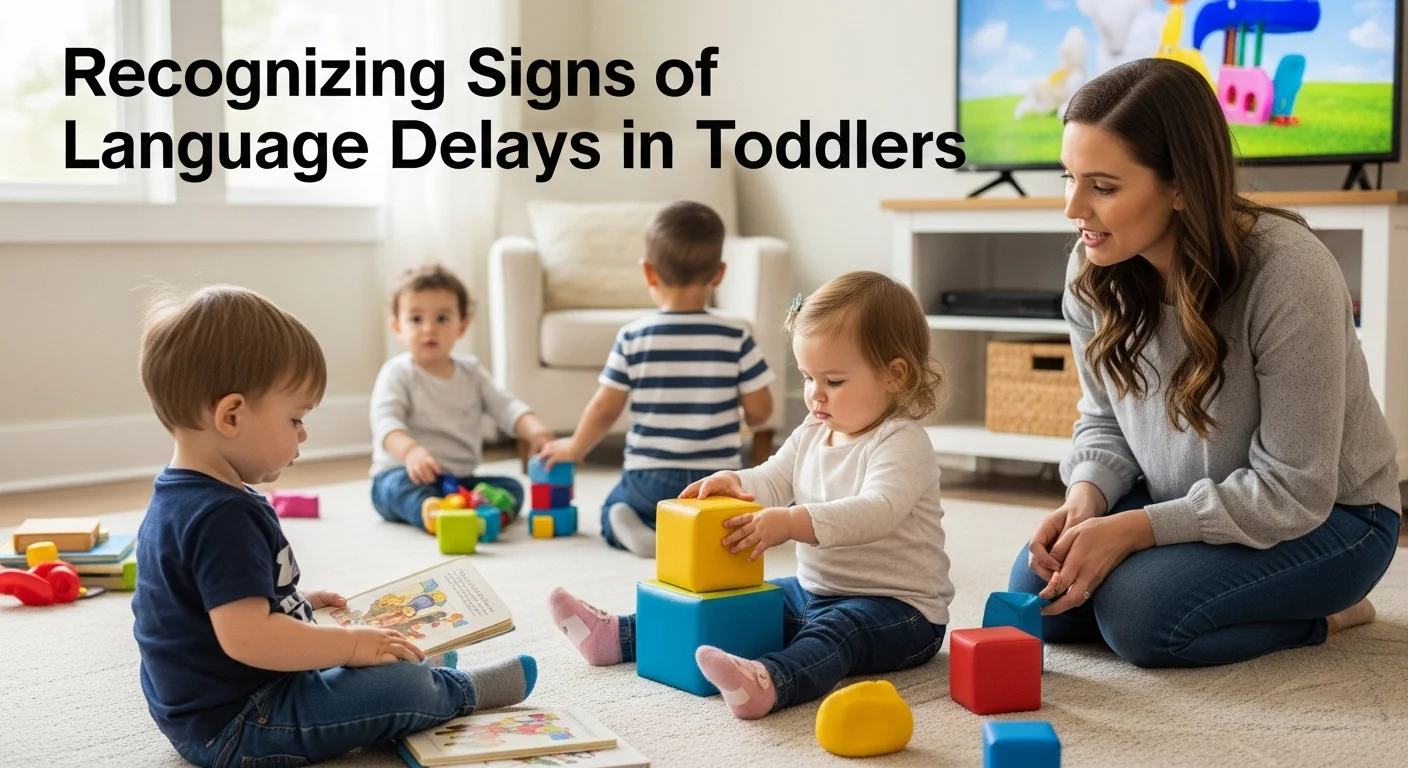
As a parent, watching your toddler grow and develop is one of the most rewarding experiences. But sometimes, it can also be concerning, especially when it comes to their language skills. Understanding language development in toddlers is crucial for ensuring they reach their full potential. Read Interesting article: Essential Resources for Developing Toddler Language Skills
Recognizing Signs of Language Delays in Toddlers
Understanding Language Development in Toddlers
Language development in toddlers is a fascinating journey that unfolds in stages. From the moment they coo and babble, to forming simple sentences, each milestone marks a significant step in their growth. I remember when my child first started to put words together. It was such a joy to hear those little phrases, but I also learned that not every child develops at the same pace. That’s why understanding the typical milestones can help us recognize when a toddler might need a little extra support. Simple Ways to Support Your Toddler’s Language Development are essential for nurturing their skills.
Typical Language Milestones
Generally, toddlers progress through various language milestones by certain ages. Around 12 months, many toddlers can say their first words, such as “mama” or “dada.” By 18 months, they might know about 10-25 words and can follow simple directions. By the age of 2, children often combine words into simple phrases like “more juice” or “big truck.” I found it helpful to keep track of these milestones, as they can serve as a guide to what’s considered typical development.
As they approach the age of 3, many children can use around 200 words and can form three-word sentences. They also start to ask questions and engage in more complex conversations. However, every child is unique, and some may hit these milestones a bit later than others, which is completely normal. I often remind myself that patience is key during this phase.
Factors Influencing Language Development
Language development isn’t just about age; various factors can influence how and when a toddler learns to communicate. For instance, exposure to language plays a crucial role. I noticed that children who are spoken to frequently, read to, and engaged in conversations tend to develop their language skills faster. It’s amazing how much a toddler can absorb just by hearing words in their environment.
Another factor is social interaction. Toddlers who spend time with peers or adults in social settings often pick up language skills more quickly. I remember setting up playdates for my child, and I saw firsthand how they learned from mimicking their friends. Additionally, a child’s overall health can affect their language development. Hearing and cognitive abilities are essential, so any issues in these areas can lead to delays.
Lastly, family dynamics can play a part. In my case, I realized that a nurturing environment with encouragement and support can boost language skills. On the flip side, a chaotic home life or a lack of emotional support can hinder development. Being aware of these factors helped me create a more conducive environment for my child’s growth.
Recognizing Signs of Language Delays
It’s crucial to recognize the signs of potential language delays early. The earlier we notice these signs, the sooner we can take action to support our toddlers. I’ve learned over the years that there are several key indicators we should keep an eye on.
Delayed Speech Milestones
One of the first signs I noticed in my child was a delay in reaching speech milestones. If your toddler isn’t saying their first word by around 12 months or isn’t combining words by 2 years, it might be a cause for concern. I remember feeling anxious when my child wasn’t saying “mama” until they were closer to 15 months. It’s important not to rush to conclusions, but being aware of these milestones can help us gauge progress. Regular check-ins with pediatricians can help address these concerns early on.
Limited Vocabulary Usage
If your child uses fewer words than expected for their age, that could be a sign of a delay. For example, I noticed that my child had a limited vocabulary at 18 months, knowing only about 10 words. This can be frustrating for both the child and the parent, as communication becomes challenging. Encouraging vocabulary expansion through reading and conversations can be beneficial, but if you notice a consistent pattern of limited vocabulary, it’s worth discussing with a professional.
Poor Understanding of Simple Instructions
Another sign I found significant was my child’s difficulty understanding simple instructions. If a toddler struggles to follow basic commands like “come here” or “give me the ball” by the age of 2, this might indicate a language delay. I often played games that involved following directions to help my child practice this skill. It’s a fun way to reinforce understanding, but if there’s still struggle, it may be time to seek advice from a specialist.
Challenges in Social Communication
Social communication is another critical aspect. When my child began to play with others, I noticed they struggled to express themselves or join in conversations. Toddlers should ideally be able to engage with peers through simple conversations or interactive play by age 3. If you notice your child shying away from social interactions or having difficulty maintaining a back-and-forth conversation, it’s an important sign to pay attention to.
Difficulty with Pronunciation and Articulation
Lastly, pronunciation and articulation can also indicate delays. If your toddler frequently mispronounces words or has unclear speech, it might be worth monitoring. I remember being concerned when my child said “wabbit” instead of “rabbit.” While some mispronunciations are normal, persistent issues could suggest a delay in language development.
Common Causes of Language Delays
Understanding the reasons behind language delays is just as important as recognizing the signs. I remember feeling overwhelmed when I realized my child was having trouble with speech. It helped me to know that various factors can contribute to these delays, and addressing them early can make a world of difference. Essential Tips for Nurturing Your Toddler’s Language Growth can also provide valuable insights.
Hearing Impairments
One of the most common causes of language delays is hearing impairment. I learned this firsthand when I took my child for a routine check-up, and the pediatrician suggested a hearing test. Hearing is essential for developing language skills, as children need to listen to sounds and words to learn how to use them. If a child can’t hear well, it can lead to delays in speaking and understanding. I know some parents who discovered their child had a mild hearing loss only after seeking help. If you suspect your toddler might not be hearing well, it’s wise to explore this possibility sooner rather than later.
Developmental Disorders
Developmental disorders can also play a role in language delays. Conditions like autism spectrum disorder (ASD) or specific language impairment (SLI) can affect communication skills. I remember reading about how children on the spectrum might excel in some areas while struggling in others, particularly in social communication. Understanding these complexities helped me appreciate the diversity in how children develop. If you notice a pattern of challenges in your toddler’s language skills along with other developmental signs, seeking guidance from a professional can provide clarity and support.
Environmental Factors
The environment in which a child grows up significantly influences their language development. I’ve seen how a rich language environment—where children are regularly exposed to conversations, reading, and diverse vocabulary—can boost their skills. Conversely, a lack of interaction can hinder language growth. I remember incorporating more reading and dialogue into our daily routines, and it made a noticeable difference. Factors like family dynamics, the amount of screen time, and even the availability of educational resources can all impact language development, so it’s worth examining these aspects in your home.
Genetic Influences
Genetics can also play a role in language development. I learned that if there’s a family history of speech or language issues, it might increase the likelihood of similar challenges for a child. This realization made me reflect on my own upbringing and how my family communicated. While we can’t change our genetic makeup, understanding these influences can help us prepare and seek the right support. If there’s a concern about inherited traits, discussing this with a pediatrician can lead to a comprehensive evaluation.
When to Seek Professional Help
Knowing when to seek professional help can be daunting. I remember struggling with whether to reach out for assistance when my child was a bit behind in their speech. Ultimately, I decided that better safe than sorry was the best approach. Here are a few guidelines that helped me navigate this uncertainty.
Guidelines for Monitoring Language Development
Monitoring language development is essential. I found it helpful to keep an informal checklist of milestones and signs to look out for. If you notice persistent delays or concerns with your child’s language skills, it might be time to consult a professional. Some helpful guidelines include tracking the number of words your child uses, their ability to follow simple instructions, and how they engage socially. If your toddler is not meeting expected milestones, consider reaching out for advice.
Consulting with Pediatricians
Reaching out to a pediatrician is often the first step. I remember feeling nervous about bringing up my concerns, but my child’s doctor was supportive and reassuring. Pediatricians can assess developmental progress and provide recommendations for further evaluation if necessary. They can also help rule out any medical issues that might be affecting language development. Don’t hesitate to voice your worries—pediatricians are there to help!
Speech and Language Pathologists’ Role
Speech and language pathologists (SLPs) specialize in diagnosing and treating communication disorders. I found that connecting with an SLP was incredibly beneficial. They can conduct in-depth assessments and develop tailored intervention strategies. If your child exhibits signs of language delays, an SLP can provide the tools and guidance needed to support their communication skills effectively. Their expertise can make a significant difference in a child’s development.
Assessment and Diagnosis of Language Delays
Once we recognize potential signs of language delays in our toddlers, the next step is assessment and diagnosis. I remember feeling a mix of anxiety and hope when it came time to evaluate my child’s language skills. Understanding the different methods of assessment helped ease my concerns and clarify the path forward.
Standardized Language Assessments
Standardized language assessments are formal tests that can help determine where a child stands in their language development. These assessments typically involve a speech and language pathologist administering specific tasks that measure various aspects of language, such as vocabulary, grammar, and comprehension. I found that these tests provided valuable insights into my child’s strengths and areas needing support. While the thought of formal testing can be intimidating, it’s crucial to remember that these assessments are designed to help us understand our child better and guide us toward the appropriate interventions.
Observational Methods
In addition to standardized tests, observational methods are often employed to evaluate a child’s language development in a more natural setting. I discovered that simply watching my child during playtime or everyday conversations could reveal a lot about their language use. Observational assessments can include noting how a child communicates with peers and adults, their ability to follow instructions, and their engagement in conversations. I found this approach to be less stressful for my child, as it allowed them to demonstrate their skills in a comfortable environment. Sometimes, informal observations provided just as much information as formal assessments.
Parent and Caregiver Questionnaires
Parent and caregiver questionnaires are another useful tool for assessing language development. These questionnaires typically ask about a child’s language skills, interactions, and behaviors observed at home. I remember filling out a questionnaire that asked about my child’s ability to express needs, follow directions, and engage with others. Completing this form not only helped the professionals understand my child’s abilities but also made me reflect on my observations, which reinforced my awareness of their progress. Sharing these insights with a speech and language pathologist can lead to a more comprehensive understanding of a child’s language skills.
Intervention Strategies for Language Delays
Once we have a clearer picture of our toddler’s language development through assessments, the next step is to explore intervention strategies. I learned that early intervention can make a significant difference in helping our children catch up and thrive in their communication skills.
Early Intervention Programs
Early intervention programs are designed to support children with developmental delays, including language delays. These programs often include a combination of therapies, educational activities, and family support. I remember finding a local program that focused on engaging toddlers through play-based learning, which was a perfect fit for my child. Early intervention can provide tailored strategies and resources, helping children develop their language skills in a nurturing environment. I firmly believe that the sooner we address these challenges, the better the outcomes for our children.
Speech Therapy Techniques
Speech therapy techniques can also be very effective in treating language delays. I found that working with a speech-language pathologist allowed my child to practice specific skills in a fun and engaging way. Techniques might include exercises to enhance vocabulary, improve articulation, or develop conversational skills. For instance, we did activities that involved playing with toys while repeating names and sounds to reinforce language learning. I loved seeing how these sessions turned into enjoyable experiences for my child, making learning feel like play rather than work.
Home-Based Activities to Encourage Language
Incorporating language development activities into our daily routines was another strategy I found helpful. Simple activities like singing songs, playing rhyming games, or narrating our daily activities can foster language growth. I remember turning our grocery shopping trips into opportunities for vocabulary building by naming items and asking my child to repeat them. Reading books together, especially those that encourage participation, became a cherished daily habit. These small, consistent efforts can make a big difference in supporting our toddlers’ language development.
Supporting Your Toddler’s Language Development
Supporting our toddlers’ language development is an ongoing journey that requires patience and creativity. I found that by actively engaging with my child, I could create an environment where communication flourished.
Engaging in Conversational Play
Engaging in conversational play is one of the most enjoyable ways to support language development. I discovered that using open-ended questions during playtime encouraged my child to express themselves. Instead of asking yes or no questions, I would prompt them with, “What do you think will happen next?” This not only sparked their imagination but also helped them practice forming sentences and ideas. I loved watching my child become more confident in sharing their thoughts through these playful interactions.
Reading Together: Importance of Storytime
Storytime became one of my favorite bonding activities. I realized that reading together not only nurtured our connection but also exposed my child to new vocabulary and ideas. I made it a point to choose books that encouraged participation, like those with repetitive phrases or questions. I remember the sparkle in my child’s eyes when they recognized a word or could predict what would happen next in the story. These moments reinforced a love for language and learning.
Using Visual Aids and Interactive Tools
Visual aids and interactive tools can also enhance language development. I found that using picture cards or apps designed for language learning made a significant impact. These tools provided my child with visual context, which helped reinforce their understanding of words and concepts. We would often create storyboards together, using pictures to narrate our adventures or family experiences. This not only strengthened their vocabulary but also developed their storytelling skills.
Frequently Asked Questions
What are the typical language milestones for toddlers?
Typically, toddlers can say their first words around 12 months, know about 10-25 words by 18 months, combine words into simple phrases by 2 years, and use around 200 words and form three-word sentences by age 3.
How does exposure to language influence a toddler’s development?
Exposure to language is crucial for development; toddlers who are spoken to frequently, read to, and engaged in conversations tend to develop their language skills faster.
What signs might indicate language delays in toddlers?
Signs of potential language delays include delayed speech milestones, limited vocabulary usage, difficulty understanding simple instructions, challenges in social communication, and difficulty with pronunciation and articulation.
What common causes contribute to language delays in toddlers?
Common causes of language delays include hearing impairments, developmental disorders, environmental factors, and genetic influences.
When should parents seek professional help for language delays?
Parents should consider seeking professional help if they notice persistent delays in their child’s language skills or if their child is not meeting expected milestones.
What role do pediatricians play in addressing language development concerns?
Pediatricians can assess developmental progress, provide recommendations for further evaluation if necessary, and help rule out any medical issues affecting language development.
How can speech and language pathologists assist with language delays?
Speech and language pathologists specialize in diagnosing and treating communication disorders, conducting assessments, and developing tailored intervention strategies to support language skills.
What are some effective intervention strategies for language delays?
Effective intervention strategies include early intervention programs, speech therapy techniques, and home-based activities designed to encourage language development.
How can parents support their toddler’s language development at home?
Parents can support language development by engaging in conversational play, reading together, and using visual aids and interactive tools to enhance understanding and vocabulary.
What types of assessments are used to evaluate a child’s language development?
Assessments may include standardized language assessments, observational methods, and parent and caregiver questionnaires to evaluate various aspects of a child’s language skills.
Uninvolved parenting, also known as neglectful parenting, is a style characterized by a significant lack of responsiveness and engagement with a child's emotional and developmental needs [1]. This...
5Permissive and authoritative parenting represent two distinct styles that significantly impact child development [1]. Permissive parenting is characterized by high warmth and low boundaries, while...