
Unlocking critical thinking in toddlers can be a transformative journey for both parents and children. By nurturing these skills early, we set the stage for lifelong learning and problem-solving. Read Interesting article: Backpacking with Toddlers: Boosting Social Skills on the Road
Understanding Critical Thinking in Toddlers
What is Critical Thinking?
Critical thinking, in simple terms, is the ability to think clearly and rationally. It’s about understanding the logical connection between ideas. For toddlers, this means learning to analyze their surroundings, ask questions, and make decisions based on their observations. I remember the first time my little one looked at a puzzle piece and asked, “Why doesn’t it fit here?” That moment sparked a realization for me about their budding critical thinking skills. It’s not just about knowing the answer; it’s about questioning and exploring the ‘why’ and ‘how’ behind things. This foundational ability allows them to navigate their world with curiosity and understanding.
The Importance of Critical Thinking in Early Childhood
From my experience, fostering critical thinking in early childhood is crucial. These skills help toddlers learn to solve problems, think independently, and make sense of their experiences. When children are encouraged to think critically, they develop a greater sense of confidence and competence. I’ve seen how my children, when invited to explore their thoughts, become more engaged in their play and learning. They start asking deeper questions and seeking out answers, which not only enriches their understanding but also fosters their emotional development. Engaging in critical thinking prepares them for the challenges of school and beyond. Read Interesting article: Backpacking with Toddlers: Boosting Cognitive Skills on a Budget
How Critical Thinking Develops in Toddlers
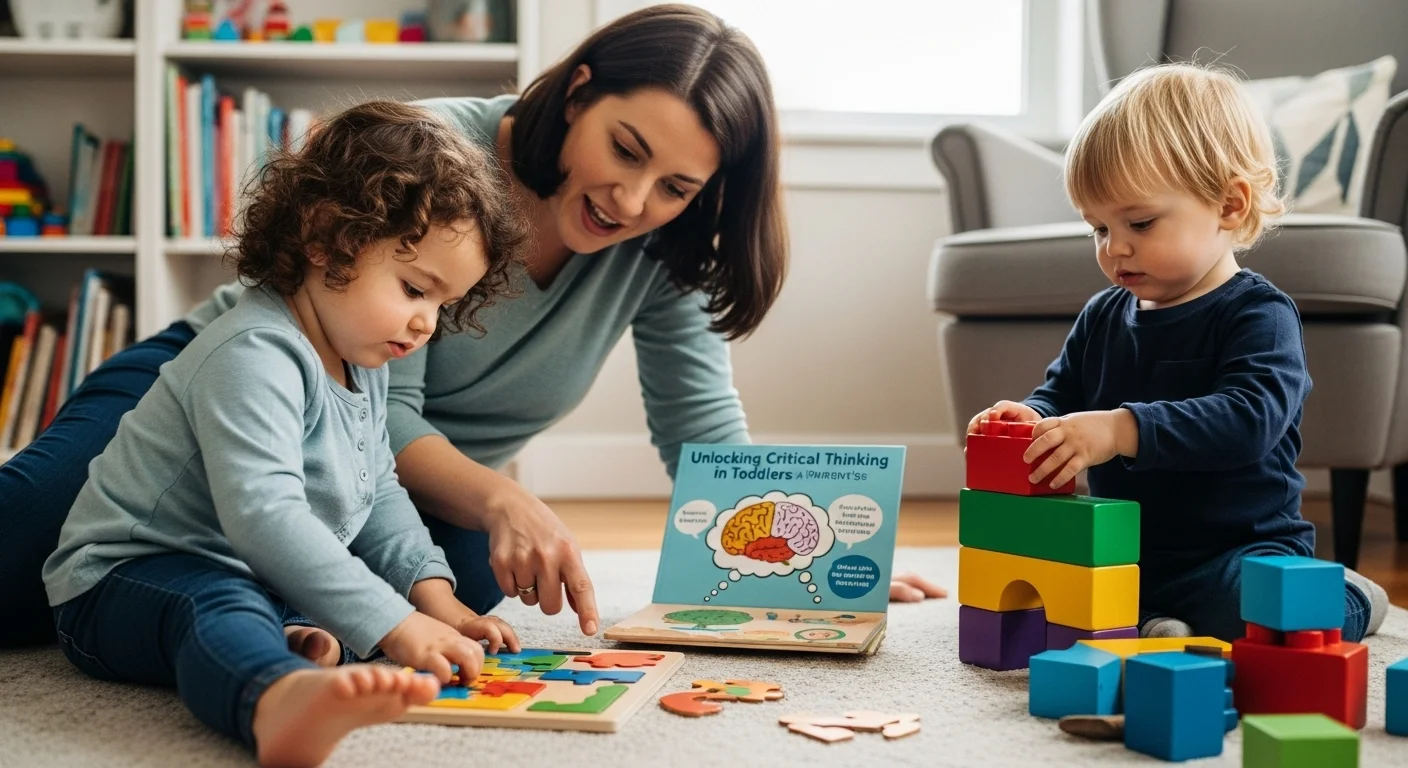
Critical thinking doesn’t just appear overnight; it develops gradually as toddlers interact with their environment. I’ve observed that toddlers often engage in trial and error, which is a natural part of their learning process. As they encounter new situations, they begin to experiment, hypothesize, and reflect on their actions. For example, when my child tried stacking blocks, they quickly learned which shapes worked best together. This hands-on experience was a stepping stone toward developing analytical skills. Additionally, as they engage in discussions with us, they learn to articulate their thoughts and consider different perspectives, which is essential for critical thinking. In our daily lives, I find that encouraging these moments of exploration can foster a rich environment for their cognitive development.
Identifying Key Skills for Critical Thinking
Problem-Solving Skills
One of the first skills we should look for in our toddlers is problem-solving. This could be as simple as figuring out how to get a toy out from under the couch or deciding how to build a tower with blocks. I remember watching my child use their favorite stuffed animal to reach for a toy, demonstrating creativity and resourcefulness. Encouraging this kind of thinking helps them realize there are multiple ways to approach a challenge.
Creative Thinking
Creative thinking goes hand-in-hand with critical thinking. I’ve noticed that when my children engage in imaginative play, they often come up with unique solutions to problems. For instance, when faced with a broken toy, instead of giving up, they might invent a new game that incorporates the pieces. By supporting their creativity, we nurture their ability to think outside the box.
Analytical Skills
Analyzing information is another vital skill for toddlers. They start to ask questions about the world around them, such as “Why is the sky blue?” or “What happens if I drop this?” These questions are a sign of their developing analytical skills. I encourage a sense of inquiry by providing them with answers or, even better, exploring the answers together. This collaborative learning experience enriches their understanding and keeps the curiosity alive.
Decision Making
Decision-making is a critical aspect of critical thinking. When toddlers choose between different activities or select what to wear, they engage in a decision-making process. I’ve found that by offering them choices, whether it’s picking out snacks or selecting toys for playtime, they learn to weigh options and consider consequences. It empowers them and builds confidence in their abilities to make choices.
Communication Skills
Lastly, communication skills are essential for toddlers as they learn to express their ideas and thoughts. I’ve seen how my children develop their vocabulary through conversations, storytelling, and asking questions. By encouraging them to share their thoughts, we help them articulate their reasoning and opinions, which is vital for effective critical thinking. I often make it a point to engage in discussions about their day or encourage them to describe their play, fostering both their language and critical thinking skills.
Signs Your Toddler is Developing Critical Thinking Skills
Curiosity and Questioning
One of the most delightful signs that my toddler is developing critical thinking skills is their boundless curiosity. I often find myself bombarded with questions like “Why is the moon so far away?” or “What makes the grass green?” It’s amazing to witness this natural desire to learn. I believe that when our little ones start asking questions, they are not only seeking answers but also trying to understand the world around them. This curiosity fuels their ability to think critically. When I engage with their questions, it opens up a dialogue that encourages deeper thinking. I recommend embracing this curiosity; it’s a wonderful opportunity for us to explore together and to show them that their questions are valued.
Ability to Make Predictions
I’ve seen firsthand how toddlers begin to make predictions about what will happen next, which is another key indicator of their critical thinking development. For instance, when we’re reading a story, my child often tries to guess what happens next based on the illustrations or the plot. This not only indicates their engagement with the story but also shows their ability to connect dots and think ahead. I love encouraging these predictions by asking questions like, “What do you think will happen if the character does this?” This practice helps them to think logically and understand cause and effect, which is a fundamental part of critical thinking.
Exploring Different Solutions
Another sign that my toddler is honing their critical thinking skills is their willingness to explore different solutions to a problem. I remember when my child was trying to figure out how to get a toy stuck on a high shelf. Instead of just getting frustrated, they started looking around for alternatives—like finding a chair to stand on or asking for my help. This exploration of various solutions reflects their developing understanding that problems can often be approached from multiple angles. I encourage this behavior by celebrating their attempts, regardless of whether they succeed or fail. It’s important for them to understand that trying different solutions is a valuable part of problem-solving.
Testing and Experimenting
Testing and experimenting are core aspects of critical thinking, and I love watching my toddler engage in this process. I’ve noticed them conducting little experiments without even realizing it. For example, when they mix different colors of playdough, they’re not just having fun; they’re learning about color theory through experimentation. They ask questions like, “What happens if I mix red and blue?” These moments are golden for me because it’s where learning becomes tangible and exciting. I try to foster this spirit of experimentation by providing a safe space where they can test out their ideas without fear of making a mess or failing. This encouragement helps build their confidence in their ability to explore and learn.
Activities to Encourage Critical Thinking
Open-Ended Play
Open-ended play is one of my favorite ways to foster critical thinking in toddlers. I find that when I provide toys that don’t have a specific purpose—like building blocks or art supplies—my children are free to explore their creativity. I remember when my kids turned a simple box into a spaceship, a fort, and even a puppet theater! These kinds of imaginative play scenarios encourage them to think critically as they figure out how to create and navigate their own worlds. I recommend setting aside time for unstructured play, as it allows them to approach problems in their own way and come up with unique solutions.
Puzzles and Problem-Solving Games
Puzzles and problem-solving games are also fantastic tools for fostering critical thinking. I’ve noticed that when my children work on puzzles, they learn to recognize patterns and think ahead about how to fit pieces together. I often sit with them to encourage discussion about their strategies and thought processes. This collaboration not only strengthens their problem-solving skills but also builds our bond as we share the experience together. Whether it’s a jigsaw puzzle or a logic game, these activities provide an enjoyable way to challenge their minds.
Storytelling and Role-Play
Storytelling and role-play are activities that I’ve found to be incredibly effective in nurturing critical thinking. When my children engage in storytelling—whether they’re listening to a tale or inventing their own—they learn to analyze characters and plots. I love to ask them questions about the story, like “What would you do if you were in that situation?” This prompts them to think critically about choices and consequences. Additionally, role-playing different scenarios allows them to explore different perspectives and develop empathy. I encourage this type of imaginative play as it not only enhances their creativity but also sharpens their critical thinking skills. Read Interesting article: Exploring the World: Language Acquisition Strategies for Toddlers
Outdoor Exploration and Nature Walks
Taking my toddlers outdoors for exploration is another fantastic way to stimulate their critical thinking. Nature is full of opportunities for questions and discovery. I remember one day in the park, my child spotted an ant hill and started wondering how ants communicate. This led us to observe and discuss what we saw. I believe that nature walks allow children to explore, ask questions, and find answers in real-time. I often bring a magnifying glass or a simple guidebook to encourage them to examine plants and insects closely. These hands-on experiences make learning exciting and relevant.
Arts and Crafts Projects
Arts and crafts projects provide another avenue for developing critical thinking skills. I love watching my children express themselves through art while also making decisions about colors, materials, and techniques. When we create together, I often prompt them to think critically about their choices. Questions like “What happens if you mix these two colors?” or “How can we make this shape bigger?” encourage experimentation and reflection. I find that the process of creating something from scratch also boosts their confidence and reinforces the idea that their choices matter.
Effective Parenting Strategies to Foster Critical Thinking
Encouraging Questions and Curiosity
One of the most effective strategies I’ve found in encouraging critical thinking is to actively promote questions and curiosity. I remember a day when my child asked, “Why do leaves change color?” Instead of just giving a quick answer, I decided to explore this together. We looked at different colored leaves and researched the topic online. This not only satisfied their curiosity but also showed them that asking questions is a positive and exciting way to learn. I believe that by creating an environment where questions are welcomed, we empower our toddlers to seek out knowledge and develop a love for learning. I recommend that we, as parents, embrace their inquiries and turn those moments into opportunities for exploration.
Modeling Critical Thinking
Another key strategy is to model critical thinking ourselves. I often find myself thinking aloud during daily tasks. For example, when I’m cooking, I might say, “Hmm, if I add this spice, it might taste better. Let’s see!” I’ve noticed that my children pay close attention to how I analyze situations and make decisions. By verbalizing my thought process, I’m not only providing them with a real-life example of critical thinking but also inviting them to participate in that thought process. I encourage us to share our reasoning when we make choices, whether it’s about what to eat for dinner or how to solve a problem. This practice can inspire them to think critically in their own lives.
Creating a Safe Environment for Exploration
I’ve learned that creating a safe and supportive environment is crucial for fostering critical thinking. I want my children to feel free to experiment and explore without the fear of making mistakes. When they spill paint during an art project or drop their building blocks, I remind them that accidents are just part of learning. I often say, “Let’s see what happens when we try it this way!” This mindset encourages them to take risks and think creatively. I recommend parents establish a space where toddlers can freely explore their ideas and interests, knowing that their efforts are valued regardless of the outcome. This freedom can lead to surprising discoveries and boost their confidence.
Using Everyday Situations for Learning
I’ve found that everyday situations offer endless opportunities for teaching critical thinking. Simple tasks, like grocery shopping or cooking, can turn into engaging learning experiences. For instance, while shopping, I might ask my child to help choose fruits and vegetables. I ask questions like, “What color do we need for our salad?” or “Which fruit do you think is sweeter?” This encourages them to think critically about their choices. I believe that by incorporating learning into our daily routines, we help our children see the practical applications of critical thinking in their lives. It makes learning feel relevant and exciting.
Tools and Resources for Parents
Books that Promote Critical Thinking
Books have always been a part of our family culture, and I’ve found that some are particularly great at promoting critical thinking. I love choosing stories that spark curiosity and invite questions. For example, books that feature problem-solving characters or plot twists encourage my kids to think about how the story might unfold. I remember reading “The Very Hungry Caterpillar” with my kids and discussing how the caterpillar’s choices impacted its journey. I recommend looking for books that challenge young readers to think critically, whether through interactive stories or ones that present moral dilemmas. It’s a wonderful way to combine reading with critical thinking!
Apps and Online Games for Toddlers
In this digital age, I’ve discovered that there are many apps and online games designed to enhance critical thinking skills in toddlers. Games that involve puzzles, logic, and problem-solving can be both fun and educational. I often let my children play educational apps that promote reasoning through engaging activities. These games challenge them to think creatively and strategize. I recommend checking for age-appropriate options that encourage exploration and logical thinking. While I enjoy screen time, I make sure to balance it with hands-on activities to ensure a well-rounded approach to learning.
Local Classes and Workshops
Exploring local classes and workshops can also be a fantastic way to foster critical thinking. I’ve enrolled my children in art classes and science workshops, which provide structured opportunities for them to experiment and learn. These environments often encourage teamwork and collaboration, letting them engage with peers while developing their skills. I believe that being part of a group fosters social skills that are just as crucial as critical thinking. I recommend researching local offerings that allow children to explore their interests while enhancing their critical thinking abilities.
Parenting Blogs and Online Communities
Lastly, I’ve found that connecting with other parents through blogs and online communities can be incredibly valuable. These platforms often share tips, resources, and personal stories about fostering critical thinking. I enjoy reading about different strategies that other parents have tried and hearing about their experiences. It’s comforting to know I’m not alone in this journey. I encourage other parents to seek out blogs and forums that resonate with them. Engaging with a community can provide support and inspiration as we navigate the challenges of parenting and encourage critical thinking in our toddlers.
Frequently Asked Questions
What is critical thinking in toddlers?
Critical thinking is the ability to think clearly and rationally, which for toddlers involves analyzing their surroundings, asking questions, and making decisions based on their observations. It is about questioning and exploring the ‘why’ and ‘how’ behind things.
Why is fostering critical thinking important in early childhood?
Fostering critical thinking in early childhood is crucial as it helps toddlers learn to solve problems, think independently, and make sense of their experiences. Encouraged critical thinking develops confidence and competence in children, making them more engaged in their play and learning.
How does critical thinking develop in toddlers?
Critical thinking develops gradually as toddlers interact with their environment. They engage in trial and error, experiment, hypothesize, and reflect on their actions, which helps them develop their analytical skills and articulate their thoughts through discussions.
What are some key skills associated with critical thinking?
Key skills for critical thinking in toddlers include problem-solving skills, creative thinking, analytical skills, decision-making, and communication skills. These skills help them approach challenges, express their ideas, and articulate their reasoning.
What are signs that a toddler is developing critical thinking skills?
Signs of developing critical thinking skills in toddlers include curiosity and questioning, the ability to make predictions, exploring different solutions to problems, and testing and experimenting with ideas and concepts.
What activities can encourage critical thinking in toddlers?
Activities that encourage critical thinking include open-ended play, puzzles and problem-solving games, storytelling and role-play, outdoor exploration and nature walks, and arts and crafts projects. These activities stimulate creativity and problem-solving abilities.
How can parents effectively foster critical thinking in their children?
Parents can foster critical thinking by encouraging questions and curiosity, modeling critical thinking themselves, creating a safe environment for exploration, and using everyday situations as learning opportunities.
What resources are available for parents to promote critical thinking?
Resources for promoting critical thinking include books that spark curiosity, apps and online games designed for toddlers, local classes and workshops, and parenting blogs and online communities that share strategies and experiences.
How can everyday situations be used for teaching critical thinking?
Everyday situations like grocery shopping or cooking can be used to teach critical thinking by asking engaging questions and allowing toddlers to make choices, helping them see the practical applications of critical thinking in their lives.
What role do books play in fostering critical thinking in toddlers?
Books can promote critical thinking by featuring problem-solving characters and plots that invite questions. Choosing stories that challenge young readers to think critically is a wonderful way to combine reading with critical thinking skills.