
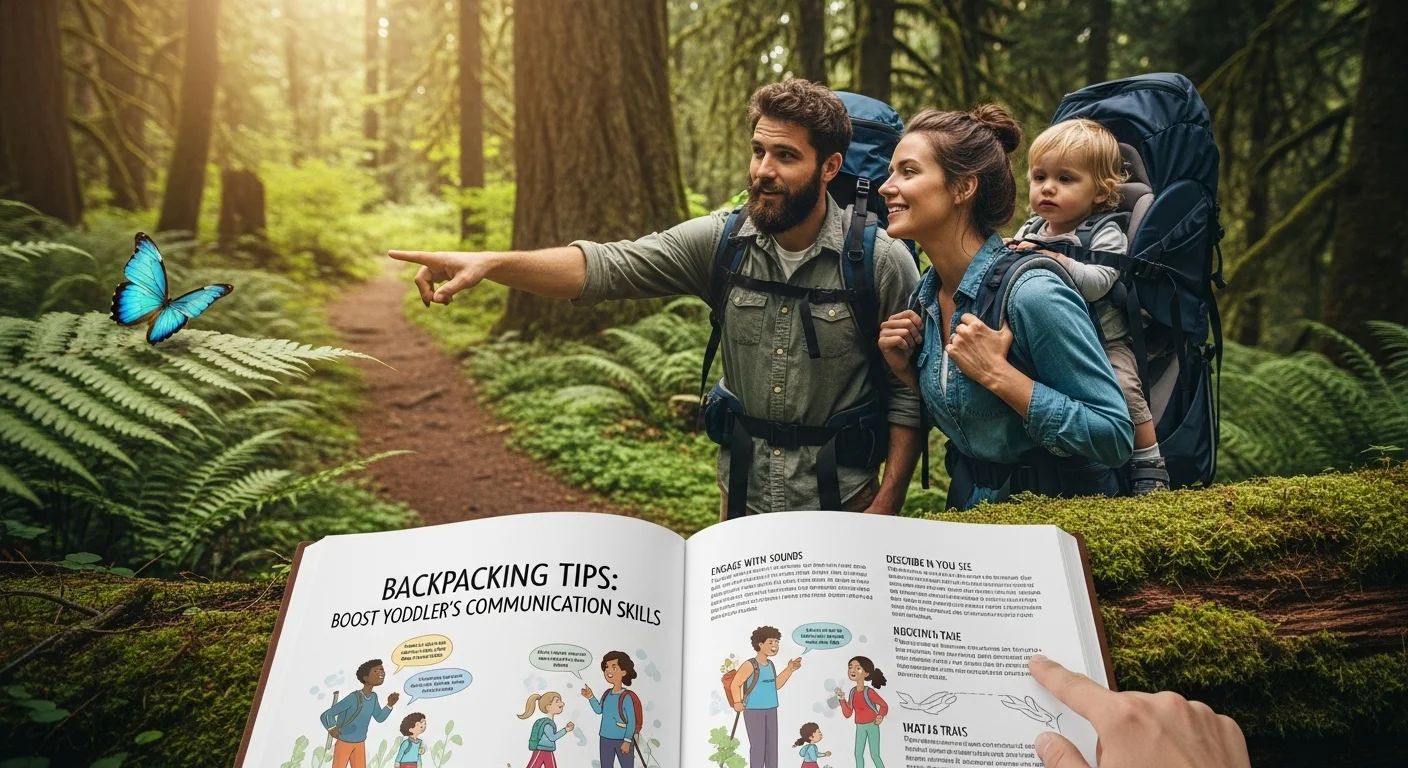
Backpacking with toddlers can be a delightful adventure, especially when it comes to boosting their communication skills. Let’s dive into how we can turn our outdoor explorations into meaningful language-learning experiences for our little ones. Read Interesting article: Budget Backpacking with Toddlers: Tips for Communication Skills
Understanding Communication Development in Toddlers
As a parent, I’ve always found it fascinating to watch my toddler’s communication skills grow. Understanding how toddlers develop these skills helps us support their journey. Communication in young children isn’t just about talking; it’s a complex process that unfolds in stages over time.
Stages of Language Acquisition
From my experience, toddlers typically go through several stages of language acquisition. It starts with simple sounds and gestures as early as six months old. By around one year, many toddlers begin to say their first words, often mimicking sounds they hear in their environment. I remember the joy of hearing my child say “mama” for the first time; it felt like magic!
As they approach 18 months, vocabulary expands rapidly. My toddler went from just a few words to a little dictionary of terms. This stage is crucial as it lays the groundwork for more complex sentences. By the age of three, they’re forming simple sentences and can express their needs and thoughts more clearly.
Understanding these stages has helped me tailor my interactions with my child. For example, I started using more descriptive language during our daily routines, which encouraged my toddler to pick up new words and phrases. This intentionality in communication has made a significant difference in my child’s ability to express themselves.
Importance of Communication Skills
I’ve realized that fostering communication skills in toddlers is not just about teaching them to speak. It’s about helping them develop confidence and the ability to connect with others. Strong communication skills can enhance their social interactions and support their emotional development. I often notice how my own child thrives when we engage in conversations, even when they are still learning to form sentences. It’s a beautiful thing to witness their eagerness to share thoughts, stories, and feelings.
Engaging in conversation also helps toddlers develop their listening skills. I’ve seen firsthand how responding to my child’s questions or prompts encourages them to think critically and express their ideas. When we backpack together, I make it a point to narrate our surroundings, which not only keeps my child engaged but also expands their vocabulary and understanding of the world around them. Read Interesting article: How to Encourage Your Toddler’s Communication and Social Skills
Preparing for the Backpacking Adventure
Now that we’ve discussed the importance of communication skills, let’s look at how we can prepare for a backpacking adventure that encourages these skills. I’ve learned that preparation is key to making the most of our outdoor experiences.
Choosing the Right Backpack for Your Toddler
The first step is selecting the right backpack for my toddler. I remember my first backpacking trip with my little one; I was overwhelmed by choices. I found that a lightweight backpack designed specifically for toddlers made a huge difference. It should be comfortable for them to carry, with adjustable straps and enough space for essentials. I let my child help pack their backpack, which not only made them excited for the adventure but also provided an opportunity to talk about what we were bringing and why.
Essential Packing List for Communication
When it comes to packing, I focus on items that enhance communication. I always include a notebook and colored pencils so we can draw and write together. This not only provides a creative outlet but also encourages my toddler to express their thoughts visually, which can be just as important as verbal communication.
Snacks are also a must! I discovered that sharing snacks during our breaks opens up great opportunities for conversation. Asking questions about their favorite snacks or what they would like to try next can spark fun discussions. I learned to pack their favorite treats, which keeps them happy and engaged, making it easier to explore new topics together.
Engaging Toys and Books for Language Development
I also make sure to pack engaging toys and books that promote language development. I’ve found that bringing along a few picture books related to nature can lead to beautiful conversations while we hike. For instance, spotting animals or plants we read about helps connect the dots between words and the real world. These moments have turned into some of our most cherished memories.
I remember one hike where we found a butterfly that matched the one from a book we had read. My toddler was so excited, and it led to a conversation about colors, shapes, and even emotions. It was a reminder of how powerful our interactions can be when we intentionally integrate communication into our adventures. Read Interesting article: Fun Activities to Boost Your Toddler’s Social Communication Skills
Backpacking Locations That Encourage Interaction
Choosing the right locations for our backpacking adventures can significantly enhance my toddler’s communication experience. I’ve discovered that some places not only offer beautiful scenery but also create opportunities for engaging conversations and learning. Here are some of my favorite types of locations that encourage interaction.
Choosing Family-Friendly Trails
When picking a trail, I always look for family-friendly options. These trails are often shorter and less challenging, making them perfect for toddlers. I remember one trip where we explored a local nature reserve with a flat, easy path. It allowed us to focus on our surroundings rather than worrying about steep inclines. I encouraged my child to notice different plants and animals along the way, which led to delightful discussions about what we saw. This approach not only kept my child engaged but also sparked a sense of curiosity about nature.
Another great aspect of family-friendly trails is that they often feature signs or markers describing the local flora and fauna. I make it a point to stop and read these signs together. It’s a perfect chance to expand vocabulary and learn new words. I’ve found that my toddler is more interested in learning when it’s tied to an experience in a beautiful setting, and these moments really stick with them.
Visiting Interactive Museums and Parks
In addition to hiking, I’ve realized that interactive museums and parks can be fantastic alternatives for our adventures. I recall visiting a children’s museum where everything was hands-on. My child loved exploring different exhibits and asking questions about everything they saw. I made sure to engage with them by asking open-ended questions about the displays, which sparked more in-depth conversations. It was a joy to see my toddler’s imagination come alive as they played and learned simultaneously.
We also enjoy visiting parks that have interactive installations or playgrounds. These spaces allow for play and exploration, and I’ve noticed that when my child is engaged in play, they are more inclined to express their thoughts and feelings. I try to follow their lead, asking them about what they’re playing with or what they’re discovering. These conversations can lead to a deeper understanding of their interests and how they view the world.
Exploring Nature and Wildlife
One of my favorite parts of backpacking is the opportunity to explore wildlife. I’ve found that simply being in nature can be incredibly inspiring for toddlers. Watching birds, spotting insects, or even tracking animal footprints opens up a world of questions and conversations. I remember a hike where we saw a family of deer. My toddler was fascinated, and we spent a good amount of time discussing what deer eat, where they live, and how they move. The excitement in my child’s voice as they shared their observations was truly heartwarming.
I also encourage my child to make observations about the weather, sounds, and smells around us. Naming these sensory experiences helps them connect language to their environment. For example, while walking through a pine forest, I pointed out the smell of the trees and asked if they could describe it. I love how these little moments can lead to rich vocabulary-building experiences and a deeper appreciation for nature.
Activities to Boost Communication Skills While Backpacking
In addition to choosing the right locations, I’ve found that incorporating specific activities into our backpacking trips can greatly enhance my toddler’s communication skills. These activities not only make our adventures more fun but also create memorable learning experiences.
Storytelling and Imaginative Play
One of the activities we enjoy is storytelling. I often encourage my toddler to share their own stories inspired by our surroundings. For instance, if we’re near a creek, I might prompt them with, “What do you think lives in that water?” This opens the door for imaginative play and allows my child to express their thoughts creatively. I love how storytelling nurtures their imagination and helps them articulate their ideas more clearly.
Sometimes, I’ll start a story and let my child fill in the gaps. We might create characters based on animals we see during our hike, or come up with adventures that take place in the forest. This collaborative storytelling not only strengthens their language skills but also deepens our bond as we share these experiences together.
Sing-Alongs and Rhymes
Singing songs and rhymes is another wonderful way to boost communication. I often find myself singing nature-themed songs while we walk. It keeps the mood light, and my toddler enjoys joining in. I believe that music can enhance language learning, and I’ve seen how the rhythm and repetition of songs make it easier for them to remember words and phrases. I love to mix in classic children’s songs with new lyrics about our adventures, making the experience personal and engaging.
Nature Scavenger Hunts
We also enjoy organizing nature scavenger hunts. Before our hikes, I create a simple list of items for my toddler to find—like a pine cone, a yellow flower, or a specific bird. As they search, I encourage them to describe what they’re looking for and to talk about what they see. This activity keeps my child engaged and excited about their discoveries. I find that as they search for items, they naturally start to express their thoughts and observations more freely, which is a fantastic way to reinforce their language skills.
Encouraging Conversation and Engagement
As we backpack and explore the great outdoors, I’ve learned that fostering conversation and engagement with my toddler can significantly enhance their communication skills. It’s about creating an environment where they feel comfortable expressing themselves and exploring their thoughts. Here’s what I’ve found to be effective.
Asking Open-Ended Questions
One of the simplest yet most powerful tools I’ve discovered is the use of open-ended questions. Instead of asking questions that can be answered with a simple “yes” or “no,” I try to ask questions that prompt my toddler to elaborate. For example, instead of saying, “Did you see the bird?” I might ask, “What do you think that bird is doing?” This encourages my child to think critically and use their words to express their ideas.
I’ve noticed that when I ask open-ended questions, it often leads to deeper conversations. During one hike, we spotted a squirrel. Instead of just asking if they saw it, I asked, “What do you think the squirrel is looking for?” My toddler came up with an imaginative answer about the squirrel searching for food, and we ended up discussing what squirrels eat and where they find their food. It was a delightful moment that not only sparked curiosity but also allowed my child to practice their verbal skills.
Encouraging Expressive Language
Encouraging expressive language is another important aspect of our communication journey. I try to create opportunities for my toddler to describe what they see, feel, or think during our adventures. For instance, if we come across a beautiful flower, I might say, “Can you tell me what you see?” or “How does this flower make you feel?”
These prompts help my toddler learn to articulate their thoughts and feelings. I remember one hike where we saw a rainbow after a rain shower. My child exclaimed, “It’s so colorful!” I encouraged them to elaborate by asking, “What colors do you see?” This led to a fun exercise in color recognition but also helped them practice putting their thoughts into words.
Encouraging my toddler to express themselves doesn’t always have to be about what they see. Sometimes, I ask them to share their favorite part of the hike or what they are looking forward to next. This not only provides a chance for them to practice their language skills but also makes them feel valued, as their opinions matter in our adventure.
Modeling Good Communication Practices
Through our experiences, I’ve learned that modeling good communication practices is essential. Children often learn by imitating adults, so I make a conscious effort to demonstrate effective communication. Whether it’s using new vocabulary, maintaining eye contact, or being an active listener, I try to embody the communication skills I want my toddler to develop.
When my child speaks to me, I make sure to give them my full attention. I often kneel down to their level, look them in the eyes, and respond thoughtfully. This practice not only shows them that I value their words but also helps them understand the importance of listening and engaging in conversations. I remember a moment when my toddler shared a story about a bug they found. I listened intently, asked follow-up questions, and encouraged them to tell me more. This interaction helped them feel heard and motivated them to share even more.
Additionally, I try to incorporate new words into our conversations, explaining their meanings through context. When we encounter a new animal or plant, I’ll say something like, “Look at that majestic eagle! Majestic means it’s grand and beautiful.” This approach helps my toddler expand their vocabulary naturally, making the learning process enjoyable and relevant to our experiences.
By creating an environment rich with conversation, encouraging expressive language, and modeling good communication practices, I’ve seen my toddler’s confidence grow. They are becoming more articulate and eager to share their thoughts. Each backpacking trip becomes not only an adventure in nature but also an opportunity for meaningful communication, which is something I cherish deeply.
Using Technology Wisely
While I absolutely love the outdoors, I’ve come to appreciate that technology can play a supportive role in my toddler’s communication development. When used wisely, it can enhance our adventures and provide additional learning opportunities. Here’s how I integrate technology into our backpacking experiences without overshadowing the beauty of nature.
Educational Apps for Language Learning
There are some fantastic educational apps designed for toddlers that I recommend. I often download a couple of these before our trips. One of my favorites is an app that teaches vocabulary through fun games and interactive activities. Before we head out, I’ll sit down with my child and explore the app together. This not only makes the learning process enjoyable, but it also gives us a chance to discuss what we might see on our hike.
For instance, if we’re going to a nature reserve, we might browse through an app that shows different animals and plants. I love seeing my toddler’s eyes light up when they recognize something they’ve learned as we hike. It feels rewarding to know that they’re making connections between the app and the real world around them.
Audio Books and Podcasts for Toddlers
Another way I incorporate technology is through audio books and podcasts. On longer hikes, I’ve found that playing short stories or educational podcasts can keep my toddler entertained while also providing opportunities for learning. I select audio content that aligns with our environment. For example, if we’re in a forest, I might choose an audio book about woodland animals or a podcast that talks about the ecosystem.
Listening to these stories during breaks or while we walk allows for spontaneous discussions. I often pause the audio to ask my toddler what they think about the story or how it relates to what we’re seeing. It encourages critical thinking and keeps our communication flowing.
Health and Safety Considerations
While backpacking with toddlers can be a thrilling adventure, it’s essential to keep health and safety in mind. I’ve learned that being prepared helps ensure a smooth journey and allows us to focus on communication and exploration.
Staying Safe While Backpacking with a Toddler
Before embarking on any trip, I always make sure to have a first-aid kit handy. This kit includes basics like band-aids, antiseptic wipes, and allergy medication. I explain to my toddler what each item is for, which not only teaches them about safety but also promotes vocabulary related to health and well-being.
Additionally, I emphasize the importance of staying close and being aware of our surroundings. I use phrases like “Let’s look out for any slippery rocks” or “Stay close to me while we walk.” These reminders help my child understand safety boundaries while reinforcing communication about our environment.
Managing Communication During Emergencies
Though I hope we never face emergencies, I believe it’s essential to prepare my child for what to do in case we get separated or encounter a problem. I’ve had conversations with my toddler about identifying safe adults and what to do if they feel lost or scared. We practice phrases that they can use to ask for help, like “I’m lost” or “Can you help me find my mommy?”
These discussions not only boost their confidence but also encourage them to express themselves clearly in times of stress. I want them to feel empowered to communicate their needs effectively, no matter the situation.
Post-Trip Activities to Reinforce Skills
After our adventures, I find that reflecting on our experiences can reinforce everything we learned together. It’s a wonderful way to keep the communication flowing even after we’ve returned home.
Reflecting on the Journey Together
One of my favorite post-trip activities is sitting down with my toddler to talk about our hike. I ask open-ended questions like, “What was your favorite part of the trip?” or “What did you learn about nature?” These discussions allow them to articulate their thoughts and feelings, reinforcing the vocabulary they picked up during our adventure.
Creating a Memory Book or Scrapbook
Another engaging activity is creating a memory book or scrapbook. We gather photos, drawings, and mementos from our trip. This not only helps my toddler practice storytelling but also serves as a tangible reminder of our experiences together. While we work on it, I make it a point to ask questions about each item we include, which encourages them to express their thoughts and memories.
Continuing Language Development at Home
Finally, I try to keep the momentum going at home. I incorporate nature-themed books into our reading routine, and we explore new vocabulary related to our adventures. I also make an effort to find new outdoor activities that we can enjoy together, like gardening or visiting local parks. This ongoing engagement helps solidify the language skills we’ve developed while backpacking.
Final Thoughts
Backpacking with toddlers is not just about enjoying nature; it’s a profound opportunity for communication and growth. By exploring together, engaging in thoughtful conversations, and using technology wisely, we can support our little ones as they navigate their language development. Each trip we take strengthens our bond and nurtures their curiosity, confidence, and ability to express themselves. I truly cherish these moments and look forward to many more adventures ahead, knowing that each step we take together fosters their growth.
Frequently Asked Questions
What are the stages of language acquisition in toddlers?
Toddlers typically go through several stages of language acquisition, starting with simple sounds and gestures as early as six months old. By around one year, many begin to say their first words. As they approach 18 months, their vocabulary expands rapidly, and by the age of three, they form simple sentences.
How can backpacking enhance a toddler’s communication skills?
Backpacking can enhance a toddler’s communication skills by providing opportunities for engaging conversations about their surroundings, using descriptive language, and encouraging them to express thoughts and feelings during the adventure.
What should I pack for a backpacking trip to support communication?
Essential items to pack include a notebook and colored pencils for drawing and writing, engaging toys and books related to nature, and snacks to encourage conversation during breaks.
What types of backpacking locations are best for encouraging interaction?
Family-friendly trails, interactive museums, and parks that feature hands-on exhibits are great options. These locations often provide opportunities for engaging discussions and learning experiences.
How can storytelling boost a toddler’s communication skills while backpacking?
Storytelling encourages toddlers to share their thoughts and imagination, allowing them to articulate ideas creatively. It also strengthens their language skills through collaborative storytelling based on their surroundings.
What role do open-ended questions play in fostering communication?
Open-ended questions encourage toddlers to elaborate on their thoughts, leading to deeper conversations and critical thinking. This practice helps them express themselves more fully rather than just responding with simple answers.
How can I model good communication practices for my toddler?
Modeling good communication practices involves demonstrating effective listening, maintaining eye contact, and using new vocabulary in context. This teaches toddlers the importance of engaging in conversations and expressing themselves clearly.
What safety considerations should I keep in mind while backpacking with a toddler?
It’s essential to have a first-aid kit on hand and to explain its contents to the toddler. Additionally, remind them to stay close and be aware of their surroundings to reinforce communication about safety boundaries.
How can technology support a toddler’s language development during outdoor adventures?
Educational apps that teach vocabulary and audio books or podcasts can enhance language development. These tools provide opportunities for learning and can lead to spontaneous discussions during hikes.
What activities can reinforce communication skills after a backpacking trip?
Post-trip activities like reflecting on the journey, creating a memory book or scrapbook, and continuing language development at home through themed books and outdoor activities can reinforce the skills learned during the adventure.