
STEM activities can be both fun and educational without breaking the bank. Let’s explore engaging ways to inspire kids in science, technology, engineering, and math while sticking to a budget! Read Interesting article: 10 Fun STEM Activities for Kids: Budget-Friendly Ideas
Understanding STEM Education for Kids
What is STEM?
I remember the first time I heard the term STEM; it sounded so technical and intimidating. But as I learned more, I discovered it stands for Science, Technology, Engineering, and Mathematics. These subjects are interconnected in so many ways, and they play a crucial role in developing problem-solving skills. When we introduce STEM concepts to kids, we’re not just teaching them about facts and figures; we’re helping them nurture a curious mindset and an ability to think critically. I’ve found that when kids engage with these subjects through hands-on activities, their interest and understanding deepen significantly.
The Importance of STEM in Child Development
From my experience, STEM education is vital for children’s overall development. It cultivates their analytical thinking, creativity, and collaboration skills. As kids take part in various STEM activities, they learn to ask questions, explore solutions, and even make mistakes, which is an essential part of learning. I’ve seen firsthand how these experiences can boost a child’s confidence and encourage them to tackle challenges head-on. This foundation is especially important as we prepare them for a world that increasingly relies on technology and innovative thinking.
Benefits of Engaging in STEM Activities
Engaging in STEM activities brings a multitude of benefits that I can’t emphasize enough. For starters, it enhances critical thinking abilities. When kids are faced with a problem, they learn to strategize and come up with creative solutions. I noticed that my children became more inquisitive; they started to ask “why” and “how” about the world around them. Additionally, STEM activities often encourage teamwork. Working on projects together helps kids learn to communicate effectively and share ideas. It’s not just about learning; it’s about building social skills that are invaluable later in life. Read Interesting article: Backpacking with Kids: Fun Ways to Boost Social Skills
Choosing Budget-Friendly STEM Activities
Setting a Budget for STEM Projects
When I first began exploring STEM activities with my kids, I realized that budget constraints could be a significant concern. To tackle this, we set a reasonable budget for our projects. I suggest starting small—maybe $20 a month for supplies. This way, you can plan out activities without feeling pressured to overspend. I found that by prioritizing what we wanted to try, we could maximize our resources and still have plenty of fun. Planning also helped us get the most out of every activity, as we could research and gather everything we needed in advance.
Gathering Materials: Household Items and Low-Cost Supplies
One of the best things about STEM activities is that you don’t always need fancy supplies to make them work. I discovered that many successful projects could be completed with items I already had at home. For example, empty plastic bottles, cardboard boxes, and even kitchen ingredients can be transformed into exciting experiments or engineering challenges. I keep a little stash of reusable materials in my garage, just waiting for us to get creative. Plus, it teaches kids about recycling and resourcefulness, which I think is a valuable lesson.
Online Resources for Free STEM Activities
The internet is a treasure trove of free STEM activities and resources. I often turn to websites and online platforms dedicated to educational content. You can find everything from printable worksheets to video tutorials that guide you through engaging projects. I recommend websites like NASA’s Kids Club and PBS Kids, which offer interactive games and experiments tailored for young learners. We’ve even joined online forums and communities where parents share their favorite activities, which has expanded our STEM adventure even more! Read Interesting article: Explore Budget Backpacking: STEM Learning for Young Minds
Hands-On STEM Activities for Kids
Science Experiments
One of the most exciting aspects of STEM is diving into hands-on science experiments. There’s something magical about watching a reaction unfold right before your eyes. I remember setting up simple experiments in our kitchen and feeling the thrill of discovery alongside my kids. It’s a fantastic way to make science come alive! Here are a couple of ideas that we’ve tried and loved:
Simple Chemistry Experiments
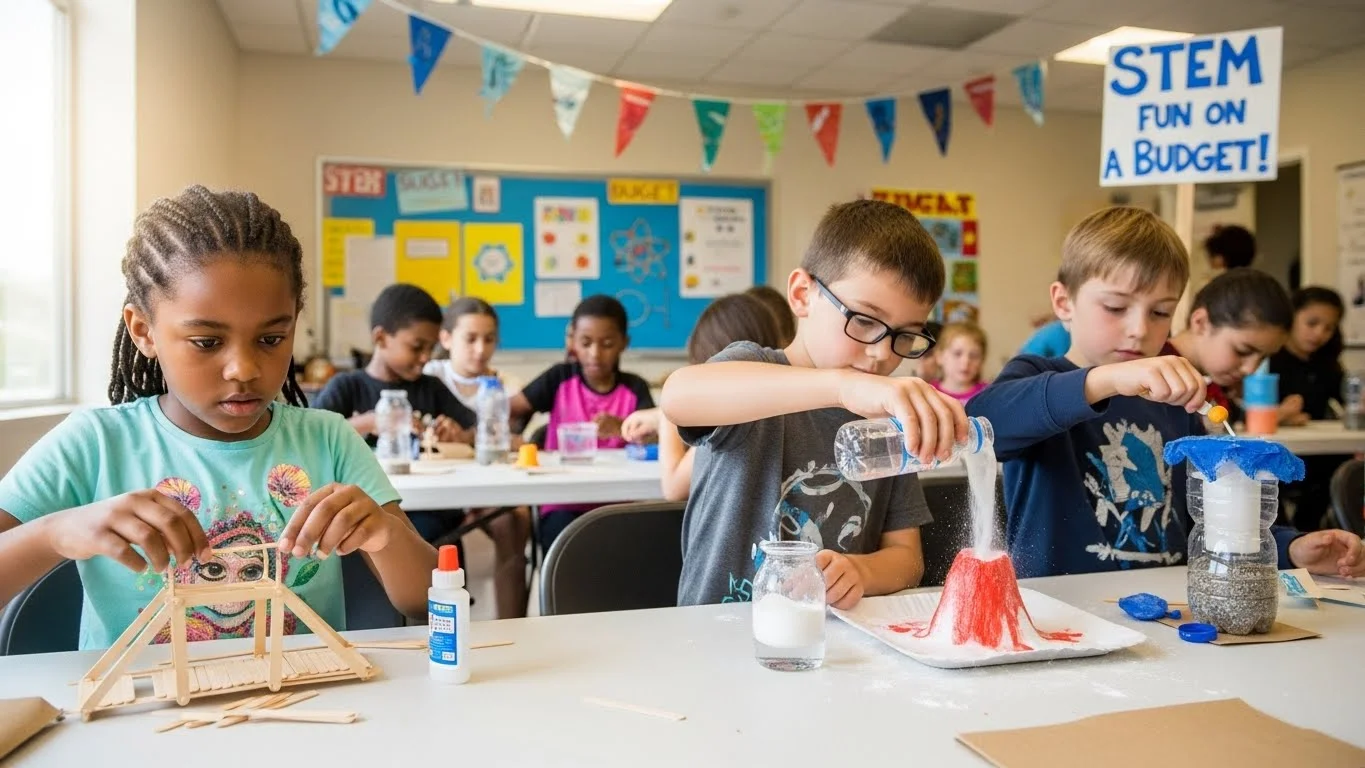
A classic favorite in our home is the vinegar and baking soda volcano. It’s incredibly easy to set up, and my kids can’t get enough of it! All you need is a small container, vinegar, baking soda, and food coloring if you want to add a splash of color. When the baking soda meets the vinegar, it creates a bubbly explosion that never fails to elicit squeals of joy. This experiment taught my kids about chemical reactions while providing a lot of laughs.
Another fun experiment is making slime. We gathered glue, water, and a bit of borax—or we’ve even used cornstarch as an alternative—and mixed them together. The texture and the process fascinated my kids, and they loved customizing their slime with colors and glitter! It’s a hands-on way to learn about polymers and the science behind how substances can change states.
Fun Physics Projects
Physics can be incredibly engaging when you incorporate movement and challenges. One of my favorites is the balloon rocket experiment. Using a balloon, string, and a straw, we created a simple apparatus that demonstrated Newton’s Third Law of Motion. Watching the balloon zip across the room brought out the competitive spirit in my kids as they raced to see whose balloon could travel the furthest.
We also enjoyed building simple catapults using spoons and rubber bands. My kids learned about potential and kinetic energy while having a blast launching marshmallows across the living room. It’s these kinds of projects that make physics feel accessible and fun!
Technology Projects
Exploring technology with kids doesn’t have to mean expensive gadgets. I’ve found that we can create engaging tech projects using simple tools and resources.
Basic Coding Activities for Kids
I started introducing my kids to coding with free online platforms like Scratch. I love how it allows them to create their own games and stories by dragging and dropping blocks of code. It’s a fantastic way for them to grasp the basics of programming while expressing their creativity. We even had a family challenge where we all created short animations, and it was inspiring to see each other’s unique ideas come to life!
Robotics with Everyday Items
Building robots can sound daunting, but we’ve had so much fun creating simple machines with items we found around the house. For example, we transformed an old toothbrush and some small motors into a basic robot that could draw on paper. This project sparked a lot of questions about how robots function and the role of engineering in technology. I think it’s important to show kids that robotics can be as simple as using what you already have around you.
Engineering Challenges
Engineering activities can be both challenging and rewarding. We often set up design challenges that let the kids get creative while applying engineering principles.
Building Structures with Recyclables
One of our go-to activities is creating structures using recycled materials. We’ve built towers out of cardboard boxes, plastic bottles, and even egg cartons. It’s amazing to see how my kids approach the challenge differently, each coming up with distinct designs. This activity not only nurtures creativity but also teaches them about stability and the engineering process. Plus, it’s a great way to talk about sustainability!
Designing and Creating Simple Machines
We’ve also enjoyed building simple machines like levers and pulleys. Using everyday items like wooden spoons, string, and weights, we constructed a working pulley system and experimented with lifting various objects. I remember watching my kids’ eyes light up as they realized they could lift something heavier with a little ingenuity. It’s these moments of discovery that make engineering so thrilling!
Mathematics Games
Math doesn’t have to be intimidating. I’ve found that incorporating games can make learning math concepts enjoyable and engaging.
Math Puzzles and Challenges
We often turn to puzzles and challenges that encourage problem-solving. For instance, we’ve tackled Sudoku puzzles together and played math-related board games that require strategic thinking. I appreciate how these activities promote critical thinking while allowing us to bond as a family. Plus, it’s fun to compete for who can solve the puzzles faster!
Budget-Friendly Math Manipulatives
Using everyday items as math manipulatives has been a game-changer for us. We use things like buttons, pasta, or even small toys to teach counting, addition, and subtraction. By turning math into a hands-on experience, I’ve seen my kids’ confidence grow as they grasp concepts in a fun and tangible way. It’s a simple yet effective approach to making math come alive!
Seasonal STEM Activities
Spring and Summer STEM Projects
Spring and summer bring a fantastic opportunity to blend STEM with nature. I’ve always found that the changing seasons inspire creativity and curiosity. One of our favorite spring projects is planting a garden. We’ve turned our backyard into a mini-lab by exploring how plants grow, discussing the science of photosynthesis, and measuring growth over time. It’s incredible to watch the kids care for their plants while learning about biology and ecology. Plus, there’s something rewarding about eating what we’ve grown together!
Another fun idea is creating homemade weather instruments. During the warmer months, we’ve made a simple rain gauge using a plastic bottle and a ruler. This project not only teaches kids about measuring precipitation but also engages them in observing weather patterns. I remember how excited my kids were to record their findings each day, linking our data collection to discussions about climate and the environment.
Summer is perfect for outdoor physics activities. We’ve set up a water balloon catapult using a slingshot made from rubber bands and a spoon. It’s a hands-on way to learn about force and trajectory. The laughter and joy that come from watching those balloons soar through the air while discussing the principles of physics made this project a hit in our home!
Fall and Winter STEM Activities
As the leaves change and the weather cools down, I’ve found that fall and winter are great times for indoor STEM activities. One memorable fall project was making a DIY compass using a needle, a magnet, and a cork. We learned about magnetism and navigation while exploring our backyard to see how accurately it pointed north. It turned into an exciting adventure, as we turned our yard into a tiny exploration zone!
During winter, we often dive into holiday-themed STEM activities. One project that my kids adore is creating homemade snowflakes using coffee filters. We’ve experimented with symmetry and geometry by cutting different shapes and patterns. It’s always a thrill to unfold the filters and reveal unique designs! We even incorporated discussions about the science of snowflakes and how no two are alike, which sparked some great conversations.
Another winter favorite is building a simple electric circuit using batteries, wires, and LED lights. We’ve created holiday decorations that light up, combining engineering and creativity. I love how this project encourages problem-solving as my kids troubleshoot their circuits, learning about conductivity and energy transfer in the process. It’s a fantastic way to celebrate the season while learning valuable STEM concepts!
Incorporating STEM into Everyday Life
STEM in the Kitchen: Cooking and Baking Activities
The kitchen is an excellent place to introduce STEM concepts in a fun and delicious way! I’ve found that cooking and baking can serve as hands-on lessons in chemistry and math. Measuring ingredients is a fantastic way to practice fractions and conversions. I often involve my kids in the process, asking them to double a recipe or convert measurements. It’s amazing to see how quickly they pick up these skills while enjoying the fruits of their labor.
We’ve also conducted simple experiments while cooking, like observing how heat transforms ingredients. One of our favorites is making bread. The yeast’s role in fermentation is fascinating, and watching the dough rise provides a tangible example of science in action. My kids take great pride in the bread we bake together, and it’s wonderful to see them connect the science behind it to something they can taste!
STEM in Nature: Outdoor Exploration and Experiments
Nature is full of opportunities to explore STEM concepts. I love taking my kids on walks in the park, where we collect leaves, rocks, and flowers to observe and identify. We’ve turned this into a mini-biology lesson by discussing different species, ecosystems, and the importance of biodiversity. It’s so rewarding to see their excitement as they discover something new about their environment!
We’ve also set up a small outdoor experiment, like observing insects or creating a bird feeder to study local wildlife. This encourages curiosity about the natural world and fosters a sense of responsibility for our environment. I remember how my kids were captivated by the different birds visiting our feeder, turning it into a daily observation project!
STEM in Arts and Crafts: Creative Projects
Combining STEM with arts and crafts has been one of the most enjoyable ways to engage my kids. I’ve discovered that creative projects can reinforce scientific concepts while allowing for self-expression. One of our favorite activities is creating 3D models using craft supplies. We’ve built everything from the solar system to simple machines, discussing concepts like gravity and balance along the way. It’s exciting to see their ideas take shape and connect to what they’ve learned!
We’ve also explored the world of engineering by constructing bridges out of popsicle sticks and glue. It’s a hands-on way to learn about design principles and stability while sparking creativity. I love how these projects encourage teamwork, as my kids often collaborate to create their masterpieces. The pride they feel when they complete a project is truly rewarding for all of us!
Collaborative STEM Activities
Group Projects for Friends and Family
One of the most rewarding experiences I’ve had with STEM activities is when we’ve collaborated with friends or family. I remember a time when we organized a mini STEM fair at our house, inviting a few families over to showcase the projects we had been working on. Each child brought their own project, and it turned into a lively day filled with demonstrations, questions, and a lot of excitement. It was inspiring to see how different minds approached the same topic in unique ways!
During the fair, my kids presented their vinegar and baking soda volcano, while another child showcased a homemade robot. We even had a group challenge where we built the tallest tower using only spaghetti and marshmallows. It was fascinating to witness teamwork in action and how the kids learned from one another. These group projects not only make learning fun, but they also foster a sense of community and collaboration that I believe is essential for developing social skills.
STEM Clubs and Community Resources
Joining STEM clubs or community resources has been another fantastic way to engage my kids. I’ve found local libraries and community centers often host workshops or clubs focused on STEM education. These programs provide fantastic opportunities for kids to connect with peers who share similar interests. I remember enrolling my kids in a robotics club at our local library, and it quickly became a highlight of our week.
In these clubs, they got to work on projects together, participate in competitions, and even learn from mentors in the field. It’s amazing how much they’ve learned in a short time, and it’s all because they were surrounded by like-minded friends. I also encourage parents to look for online community resources. Websites often have forums where families can share ideas and connect with others interested in STEM. It’s a wonderful way to extend the learning experience beyond our homes.
Tips for Maximizing Engagement in STEM Activities
Encouraging Curiosity and Questions
I’ve learned that one of the best ways to engage kids in STEM activities is to encourage their natural curiosity. I always find it helpful to ask open-ended questions during our projects. For instance, when we were building our balloon rocket, I asked, “What do you think will happen if we change the size of the balloon?” This sparks discussions and gets them thinking critically about the science behind their experiments. I believe that when kids feel comfortable asking questions, it leads to deeper exploration and learning.
Making Learning Fun and Interactive
Keeping STEM activities fun and interactive is key to maintaining my kids’ interest. I remember the time we turned a simple math lesson into a scavenger hunt around the house. They had to find items that represented different shapes or numbers. It was a fantastic way to combine physical activity with learning, and they didn’t even realize they were practicing math skills! I highly recommend incorporating movement and games into STEM to create a dynamic learning environment. The more engaged they are, the more they’ll want to participate!
Tracking Progress and Celebrating Achievements
Tracking progress and celebrating achievements is something I value greatly. I often keep a chart where we note down the activities we’ve completed and what new skills we’ve learned. It’s rewarding for my kids to see their growth over time. We also make it a point to celebrate milestones, whether it’s finishing a challenging project or mastering a new math concept. A simple reward system, like stickers or a fun family outing, can motivate them to continue exploring STEM activities. I think it’s essential to recognize their efforts and achievements to foster a positive attitude toward learning.
Final Thoughts
Fostering a love for STEM doesn’t have to be expensive or overwhelming. Through simple, budget-friendly activities, we can inspire curiosity and creativity in our children. I’ve experienced firsthand how engaging in STEM projects can spark a lifelong interest in science, technology, engineering, and math. By incorporating these activities into our everyday lives, collaborating with others, and encouraging questions, we can create a rich learning environment that nurtures young minds. Let’s continue to explore, discover, and celebrate the joy of STEM together!
Frequently Asked Questions
What does STEM stand for?
STEM stands for Science, Technology, Engineering, and Mathematics. These subjects are interconnected and play a crucial role in developing problem-solving skills in children.
Why is STEM education important for child development?
STEM education is vital for children’s overall development as it cultivates analytical thinking, creativity, and collaboration skills. It encourages children to ask questions, explore solutions, and learn from mistakes, boosting their confidence and preparing them for a technology-driven world.
How can I choose budget-friendly STEM activities?
To choose budget-friendly STEM activities, set a reasonable budget for projects, like $20 a month for supplies, and prioritize activities. Gathering materials from household items and utilizing online resources for free STEM activities can also help keep costs low.
What are some examples of hands-on science experiments for kids?
Some hands-on science experiments include creating a vinegar and baking soda volcano and making slime. These activities not only provide fun but also teach kids about chemical reactions and polymers.
How can technology be incorporated into STEM projects?
Technology can be incorporated into STEM projects through basic coding activities using free online platforms like Scratch, which allows kids to create their own games and stories. Additionally, robotics can be explored by building simple machines with everyday items.
What kind of engineering challenges can kids participate in?
Kids can participate in engineering challenges by building structures with recyclables, such as cardboard boxes and plastic bottles, or designing simple machines like levers and pulleys using everyday items.
How can math be made enjoyable for children?
Math can be made enjoyable through games, puzzles, and hands-on activities. Using everyday items as math manipulatives, like buttons and pasta, helps teach counting and basic operations in a fun, tangible way.
What seasonal STEM activities can families enjoy together?
Seasonal STEM activities include planting a garden in spring, making homemade weather instruments in summer, creating a DIY compass in fall, and building simple electric circuits during winter. Each activity teaches valuable STEM concepts while allowing for family bonding.
How can parents encourage curiosity and questions during STEM activities?
Parents can encourage curiosity by asking open-ended questions during projects, which sparks critical thinking and deeper exploration. Engaging kids in discussions about their experiments helps foster a more inquisitive mindset.
What are some benefits of collaborative STEM activities?
Collaborative STEM activities, such as group projects or joining STEM clubs, foster teamwork and community, allowing kids to learn from one another. These experiences enhance social skills and make learning more enjoyable.