Looking for engaging and affordable ways to spark your child’s interest in STEM? You’re in the right place! Here are ten budget-friendly activities that are not only fun but also educational.
10 Fun STEM Activities for Kids: Budget-Friendly Ideas
Understanding STEM and Its Importance for Kids
What is STEM?
STEM stands for Science, Technology, Engineering, and Mathematics. It’s a way of thinking that encourages exploration, problem-solving, and creativity. I remember when I first learned about STEM as a kid; it opened my eyes to how the world works. We often use STEM concepts in our daily lives without even realizing it! From calculating how much time it takes to get from one place to another to understanding how our favorite gadgets work, STEM is all around us. It encourages children to ask questions and seek answers, fostering a natural curiosity that can lead to lifelong learning.
Benefits of STEM Education for Children
The benefits of STEM education for kids are immense. First off, it develops critical thinking skills. I’ve seen my own children tackle challenges through experimentation and inquiry. When they can’t figure something out right away, they learn resilience as they try again, which is a vital skill in today’s world. Additionally, STEM education promotes collaboration. Many activities require teamwork, and I love watching my kids work together to solve problems. They learn to communicate effectively, share ideas, and respect different perspectives. Read more about how collaboration can enhance social skills.
Moreover, STEM activities can help kids discover their interests and passions. I can’t tell you how many times a simple science experiment led my children to delve deeper into topics they found exciting. This exploration can inspire future career paths, whether in engineering, medicine, or technology. In essence, STEM education empowers kids to think critically, work collaboratively, and ignite their curiosity about the world.
Criteria for Budget-Friendly STEM Activities
Cost-Effective Materials
When considering STEM activities, I always look for options that use materials I already have at home or that can be purchased cheaply. Items like baking soda, vinegar, and food coloring can create fantastic experiments without breaking the bank. I also love using recycled materials like cardboard boxes, plastic bottles, and old electronics. Not only does this keep costs down, but it also teaches kids about sustainability and repurposing. We often have family craft nights where we gather these items and brainstorm creative uses for them. Explore budget-friendly ideas that combine play and learning.
Easy Setup and Cleanup
Another important factor in choosing STEM activities is how easy they are to set up and clean up afterward. I’ve had my fair share of messy projects that took hours to clean up, and let me tell you, that can be a deterrent! Simple activities that require minimal setup and cleanup mean more time for fun and learning. For instance, projects that can be done outside or in the kitchen are often easier because spills can be washed away quickly. I appreciate activities that allow my kids to experiment without me worrying about the mess, like making homemade slime or conducting simple physics experiments. I always encourage my kids to embrace the messiness of learning, but I also want to keep our home tidy!
Accessibility for Different Age Groups
Lastly, I think it’s essential that STEM activities cater to different age groups. I have kids ranging from toddlers to preteens, so I try to find activities that everyone can participate in at their own level. For younger children, hands-on exploration is crucial, while older kids might enjoy more complex challenges. Adapting activities so that everyone can engage allows for family bonding time. One of our favorite traditions is to have a family STEM night where we pick an activity that everyone can contribute to, regardless of age.
Finding budget-friendly STEM activities that meet these criteria can lead to countless hours of fun and learning. Now that we’ve established the importance of STEM and how to choose activities wisely, let’s dive into some exciting ideas that your kids will love!
10 Fun STEM Activities for Kids
1. DIY Volcano Eruption
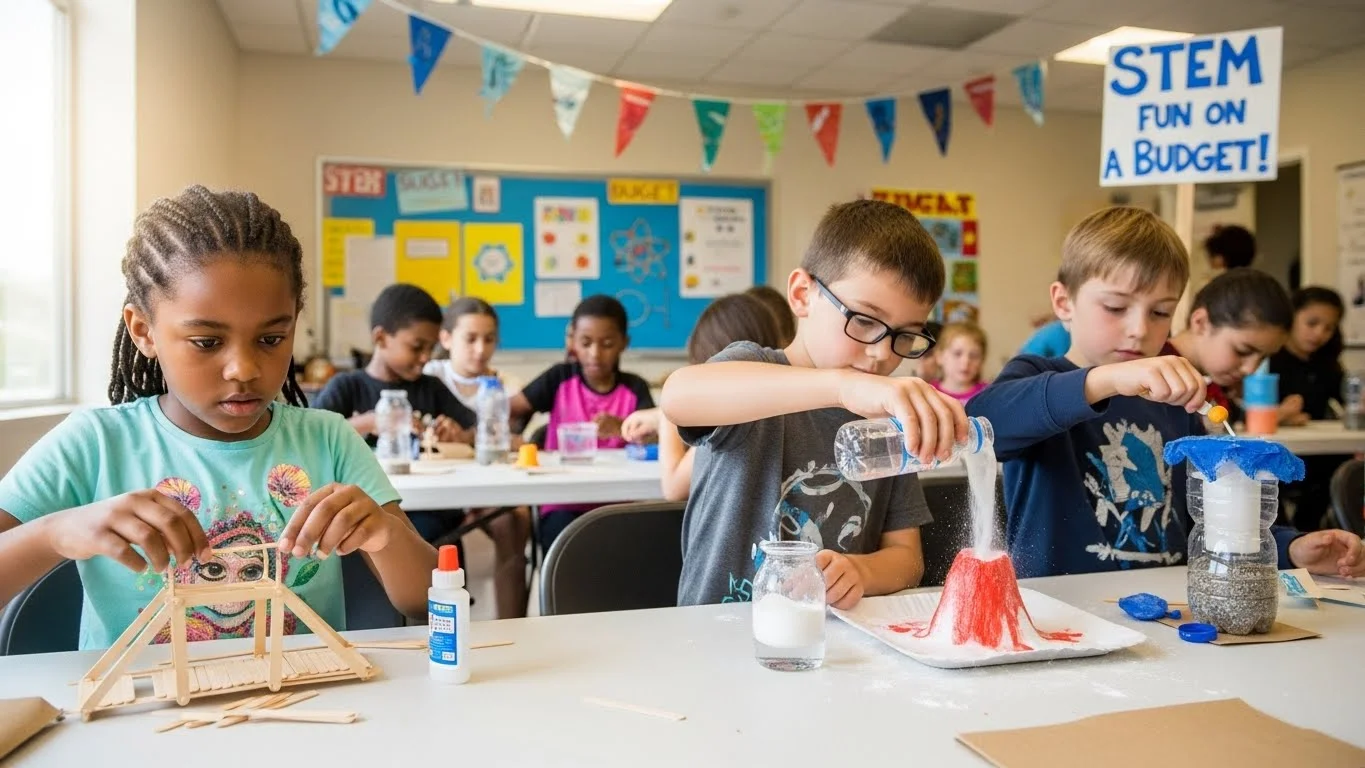
One of my all-time favorite activities is the DIY volcano eruption. It’s simple, exciting, and always gets a great reaction! To create your own volcano, we usually use a plastic bottle as the volcano’s core, surrounded by clay or playdough to shape the mountain. Then, we mix baking soda and vinegar inside the bottle. When we pour the vinegar into the baking soda, it erupts with a fizzing reaction, mimicking a real volcano. I love how this activity teaches kids about chemical reactions while keeping them engaged and entertained. Plus, watching the eruption unfold is just plain fun!
2. Homemade Slime Science
Homemade slime is another hit in our household. I remember the first time we made it; my kids were amazed at how simple ingredients like glue and borax could transform into something so squishy and fun. We often customize our slime with different colors and glitter, adding a creative twist to the science behind it. I appreciate this activity because it not only allows for sensory play but also introduces kids to the science of polymers. It’s a great way to blend creativity with learning!
3. Build a Simple Circuit
Building a simple circuit is an activity that has sparked a lot of interest in my kids. Using just a battery, a light bulb, and some wires, we can create our own working circuit. I love seeing their faces light up when the bulb turns on! We often challenge ourselves to create different circuit designs or even add a switch to control the light. It’s fascinating to see them grasp the concept of electricity and how it flows, and I believe this foundational understanding can be essential for their future learning in technology and engineering.
4. Create a Balloon-Powered Car
Have you ever tried making a balloon-powered car? It’s an awesome engineering challenge that my kids absolutely love! We use lightweight materials like straws and cardboard to build the car, and then a balloon for propulsion. The kids take turns blowing up the balloon and watching how far their car can race. Not only does this activity teach them about forces and motion, but it also encourages them to experiment with design improvements. I find it rewarding to see them brainstorm different ideas to make their cars faster!
5. DIY Water Filtration System
Creating a DIY water filtration system is a fantastic way to teach kids about environmental science and the importance of clean water. We use materials like sand, gravel, and activated charcoal layered in a bottle to filter dirty water. Watching the transformation of murky water into something clear is always a “wow” moment for them. This activity not only introduces them to scientific principles but also helps them understand real-world issues like water pollution, making it both educational and impactful.
6. Egg Drop Challenge
The egg drop challenge is a classic STEM activity that tests creativity and engineering skills. We gather materials like straws, tape, and paper, and the goal is to create a protective structure for an egg that will prevent it from breaking when dropped from a height. I enjoy seeing the different designs my kids come up with, and it turns into a friendly competition. After each drop, we discuss what worked and what didn’t, fostering critical thinking and improvement for the next round. It’s an exciting way to blend science with a little bit of friendly rivalry!
7. Paper Airplane Contest
Who doesn’t love a good paper airplane contest? This activity is perfect for all ages and allows for some fun competition. We usually spend time designing various airplane styles and then test how far they can fly. I encourage my kids to experiment with different designs, observing how changes affect flight distance and stability. This not only reinforces concepts of aerodynamics but also sparks discussions about trial and error, which is a crucial part of the scientific method. Plus, it’s a great excuse to spend time outdoors!
8. Nature Scavenger Hunt
A nature scavenger hunt is a fantastic way to get kids outside and connected with their environment. We create a list of items to find, like specific leaves, rocks, or insects. While searching for these items, my kids learn about biodiversity and ecosystems. It’s amazing to see their curiosity in action as they explore nature. I love taking pictures of their discoveries and discussing what they found when we return home. It’s a simple yet effective way to integrate science into our everyday lives!
9. Marshmallow and Toothpick Structures
Building structures with marshmallows and toothpicks is not only a delicious activity but also a great way to introduce basic engineering concepts! We often challenge ourselves to build the tallest or sturdiest structure we can. This activity encourages creativity, critical thinking, and teamwork as we collaborate on designs. I’ve noticed that my kids get really invested in their structures, and it’s fun to see how their ideas evolve as they experiment with different configurations.
10. Raspberry Pi or Arduino Projects
For families with older kids, diving into Raspberry Pi or Arduino projects can be incredibly rewarding. I remember the first time we built a simple robot using Arduino; it was a game changer for my kids. They learned about programming and electronics in a hands-on way. These projects might require a bit more investment upfront, but they offer endless possibilities for learning and creativity. We often explore various tutorials together, and I love watching my kids transform their ideas into real-life applications!
Safety Considerations for STEM Activities
Age-Appropriate Activities
When diving into STEM activities, I can’t stress enough the importance of age-appropriate choices. Each of my kids has different interests and capabilities, which I’ve learned to consider when planning our experiments. For instance, while my older children can handle more complex tasks like coding or building electronics, my younger ones benefit from hands-on activities that allow them to explore safely. Always think about what’s suitable for your child’s age group to keep their learning experience enjoyable and safe. I’ve found that adapting activities, such as simplifying instructions or using larger materials for younger kids, helps everyone participate without feeling overwhelmed.
Supervision and Guidance
Supervision is key for us when we engage in STEM activities. I remember a few instances where my kids got a little too adventurous with their experiments, which led to some messes and minor mishaps. Being present not only keeps them safe but also allows me to guide them through the learning process. I love asking them questions to encourage critical thinking while they work. It’s amazing how a simple question like, “What do you think will happen if we change this variable?” can lead to deeper understanding and exploration. I make it a point to be involved, especially during activities that involve materials that might be tricky or require a bit more finesse to manage.
Handling Materials Safely
Handling materials safely is a big part of our STEM journey. I’ve learned that some common household items can pose risks, like hot liquids or sharp tools. When we do experiments that involve these, I take extra precautions, such as wearing gloves or goggles. For example, during our DIY water filtration project, we used activated charcoal, which I made sure was handled carefully. I also emphasize the importance of cleaning up afterward, as certain substances can be harmful if left unattended. Teaching my children about safety in these situations not only protects them but also instills a sense of responsibility for their learning environment.
Additional Resources for STEM Activities
Books and Online Resources
Over the years, I’ve discovered a treasure trove of books and online resources that have sparked our STEM adventures. I love visiting the library to pick out books that delve into scientific concepts in a fun way. There are so many engaging titles that cover everything from space exploration to biology. Online, I often turn to platforms like YouTube for visual tutorials and experiments. There’s something so captivating about watching someone else perform an experiment before trying it ourselves! I also recommend websites like NASA’s education page, which provides incredible resources tailored for kids. These tools have opened up new avenues for learning and ignited my children’s curiosity, making it easy to explore topics they may not encounter in school.
Community Workshops and Events
Community workshops and events have played a significant role in our STEM journey. I remember when we participated in a local science fair; it was a fantastic experience for my kids. They got to showcase their projects and connect with other young scientists. Many local libraries and community centers host STEM-themed events, which I highly recommend checking out. Not only do these gatherings provide hands-on experiences, but they also foster a sense of community and collaboration. My kids have made friends while learning, and it’s been wonderful to see them inspire and support each other in their scientific pursuits. Consider attending events that also promote social skills.
STEM Kits and Subscription Boxes
STEM kits and subscription boxes have been a game-changer for us! There are so many options available that cater to different interests and age groups. I remember the excitement on my kids’ faces when our first kit arrived; it included everything we needed to build a small robot. These kits often come with detailed instructions and all the necessary materials, making it easy for us to dive right in without a lot of preparation. I appreciate that they offer a structured way to tackle STEM activities while still allowing for creativity and experimentation. Subscription boxes can be a fun surprise each month, adding an element of discovery to our learning routine!
Encouraging Continued Interest in STEM
Integrating STEM into Everyday Life
Integrating STEM into our everyday life has been incredibly fulfilling. I’ve found that small, everyday moments can turn into valuable learning experiences. For example, cooking dinner often turns into a math lesson as we measure ingredients or discuss the science of baking. Even simple trips to the grocery store can become opportunities to talk about nutrition and food science. I believe that when kids see the relevance of STEM in daily activities, they become more engaged and interested in learning. It’s all about taking those little moments to ask questions and spark curiosity!
Promoting Problem-Solving Skills
Promoting problem-solving skills is something I strive to do regularly. Whenever we face challenges—be it in a STEM activity or another aspect of life—I encourage my kids to think critically and brainstorm solutions. I remember a time when a science experiment didn’t go as planned; instead of getting frustrated, we discussed what might have gone wrong and how we could fix it. This process not only teaches resilience but also shows them that failure is part of learning. I always tell my kids, “Every mistake is a lesson,” and I genuinely believe that cultivating this mindset will serve them well in the future.
Celebrating Achievements in STEM
Celebrating achievements is so important in keeping my kids motivated. Whether they’ve successfully completed an experiment, built something amazing, or simply learned something new, I make a point to recognize their hard work. We often have little “STEM celebrations” at home, where we showcase what we’ve done over the week. It can be as simple as a shout-out at dinner or a fun display of our projects. I’ve noticed that these celebrations boost their confidence and make them excited to tackle new challenges. Encouraging them to share their achievements with family and friends also helps reinforce the idea that learning is something to be proud of!
Frequently Asked Questions
What does STEM stand for?
STEM stands for Science, Technology, Engineering, and Mathematics. It encourages exploration, problem-solving, and creativity in children.
Why is STEM education important for children?
STEM education is important because it develops critical thinking skills, promotes collaboration, and helps kids discover their interests and passions, which can inspire future career paths.
What materials are recommended for budget-friendly STEM activities?
Cost-effective materials include household items like baking soda, vinegar, and food coloring, as well as recycled materials such as cardboard boxes and plastic bottles.
How can parents ensure STEM activities are accessible for different age groups?
Parents can ensure accessibility by choosing activities that cater to various age levels, allowing younger children to engage in hands-on exploration while older kids tackle more complex challenges.
What is the DIY volcano eruption activity?
The DIY volcano eruption involves using a plastic bottle as the core of a volcano, surrounded by clay or playdough, and mixing baking soda and vinegar to create a fizzing reaction that mimics a real volcano eruption.
What safety considerations should be taken into account during STEM activities?
Safety considerations include choosing age-appropriate activities, supervising children during experiments, and handling materials safely, especially those that could pose risks.
What are some examples of STEM activities that can be done at home?
Examples of STEM activities include making homemade slime, building simple circuits, creating balloon-powered cars, and conducting nature scavenger hunts.
How can parents promote continued interest in STEM for their children?
Parents can promote continued interest in STEM by integrating it into everyday life, encouraging problem-solving skills, and celebrating their children’s achievements in STEM activities.
What resources are available for finding STEM activities?
Resources for finding STEM activities include books, online tutorials, community workshops, and STEM kits or subscription boxes that provide structured activities and materials.
How do community workshops benefit children’s STEM learning?
Community workshops provide hands-on experiences, foster a sense of community and collaboration, and allow children to showcase their projects and connect with other young scientists.
STEM activities can be both fun and educational without breaking the bank. Let’s explore engaging ways to inspire kids in science, technology, engineering, and math while sticking to a budget! Read Interesting article: 10 Fun STEM Activities for Kids: Budget-Friendly Ideas
Engaging STEM Activities for Kids on a Budget: A Guide
Understanding STEM Education for Kids
What is STEM?
I remember the first time I heard the term STEM; it sounded so technical and intimidating. But as I learned more, I discovered it stands for Science, Technology, Engineering, and Mathematics. These subjects are interconnected in so many ways, and they play a crucial role in developing problem-solving skills. When we introduce STEM concepts to kids, we’re not just teaching them about facts and figures; we’re helping them nurture a curious mindset and an ability to think critically. I’ve found that when kids engage with these subjects through hands-on activities, their interest and understanding deepen significantly.
The Importance of STEM in Child Development
From my experience, STEM education is vital for children’s overall development. It cultivates their analytical thinking, creativity, and collaboration skills. As kids take part in various STEM activities, they learn to ask questions, explore solutions, and even make mistakes, which is an essential part of learning. I’ve seen firsthand how these experiences can boost a child’s confidence and encourage them to tackle challenges head-on. This foundation is especially important as we prepare them for a world that increasingly relies on technology and innovative thinking.
Benefits of Engaging in STEM Activities
Engaging in STEM activities brings a multitude of benefits that I can’t emphasize enough. For starters, it enhances critical thinking abilities. When kids are faced with a problem, they learn to strategize and come up with creative solutions. I noticed that my children became more inquisitive; they started to ask “why” and “how” about the world around them. Additionally, STEM activities often encourage teamwork. Working on projects together helps kids learn to communicate effectively and share ideas. It’s not just about learning; it’s about building social skills that are invaluable later in life. Read Interesting article: Backpacking with Kids: Fun Ways to Boost Social Skills
Choosing Budget-Friendly STEM Activities
Setting a Budget for STEM Projects
When I first began exploring STEM activities with my kids, I realized that budget constraints could be a significant concern. To tackle this, we set a reasonable budget for our projects. I suggest starting small—maybe $20 a month for supplies. This way, you can plan out activities without feeling pressured to overspend. I found that by prioritizing what we wanted to try, we could maximize our resources and still have plenty of fun. Planning also helped us get the most out of every activity, as we could research and gather everything we needed in advance.
Gathering Materials: Household Items and Low-Cost Supplies
One of the best things about STEM activities is that you don’t always need fancy supplies to make them work. I discovered that many successful projects could be completed with items I already had at home. For example, empty plastic bottles, cardboard boxes, and even kitchen ingredients can be transformed into exciting experiments or engineering challenges. I keep a little stash of reusable materials in my garage, just waiting for us to get creative. Plus, it teaches kids about recycling and resourcefulness, which I think is a valuable lesson.
Online Resources for Free STEM Activities
The internet is a treasure trove of free STEM activities and resources. I often turn to websites and online platforms dedicated to educational content. You can find everything from printable worksheets to video tutorials that guide you through engaging projects. I recommend websites like NASA’s Kids Club and PBS Kids, which offer interactive games and experiments tailored for young learners. We’ve even joined online forums and communities where parents share their favorite activities, which has expanded our STEM adventure even more! Read Interesting article: Explore Budget Backpacking: STEM Learning for Young Minds
Hands-On STEM Activities for Kids
Science Experiments
One of the most exciting aspects of STEM is diving into hands-on science experiments. There’s something magical about watching a reaction unfold right before your eyes. I remember setting up simple experiments in our kitchen and feeling the thrill of discovery alongside my kids. It’s a fantastic way to make science come alive! Here are a couple of ideas that we’ve tried and loved:
Simple Chemistry Experiments
A classic favorite in our home is the vinegar and baking soda volcano. It’s incredibly easy to set up, and my kids can’t get enough of it! All you need is a small container, vinegar, baking soda, and food coloring if you want to add a splash of color. When the baking soda meets the vinegar, it creates a bubbly explosion that never fails to elicit squeals of joy. This experiment taught my kids about chemical reactions while providing a lot of laughs.
Another fun experiment is making slime. We gathered glue, water, and a bit of borax—or we’ve even used cornstarch as an alternative—and mixed them together. The texture and the process fascinated my kids, and they loved customizing their slime with colors and glitter! It’s a hands-on way to learn about polymers and the science behind how substances can change states.
Fun Physics Projects
Physics can be incredibly engaging when you incorporate movement and challenges. One of my favorites is the balloon rocket experiment. Using a balloon, string, and a straw, we created a simple apparatus that demonstrated Newton’s Third Law of Motion. Watching the balloon zip across the room brought out the competitive spirit in my kids as they raced to see whose balloon could travel the furthest.
We also enjoyed building simple catapults using spoons and rubber bands. My kids learned about potential and kinetic energy while having a blast launching marshmallows across the living room. It’s these kinds of projects that make physics feel accessible and fun!
Technology Projects
Exploring technology with kids doesn’t have to mean expensive gadgets. I’ve found that we can create engaging tech projects using simple tools and resources.
Basic Coding Activities for Kids
I started introducing my kids to coding with free online platforms like Scratch. I love how it allows them to create their own games and stories by dragging and dropping blocks of code. It’s a fantastic way for them to grasp the basics of programming while expressing their creativity. We even had a family challenge where we all created short animations, and it was inspiring to see each other’s unique ideas come to life!
Robotics with Everyday Items
Building robots can sound daunting, but we’ve had so much fun creating simple machines with items we found around the house. For example, we transformed an old toothbrush and some small motors into a basic robot that could draw on paper. This project sparked a lot of questions about how robots function and the role of engineering in technology. I think it’s important to show kids that robotics can be as simple as using what you already have around you.
Engineering Challenges
Engineering activities can be both challenging and rewarding. We often set up design challenges that let the kids get creative while applying engineering principles.
Building Structures with Recyclables
One of our go-to activities is creating structures using recycled materials. We’ve built towers out of cardboard boxes, plastic bottles, and even egg cartons. It’s amazing to see how my kids approach the challenge differently, each coming up with distinct designs. This activity not only nurtures creativity but also teaches them about stability and the engineering process. Plus, it’s a great way to talk about sustainability!
Designing and Creating Simple Machines
We’ve also enjoyed building simple machines like levers and pulleys. Using everyday items like wooden spoons, string, and weights, we constructed a working pulley system and experimented with lifting various objects. I remember watching my kids’ eyes light up as they realized they could lift something heavier with a little ingenuity. It’s these moments of discovery that make engineering so thrilling!
Mathematics Games
Math doesn’t have to be intimidating. I’ve found that incorporating games can make learning math concepts enjoyable and engaging.
Math Puzzles and Challenges
We often turn to puzzles and challenges that encourage problem-solving. For instance, we’ve tackled Sudoku puzzles together and played math-related board games that require strategic thinking. I appreciate how these activities promote critical thinking while allowing us to bond as a family. Plus, it’s fun to compete for who can solve the puzzles faster!
Budget-Friendly Math Manipulatives
Using everyday items as math manipulatives has been a game-changer for us. We use things like buttons, pasta, or even small toys to teach counting, addition, and subtraction. By turning math into a hands-on experience, I’ve seen my kids’ confidence grow as they grasp concepts in a fun and tangible way. It’s a simple yet effective approach to making math come alive!
Seasonal STEM Activities
Spring and Summer STEM Projects
Spring and summer bring a fantastic opportunity to blend STEM with nature. I’ve always found that the changing seasons inspire creativity and curiosity. One of our favorite spring projects is planting a garden. We’ve turned our backyard into a mini-lab by exploring how plants grow, discussing the science of photosynthesis, and measuring growth over time. It’s incredible to watch the kids care for their plants while learning about biology and ecology. Plus, there’s something rewarding about eating what we’ve grown together!
Another fun idea is creating homemade weather instruments. During the warmer months, we’ve made a simple rain gauge using a plastic bottle and a ruler. This project not only teaches kids about measuring precipitation but also engages them in observing weather patterns. I remember how excited my kids were to record their findings each day, linking our data collection to discussions about climate and the environment.
Summer is perfect for outdoor physics activities. We’ve set up a water balloon catapult using a slingshot made from rubber bands and a spoon. It’s a hands-on way to learn about force and trajectory. The laughter and joy that come from watching those balloons soar through the air while discussing the principles of physics made this project a hit in our home!
Fall and Winter STEM Activities
As the leaves change and the weather cools down, I’ve found that fall and winter are great times for indoor STEM activities. One memorable fall project was making a DIY compass using a needle, a magnet, and a cork. We learned about magnetism and navigation while exploring our backyard to see how accurately it pointed north. It turned into an exciting adventure, as we turned our yard into a tiny exploration zone!
During winter, we often dive into holiday-themed STEM activities. One project that my kids adore is creating homemade snowflakes using coffee filters. We’ve experimented with symmetry and geometry by cutting different shapes and patterns. It’s always a thrill to unfold the filters and reveal unique designs! We even incorporated discussions about the science of snowflakes and how no two are alike, which sparked some great conversations.
Another winter favorite is building a simple electric circuit using batteries, wires, and LED lights. We’ve created holiday decorations that light up, combining engineering and creativity. I love how this project encourages problem-solving as my kids troubleshoot their circuits, learning about conductivity and energy transfer in the process. It’s a fantastic way to celebrate the season while learning valuable STEM concepts!
Incorporating STEM into Everyday Life
STEM in the Kitchen: Cooking and Baking Activities
The kitchen is an excellent place to introduce STEM concepts in a fun and delicious way! I’ve found that cooking and baking can serve as hands-on lessons in chemistry and math. Measuring ingredients is a fantastic way to practice fractions and conversions. I often involve my kids in the process, asking them to double a recipe or convert measurements. It’s amazing to see how quickly they pick up these skills while enjoying the fruits of their labor.
We’ve also conducted simple experiments while cooking, like observing how heat transforms ingredients. One of our favorites is making bread. The yeast’s role in fermentation is fascinating, and watching the dough rise provides a tangible example of science in action. My kids take great pride in the bread we bake together, and it’s wonderful to see them connect the science behind it to something they can taste!
STEM in Nature: Outdoor Exploration and Experiments
Nature is full of opportunities to explore STEM concepts. I love taking my kids on walks in the park, where we collect leaves, rocks, and flowers to observe and identify. We’ve turned this into a mini-biology lesson by discussing different species, ecosystems, and the importance of biodiversity. It’s so rewarding to see their excitement as they discover something new about their environment!
We’ve also set up a small outdoor experiment, like observing insects or creating a bird feeder to study local wildlife. This encourages curiosity about the natural world and fosters a sense of responsibility for our environment. I remember how my kids were captivated by the different birds visiting our feeder, turning it into a daily observation project!
STEM in Arts and Crafts: Creative Projects
Combining STEM with arts and crafts has been one of the most enjoyable ways to engage my kids. I’ve discovered that creative projects can reinforce scientific concepts while allowing for self-expression. One of our favorite activities is creating 3D models using craft supplies. We’ve built everything from the solar system to simple machines, discussing concepts like gravity and balance along the way. It’s exciting to see their ideas take shape and connect to what they’ve learned!
We’ve also explored the world of engineering by constructing bridges out of popsicle sticks and glue. It’s a hands-on way to learn about design principles and stability while sparking creativity. I love how these projects encourage teamwork, as my kids often collaborate to create their masterpieces. The pride they feel when they complete a project is truly rewarding for all of us!
Collaborative STEM Activities
Group Projects for Friends and Family
One of the most rewarding experiences I’ve had with STEM activities is when we’ve collaborated with friends or family. I remember a time when we organized a mini STEM fair at our house, inviting a few families over to showcase the projects we had been working on. Each child brought their own project, and it turned into a lively day filled with demonstrations, questions, and a lot of excitement. It was inspiring to see how different minds approached the same topic in unique ways!
During the fair, my kids presented their vinegar and baking soda volcano, while another child showcased a homemade robot. We even had a group challenge where we built the tallest tower using only spaghetti and marshmallows. It was fascinating to witness teamwork in action and how the kids learned from one another. These group projects not only make learning fun, but they also foster a sense of community and collaboration that I believe is essential for developing social skills.
STEM Clubs and Community Resources
Joining STEM clubs or community resources has been another fantastic way to engage my kids. I’ve found local libraries and community centers often host workshops or clubs focused on STEM education. These programs provide fantastic opportunities for kids to connect with peers who share similar interests. I remember enrolling my kids in a robotics club at our local library, and it quickly became a highlight of our week.
In these clubs, they got to work on projects together, participate in competitions, and even learn from mentors in the field. It’s amazing how much they’ve learned in a short time, and it’s all because they were surrounded by like-minded friends. I also encourage parents to look for online community resources. Websites often have forums where families can share ideas and connect with others interested in STEM. It’s a wonderful way to extend the learning experience beyond our homes.
Tips for Maximizing Engagement in STEM Activities
Encouraging Curiosity and Questions
I’ve learned that one of the best ways to engage kids in STEM activities is to encourage their natural curiosity. I always find it helpful to ask open-ended questions during our projects. For instance, when we were building our balloon rocket, I asked, “What do you think will happen if we change the size of the balloon?” This sparks discussions and gets them thinking critically about the science behind their experiments. I believe that when kids feel comfortable asking questions, it leads to deeper exploration and learning.
Making Learning Fun and Interactive
Keeping STEM activities fun and interactive is key to maintaining my kids’ interest. I remember the time we turned a simple math lesson into a scavenger hunt around the house. They had to find items that represented different shapes or numbers. It was a fantastic way to combine physical activity with learning, and they didn’t even realize they were practicing math skills! I highly recommend incorporating movement and games into STEM to create a dynamic learning environment. The more engaged they are, the more they’ll want to participate!
Tracking Progress and Celebrating Achievements
Tracking progress and celebrating achievements is something I value greatly. I often keep a chart where we note down the activities we’ve completed and what new skills we’ve learned. It’s rewarding for my kids to see their growth over time. We also make it a point to celebrate milestones, whether it’s finishing a challenging project or mastering a new math concept. A simple reward system, like stickers or a fun family outing, can motivate them to continue exploring STEM activities. I think it’s essential to recognize their efforts and achievements to foster a positive attitude toward learning.
Final Thoughts
Fostering a love for STEM doesn’t have to be expensive or overwhelming. Through simple, budget-friendly activities, we can inspire curiosity and creativity in our children. I’ve experienced firsthand how engaging in STEM projects can spark a lifelong interest in science, technology, engineering, and math. By incorporating these activities into our everyday lives, collaborating with others, and encouraging questions, we can create a rich learning environment that nurtures young minds. Let’s continue to explore, discover, and celebrate the joy of STEM together!
Frequently Asked Questions
What does STEM stand for?
STEM stands for Science, Technology, Engineering, and Mathematics. These subjects are interconnected and play a crucial role in developing problem-solving skills in children.
Why is STEM education important for child development?
STEM education is vital for children’s overall development as it cultivates analytical thinking, creativity, and collaboration skills. It encourages children to ask questions, explore solutions, and learn from mistakes, boosting their confidence and preparing them for a technology-driven world.
How can I choose budget-friendly STEM activities?
To choose budget-friendly STEM activities, set a reasonable budget for projects, like $20 a month for supplies, and prioritize activities. Gathering materials from household items and utilizing online resources for free STEM activities can also help keep costs low.
What are some examples of hands-on science experiments for kids?
Some hands-on science experiments include creating a vinegar and baking soda volcano and making slime. These activities not only provide fun but also teach kids about chemical reactions and polymers.
How can technology be incorporated into STEM projects?
Technology can be incorporated into STEM projects through basic coding activities using free online platforms like Scratch, which allows kids to create their own games and stories. Additionally, robotics can be explored by building simple machines with everyday items.
What kind of engineering challenges can kids participate in?
Kids can participate in engineering challenges by building structures with recyclables, such as cardboard boxes and plastic bottles, or designing simple machines like levers and pulleys using everyday items.
How can math be made enjoyable for children?
Math can be made enjoyable through games, puzzles, and hands-on activities. Using everyday items as math manipulatives, like buttons and pasta, helps teach counting and basic operations in a fun, tangible way.
What seasonal STEM activities can families enjoy together?
Seasonal STEM activities include planting a garden in spring, making homemade weather instruments in summer, creating a DIY compass in fall, and building simple electric circuits during winter. Each activity teaches valuable STEM concepts while allowing for family bonding.
How can parents encourage curiosity and questions during STEM activities?
Parents can encourage curiosity by asking open-ended questions during projects, which sparks critical thinking and deeper exploration. Engaging kids in discussions about their experiments helps foster a more inquisitive mindset.
What are some benefits of collaborative STEM activities?
Collaborative STEM activities, such as group projects or joining STEM clubs, foster teamwork and community, allowing kids to learn from one another. These experiences enhance social skills and make learning more enjoyable.
Finding engaging and educational STEM apps for kids doesn’t have to break the bank. With so many options available, we can discover tools that not only teach but also inspire creativity and curiosity in our children. For families interested in combining travel with learning, exploring the world: budget travel tips for STEM families can provide valuable insights.
Top 10 STEM Apps for Kids: Fun Learning on a Budget
Understanding STEM Education for Kids
What is STEM?
STEM stands for Science, Technology, Engineering, and Mathematics. It’s an educational approach that integrates these four disciplines into a cohesive learning paradigm. I remember the first time I came across STEM education. It struck me that it’s not just about memorizing facts; it’s about exploring the world through a lens that connects different fields of knowledge. STEM invites our kids to ask questions, solve problems, and think critically. It’s hands-on and encourages experimentation, which is something I believe every child should experience.
The Importance of STEM Learning in Early Education
Embracing STEM learning in early education sets the groundwork for future success. I’ve seen how kids who engage with STEM concepts early on develop a sense of curiosity that lasts a lifetime. It’s fascinating to witness how they start to connect the dots between subjects, whether it’s math used in cooking or science applied in gardening. Early exposure to STEM can help kids improve their analytical skills and boost their confidence in tackling challenging tasks. I think this is vital, especially in today’s rapidly changing world where technology plays a crucial role in our daily lives.
Benefits of Using Apps for STEM Learning
In our digital age, apps are a fantastic way to make learning interactive and fun. I’ve found that using apps for STEM education can be incredibly effective. They often provide a level of engagement that traditional learning methods might not offer. For example, interactive simulations allow kids to experiment without the fear of making mistakes. I’ve noticed my kids are more willing to try again when they can see immediate results and feedback. Apps can also tailor the learning experience to each child’s pace, helping them grasp concepts more solidly. Plus, they’re easily accessible. With just a smartphone or tablet, learning can happen anywhere—whether we’re at home, in the car, or at the park. For those looking for more insights, backpacking with kids: fun STEM learning adventures can be a great resource.
Budget-Friendly STEM Apps Overview
Criteria for Selecting Budget-Friendly Apps
When looking for budget-friendly STEM apps, I focus on a few key criteria. First, I always check if the app is free or offers a free trial, which helps me test its effectiveness without any financial commitment. Next, I consider the age appropriateness and the educational content it offers. The app should challenge my kids while still being enjoyable. User reviews are also a great resource for gauging the app’s quality and effectiveness. I often read what other parents have to say about their experiences. Lastly, I look for apps that provide ongoing updates and support, ensuring they stay relevant and engaging over time.
How to Access Free or Low-Cost Apps
There are numerous ways we can access free or low-cost STEM apps. Many educational organizations and developers provide free versions or discounted rates for certain apps. Some popular platforms like Google Play and the Apple App Store often have sales or promotions, especially during back-to-school seasons or holidays. I’ve made it a habit to keep an eye on these sales, which can lead to some fantastic finds. Additionally, I’ve discovered that some libraries offer free access to educational apps, which has been a game-changer for our family. Checking out local resources can open a treasure trove of options.
In-App Purchases: What to Expect
In-app purchases can be a bit tricky. While many apps are free to download, they may offer additional content or features for a fee. I’ve found it helpful to read the app descriptions carefully to understand what’s included and what costs might arise later. It’s essential to set up parental controls to avoid unexpected charges. In my experience, knowing what to expect helps me decide whether an app is worth the investment. Some apps offer a wealth of free content, while others might require a purchase for full access. I always weigh the benefits against the potential costs before diving in.
Top 10 STEM Apps for Kids
1. ScratchJr
ScratchJr is one of my favorite apps for introducing young kids to programming. Designed for children ages 5 to 7, it allows them to create their own interactive stories and games using blocks that represent code. I remember when my child first started using it; the joy on their face as they made characters dance and move was priceless. ScratchJr encourages creativity while teaching the basics of coding in an intuitive way. Plus, it’s free, which makes it even more appealing!
2. Tynker
Tynker is another fantastic app that caters to slightly older kids, typically ages 7 and up. It offers a variety of coding games and activities that help children learn to program through fun challenges. I love how Tynker breaks down complex concepts into manageable lessons, allowing kids to progress at their own pace. The app also features game design, which I think is a great way for kids to see their creativity come to life while learning essential coding skills.
3. LightBot
If your kids enjoy puzzles, LightBot is a must-try. This app teaches programming logic through engaging puzzles that require kids to guide a robot to light up tiles. My kids found themselves eager to take on each level, and I appreciated how it subtly introduced them to concepts like loops and conditionals. The satisfaction they felt after solving a challenging puzzle was wonderful to see, and it sparked some great discussions about problem-solving.
4. Khan Academy Kids
Khan Academy Kids is a comprehensive educational app that covers various subjects, including math, reading, and social-emotional learning. I’ve noticed that this app is particularly great for younger children, as it combines learning with fun animations and characters. It’s interactive and encourages kids to explore different topics while tracking their progress. The best part? It’s completely free, making it accessible for everyone regardless of budget.
5. NASA App
For the young space enthusiasts in our lives, the NASA App is a treasure trove of information and activities. It offers a glimpse into the fascinating world of space exploration, complete with images, videos, and live feeds from the International Space Station. I remember one evening when my kids were glued to the app, exploring Mars landings and learning about the solar system. It fosters curiosity about science and technology in a way that feels both educational and awe-inspiring.
6. CodeSpark Academy
CodeSpark Academy is designed for kids aged 5 to 9 and focuses on teaching coding through fun games and activities. This app has a user-friendly interface that makes it easy for kids to navigate. I found that my children were excited to unlock new levels and characters as they progressed, which kept them engaged. It’s an excellent way to introduce coding concepts while allowing kids to learn at their own pace.
7. Monster Math
If you’re looking for a way to make math practice enjoyable, Monster Math is a fantastic choice. This app helps kids practice arithmetic through engaging games and challenges. I’ve noticed my kids giggling and competing against each other to solve problems, which makes learning math a lot more fun. The app adjusts the difficulty level based on the child’s progress, ensuring they are always challenged but not overwhelmed.
8. Tinybop’s Explorer’s Library
Tinybop’s Explorer’s Library offers a collection of interactive apps that focus on science topics like the human body, ecosystems, and more. Each app in the library allows kids to explore these topics in-depth and encourages hands-on experimentation. I love that my kids can manipulate and interact with the concepts directly, reinforcing their understanding in an engaging way. This app truly inspires curiosity about the world around us.
9. DIY.org
DIY.org is more than just an app; it’s a community for kids who love to create. It encourages children to learn new skills through hands-on projects that range from art to science experiments. I’ve seen my children take on challenges they might not have tried otherwise, and it’s been rewarding to see them share their creations with others. It’s a fantastic way to foster creativity and collaboration, teaching kids to learn by doing.
10. Puzzlets
Puzzlets combines physical play with digital learning, making it a unique app in the STEM landscape. It uses a tangible play interface that kids can manipulate, and it’s perfect for teaching coding and problem-solving skills. My kids love the interactive aspect of placing the pieces down to control the game, and I appreciate how it blends screen time with physical activity. It’s a wonderful way to engage kids with technology while keeping them off the couch!
Features to Look for in STEM Apps
User-Friendly Interface
When I’m choosing a STEM app for my kids, the first thing I look for is a user-friendly interface. Kids should be able to navigate the app without feeling frustrated or lost. I remember trying out some educational apps that had complicated menus, and my kids quickly lost interest. A simple, intuitive design helps keep their focus on learning. For example, apps that use bright colors, easy-to-read fonts, and large buttons make it easier for younger users to engage. I appreciate when the interface is tailored for kids, as it empowers them to explore independently and fosters a sense of confidence.
Engaging and Interactive Content
Engagement is key in keeping kids interested in STEM learning, and interactive content plays a massive role in this. I’ve found that apps that incorporate games, challenges, or hands-on activities hold my children’s attention much longer. For instance, when they can build structures in a virtual environment or solve puzzles to advance to the next level, they are not just passive learners; they are actively involved in the learning process. I think it’s essential for apps to blend education with fun, making the learning feel less like school and more like play. That way, they associate learning with excitement, which is something I truly value.
Educational Value and Curriculum Alignment
I often look for apps that align with educational standards and offer genuine educational value. It’s important to know that the time my kids spend on these apps translates to real learning. I like checking if the app provides clear learning objectives and if it covers topics relevant to their grade level. For example, when my kids used an app that focused on basic coding skills, I could see how it reinforced what they were learning in school while also expanding their knowledge. In my experience, apps that integrate core curriculum concepts tend to help kids make connections between what they learn at home and in the classroom.
Progress Tracking and Feedback Mechanisms
Another feature that I find incredibly useful is progress tracking and feedback mechanisms. Knowing how my kids are doing in their learning journey helps me support them effectively. I appreciate apps that provide performance analytics, such as tracking completed levels or skills mastered. It not only motivates kids by showing them their progress but also allows me to celebrate their achievements. I remember the joy on my child’s face when they unlocked a new level after working hard. Feedback mechanisms, such as hints or encouragement when they get stuck, can also be beneficial. It’s important for children to feel supported, and apps that offer constructive feedback can make a significant difference in their learning experience.
How to Encourage Kids to Use STEM Apps
Creating a STEM-Friendly Environment
To foster a love for STEM learning, I believe it’s essential to create a STEM-friendly environment at home. This can include setting up a dedicated space for exploring apps and other STEM activities. I’ve found that having a specific area, free from distractions, helps my kids focus. We also decorate the space with colorful charts, science posters, and even DIY projects they’ve completed. Surrounding them with inspiration can ignite their curiosity. In my case, we have a “STEM corner” where my kids can experiment and learn, which has become a favorite spot for them.
Setting Screen Time Limits and Goals
While I see the value in using apps for learning, I also think it’s important to set screen time limits and goals. I’ve learned the hard way that too much screen time can lead to burnout or disinterest in the subject. So, I try to establish a balance by setting specific times for app usage and integrating breaks. I also like to set goals, like completing a certain number of challenges or spending a specific amount of time learning. This way, kids have something to strive for, which can make their learning experience more fulfilling. I’ve noticed that when we set these limits together, my kids are more likely to engage with the apps positively.
Incorporating STEM Learning into Daily Activities
One of my favorite ways to encourage the use of STEM apps is to incorporate STEM learning into our daily activities. I often relate what they learn in the apps to real-life situations. For example, if my kids are exploring math concepts in an app, I might ask them to help me measure ingredients while cooking or calculate distances during a family walk. This approach reinforces their learning and shows them the practical applications of what they’re studying. I believe that making connections between app learning and everyday life helps solidify their understanding and keeps their interest alive.
Parent and Educator Resources
How to Evaluate STEM Apps
As a parent, evaluating STEM apps can sometimes feel overwhelming given the vast selection available. I recommend starting with a few simple criteria: look for user reviews, check the app’s educational background, and try to find expert endorsements. I often consult educational blogs or websites dedicated to app reviews, as they provide insights from other parents and educators who have tested the apps. In my experience, taking the time to research can save us from choosing apps that don’t meet our expectations.
Websites and Communities for STEM Education
I’ve found that joining online communities focused on STEM education can be immensely helpful. Websites like Edutopia and Common Sense Media provide resources, tips, and recommendations for STEM apps and activities. Additionally, forums on platforms like Reddit offer discussions where parents share their experiences and suggestions. I’ve learned so much from others in these communities, whether it’s discovering new apps or getting creative ideas for hands-on projects at home. It’s comforting to know that I’m not alone in this journey, and the support from fellow parents can be invaluable.
Books and Other Media for Supporting STEM Learning
Books and other media can complement STEM apps beautifully. I love exploring STEM-themed books with my kids, whether they’re fiction that sparks their imagination or non-fiction that dives into scientific concepts. Documentaries and educational programs also serve as great supplements to app learning. I remember watching a documentary about space exploration, which led to my kids wanting to explore the NASA app further. This kind of media can open up conversations about what they learn in apps and reinforce their knowledge in a fun way. I believe combining different educational resources keeps their interest piqued and enriches their learning experience.
Frequently Asked Questions
What does STEM stand for?
STEM stands for Science, Technology, Engineering, and Mathematics. It’s an educational approach that integrates these four disciplines into a cohesive learning paradigm.
Why is STEM learning important in early education?
Embracing STEM learning in early education sets the groundwork for future success by developing a sense of curiosity and improving analytical skills in children.
What are the benefits of using apps for STEM learning?
STEM apps provide interactive and engaging learning experiences, allowing kids to experiment without fear of making mistakes and tailoring the learning experience to each child’s pace. For families interested in learning about STEM while traveling, traveling on a budget: STEM activities for kids abroad offers exciting opportunities.
What criteria should be considered when selecting budget-friendly STEM apps?
Key criteria include checking if the app is free or offers a free trial, ensuring age-appropriateness, evaluating educational content, reading user reviews, and looking for ongoing updates and support.
How can I access free or low-cost STEM apps?
Free or low-cost STEM apps can often be found through educational organizations, sales on platforms like Google Play and the Apple App Store, and local libraries offering free access to educational resources.
What should I know about in-app purchases in STEM apps?
In-app purchases can offer additional content or features for a fee, so it’s important to read app descriptions carefully and set up parental controls to avoid unexpected charges.
What is ScratchJr and who is it designed for?
ScratchJr is an app designed for children ages 5 to 7 that introduces them to programming by allowing them to create interactive stories and games using blocks that represent code.
How can I encourage my kids to use STEM apps effectively?
Encouragement can be fostered by creating a STEM-friendly environment, setting screen time limits and goals, and incorporating STEM learning into daily activities to reinforce their understanding.
What features should I look for in STEM apps?
Look for a user-friendly interface, engaging and interactive content, educational value aligned with curriculum standards, and progress tracking and feedback mechanisms.
Where can I find resources for evaluating STEM apps?
Resources for evaluating STEM apps include user reviews, educational blogs, expert endorsements, and online communities focused on STEM education, such as Edutopia and Common Sense Media.
STEM education is evolving rapidly, and 2024 promises to bring exciting advancements. As we explore the latest trends, we’ll uncover how these changes can shape our kids’ learning experiences and prepare them for the future. Top 5 STEM Trends Transforming Children’s Education in 2024 highlights some of the most significant shifts we can expect.
Explore the Latest STEM Education Trends for Kids in 2024
Overview of STEM Education in 2024
Definition of STEM Education
STEM stands for Science, Technology, Engineering, and Mathematics. It’s an educational approach that integrates these disciplines into a cohesive learning paradigm. I’ve seen firsthand how this approach encourages kids to think critically, solve problems, and collaborate effectively. It’s not just about memorizing facts; it’s about understanding how these subjects relate to the world around us. I remember when my child worked on a group project that combined physics and engineering—watching them apply what they learned in real-time was eye-opening.
Importance of STEM for Kids
In today’s technology-driven society, STEM education is more vital than ever. I believe that equipping our kids with STEM skills prepares them for future challenges and opportunities. These subjects foster creativity and innovation, essential traits in any career path. I’ve noticed that kids engaged in STEM activities often develop a passion for learning, as they see immediate applications for their knowledge. Additionally, STEM education promotes teamwork and communication—skills that are crucial in any field. As I reflect on the importance of STEM, I feel excited about the doors it opens for our children.
Current Trends in STEM Education
Incorporating Artificial Intelligence
Artificial Intelligence (AI) is making waves in education, and I think it’s a trend we can’t ignore. In 2024, we’re seeing more educational tools that use AI to personalize learning experiences for kids. For instance, I’ve tried platforms where AI adapts the curriculum based on a child’s progress, making learning more effective and engaging. This technology can identify areas where a student struggles and offer resources tailored to their needs. It’s like having a personal tutor available 24/7, and I find that incredibly exciting!
Hands-On Learning and Maker Spaces
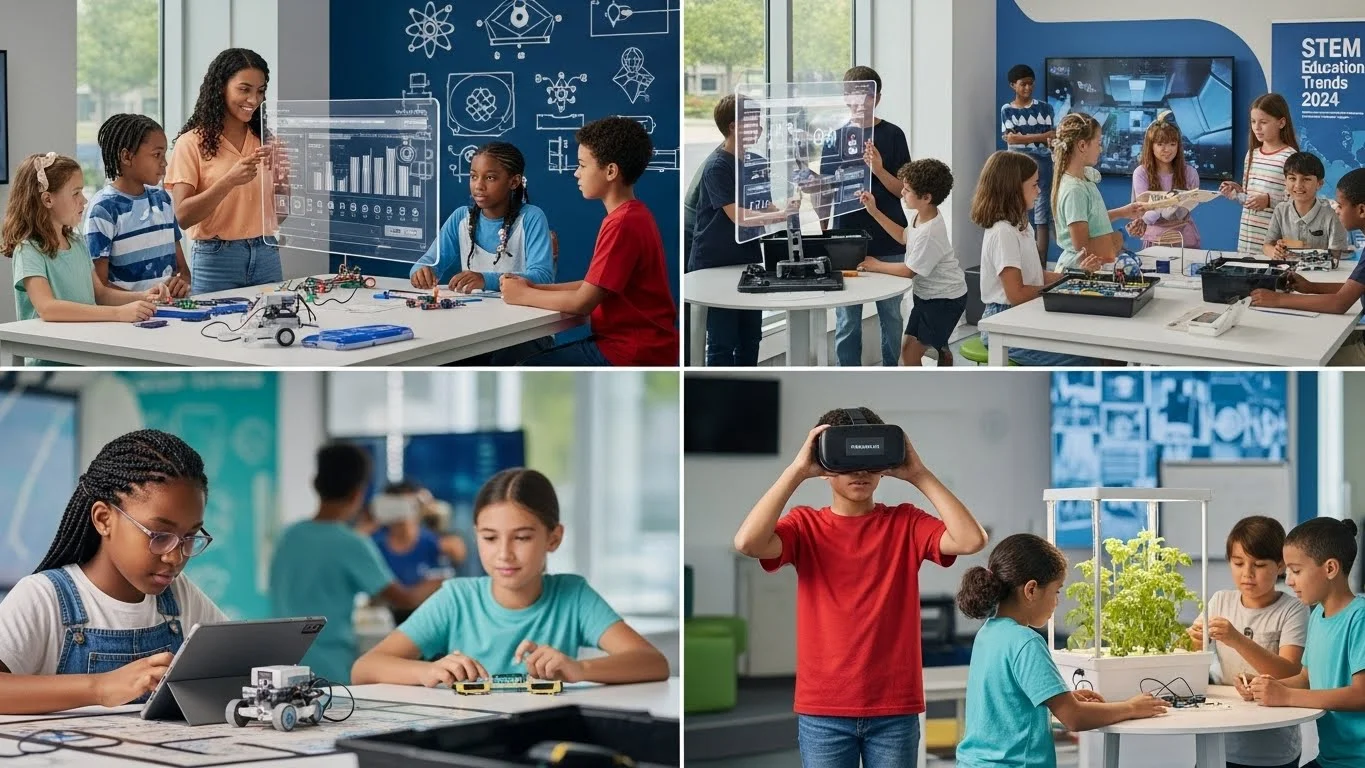
Hands-on learning has always been a favorite of mine, especially when it comes to STEM. In 2024, more schools are establishing maker spaces—creative environments where kids can tinker, build, and experiment. I remember visiting a local school that had set up a maker space, filled with 3D printers, robotics kits, and art supplies. Kids were not just learning theories; they were applying what they learned in real projects. I believe these spaces ignite curiosity and foster innovation, and they are essential for nurturing the next generation of problem solvers.
Project-Based Learning Approaches
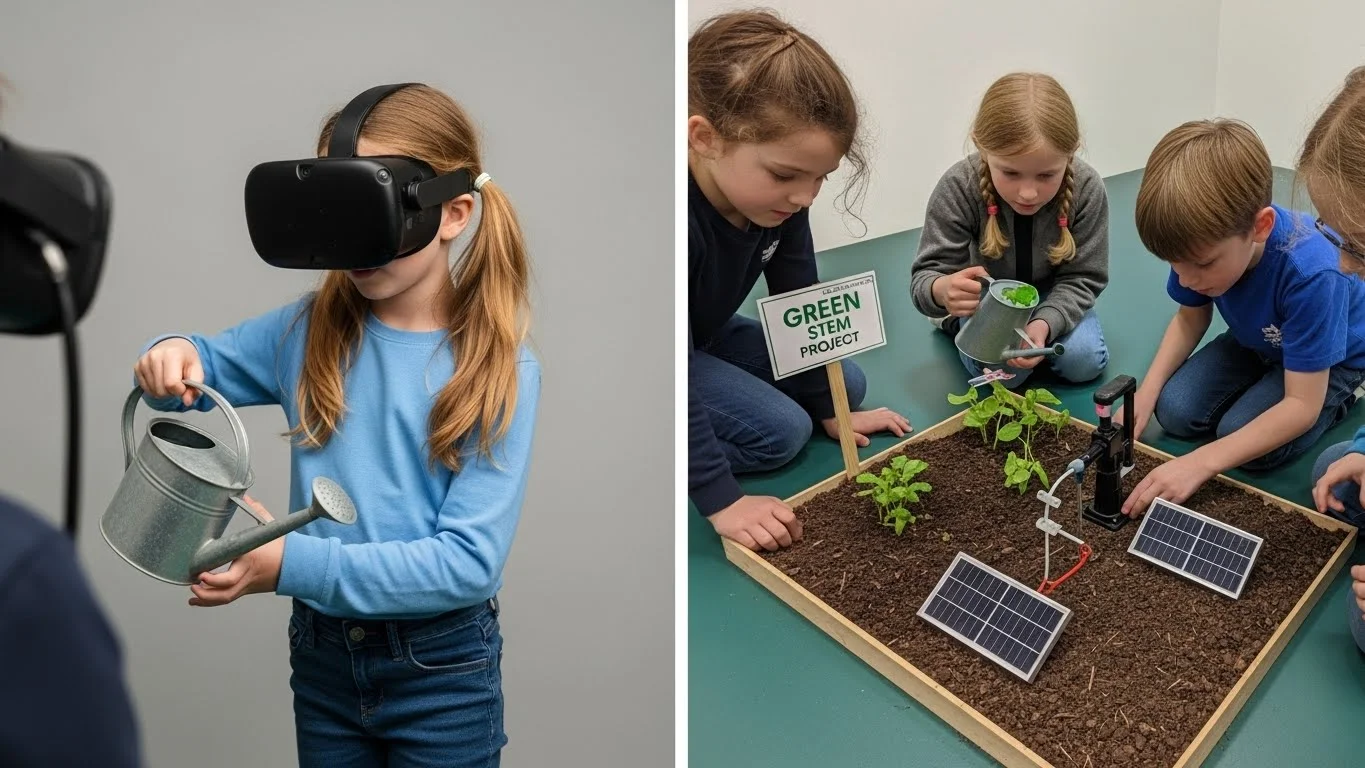
Project-based learning (PBL) is another key trend I’ve noticed gaining traction. In this approach, students engage in real-world projects that require critical thinking and collaboration. I’ve seen how my child and their peers thrive when they can connect their learning to tangible outcomes. For example, a project where they designed a sustainable garden not only taught them about biology and ecology but also about teamwork and perseverance. PBL encourages kids to take charge of their education, which I believe is incredibly empowering. Read Interesting article: Empowering Parents: Advocacy Tips for Special Education
Emphasis on Coding and Robotics
The emphasis on coding and robotics in education continues to grow. In 2024, we’re seeing more kids getting involved in programming at younger ages. I’ve introduced my child to simple coding apps, and it’s fascinating to watch them create their own games. Schools are also integrating robotics into the curriculum, allowing students to build and program robots. I feel that these skills are fundamental for the future job market, and it’s exciting to see kids develop a foundation in technology that will serve them well.
The trends in STEM education in 2024 are not just shaping how kids learn; they are redefining what it means to be a learner. As I look forward to the future, I’m hopeful that these innovations will lead to even more engaging and enriching educational experiences for our children.
Popular STEM Programs and Initiatives
After-School STEM Clubs
After-school STEM clubs have become a hotbed for creativity and learning. I’ve seen how these clubs not only provide a space for kids to explore their interests but also foster a sense of community. My child joined an after-school robotics club where they collaborated with peers to build and program robots for competitions. Watching them work together, sharing ideas, and troubleshooting problems was inspiring. These clubs often offer hands-on projects that might not be possible during regular class hours, allowing kids to dive deeper into subjects they’re passionate about. I believe these experiences can cultivate a love for STEM that stays with them for years to come.
Online STEM Learning Platforms
Online STEM learning platforms have exploded in popularity, and I can see why. They provide a wealth of resources that kids can explore at their own pace. I remember when my child discovered a platform with interactive coding exercises. They were so engaged that they spent hours learning new concepts and building projects. These platforms often include gamified elements, which make learning fun and rewarding. I think the accessibility of these resources means that kids from various backgrounds can find something that resonates with them. As we move further into 2024, I’m excited to see how these online tools continue to evolve and support STEM education. Read Interesting article: Exploring the World: Travel Tips for Special Needs Education
Summer STEM Camps
Summer STEM camps have become a fantastic way for kids to immerse themselves in science, technology, engineering, and math during their break from school. I remember signing my child up for a week-long camp focused on environmental science. They engaged in hands-on experiments, field trips, and collaborative projects, all while making new friends. These camps not only reinforce what they learn in school but also allow them to explore new interests in a fun and relaxed environment. I truly believe that summer camps can spark a lifelong passion for STEM, as kids have the freedom to experiment and discover without the pressures of grades.
Role of Technology in STEM Learning
Virtual Reality (VR) and Augmented Reality (AR) in Education
Virtual Reality (VR) and Augmented Reality (AR) are transforming the educational landscape. I’ve experienced how these technologies can bring abstract concepts to life. For instance, I remember visiting a science museum where my child stepped into a VR simulation of a human heart. They were able to explore its chambers and learn about blood flow in a way that was engaging and memorable. In classrooms, AR can overlay digital information onto the physical world, making learning more interactive. I feel that these tools can deepen understanding and make complex subjects much more approachable for kids.
Gamification of Learning
Gamification has made its way into STEM education, and it’s a trend I wholeheartedly support. By incorporating game-like elements into lessons, educators can increase motivation and engagement. I’ve seen this work wonders in my own home when my child played educational games that challenged them to solve math problems or scientific puzzles to earn rewards. These experiences often feel less like traditional learning and more like an exciting adventure. I believe that turning learning into a game can help kids develop a growth mindset, allowing them to embrace challenges and learn from mistakes without fear.
Mobile Apps for STEM Education
Mobile apps are another powerful tool in the realm of STEM education. With the convenience of smartphones and tablets, kids can access a plethora of educational content wherever they are. I’ve downloaded a few coding apps for my child, and they’ve been able to learn programming fundamentals through interactive puzzles and challenges. The flexibility of mobile learning means that kids can explore STEM topics during downtime, like while waiting for an appointment or on a car ride. I think this on-the-go learning is vital in helping kids stay engaged with STEM concepts outside of the classroom.
Benefits of STEM Education for Kids
Enhancing Critical Thinking Skills
One of the most significant benefits of STEM education is the enhancement of critical thinking skills. I’ve noticed that kids engaged in STEM activities often learn to analyze situations and think on their feet. For example, when my child encountered a problem during a science experiment, they had to assess the situation, brainstorm solutions, and test different approaches. This kind of problem-solving fosters resilience and adaptability—qualities that are essential in life. I believe that by encouraging kids to tackle complex challenges, we’re equipping them with the tools they need to navigate an ever-changing world.
Encouraging Creativity and Innovation
STEM education naturally encourages creativity and innovation. I’ve seen how kids are inspired to think outside the box when they’re given the freedom to explore and create. In one project, my child designed a prototype for an eco-friendly product, and it was amazing to see their imaginative ideas come to life. This creative process is crucial, as it helps cultivate a mindset that embraces experimentation and new ideas. I feel that empowering kids to innovate in STEM can lead to breakthroughs that benefit society as a whole.
Preparing for Future Careers
Finally, STEM education is pivotal in preparing kids for future careers. As technology continues to advance, the demand for STEM professionals is growing. I often remind my child that many of the jobs they might pursue in the future will require a solid foundation in these subjects. By engaging in STEM experiences now, they’re not just learning— they’re building a skill set that will be invaluable in the job market. I believe that investing in STEM education today will open doors to exciting career opportunities for our children tomorrow.
Challenges in Implementing STEM Education
Lack of Resources and Funding
One of the biggest hurdles we face in STEM education is the lack of resources and funding. I’ve seen schools struggle to provide the necessary tools and materials for effective STEM programs. For instance, when my child’s school wanted to implement a new robotics curriculum, they faced budget constraints that delayed the project. It made me realize how critical funding is to foster innovation and provide quality education. Without proper resources—like updated technology, lab equipment, and even basic supplies—teachers can find it challenging to create engaging learning experiences. I believe that advocating for funding in STEM education is crucial for ensuring that all kids have access to these vital learning opportunities.
Need for Trained Educators
Another challenge is the need for trained educators who are comfortable and confident in teaching STEM subjects. I’ve spoken to teachers who want to incorporate more hands-on learning but feel underprepared to do so. It’s not just about knowing the content; they need to have the skills to inspire and engage students effectively. I remember attending a workshop where we discussed the importance of professional development for teachers. Investing in training programs can equip educators with the latest teaching strategies and tools. I genuinely believe that when teachers feel supported and knowledgeable, they can create a more dynamic and interactive learning environment, helping students thrive in STEM.
Access and Equity Issues
Access and equity are significant concerns in STEM education. I’ve noticed disparities in resources available to different schools, particularly between urban and rural areas. Some kids have access to advanced technology and extracurricular STEM programs, while others are left behind. This inequality can limit opportunities for many bright young minds. I remember volunteering at a local community center, where we tried to bridge this gap by offering free coding workshops for kids who might not otherwise have access. It was heartwarming to see their excitement as they learned something new. I feel that we need to work together as a community to ensure all children have equal opportunities to explore and excel in STEM, regardless of their background.
Parental Involvement in STEM Education
Supporting STEM Learning at Home
As parents, we play a vital role in supporting our children’s STEM education. From my experience, incorporating STEM-related activities at home can significantly enhance what they learn in school. I’ve started simple projects with my child, like building a volcano using baking soda and vinegar. Not only was it fun, but it also sparked discussions about chemical reactions and scientific principles. I believe that creating a STEM-friendly environment at home encourages curiosity and a love for learning. Whether it’s through educational apps, science kits, or even visits to science museums, I’ve found that actively participating in STEM projects fosters a deeper understanding and appreciation for these subjects.
Engaging in School STEM Activities
Getting involved in school STEM activities can also make a big difference. I remember when my child’s school hosted a STEM night, where parents were encouraged to participate in different stations focused on science experiments, engineering challenges, and coding activities. Being there and collaborating with other families not only allowed me to connect with my child’s interests but also to meet other parents and teachers who share a passion for STEM. I think these events are essential for building a supportive community around STEM education. By showing our support, we can help cultivate an environment where kids feel excited about learning and exploring new concepts.
Future Predictions for STEM Education Beyond 2024
Potential Innovations on the Horizon
As we look ahead, I can’t help but wonder about the potential innovations that might shape STEM education beyond 2024. Technology is advancing rapidly, and I believe that we’ll see even more immersive learning experiences, perhaps through enhanced VR and AR applications. Imagine a classroom where students can virtually visit distant planets, explore the human body, or walk through historical events! I think these innovations could transform how kids engage with complex subjects, making them more tangible and relatable. I’m excited to see how educators will harness these technologies to create richer educational experiences.
Shifting Educational Policies
We may also witness shifting educational policies that prioritize STEM education even more. I’ve noticed a growing awareness among policymakers about the importance of preparing future generations for careers in science and technology. As discussions around STEM funding and curriculum development continue, I believe we’ll see more initiatives designed to support schools in integrating STEM effectively. I think that as parents and community members, we can advocate for these changes by voicing our support for strong STEM programs in our local schools.
Global Trends in STEM Education
Finally, I believe that global trends will influence how we approach STEM education in the coming years. Countries around the world are investing heavily in their STEM programs, and it’s inspiring to see different educational models emerge. For instance, Finland’s education system emphasizes hands-on learning and collaboration, which has shown impressive results. I think we can learn a lot from these international approaches and adapt them to our own educational contexts. By embracing a global perspective, we can enrich our kids’ learning experiences and prepare them for a world that is increasingly interconnected.
Final Thoughts
Looking back at the evolution of STEM education, I’m genuinely thrilled about where we’re headed. It’s clear that the innovations we’re witnessing are not just passing trends; they are reshaping the educational landscape for future generations. I believe that by embracing these advancements, we’re creating a more dynamic and engaging environment for our children to learn and grow.
One of the most exciting aspects is how our approach to teaching is becoming more holistic. I’ve noticed that as schools begin to integrate various subjects and technologies in creative ways, students are not only acquiring knowledge but also developing essential skills such as collaboration, communication, and critical thinking. These skills are increasingly vital in our interconnected world, and I feel fortunate that my child is part of this transformative era in education.
As we support our kids in their STEM journeys, I think it’s essential to maintain a balance between structured learning and exploration. I’ve found that when kids are given the freedom to experiment and explore their interests, they often surprise us with their creativity and passion. Encouraging them to pursue their curiosities can lead to unexpected and exciting discoveries that go beyond the classroom. For me, fostering a sense of wonder is just as important as the academic skills they are developing.
Moreover, the role of parents in this process cannot be understated. By actively engaging in STEM activities, whether it’s through supporting school initiatives or creating learning opportunities at home, we can help our children see the relevance of STEM in their everyday lives. I’ve witnessed how these shared experiences strengthen our bond and create lasting memories while instilling a love for learning that lasts a lifetime.
I also feel a sense of responsibility to advocate for equitable access to STEM education. The disparities that exist today should motivate us to work collectively towards change. It’s a reminder that every child, regardless of their background, deserves the opportunity to explore and excel in STEM fields. I believe that by fostering inclusivity and supporting initiatives that aim to bridge these gaps, we can ensure that all kids have a chance to thrive in this exciting future.
As we look to the future, I’m optimistic that the world of STEM will continue to evolve, presenting new challenges and opportunities. I encourage all parents, educators, and community members to stay engaged and informed about these changes. After all, we are the ones who will help pave the way for the next generation of innovators, problem solvers, and thinkers. I believe that our involvement today will shape a brighter, more innovative tomorrow for our children and the world.
In closing, I feel grateful for the advancements in STEM education and the potential they bring. Let’s continue to explore, support, and celebrate the amazing journey our kids are on as they navigate the world of science, technology, engineering, and mathematics. Together, we can inspire them to dream big and reach for the stars.
Frequently Asked Questions
What does STEM stand for?
STEM stands for Science, Technology, Engineering, and Mathematics. It is an educational approach that integrates these disciplines into a cohesive learning paradigm.
Why is STEM education important for kids?
STEM education is vital as it equips kids with essential skills for future challenges and opportunities. It fosters creativity, innovation, teamwork, and communication—traits crucial in any career path.
What are some current trends in STEM education for 2024?
Current trends in STEM education for 2024 include incorporating Artificial Intelligence to personalize learning, establishing hands-on learning and maker spaces, project-based learning approaches, and emphasizing coding and robotics.
How do after-school STEM clubs benefit children?
After-school STEM clubs provide a space for kids to explore their interests creatively and foster a sense of community. They offer hands-on projects and collaborative opportunities that may not be available during regular class hours.
What role does technology play in STEM learning?
Technology enhances STEM learning through tools like Virtual Reality (VR), Augmented Reality (AR), and gamified learning, making complex subjects more interactive and engaging for kids.
How can parents support their children’s STEM education at home?
Parents can support STEM education by incorporating STEM-related activities at home, such as science projects, educational apps, and visits to science museums, thus fostering curiosity and a love for learning.
What challenges exist in implementing STEM education?
Challenges in implementing STEM education include lack of resources and funding, the need for trained educators, and access and equity issues that limit opportunities for some students.
What benefits does STEM education provide for critical thinking skills?
STEM education enhances critical thinking skills by encouraging kids to analyze situations, brainstorm solutions, and test various approaches when faced with problems, fostering resilience and adaptability.
What future innovations are anticipated in STEM education beyond 2024?
Future innovations in STEM education may include enhanced VR and AR applications for immersive learning experiences, as well as shifting educational policies that prioritize STEM integration in schools.
How can communities ensure equitable access to STEM education?
Communities can advocate for equitable access to STEM education by supporting initiatives that bridge resource gaps and ensuring that all children, regardless of background, have opportunities to explore and excel in STEM fields.
Engaging kids in STEM activities at home doesn’t have to break the bank. With a little creativity and resourcefulness, we can inspire young minds while keeping costs low. Let’s dive into understanding the world of STEM and its significance for our children. Read Interesting article: Top 10 Budget-Friendly STEM Activities for Kids
Budget-Friendly STEM Activities for Kids at Home
Understanding STEM: What It Means for Kids
Definition of STEM
STEM stands for Science, Technology, Engineering, and Mathematics. These fields are more than just subjects in school; they represent a way of thinking and problem-solving that is essential in our rapidly changing world. I remember when I first learned about STEM, it felt like unlocking a treasure chest of knowledge and creativity. It’s not just about formulas and facts; it’s about understanding how things work and using that knowledge to create something new and innovative.
The Importance of STEM Education
STEM education has become increasingly important as technology continues to evolve. In my experience, teaching kids STEM concepts helps them develop critical thinking skills and encourages them to ask questions. It prepares them for future careers in fields that are not only in high demand but also play a crucial role in shaping our society. I’ve seen how my own children developed a love for learning when they began to explore these subjects through hands-on activities.
Benefits of STEM Activities for Children
Getting kids involved in STEM activities offers numerous benefits. For one, it fosters a mindset of inquiry and exploration. I’ve noticed that when my children engage in STEM projects, they become more curious about the world around them. They learn to experiment, fail, and try again, which builds resilience. These activities also promote teamwork and communication, as kids often work together to solve problems. I truly believe that these skills are invaluable, not just in academics but in life itself. Read Interesting article: Affordable STEM Activities for Kids: Fun and Educational Ideas
Budget-Friendly Materials for STEM Activities
Common Household Items for STEM Projects
You might be surprised at how many materials we already have at home that can be used for STEM projects. I often raid my kitchen, garage, and craft supplies to find items that can spark creativity. Here are some common household items that can be transformed into STEM projects:
Plastic Bottles: These can be turned into rockets or water wheels.
Cardboard Boxes: Perfect for building structures or as bases for experiments.
Egg Cartons: Use them for sorting activities or as planting pots.
Popsicle Sticks: Great for constructing bridges or other designs.
Kitchen Ingredients: Items like baking soda and vinegar can create fun chemical reactions.
By simply looking around, we can find so many items that can be repurposed for learning.
Affordable Materials to Purchase
If you want to expand your toolkit for STEM activities, there are plenty of affordable materials available for purchase. I’ve found that investing in a few key items can really enhance the fun. Here are some suggestions:
Craft Supplies: Items like glue, tape, and scissors are essential for any project.
Building Sets: LEGO kits or magnetic tiles can be great for engineering challenges.
Science Kits: There are many budget-friendly kits that focus on chemistry or physics experiments.
Basic Electronics: Items like batteries, LED lights, and wires can help with simple circuit projects.
These materials don’t have to be expensive, and they often lead to endless creativity and innovation. I recommend checking local dollar stores or discount retailers for great deals.
Where to Find Free Resources
One of the best parts about engaging in STEM activities is the wealth of free resources available online. I’ve spent countless hours exploring sites that offer free printables, lesson plans, and tutorials. Here are some great places to check out:
Public Libraries: Many libraries offer free access to educational resources and workshops.
Online Platforms: Websites like Khan Academy, NASA’s website for kids, and even YouTube have fantastic content.
Educational Blogs: There are countless blogs dedicated to STEM education that share free projects and tips.
By tapping into these resources, we can create engaging learning experiences without spending a fortune. I’ve discovered that the more I explore these avenues, the more excited my kids become about learning!
Creative STEM Activities for Kids at Home
Science Experiments
One of the most exciting ways to engage kids in STEM is through hands-on science experiments. I remember the thrill on my children’s faces when they saw the results of their experiments unfold. Here are a couple of my favorites that are not only fun but also easy to set up at home.
DIY Volcano Experiment
This classic science experiment never gets old! For the DIY volcano, all you need is some baking soda, vinegar, and a container to create the volcano. I typically use a plastic bottle as the base. First, we mix baking soda with a little food coloring for that authentic lava look. Then, when we pour in the vinegar, the reaction creates a bubbly eruption. It’s such a simple yet impactful way to explain chemical reactions. My kids love the visual aspect, and I enjoy watching their curiosity grow!
Making Slime: A Chemistry Project
Slime is not just a trendy toy; it’s a great chemistry project too! To make slime, we gather simple ingredients like glue, baking soda, and contact lens solution. We combine the glue and baking soda and then add the contact lens solution, which acts as a catalyst. As we knead the mixture, it transforms into a stretchy, gooey substance. I find it fascinating how a few common ingredients can change into something so different. Plus, it’s great for sensory play!
Technology Projects
Technology is an integral part of STEM, and I think it’s crucial to introduce kids to basic tech concepts early on. Here’s how we can make that happen at home.
Building a Simple Circuit
Building a simple circuit can be a real eye-opener for kids. With just a battery, some wires, and a small light bulb, we can show them the basics of electrical engineering. I usually start by explaining how electricity flows, and then we get to work connecting the components. When the light bulb lights up, the excitement is palpable! I love how this project allows them to visualize how circuits work and sparks interest in further exploration.
Introduction to Coding with Free Online Tools
In my experience, introducing kids to coding can be a game changer. There are numerous free online platforms that teach coding in a fun and engaging way. Websites like Scratch and Code.org offer interactive lessons that allow kids to create their own games and animations. I’ve found that my kids enjoy the challenges and the satisfaction of seeing their creations come to life. It’s amazing to watch them develop problem-solving skills through coding!
Engineering Challenges
Engineering challenges push kids to think creatively and apply their STEM knowledge. I’ve discovered that these activities can be incredibly fun and rewarding.
Building Structures with Recyclables
Using recyclables to build structures is one of our favorite activities. I gather items like toilet paper rolls, plastic bottles, and cardboard boxes, and then we set a challenge: build the tallest tower or the strongest bridge. The thrill of competition adds excitement, and I love seeing how different ideas come to life. It’s a fantastic way to teach concepts like balance and stability while having a blast!
Creating a Catapult with Household Items
Another fun engineering project is constructing a catapult. We usually use items like popsicle sticks, rubber bands, and a small object to launch. My kids enjoy the trial-and-error process of adjusting their catapult to see how far they can launch an object. You wouldn’t believe how much laughter and excitement this simple project brings to our home! It’s a perfect blend of creativity, physics, and fun.
Math Games and Puzzles
Math can sometimes feel daunting for kids, but I’ve found that turning it into a game can change their perspective entirely. Here are a couple of ways to make math fun!
Fun Math Challenges Using Everyday Objects
We often use everyday objects for math challenges. For example, I might ask my kids to stack a certain number of blocks and then count how many blocks are needed to reach a specific height. We also create patterns using colored items from around the house, which helps them think critically while having fun. I’ve noticed that these activities help reinforce their math skills in a relaxed and enjoyable way.
Online Math Resources and Apps
There are fantastic online resources and apps designed to make math engaging. I recommend checking out platforms like Prodigy Math and Math Playground. They offer interactive games that cover various math concepts, and my kids love the challenges they present. It’s incredible how technology can turn learning into an adventure!
These creative STEM activities have enriched our home learning experience, and I truly believe they can inspire kids to develop a lifelong love for science, technology, engineering, and math. By making learning fun and accessible, we can help our children thrive in these essential fields. Read Interesting article: Engaging STEM Activities for Kids on a Budget: A Guide
Age-Appropriate STEM Activities
STEM Activities for Toddlers
When it comes to engaging toddlers in STEM activities, simplicity is key. I’ve found that at this age, kids are naturally curious and eager to explore their surroundings. One of my favorite activities is a “Nature Scavenger Hunt.” We go outside and look for various items like leaves, rocks, or flowers. As we collect them, I encourage my little ones to ask questions about what they see. This not only promotes observation skills but also introduces them to concepts like categorization and basic biology.
Another fun activity is sensory play with water and sand. I set up a small water table with measuring cups and various containers. As they pour and measure, they’re learning about volume and capacity without even realizing it. It’s amazing how much we can teach toddlers just through play!
STEM Activities for Preschoolers
Preschoolers are ready for more structured activities. I love incorporating simple engineering challenges, like building with blocks or creating structures using playdough. We often have a theme, such as “building a bridge,” where they can explore concepts of stability and balance. It’s fascinating to see how they problem-solve and collaborate during these projects.
In addition to building activities, I’ve introduced basic science experiments like “Color Mixing.” We use clear cups, water, and food coloring to explore how colors blend. This not only teaches them about colors but also introduces basic concepts of chemistry. Watching their reactions as they mix colors is priceless!
STEM Activities for Elementary School Kids
For elementary school-aged kids, the possibilities really expand! I’ve found that they are ready for more complex projects that challenge their thinking. One of my go-to activities is the “Egg Drop Challenge.” We design containers to protect an egg from breaking when dropped from a height. This activity involves engineering, physics, and creativity. Plus, my kids love the thrill of the drop!
Another engaging project is creating simple machines. We’ve built levers and pulleys using household items, which allows them to see the principles of physics in action. I love hearing their discussions about how to improve their designs and make them work better. It’s a fantastic way to blend learning with creativity!
STEM Activities for Middle School Students
As kids enter middle school, they often have a stronger grasp of STEM concepts, so I like to challenge them even more. One project we’ve enjoyed is building a model of a sustainable city. They research renewable energy sources and design a city that incorporates those elements. This project not only covers engineering and technology but also encourages them to think critically about environmental issues.
Another exciting activity is participating in robotics competitions. Many local schools and organizations offer robotics clubs where kids can learn coding and engineering skills while working on a team. I’ve seen my children develop leadership and collaborative skills through these experiences, which are just as important as the technical knowledge they gain.
How to Encourage STEM Learning at Home
Creating a STEM-Friendly Environment
Creating a space at home that fosters STEM learning is something we’ve made a priority. I’ve dedicated a corner of our family room as a “STEM zone,” filled with supplies like building materials, craft items, and science books. I believe having a dedicated space encourages my kids to explore and experiment whenever inspiration strikes. It’s also a great way to keep all our materials organized!
Incorporating STEM into Daily Routines
Incorporating STEM into our daily routines has been an enjoyable way to make learning feel seamless. For instance, during our weekly grocery shopping trips, we discuss budgeting and measurements. When cooking together, we talk about chemistry and changes in matter. I’ve realized that everyday activities can turn into valuable learning experiences just by asking questions and sparking discussions.
Encouraging Curiosity and Problem Solving
Encouraging my children to embrace curiosity has been a game changer. I’ve found that when they ask questions, I take the time to explore those inquiries together. Whether it’s looking up facts or conducting a small experiment, I aim to foster their natural desire to learn. I also try to emphasize the importance of problem-solving by allowing them to tackle challenges independently. I step back when necessary, as I’ve noticed that they often come up with creative solutions on their own, which boosts their confidence and self-efficacy.
By nurturing a love for STEM in our home, I truly believe we’re setting our children up for success in life. It’s rewarding to see their excitement in learning and how they connect these concepts to the world around them.
Resources for Parents and Educators
Books and Online Resources
As I’ve explored the world of STEM, I’ve come across some fantastic books and online resources that can help both parents and kids dive deeper into these subjects. I find that having a good mix of literature and interactive content makes learning more enjoyable and effective. For instance, books like “The Boy Who Harnessed the Wind” by William Kamkwamba inspire creativity and innovation. It’s amazing how stories like this can spark curiosity and drive in young minds.
Online, I recommend checking out platforms like National Geographic Kids and PBS LearningMedia, which offer a treasure trove of articles, videos, and activities that make learning about science and the world around us engaging. I love how these resources encourage children to explore topics that fascinate them.
STEM Clubs and Online Communities
Joining a STEM club can be a game-changer for kids. I remember when my children participated in a local robotics club; they not only learned about engineering and programming but also made friends with similar interests. Many communities offer STEM clubs, often through schools or local organizations. If in-person options aren’t available, online communities like “Girls Who Code” and “Roblox Education” provide great platforms for students to connect, collaborate, and learn together.
Online forums, such as Reddit’s STEM subreddit, can also be an excellent source for parents looking for ideas, support, or resources to enhance their child’s STEM learning experience. I often find myself browsing and gathering tips from other parents who share their successes and challenges.
Local STEM Programs and Workshops
Local museums, science centers, and universities frequently offer STEM programs and workshops for kids. We’ve attended several events at our local science museum, where my kids could engage in hands-on experiments and meet professionals in STEM fields. These experiences are not only educational but also incredibly motivating for children, as they see real-world applications of what they are learning. I recommend keeping an eye on community calendars or subscribing to newsletters from these institutions to stay updated on upcoming events.
Safety Tips for Conducting STEM Activities
General Safety Guidelines for Kids
Safety is always a priority when doing any kind of STEM activity at home. I’ve learned that establishing a few basic rules can go a long way in keeping everyone safe. First, I make sure that the workspace is clean and free from clutter. This helps prevent accidents and ensures that kids can focus on their projects. Additionally, we always wear appropriate safety gear, like goggles when working with chemicals or sharp tools. I find that teaching kids to respect safety protocols early on instills good habits for the future.
Specific Safety for Science Experiments
When it comes to science experiments, I’ve found it essential to read through the instructions carefully before starting. This helps identify any potential hazards and ensures that we have the right materials on hand. I always supervise my kids during these experiments, especially when using materials that might be harmful or messy. For instance, when we do projects involving heat or reactions, I make sure to keep a fire extinguisher nearby and to work in a well-ventilated area. It’s all about being prepared and aware!
Supervision and Engagement
Supervision doesn’t just mean keeping an eye on the kids; it also means engaging with them during the activities. I’ve noticed that when I participate in their STEM projects, they are more excited and motivated. It creates bonding moments, and we get to discuss what they are learning in real-time. I encourage them to ask questions and explore different outcomes, but I also guide them to think critically about safety and the steps they’re taking. This collaborative approach makes STEM learning not just safe, but also fun and enriching.
Final Thoughts
Engaging our kids in STEM activities is a wonderful way to nurture their natural curiosity and equip them with essential skills for the future. I’ve seen firsthand how these experiences can ignite a passion for learning and innovation. By utilizing budget-friendly resources, creating a supportive environment, and encouraging exploration, we can inspire the next generation of thinkers and problem solvers. I truly believe that with a little creativity and enthusiasm, we can make STEM learning an adventure for our children, helping them to thrive in an ever-changing world.
Frequently Asked Questions
What does STEM stand for?
STEM stands for Science, Technology, Engineering, and Mathematics. It represents a way of thinking and problem-solving that is essential in our rapidly changing world.
Why is STEM education important for children?
STEM education is important as it helps children develop critical thinking skills, encourages them to ask questions, and prepares them for future careers in high-demand fields that shape society.
What are some benefits of engaging kids in STEM activities?
Engaging kids in STEM activities fosters a mindset of inquiry and exploration, builds resilience through experimentation, promotes teamwork and communication, and helps develop invaluable skills for life.
What common household items can be used for STEM projects?
Common household items for STEM projects include plastic bottles, cardboard boxes, egg cartons, popsicle sticks, and kitchen ingredients like baking soda and vinegar.
What affordable materials can parents purchase for STEM activities?
Affordable materials for STEM activities include craft supplies (glue, tape, scissors), building sets (LEGO kits, magnetic tiles), science kits, and basic electronics (batteries, LED lights, wires).
Where can I find free resources for STEM activities?
Free resources for STEM activities can be found at public libraries, online platforms like Khan Academy and NASA’s website for kids, and various educational blogs dedicated to STEM education.
What are some easy science experiments for kids at home?
Some easy science experiments include a DIY volcano using baking soda and vinegar, and making slime with glue, baking soda, and contact lens solution.
How can parents create a STEM-friendly environment at home?
Parents can create a STEM-friendly environment by dedicating a space filled with supplies like building materials, craft items, and science books to encourage exploration and experimentation.
What are some STEM activities suitable for toddlers?
For toddlers, activities like nature scavenger hunts and sensory play with water and sand are great for promoting observation skills and introducing basic concepts of categorization and volume.
What safety tips should be considered when conducting STEM activities?
Safety tips include keeping the workspace clean, wearing appropriate safety gear, reading instructions carefully before experiments, supervising kids, and engaging with them during activities to ensure safety and enjoyment.
As we step into 2024, the landscape of children’s education is rapidly evolving, particularly in the realm of STEM. From artificial intelligence to sustainability, these trends are shaping how kids learn and prepare for the future. Read Interesting article: Unlocking Rights: Advocacy Strategies for Special Needs Parents
Top 5 STEM Trends Transforming Children's Education in 2024
Overview of STEM Education in 2024
Definition of STEM
STEM stands for Science, Technology, Engineering, and Mathematics. It encompasses a wide range of disciplines that are crucial for understanding and engaging with the world around us. I’ve always found STEM fascinating because it encourages curiosity and problem-solving skills. In schools today, STEM isn’t just a subject; it’s an integrated approach to learning that fosters creativity and innovation.
Importance of STEM in Modern Education
In my experience, the importance of STEM education can’t be overstated. It equips children with critical thinking and analytical skills necessary for the challenges they will face in their futures. As technology advances and the job market evolves, having a strong foundation in STEM subjects can open numerous doors. I believe that by focusing on STEM, we are not just preparing kids for careers in science and technology, but we are also nurturing well-rounded individuals who can approach problems with a logical mindset and creativity.
Current Landscape of Children’s Education
The current landscape of children’s education in 2024 is a mix of traditional teaching methods and innovative approaches. I’ve noticed that many schools are increasingly integrating technology into their curricula, which makes learning more engaging for children. Online resources, interactive tools, and collaborative projects are becoming common in classrooms. We’re also seeing a shift towards including more real-world applications in lessons, which helps students understand the relevance of their studies. From my observations, educators are excited about these changes, as they see how they can inspire and motivate students.
Trend 1: Integration of Artificial Intelligence in Learning
AI-Powered Learning Platforms
Artificial intelligence is transforming education in ways I never thought possible. AI-powered learning platforms are becoming integral in classrooms. These tools adapt to a child’s unique learning pace and style, making education more personalized than ever. I remember seeing my niece use an AI platform that adjusted its difficulty based on her responses. It was amazing to see how quickly she grasped concepts without feeling overwhelmed. This kind of technology can provide instant feedback, helping students learn from their mistakes in real time.
Personalized Learning Experiences
Personalized learning experiences are a game-changer. I’ve spoken to parents who have seen their children’s confidence grow as they engage with material tailored just for them. No two learners are the same, and AI helps bridge that gap. It can analyze a student’s strengths and weaknesses, suggesting resources and activities that cater to their individual needs. In my opinion, this kind of targeted learning helps children feel more invested in their education, which is vital for long-term success. Read Interesting article: Packable Lunchbox Recipes That Won’t Break the Bank
AI Tutors and Assistants
AI tutors and assistants are also making waves in education. They can provide extra help outside of the classroom, which I find particularly beneficial for busy families. Imagine a child struggling with math at home. Instead of waiting until the next day at school, they can turn to an AI assistant for immediate guidance. I’ve seen kids thrive with this kind of support, as it allows them to learn at their own pace without the pressure of feeling judged. The future of learning looks bright with AI stepping in as a reliable partner for students and educators alike.
Trend 2: Emphasis on Coding and Computational Thinking
Early Coding Programs in Schools
As I reflect on the importance of coding in today’s world, I realize how crucial it is for children to learn these skills early on. Many schools are introducing coding programs at a young age, and I think this is fantastic. It empowers kids to understand the technology they interact with daily. I’ve watched my nephew engage with coding games, and it’s incredible to see how quickly he picks up concepts that once seemed daunting to many of us adults. These programs make coding fun and accessible, ensuring that children build confidence in their abilities.
Robotics and Coding Clubs
Robotics and coding clubs are another exciting development I’ve noticed. These clubs provide children with hands-on experiences that encourage teamwork and creativity. Kids work together to build projects, and I’ve seen firsthand how this collaboration fosters a sense of community among them. I remember attending a showcase where students demonstrated their robots, and the pride on their faces was unforgettable. They weren’t just learning to code; they were learning to think critically and collaborate effectively.
Resources for Parents and Educators
For parents and educators, the abundance of resources available is heartening. Online platforms, workshops, and community programs are popping up everywhere. I often recommend websites that offer free coding tutorials or apps that turn learning into an interactive game. It’s gratifying to see parents get involved in their children’s coding journey, making it a shared experience. Together, we can create a generation that is not only tech-savvy but also equipped to tackle future challenges with confidence. Read Interesting article: Affordable Gluten-Free Food Options While Traveling Abroad
Trend 3: Hands-On Learning Through Maker Spaces
What are Maker Spaces?
Maker spaces are creative, collaborative environments where kids can come together to design, build, and experiment. I remember visiting a local maker space with my friends, and it felt like stepping into a world of endless possibilities. These spaces are equipped with tools like 3D printers, robotics kits, and craft supplies, encouraging students to bring their ideas to life. For me, the appeal of maker spaces lies in their emphasis on creativity and collaboration. They give children the freedom to explore their interests in a hands-on way, which is something that traditional classrooms can sometimes lack.
Benefits of Hands-On Learning
Hands-on learning has always resonated with me. It’s one thing to read about a concept in a textbook, but it’s entirely different to experience it firsthand. In my view, maker spaces provide that crucial experience. They allow children to engage with STEM concepts practically, which helps cement their understanding. I’ve seen kids develop problem-solving skills as they face challenges while creating projects. They learn to iterate, to fail, and to try again, which I believe is one of the most valuable lessons they can take away from their education. This type of learning fosters resilience and encourages a growth mindset, which is essential in today’s fast-paced world.
Examples of Successful Maker Space Programs
There are numerous inspiring examples of successful maker space programs in schools across the country. For instance, I recently learned about a middle school in my area that transformed an unused classroom into a vibrant maker space. Students can now participate in after-school programs where they collaborate on projects ranging from coding games to building robots. I’ve heard from parents who say their children come home buzzing with excitement, eager to share what they’ve created. This enthusiasm is contagious, and it’s a reminder of how impactful hands-on learning can be. Another example is a high school that partnered with a local university to create a maker space focused on sustainability. Students work on projects that address real-world environmental issues, reinforcing the idea that their learning can have a positive impact on the world.
Trend 4: Focus on Environmental Science and Sustainability
Curriculum Changes to Include Sustainability
As I look around, it’s clear that the focus on environmental science and sustainability is becoming more pronounced in education. Schools are beginning to integrate sustainability into their curricula, and I think it’s about time. I’ve watched as science classes have shifted to include topics like renewable energy, conservation, and climate change. It’s inspiring to see students not only learning about these critical issues but also discussing how they can make a difference. I believe this awareness equips kids with the knowledge they need to take action in their own lives, fostering a sense of responsibility for the planet.
Outdoor Learning and Nature-Based Education
Outdoor learning is another area that has caught my attention. I remember my own school days when we would occasionally have outdoor science classes, but now it seems like more schools are embracing nature-based education as a regular part of their curriculum. I’ve seen programs where students learn about ecosystems right in their own backyards, getting their hands dirty and engaging with the natural world. This kind of experiential learning helps children develop a deeper appreciation for the environment. I feel that it not only enhances their understanding of complex scientific concepts but also nurtures a lifelong love for nature.
Partnerships with Environmental Organizations
Many schools are also forming partnerships with environmental organizations to bolster their sustainability efforts. I’ve come across several local schools collaborating with nonprofits to create programs that teach students about conservation. These partnerships provide resources, expert speakers, and hands-on projects that enrich the learning experience. In my opinion, these collaborations are vital; they connect students with real-world applications of what they learn in the classroom. I remember hearing about a school that participated in a tree-planting initiative, and the pride the students felt in contributing to their community was heartwarming.
Trend 5: Collaborative Learning and Team Projects
The Role of Group Work in STEM
Collaborative learning is becoming an integral part of STEM education. I’ve always enjoyed working with others, and I think it’s fascinating to see how group work enhances the learning process. In my experience, when students collaborate on projects, they not only share ideas but also learn from each other’s strengths. This teamwork helps build communication skills and fosters a sense of community. I remember working on a science project in high school where we had to design a bridge using limited materials. It amazed me how much we learned from each other during that process, and those skills have stuck with me throughout my life.
Project-Based Learning Initiatives
Project-based learning initiatives are an excellent way to implement collaborative learning. Many schools are incorporating projects that require teamwork and critical thinking. I’ve observed students engaging in real-world problems, such as designing solutions for their school’s recycling program or creating apps to help their community. These initiatives spark creativity and innovation, turning students into active participants in their education. I believe that this kind of experiential learning not only deepens their understanding of STEM concepts but also prepares them for collaborative work environments in their future careers.
Tools and Technologies for Collaboration
Technology plays a crucial role in facilitating collaboration. I’ve seen how tools like Google Classroom and various project management apps help students communicate and work together more effectively. These platforms allow for seamless sharing of ideas and resources, which is essential for any successful team project. From my perspective, using technology in this way not only enhances the learning experience but also equips students with skills they will need in the modern workplace. I find it exciting to think about how these collaborative tools will continue to evolve and shape the way students learn together.
Future Implications of STEM Trends
Preparing Students for Future Careers
As I think about the future implications of the current trends in STEM education, it becomes clear that we are setting our children up for success in careers that may not even exist yet. The rapid advancement of technology and the increasing importance of STEM skills in various fields can’t be ignored. I’ve seen firsthand how students who engage in these trends are more adaptable and ready to tackle challenges. For instance, as industries evolve, jobs in fields like artificial intelligence, renewable energy, and biotechnology are on the rise. By equipping kids with the skills they need today, we are essentially future-proofing their careers.
In my opinion, the emphasis on problem-solving, critical thinking, and collaboration prepares students for a workforce that values innovation. I’ve talked to many educators who believe that fostering these skills now will help students navigate the complexities of the job market later. It’s exciting to envision a generation of workers who are not only experts in their fields but also capable of thinking creatively to solve unprecedented problems.
The Role of Educators in Adapting to Trends
Educators play a pivotal role in shaping how these trends will influence the future of STEM education. I’ve noticed that many teachers are eager to embrace new teaching methods and technologies, but they need support and resources to do so effectively. I remember attending a workshop where teachers shared their experiences with integrating AI and coding into their classes. Their enthusiasm was infectious, and it highlighted the importance of professional development in this ever-evolving landscape.
From my perspective, it’s essential for schools to provide ongoing training for educators, allowing them to stay updated on the latest trends and tools. I believe that when teachers feel empowered and equipped, they can inspire their students in incredible ways. For example, I’ve seen teachers utilize maker spaces to create hands-on projects that not only engage students but also relate to real-world problems. This kind of innovative teaching can spark a love for learning that lasts a lifetime.
Potential Challenges and Solutions
While the future of STEM education looks promising, I’ve also noticed several challenges that need to be addressed. One major concern is access to resources. Not all schools have the same level of funding or access to technology, which can create disparities in learning opportunities. I’ve heard from parents and educators who are frustrated that some students miss out on important experiences due to budget constraints.
In my view, it’s crucial for communities to come together to support STEM initiatives. Local partnerships with businesses, nonprofits, and universities can provide valuable resources and expertise. I’ve seen successful collaborations where companies sponsor coding camps or supply equipment for maker spaces, making a significant difference in students’ experiences. I believe that if we work together, we can bridge the gap and ensure that all students have access to quality STEM education.
Another challenge is keeping up with the rapid pace of technological change. I often wonder how educators can stay ahead of the curve while managing their existing curricula. This is where collaboration among teachers can be incredibly beneficial. By sharing resources, lesson plans, and strategies, educators can support one another in adapting to new trends without feeling overwhelmed. I’ve witnessed some inspiring examples of teacher communities that thrive on collective learning, and it’s heartening to see the impact they have on their students.
Ultimately, I believe that by addressing these challenges head-on, we can create a more equitable and effective STEM educational landscape. The future is bright, and I’m excited to see how these trends will shape the next generation of learners. Together, we can ensure that every child has the opportunity to thrive in a world where STEM skills are more critical than ever.
Final Thoughts
Reflecting on the current trends in STEM education, I feel a sense of optimism about where we are headed. It’s exhilarating to witness schools embracing innovative approaches that not only captivate students’ interests but also equip them with essential skills for the future. I believe that by integrating elements like artificial intelligence, coding, and hands-on learning, we are cultivating an environment where creativity and critical thinking thrive.
As we advance, it’s vital to keep the focus on collaboration and community efforts in education. From my experience, when schools partner with local organizations and businesses, the resources and opportunities available to students expand significantly. I’ve seen firsthand how these partnerships can lead to exciting projects that enhance the learning experience and make education relevant to real-world issues. It’s fascinating to think about the impact of these collaborations on student engagement and motivation.
Moreover, as we push for a curriculum that prioritizes sustainability and environmental science, I am hopeful that today’s students will become tomorrow’s stewards of the planet. Their education is becoming increasingly intertwined with the realities of climate change and environmental responsibility, which I think is crucial. When children learn about sustainability, they not only gain knowledge but also develop a mindset that can lead to meaningful change in their communities.
I also appreciate the attention being given to educators themselves. It’s clear that when teachers are supported—through professional development, resources, and collaboration—they can bring transformative ideas into the classroom. I’ve been inspired by the passion of many educators who are dedicated to learning new methods and sharing insights with their peers. This spirit of collaboration among teachers can create a ripple effect that benefits students tremendously.
While the challenges ahead, such as resource disparities and rapid technological changes, are real, I believe we can tackle them together. Communities, educators, and families must unite to ensure that every child has access to quality STEM education, regardless of their background. By fostering an inclusive environment that encourages exploration and growth, we can help ignite a lifelong passion for learning in our children.
Ultimately, as we navigate this exciting landscape of educational reform, I’m reminded of the incredible potential within each student. The skills they gain today will shape not only their futures but also the future of our world. It’s an exciting time to be involved in education, and I’m grateful to witness this evolution. Together, we can inspire the next generation of innovators, problem-solvers, and changemakers.
Frequently Asked Questions
What does STEM stand for?
STEM stands for Science, Technology, Engineering, and Mathematics. It encompasses a wide range of disciplines crucial for understanding and engaging with the world.
Why is STEM education important in modern education?
STEM education equips children with critical thinking and analytical skills necessary for future challenges, opens numerous career doors, and nurtures well-rounded individuals who can approach problems creatively.
How are traditional and innovative teaching methods being integrated in 2024?
The current landscape of education in 2024 combines traditional teaching with innovative methods, integrating technology into curricula, utilizing online resources, and emphasizing real-world applications in lessons.
What role does artificial intelligence play in children’s education?
AI is transforming education by providing personalized learning experiences through AI-powered platforms, which adapt to a child’s learning pace and style, and offer instant feedback to enhance understanding.
What are maker spaces?
Maker spaces are creative, collaborative environments where kids can design, build, and experiment with tools like 3D printers and robotics kits, fostering creativity and hands-on learning.
How does hands-on learning benefit students?
Hands-on learning allows children to engage practically with STEM concepts, developing problem-solving skills and resilience as they learn through trial and error in a supportive environment.
What is the focus of environmental science and sustainability in education?
Schools are increasingly integrating sustainability into their curricula, covering topics like renewable energy and conservation, and fostering a sense of responsibility for the planet among students.
How is collaborative learning implemented in STEM education?
Collaborative learning is emphasized through group projects that enhance communication skills and foster a sense of community, enabling students to learn from each other while solving real-world problems.
What challenges does STEM education face?
Challenges include disparities in access to resources and keeping up with rapid technological changes. Collaborative efforts among communities, educators, and families are essential to address these issues.
What is the future implication of current STEM trends?
The trends in STEM education are preparing students for future careers by equipping them with essential skills like problem-solving, critical thinking, and collaboration, making them adaptable to an evolving job market.
Uninvolved parenting, also known as neglectful parenting, is a style characterized by a significant lack of responsiveness and engagement with a child's emotional and developmental needs [1]. This...
5Permissive and authoritative parenting represent two distinct styles that significantly impact child development [1]. Permissive parenting is characterized by high warmth and low boundaries, while...