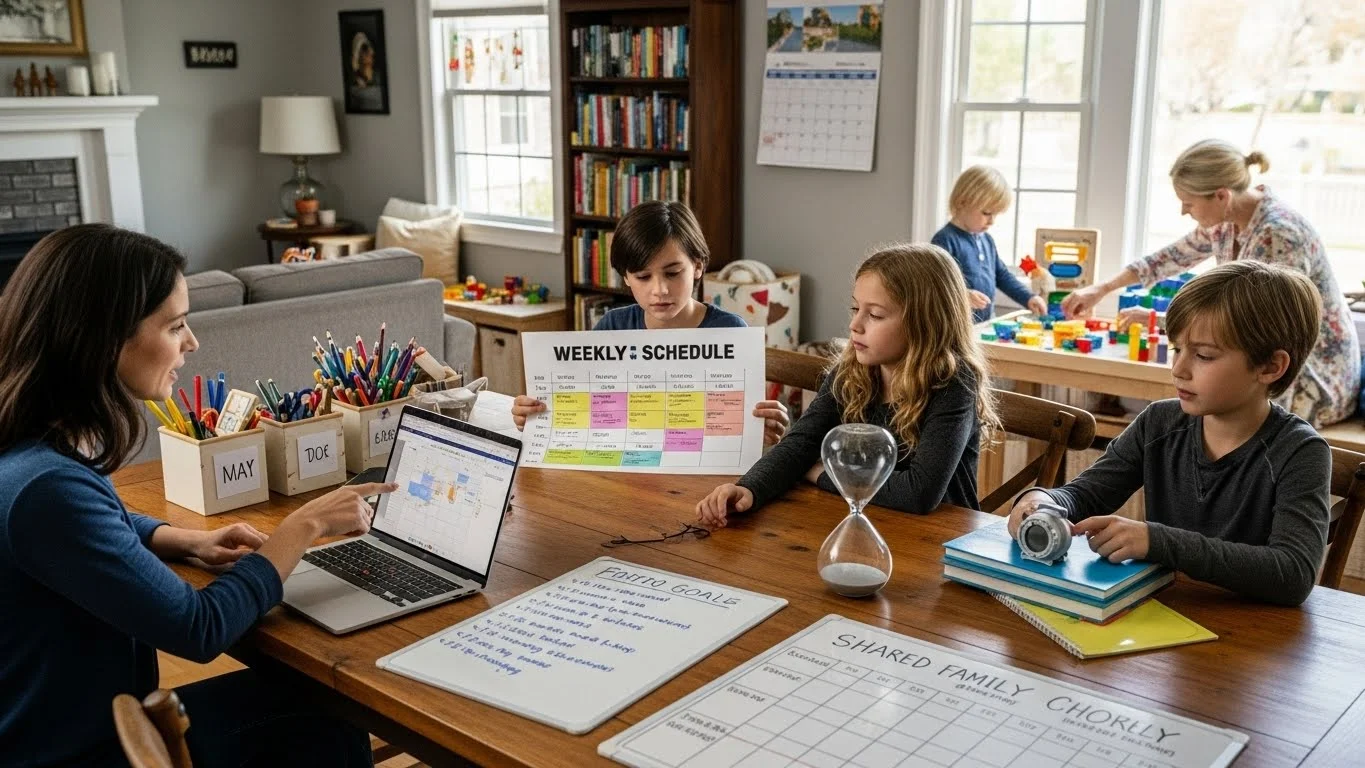
Mastering time management is crucial for successful homeschooling. It empowers us to create a structured learning environment, fostering both academic growth and personal development for our children.
Master Time Management: Essential Tips for Homeschooling Success
Understanding Time Management in Homeschooling
What is Time Management?
Time management, in its simplest form, is the ability to plan and control how much time to spend on specific activities. For us as homeschooling parents, it means organizing our days and weeks in a way that optimizes learning and allows us to cover all necessary subjects while still having time for fun and relaxation. I’ve learned that effective time management isn’t just about strict schedules; it’s about creating a balance that works for our family’s unique needs. Read Interesting article: Essential Tips for Teaching Emotional Intelligence to Kids
Importance of Time Management for Homeschooling
When I first started homeschooling, I quickly realized how easy it was to lose track of time. Without a clear structure, our days would blend together, and I often felt overwhelmed. I believe that good time management has been vital for our success. It helps us set realistic goals, allocate time for each subject, and ensure we cover everything without the chaos. Moreover, it can reduce stress significantly, allowing me to enjoy the process of teaching and learning alongside my kids. I’ve noticed that when our time is well-managed, my children are more engaged and productive. They feel a sense of accomplishment as they complete tasks, which boosts their confidence and motivation.
Setting Up a Homeschooling Schedule
Daily Routine Essentials
Creating a daily routine has been a game changer for us. I started by identifying the essential subjects that we needed to cover each day. For example, we made sure to include reading, writing, and math every day, but I also wanted to incorporate science and social studies regularly. I found it helpful to create a schedule that incorporated both core subjects and time for creativity and exploration. I recommend starting the day with a morning meeting where we discuss what we will learn, and then diving into the subjects. This practice not only sets the tone for the day but also allows my kids to know what to expect.
Weekly and Monthly Planning
When I began to plan our week and month ahead, I felt a tremendous weight lift off my shoulders. I sit down every Sunday evening to map out the week. This involves deciding which topics to cover, setting aside time for field trips, and ensuring we have blocks for family activities. Monthly planning lets me see the big picture, and I can adjust our goals as needed. I find it effective to set aside specific days for particular subjects, ensuring that we have a balanced approach without overwhelming ourselves. I’ve also started using a calendar to mark important events and deadlines, which has helped us stay on track. Read Interesting article: Vegan Nutrition Tips for Healthy Kids: A Parent’s Guide
Flexibility vs. Structure
One of the greatest things about homeschooling is the flexibility it offers. While having a structure is essential, I’ve realized that rigid schedules can sometimes stifle creativity and learning. I remember one week when we were diving deep into a science project, and the kids were so engaged that I decided to extend that subject for a few extra days. That’s the beauty of homeschooling – we can adapt and change our plans as we go. I always keep a balance in mind: structure is vital, but so is the ability to be flexible. This way, we can seize spontaneous learning opportunities that arise.
Prioritizing Tasks for Effective Learning
Identifying Learning Objectives
When I started homeschooling, one of the first things I learned was the importance of identifying clear learning objectives. It’s easy to get caught up in the day-to-day activities and lose sight of what we truly want our children to achieve. I found it helpful to sit down with my kids and discuss their interests and goals. This way, we could align our curriculum to not only cover essential subjects but also incorporate topics that excited them. For example, if they showed a keen interest in animals, we could weave biology lessons around that passion. I believe that clear learning objectives create a roadmap that guides our homeschooling journey, making it easier to stay focused and motivated.
Using a Priority Matrix
To further enhance our productivity, I started using a priority matrix, which has been a fantastic tool in our homeschooling toolkit. The matrix helps in categorizing tasks based on urgency and importance. I remember one particular week where we had a lot of assignments due, and I felt overwhelmed. I decided to map everything out using the matrix. By identifying what was most urgent and important, I was able to prioritize tasks effectively. This simple visual aid allowed us to focus on what truly mattered each day, helping us tackle our workload without feeling stressed. In my experience, this method not only keeps us organized but also empowers my kids to take ownership of their learning by understanding how to prioritize their own tasks.
Balancing Core Subjects and Electives
As I navigated through our homeschooling curriculum, I quickly discovered the importance of balancing core subjects with electives. While it’s crucial to spend time on subjects like math and language arts, incorporating electives such as art, music, or even coding can spark creativity and enthusiasm in my children. I remember scheduling Friday afternoons as a time for exploring electives. Whether it was painting, baking, or learning a new instrument, these activities provided a much-needed break from the traditional subjects. I found that this balance not only kept the kids engaged but also nurtured a well-rounded education. By allowing them to explore their interests, I’ve seen them grow into more curious and enthusiastic learners. Read Interesting article: Top Tips for Vegan Child Nutrition: Common Concerns Addressed
Tools and Resources for Time Management
Digital Planners and Apps
As technology continues to advance, I’ve found that digital planners and apps can be game-changers in managing our homeschooling schedule. I’ve experimented with a few different apps, and my favorite is one that allows me to create a visual calendar where I can set reminders and deadlines for each subject. This feature has been especially helpful for keeping track of assignments and upcoming projects. My kids also enjoy using the app because they can see their tasks visually laid out. It makes our planning sessions feel less like work and more like a collaborative effort. I believe that leveraging technology can streamline our time management and make learning more interactive.
Printable Worksheets and Calendars
While I love digital tools, there’s something about printable worksheets and calendars that I can’t resist. I often create a weekly planner that we hang on the fridge. It serves as a visual reminder of our daily activities and subjects. I’ve also found that printable worksheets, especially for subjects like math and language arts, help my kids focus during study time. They enjoy physically crossing off completed tasks, which gives them a sense of accomplishment. In my experience, having both digital and printed resources offers a nice blend, catering to different learning styles and preferences.
Time Tracking Tools
Time tracking tools have become another essential part of our routine. At first, I was skeptical about them, thinking they might add more pressure to our homeschooling experience. However, I decided to give it a try after reading about its benefits. I found that tracking how much time we spent on each subject helped us identify areas where we were spending too much or too little time. It provided insights into our learning habits and allowed me to make necessary adjustments. For instance, if we spent too long on a particular topic without progress, it was a cue to change our approach. I think that using time tracking tools fosters a more mindful learning environment, allowing us to optimize our homeschooling journey.
Time Management Techniques for Homeschooling
The Pomodoro Technique
One of the techniques I’ve embraced is the Pomodoro Technique. This method involves working in focused bursts, typically 25 minutes, followed by a short break. I introduced this technique to my kids during our study sessions, and it transformed how we approached learning. I remember the first time we tried it; my kids were skeptical. But as we progressed, they found that they could concentrate better and felt less overwhelmed by long study periods. The breaks were an added bonus, as they allowed us to stretch, grab a snack, or even play a quick game. I truly believe this technique has helped improve our productivity and make studying more enjoyable.
Time Blocking Method
Another method that has worked wonders for us is time blocking. I set aside specific blocks of time for each subject, as well as for breaks and activities. This approach creates a clear structure for our day. I recall a particularly busy week where I used time blocking to keep us on track. By allocating specific times for subjects and activities, I noticed we completed our tasks without feeling rushed. It was amazing to watch my kids adapt to this rhythm, and I found that they thrived under this structure. Time blocking not only helps in organizing our day but also aids in developing a routine that my kids can rely on.
Chunking Information for Better Retention
Finally, I discovered the power of chunking information for better retention. Instead of overwhelming my kids with large amounts of information at once, I started breaking down lessons into smaller, digestible chunks. This method has been especially beneficial in subjects like history or science, where concepts can be complex. I remember teaching my kids about ecosystems and breaking it down into smaller sections: types of ecosystems, their components, and interdependence among species. By focusing on one chunk at a time, they were more engaged and able to retain the information better. I think this approach not only supports their learning but also builds their confidence in tackling more challenging subjects.
Incorporating Breaks and Downtime
The Importance of Breaks in Learning
When I first began homeschooling, I underestimated the power of breaks. In the hustle of trying to cover all subjects and keep everything on track, I often overlooked the need for downtime. I quickly realized that breaks are essential for both my kids and myself. They allow our brains to recharge, preventing burnout and enhancing focus when we return to our studies. I’ve noticed that after a short break, my children are more engaged and ready to tackle the next lesson. It brings a sense of balance to our day and helps maintain a positive atmosphere in our home. In my experience, incorporating regular breaks has transformed our learning environment into a space of productivity and joy.
Creative Ways to Utilize Breaks
Finding creative ways to use our breaks has been a fun exploration for our family. I remember one day when we decided to take a 15-minute break during our morning session. Instead of just lounging around, we turned it into a mini dance party! Cranking up our favorite tunes and moving around not only lifted our spirits but also energized us for the next lesson. Other times, we’ve used breaks to go outside and enjoy nature or even take a quick walk around the neighborhood. I’ve also found that encouraging my kids to pursue a quick hobby—like drawing or playing an instrument—during breaks can spark their creativity and improve their mood. I believe it’s crucial to be intentional about how we use our downtime, turning it into opportunities for movement and creativity instead of just idle time.
Managing Distractions While Homeschooling
Creating a Dedicated Learning Space
One of the biggest challenges we faced in our homeschooling journey was distractions. With everything happening at home, I knew we needed a dedicated learning space. I decided to set up a specific area in our house where we could focus on our studies. This space is free from distractions like TV and toys, and it’s equipped with all the supplies we need. I involved the kids in decorating the area, which made them feel more invested in their learning environment. Having a designated space has significantly improved our focus and productivity. When we sit down at that table, it signals to everyone that it’s time to learn. I believe creating a dedicated learning space is invaluable for minimizing distractions and fostering an atmosphere of concentration.
Limiting Screen Time and Social Media
I’ve found that managing screen time is crucial for maintaining focus during our homeschooling hours. While technology is an essential tool for learning, it can easily become a distraction. I made a decision to set clear boundaries around screen time, particularly during our study sessions. We established specific times for when screens could be used for learning and when they would be off-limits. It hasn’t always been easy, but I believe it’s worth it. Encouraging my kids to engage in hands-on activities or reading during their downtime instead of scrolling through social media has made a significant difference. I’ve noticed that by limiting screens, my children are more present and engaged in their studies, which has led to a more productive learning experience.
Involving Family in the Learning Process
Another strategy I’ve found effective in managing distractions is involving the whole family in the learning process. I remember one afternoon when I invited my partner to join us for a science experiment. Having another adult around not only provided extra hands but also made the learning experience more enjoyable for everyone. We’ve also started family discussion times, where we all share what we learned during the week. This practice has encouraged my kids to stay focused and engaged, knowing that they’ll have the opportunity to share their excitement about their learning with the family. Involving everyone not only minimizes distractions but also fosters a supportive learning environment where curiosity thrives.
Assessing and Adjusting Your Schedule
Regularly Reviewing Progress
As we’ve settled into our homeschooling routine, I’ve learned that regular assessments are essential. I set aside time each month to review how things are going. This involves looking at what subjects my kids are excelling in and where they might be struggling. I remember a time when we noticed that math was becoming a challenge for one of my children. By identifying this early on, I was able to adjust our schedule, incorporating extra practice and resources to support their learning. I believe that regular assessments help us stay on track and ensure we’re meeting our educational goals. It has transformed our approach from reactive to proactive, allowing us to celebrate achievements while also addressing challenges promptly.
Making Necessary Adjustments
Flexibility is key in homeschooling, and I’ve learned to make adjustments as needed. After our monthly review, I often find areas that require tweaking. For instance, if I notice that a subject is taking longer than expected, I might extend our study time for that topic or shorten the less demanding subjects. This adaptability has allowed us to stay aligned with our learning objectives without feeling overwhelmed. I remember when we shifted our focus from a rigid schedule to a more fluid approach; it made a significant difference in our overall experience. I feel that being open to adjustments is crucial in creating a successful and enjoyable homeschooling journey.
Seeking Feedback from Students
Lastly, I’ve discovered the importance of involving my kids in the process of assessing our schedule. I regularly ask them for feedback on what they enjoy and what they find challenging. This has opened up meaningful conversations about their learning preferences and has led to valuable insights. For example, one of my kids expressed that they loved hands-on science but were finding history a bit dry. By discussing their feedback, we were able to brainstorm creative ways to make history more engaging for them. I truly believe that when kids feel heard and involved in their learning process, they become more motivated and invested in their education.
Frequently Asked Questions
What is time management in the context of homeschooling?
Time management in homeschooling refers to the ability to plan and control how much time is spent on specific activities, optimizing learning while balancing necessary subjects with fun and relaxation.
Why is time management important for homeschooling?
Good time management helps set realistic goals, allocate time for each subject, and cover all necessary topics without chaos, reducing stress and enhancing both engagement and productivity for children.
How can I create a daily routine for homeschooling?
Start by identifying essential subjects to cover each day, such as reading, writing, and math, while also incorporating time for creativity and exploration. Consider beginning the day with a morning meeting to discuss the learning plan.
What is the significance of weekly and monthly planning in homeschooling?
Weekly and monthly planning allows for a clearer overview of topics to cover, setting aside time for activities like field trips, and adjusting goals as needed, ensuring a balanced approach without overwhelming the family.
How can I balance structure and flexibility in homeschooling?
While structure is essential, it’s important to remain flexible and adapt plans based on the children’s engagement and learning opportunities. This balance allows for spontaneity and creativity in learning.
What tools can assist with time management in homeschooling?
Digital planners and apps, printable worksheets and calendars, and time tracking tools are effective resources that can help streamline scheduling, keep track of assignments, and foster a more mindful learning environment.
What is the Pomodoro Technique and how can it be used in homeschooling?
The Pomodoro Technique involves working in focused bursts of typically 25 minutes followed by short breaks. This method can help improve concentration and make studying more enjoyable for children.
How can breaks improve the homeschooling experience?
Incorporating regular breaks is essential for recharging and enhancing focus, allowing children to return to their studies more engaged. Creative ways to utilize breaks can also spark joy and promote a positive learning environment.
What strategies can help manage distractions while homeschooling?
Creating a dedicated learning space free from distractions, limiting screen time, and involving family in the learning process can significantly minimize distractions and foster a more focused environment.
Why is it important to regularly review and adjust the homeschooling schedule?
Regular assessments help track progress, identify challenges, and ensure alignment with educational goals. Making necessary adjustments based on feedback from students fosters a responsive and enjoyable homeschooling experience.
Homeschooling can be a beautiful journey, but managing time effectively is crucial for success. I’ve learned that with the right strategies, we can create a balanced and productive learning environment at home. Read Interesting article: Master Time Management: Essential Tips for Homeschooling Success
Effective Time Management Strategies for Homeschooling Families
Understanding Time Management in Homeschooling
The Importance of Time Management for Homeschooling Families
Time management is often the backbone of a successful homeschooling experience. I remember when I first started this journey; there were days when I felt overwhelmed by the endless possibilities of teaching. Without a clear plan, I found myself scrambling to cover all the subjects, often missing out on valuable learning experiences. Effective time management allows us to organize our days, ensuring that we cover core subjects while still having time for creativity, exploration, and family activities. It helps us stay focused and reduces stress, allowing us to enjoy the process of learning together.
Common Challenges in Managing Time
In my experience, managing time as a homeschooling family comes with its unique set of challenges. For instance, it can be tough to balance structured learning with the spontaneous moments that make homeschooling special. I’ve also noticed that distractions abound—from chores to phone notifications, the potential interruptions can derail even the best-laid plans. Additionally, when multiple children are involved, it can feel like juggling a circus act, where each child has different needs and learning styles. Recognizing these challenges is the first step towards finding effective solutions.
Key Time Management Strategies
Creating a Flexible Schedule
One of the most effective strategies I’ve adopted is creating a flexible schedule. This doesn’t mean we stick to a rigid timetable; instead, we have a loose framework that allows learning to flow naturally. I found that setting specific blocks of time for subjects gives us structure while still allowing for adaptability. For example, we might aim for math and language arts in the morning but leave the afternoon open for science experiments or outdoor learning. It’s all about finding what works for our family and adjusting as needed.
Setting Realistic Goals
Setting realistic goals is another key component. I remember when I first started, I aimed too high, expecting to cover an entire grade’s curriculum in a year. This led to frustration for both me and my kids. I learned to break down our learning objectives into manageable chunks. I now set weekly or monthly goals instead of overwhelming myself with a year-long plan. This not only keeps us on track but also allows us to celebrate small victories along the way, which I’ve found keeps everyone motivated. Read Interesting article: Supporting Your Mental Health After Baby: Essential Strategies
Prioritizing Learning Activities
Prioritization is essential in our homeschooling routine. Not every subject needs the same amount of attention each day. I’ve come to understand that while core subjects like math and reading are crucial, there’s also value in arts, physical education, and life skills. I prioritize learning activities based on our current focus and the interests of my children. For example, if my child is particularly excited about a science project, I might allocate extra time to that while slightly reducing time in other subjects. This approach keeps the passion for learning alive.
Utilizing Time Blocks for Different Subjects
Utilizing time blocks has been a game changer for us. By dedicating specific periods to different subjects, I can ensure that we cover a variety of topics without overwhelming the kids. I typically start with subjects that require more focus in the morning when everyone is fresh. I’ve found that around 45 minutes to an hour is ideal for each block. After that, we take a short break, allowing them to recharge. This strategy keeps engagement high and helps maintain a steady pace throughout our day.
Incorporating Breaks and Downtime
Incorporating breaks and downtime is equally important. Initially, I thought that more hours meant more learning, but I quickly realized that was not the case. My kids needed time to process what they were learning. We usually take a short break between subjects, but we also schedule longer breaks for outdoor play or creative activities. I’ve noticed that these breaks not only help with retention but also keep our homeschooling experience enjoyable and less stressful. After all, learning doesn’t only happen in front of a textbook.
As I reflect on our homeschooling journey, I see that effective time management is about finding balance and being open to adjustments. Each family’s needs are different, and it’s essential to experiment with various strategies until you find what resonates best with your unique situation. By implementing these time management strategies, I believe we can transform our homeschooling experience into a fulfilling and enriching adventure for everyone involved. Read Interesting article: Smart Strategies for Labor Preparation on a Budget
Tools and Resources for Effective Time Management
Digital Tools and Apps for Scheduling
In our homeschooling journey, I’ve discovered that the right digital tools can make a world of difference in managing our time effectively. There are countless scheduling apps designed specifically for homeschooling families that can help us stay organized. For instance, I started using apps like Trello and Google Calendar to create visual schedules. These tools allow me to drag and drop tasks, which provides a clear overview of our week. I’ve even shared access with my kids, so they can see what’s coming up and feel involved in the planning process. I especially love using reminders to ping us when it’s time to switch subjects, which keeps us on track without me having to constantly check the clock.
Printable Planners and Calendars
While digital tools are fantastic, I also value the tactile experience of using printable planners and calendars. I remember printing out a monthly calendar at the start of our school year and filling it with our learning goals and special projects. This practice not only keeps us organized but also gives my kids a sense of ownership over their learning path. We use color coding to differentiate subjects, making it visually appealing and easy to follow. Plus, there’s something satisfying about crossing off completed tasks that I’ve found can boost motivation for all of us.
Using Timers and Reminders
Another simple yet effective tool I’ve integrated into our routine is the use of timers. I’ve found that setting a timer for each learning block helps everyone stay focused and engaged. For example, when we’re in the middle of a math lesson, I’ll set a timer for 30 minutes. When it goes off, we take a quick break. This not only adds a sense of urgency to our learning but also teaches my kids to manage their time more effectively. I’ve noticed that they often self-regulate better when they see the timer counting down. It’s become a fun challenge to see how much we can accomplish before time runs out!
Involving Children in Time Management
Teaching Kids to Plan Their Own Schedule
One of the most empowering things I’ve done as a homeschooling parent is to involve my children in the planning of their own schedules. Initially, I was hesitant, thinking they might not take it seriously. However, I’ve learned that giving them a say in their daily routine encourages a sense of responsibility. We sit down together at the beginning of each week and discuss what subjects they want to focus on, what projects they’re excited about, and any special events coming up. This collaboration has not only made them more invested in their education but has also led to some amazing discussions about their interests and goals.
Encouraging Independence and Responsibility
As my kids have taken more ownership of their schedules, I’ve noticed a significant shift in their independence. They’ve begun to understand that managing time is a skill that comes with practice. I encourage them to set their own deadlines for projects, which helps them learn how to prioritize tasks. For example, when my eldest wanted to create a science fair project, I guided her to break it down into smaller, manageable steps with timelines. Watching her meet those deadlines independently was rewarding for both of us, and it helped boost her confidence in her abilities.
Adjusting Time Management Strategies as Needed
Recognizing When to Adapt Your Schedule
No matter how well we plan, there are days that just don’t go as expected. I’ve had to learn to be flexible and recognize when it’s time to adapt our schedule. Sometimes, my kids may wake up feeling under the weather or just not in the mood to tackle certain subjects. On those days, I’ve learned to shift our focus to lighter, more engaging activities. Whether it’s a nature walk or a fun documentary, adapting our schedule has become a valuable part of our routine. It’s taught me that learning doesn’t have to be confined to traditional subjects—it can happen anywhere!
Strategies for Different Age Groups
As my children grow, I’ve realized that time management strategies need to evolve as well. Younger kids often thrive on shorter, more structured activities with frequent breaks, while my older ones benefit from longer, more independent study sessions. I make it a point to adjust our daily schedule to reflect this. For instance, while my youngest may work on math for 20 minutes, I encourage my teenager to tackle a more complex topic for an hour. This differentiation has helped each of them engage with their learning in a way that suits their developmental stage.
Handling Unexpected Events and Disruptions
Life is unpredictable, and I’ve learned that unexpected events can throw a wrench in even the best-laid plans. Whether it’s a surprise visitor, a family emergency, or even a spontaneous field trip opportunity, I’ve had to adapt quickly. Embracing a “go with the flow” attitude has been essential. I try to remind myself that these moments can lead to rich learning experiences. For example, when a friend invited us to a local museum on a day we had planned for math, we seized the chance and made it a hands-on learning opportunity. It’s moments like these that remind me of the beauty of homeschooling and the importance of staying open to new adventures.
Balancing Homeschooling with Family Life
Creating Family Time within the Schedule
One of the biggest lessons I’ve learned on this homeschooling journey is the importance of carving out family time. It’s easy to get caught up in lesson plans, grading, and ensuring the kids are on track with their studies. I remember a particularly busy week when I realized we hadn’t spent any quality time together as a family. I felt the strain, and I noticed my kids were getting a bit restless, too. To remedy this, I decided to prioritize family time in our schedule, much like I would prioritize a subject. We now set aside specific times during the week dedicated to family activities—game nights, movie evenings, or even a simple walk in the park. This intentional time together not only strengthens our bond but also rejuvenates us, making our learning moments even more enjoyable.
Incorporating Household Responsibilities
Another way I’ve found balance is by incorporating household responsibilities into our homeschooling routine. I used to think that chores were distractions from our learning, but now I see them as valuable life skills. We’ve included tasks like cooking, cleaning, and laundry into our daily schedule. For example, during our science unit on measurements, my kids practice measuring ingredients while helping to prepare lunch. This approach not only teaches them responsibility but also reinforces their learning in a practical way. I’ve noticed that when we work together on household tasks, it fosters teamwork and communication skills, which are just as important as academic subjects.
Managing Extracurricular Activities
Finding the right balance between academics and extracurricular activities has been another essential aspect of our time management. I used to worry that signing my kids up for too many activities would take away from their schoolwork, but I’ve come to realize that these experiences are equally enriching. Now, I take a proactive approach by evaluating our weekly schedule and incorporating one or two extracurricular activities that align with my children’s interests. Whether it’s a sports team, art class, or a local co-op group, these activities provide social interaction and unique learning opportunities outside of our typical curriculum. We make it a point to discuss which activities they want to pursue, ensuring they remain engaged and excited about their choices.
Tips from Experienced Homeschooling Families
Success Stories and Lessons Learned
One of my favorite things about being part of the homeschooling community is hearing success stories from other families. I’ve learned so much from their experiences, and I often find that they resonate with my own struggles and triumphs. For instance, a fellow homeschooling mom shared how she overcame a particularly challenging year by adopting a theme-based learning approach. This strategy allowed her to weave subjects into a cohesive unit, making learning feel more connected and meaningful. Inspired by her story, I decided to try a similar method with my kids, focusing on a theme like “space exploration,” which ignited their interest across subjects like science, art, and even writing. Hearing about others’ journeys reminds me that we’re all in this together, and it motivates me to keep adjusting and improving our approach.
Community Resources and Support Groups
Another essential tip I’ve gathered is the value of community resources and support groups. Connecting with other homeschooling families has been a lifesaver for me. I’ve joined several local and online groups where we share resources, lesson plans, and even host field trips together. It’s comforting to know I’m not alone in this journey, and having a support network has been incredibly empowering. These groups often organize workshops on time management and homeschooling strategies, which have provided me with fresh insights and practical tools to implement in our own routine. In addition, participating in community events has helped my kids make friends and socialize, which is vital for their development. I highly recommend seeking out local homeschooling groups or online forums; the camaraderie and shared resources can make all the difference.
Final Thoughts
Reflecting on our homeschooling journey, I feel like I’ve grown alongside my children. Time management isn’t just about fitting in lessons; it’s about creating an environment where learning thrives, where curiosity is nurtured, and where family bonds are strengthened. I’ve seen how effective time management allows us to enjoy the journey rather than just complete tasks. The strategies I’ve shared have not only helped us stay organized but also sparked joy in our learning experiences.
One thing I’ve realized is that every family is unique. What works for us may not be the best fit for someone else, and that’s perfectly okay. I encourage you to experiment with different strategies, be flexible in your approach, and always prioritize the well-being of your family. It’s essential to check in regularly with your children about how they feel the schedule is working. We’ve had days where my kids suggested changes that made a significant difference in our routine. Listening to their input has fostered a sense of teamwork in our homeschooling adventure.
As we continue this journey, I’m excited to apply new ideas and learn from fellow homeschooling families. I believe that embracing a community mindset not only enriches our experience but also reminds us that we are not alone. There’s so much support available, and sharing our successes and challenges can be incredibly rewarding.
In the end, time management in homeschooling is about balance—between structure and flexibility, between academics and life skills, and between individual learning and family togetherness. I hope you find your rhythm, celebrate your unique journey, and enjoy every moment spent in the beautiful adventure of homeschooling.
Remember, it’s not just about the education we provide; it’s about the memories we create together. May your homeschooling experience be filled with joy, discovery, and love.
Frequently Asked Questions
1. Why is time management important for homeschooling families?
Time management is crucial for homeschooling families as it allows for organized days, ensuring core subjects are covered while also allowing time for creativity, exploration, and family activities. It helps reduce stress and enhances the overall learning experience.
2. What are some common challenges in managing time while homeschooling?
Common challenges include balancing structured learning with spontaneous moments, dealing with distractions, and managing the different needs and learning styles of multiple children.
3. What is a flexible schedule in homeschooling?
A flexible schedule is a loose framework that allows learning to flow naturally throughout the day. It involves setting specific blocks of time for subjects while allowing for adaptability, such as focusing on math and language arts in the morning and keeping afternoons open for creative activities.
4. How can realistic goals benefit homeschooling families?
Setting realistic goals helps prevent frustration by breaking down learning objectives into manageable chunks. This approach keeps families on track and allows them to celebrate small victories, which can motivate both parents and children.
5. What are time blocks, and how can they be utilized in homeschooling?
Time blocks are specific periods dedicated to different subjects, helping to ensure a variety of topics are covered without overwhelming students. Typically, subjects that require more focus are scheduled in the morning for around 45 minutes to an hour, followed by breaks.
6. Why are breaks and downtime important in a homeschooling schedule?
Incorporating breaks and downtime is important because it allows children to process what they are learning and prevents burnout. Short breaks between subjects and longer breaks for play or creative activities enhance retention and enjoyment of the learning process.
7. How can digital tools assist in time management for homeschooling?
Digital tools and apps like Trello and Google Calendar can help homeschooling families stay organized by creating visual schedules and allowing for easy task management. These tools can involve children in the planning process and provide reminders for subject transitions.
8. What role do children play in managing their own schedules during homeschooling?
Involving children in planning their own schedules encourages responsibility and investment in their education. This collaboration leads to discussions about their interests and goals, making them more engaged in their learning.
9. How should time management strategies change as children grow?
Time management strategies should evolve with the child’s age, with younger kids benefiting from shorter, structured activities and older children thriving on longer, independent study sessions. Adjusting the daily schedule to reflect these developmental needs is essential.
10. How can families balance homeschooling with family life?
Families can balance homeschooling with family life by intentionally scheduling family time and incorporating household responsibilities into the routine. This fosters teamwork and communication skills while also ensuring quality time spent together.
Creating an inclusive classroom can feel daunting, especially when budget constraints come into play. However, with the right strategies, we can foster an environment where every student feels valued and supported. For example, budget-friendly IEP strategies can significantly help in achieving this goal.
Top Strategies for Inclusive Classrooms on a Budget
Understanding Inclusive Classrooms
Definition of Inclusive Education
Inclusive education means ensuring that all students, regardless of their diverse backgrounds or abilities, have access to quality education together. I believe it’s about more than just bringing students with different needs into the same classroom; it’s about creating a space where everyone participates and thrives. From my experience, a truly inclusive classroom adapts to meet the needs of every learner, valuing their unique contributions and perspectives.
Benefits of Inclusive Classrooms
There are numerous benefits to having an inclusive classroom that I’ve seen firsthand. First, it promotes a sense of belonging among students. When we create an environment where everyone feels accepted, it enhances their emotional and social development. I remember a particular instance when a student with autism felt included during group activities. Seeing their confidence grow was incredibly rewarding.
Another significant benefit is the rich diversity of ideas and perspectives that emerge. Students learn from each other, fostering empathy and understanding. I’ve found that when we collaborate and share our strengths, we build a stronger classroom community. Additionally, inclusive classrooms prepare students for the real world, where they will encounter diverse individuals in their careers and personal lives. For further insights, you might explore cost-effective approaches to IEP implementation.
Key Principles of Inclusion
In my journey as an educator, I have learned about key principles that guide inclusive classrooms. First is the principle of equity. It’s crucial to ensure that every student has the resources and support they need to succeed, even if that means providing different types of assistance. I remember working with a student who required extra time for tests. By accommodating their needs, I saw their performance improve dramatically.
Another principle is collaboration. This means not only working together within the classroom but also involving families and communities. Engaging parents and caregivers has been vital in my experience. When we partner with families, we create a support system that enhances students’ learning experiences.
Lastly, flexibility is essential. Every student learns differently, and being open to adapting our teaching methods is crucial. I’ve often found that what works for one student might not work for another. Being willing to change our approaches can make a significant difference in student outcomes.
Budget-Friendly Strategies for Inclusive Classrooms
Leveraging Community Resources
One of the best ways I’ve found to enhance inclusivity while staying within budget is by tapping into community resources. Local businesses, non-profits, and even universities often have programs or materials that can support our classrooms. For example, I reached out to a nearby college that offered tutoring services from education majors. This not only provided additional help for my students but also created mentorship opportunities. I think many communities have hidden gems that can offer valuable support if we just take the initiative to ask.
Additionally, local organizations often have resources tailored to specific needs. I once connected with a local library that provided free workshops on social skills for students with disabilities. These workshops benefited not only the students who attended but also the entire classroom, as they learned together how to support their peers. It feels rewarding to see how collaboration with community resources can create a richer learning experience for everyone.
Utilizing Free Educational Tools and Platforms
In this digital age, there’s an abundance of free educational tools and platforms available that can make our classrooms more inclusive. I remember when I first discovered platforms like Khan Academy and Google Classroom. They offer a range of resources that cater to different learning styles and paces without costing a dime.
For instance, I used Google Classroom to create a space where students could access materials at their own pace. This flexibility allowed students who needed more time to master concepts to do so without feeling rushed. I also found that many educational websites provide free lesson plans, activities, and games that can cater to various abilities. It’s incredible how much is out there just waiting to be explored. I encourage everyone to spend some time researching and integrating these tools into their teaching strategies.
Creating a Collaborative Learning Environment
Fostering a collaborative environment has been pivotal in my journey toward inclusivity. Group work can be incredibly beneficial, allowing students to learn from one another and build confidence in their abilities. In my experience, when I pair students with diverse strengths in group settings, it not only enhances their learning but also promotes empathy and teamwork.
One way I achieved this was through structured group activities, where each student had a specific role that played to their strengths. For instance, assigning roles like researcher, presenter, or recorder helped everyone feel valuable and accountable. I was amazed at how this approach transformed the classroom dynamics. Students who usually hesitated to participate became more engaged and willing to share their ideas. Collaboration really has the power to break down barriers and build a sense of community.
Adapting Curriculum for Diverse Needs
Universal Design for Learning (UDL)
Universal Design for Learning (UDL) has been a game changer in my classroom. UDL emphasizes providing multiple means of engagement, representation, and action and expression. This approach ensures that all students can access and participate in the curriculum effectively.
I remember the first time I applied UDL principles. I offered my students different ways to demonstrate their understanding of a topic. Some chose to create a poster, while others preferred writing a report or delivering a presentation. The excitement in the room was palpable as students engaged in ways that suited their individual learning preferences. UDL isn’t just a teaching method; it’s a mindset that acknowledges the diverse ways we all learn.
Differentiated Instruction Techniques
Differentiated instruction is another technique that has been invaluable in my classroom. I believe that tailoring lessons to meet each student’s needs is crucial for fostering an inclusive environment. When I first started using differentiated instruction, I focused on varying the content, process, and products based on my students’ readiness, interests, and learning profiles.
For example, in a history lesson, I might provide advanced readers with complex texts while offering simpler texts to those who need extra support. I’ve found that this approach not only helps my students grasp the material but also empowers them to take ownership of their learning journey. Watching students thrive when given choices has been one of the most fulfilling aspects of my teaching career.
Implementing Multisensory Learning Approaches
Multisensory learning has been a revelation for me in terms of catering to diverse needs in the classroom. This approach combines visual, auditory, and kinesthetic activities to facilitate learning. I noticed that students who struggled with traditional methods often flourished when we incorporated multiple senses into our lessons.
One memorable project involved a science unit where students created models of the solar system. They used various materials—like clay, paper, and even digital tools—to express their understanding. The excitement was contagious, and I saw students engaging in ways I hadn’t witnessed before. By providing opportunities for hands-on, experiential learning, we can reach every learner and make the curriculum come alive. It makes learning feel more authentic and connected to their lives.
Classroom Management Techniques
Building a Positive Classroom Culture
Creating a positive classroom culture is something I strive for every day. I’ve learned that when students feel safe and respected, they are more likely to participate and take risks in their learning. One of the first things I did was establish a set of shared values with my class. Together, we discussed what respect, kindness, and responsibility look like and how we can support one another in upholding those values.
I remember a time when we created a “kindness wall” where students could post notes of appreciation for their peers. It was heartwarming to see how this simple act fostered a supportive environment. The wall became a visual reminder of our commitment to each other, and it encouraged students to recognize and celebrate each other’s strengths. I think building this kind of culture doesn’t just benefit individual students; it enhances the classroom as a whole and makes it a welcoming place for everyone.
Establishing Clear Expectations and Routines
One of the most effective strategies I found for managing a diverse classroom is to establish clear expectations and routines. This helps students understand what is expected of them and provides a structure that supports learning. I’ve noticed that when students know the routines, they feel more secure and focused.
At the beginning of the year, I spend time going over classroom rules and procedures with the students. We role-play situations to practice these expectations, from how to ask for help to how to collaborate effectively in group work. I also use visual charts that outline routines, which have been especially helpful for students who benefit from visual supports. I’ve found that having these routines in place helps minimize disruptions and keeps everyone on track, making the learning environment more effective and enjoyable.
Utilizing Peer Support and Mentoring
Peer support has been a cornerstone of my classroom management strategy. When students help each other, it not only builds their confidence but also fosters a sense of community. I often implement a buddy system, pairing students with different strengths and needs. I remember one particular partnership between a student who excelled in math and another who struggled. By working together, they both gained a deeper understanding of the material while also building a friendship. It’s incredible how collaboration can break down barriers and create bonds among students.
Additionally, I sometimes have older students mentor younger ones. This mentoring not only benefits the younger students but also enhances the mentors’ leadership skills. I’ve seen how this approach encourages students to take ownership of their learning, as they share their strengths with their peers. It creates a cycle of support and growth that enriches our classroom environment.
Incorporating Technology on a Budget
Free and Low-Cost Educational Apps
Integrating technology into the classroom can seem overwhelming, especially with budget constraints. However, I’ve discovered numerous free and low-cost educational apps that can support a diverse range of learning needs. For instance, I’ve used apps like Quizlet and Seesaw to enhance engagement in my lessons.
Quizlet allows students to create flashcards and quizzes, which can cater to different learning styles. I’ve seen my students who struggle with traditional study methods thrive when they can use technology to learn in a more interactive way. Seesaw, on the other hand, offers a platform for students to document their learning process and share it with their peers and families. It empowers them to take charge of their education, which has been a game changer in my classroom.
Moreover, I recommend exploring the app stores for educational resources that align with your curriculum. Many developers offer free trials, which provide an opportunity to assess their effectiveness before making any commitments.
Using Open Educational Resources (OER)
Open Educational Resources (OER) have been a fantastic discovery for me. These resources are freely accessible and can be adapted for various learning needs. I’ve used OER platforms like OER Commons and OpenStax to find high-quality materials that align with my lesson plans. The best part? They are often created by educators for educators, so they are practical and relevant.
One example of how OER has enriched my teaching is when I was looking for supplementary materials for a science unit. I found an entire collection of interactive simulations that allowed my students to explore complex concepts at their own pace. This flexibility was crucial for some of my learners who needed more time to grasp the material. I encourage every educator to dive into the world of OER—it can truly transform your teaching experience without breaking the bank.
Integrating Assistive Technology Solutions
Incorporating assistive technology has made a significant difference in my classroom. I’ve seen firsthand how tools like text-to-speech software and speech recognition programs can empower students with diverse needs. For example, one of my students with dyslexia greatly benefited from using text-to-speech software during reading assignments. It allowed them to access the material more effectively, and I was amazed at how it boosted their confidence and comprehension.
Finding affordable assistive technology solutions can be challenging, but I recommend reaching out to special education departments or local organizations that might offer resources or funding. I once learned about a grant opportunity through a local non-profit that enabled me to acquire several devices for my classroom. Exploring these options can help us create a more inclusive environment for all students.
Engaging Families and Communities
Creating Partnerships with Parents
One of the most rewarding aspects of my teaching journey has been building strong partnerships with parents. I’ve learned that when families feel involved, students’ success rates can soar. I remember the first parent-teacher conference I held; I was nervous but determined to create a welcoming atmosphere. I made sure to share not only the challenges their children faced but also their strengths and achievements. The look of pride on the parents’ faces was priceless, and it set the tone for a collaborative relationship.
To engage families effectively, I’ve found that regular communication is key. Sending out newsletters, using class apps, or even setting up a dedicated space on a platform like Seesaw has made it easier for parents to stay informed about what’s happening in the classroom. I also encourage parents to share their insights about their child’s learning preferences, which has proven invaluable. By fostering these partnerships, I believe we create a more connected and supportive learning environment for our students.
Involving Community Organizations
Collaborating with community organizations has been a game changer for my classroom. I’ve reached out to local nonprofits and service groups to bring in resources and support that enhance our inclusive practices. For instance, I partnered with a local arts organization to provide art therapy sessions for students needing additional emotional support. It was incredible to see students opening up and expressing themselves creatively.
Moreover, I’ve participated in community events to advocate for inclusive education, and I encourage my students to join as well. When students see their school engaging with the larger community, it reinforces the importance of inclusion and diversity. I’ve found that these connections not only enrich our classroom experience but also help students feel a stronger sense of belonging in both school and society.
Hosting Inclusive Events and Workshops
Hosting inclusive events and workshops has become a highlight of my school year. These gatherings bring families, students, and community members together to celebrate diversity and learn from one another. I remember organizing a cultural day where families shared their traditions through food, music, and stories. The sense of joy and connection in the room was palpable, and students took pride in showcasing their heritage.
Additionally, I’ve run workshops on topics like special education awareness and resources for parents. These events provide a platform for families to ask questions, share experiences, and learn strategies to support their children’s learning at home. It’s heartening to see parents connecting and supporting each other; we’re all in this together, striving to create the best possible environment for our kids.
Professional Development and Support
Accessing Free Training and Resources
As educators, we must continually seek professional development opportunities to enhance our knowledge and skills. I’ve discovered various free training programs and online courses that focus on inclusive education. Websites like Coursera and EdX offer courses taught by experts in the field, allowing us to learn at our own pace. I remember taking a course on differentiated instruction that provided me with practical strategies I could implement immediately.
Moreover, attending local workshops or conferences is a fantastic way to meet other educators who share similar goals. These events often provide resources, networking opportunities, and insights into the latest trends in inclusive education. I always return from these experiences feeling inspired and equipped with new ideas to try in my classroom.
Joining Professional Learning Communities
Being part of a professional learning community (PLC) has been incredibly beneficial for my growth as an educator. I’ve joined online groups focused on inclusive practices, where we share challenges, successes, and strategies. Having a network of fellow teachers to lean on has made a significant difference in my confidence and effectiveness.
In my experience, these communities foster a sense of camaraderie and collective problem-solving. I remember a time when I was struggling with a particular student’s needs. Through our PLC, I gained insights and suggestions from others who had faced similar challenges, which ultimately helped me find a more effective approach. It’s amazing how much we can learn from one another when we take the time to collaborate.
Seeking Mentorship and Collaboration
Mentorship has played a vital role in my professional journey. I’ve been fortunate to work with seasoned educators who guided me through the complexities of inclusive teaching. Their support and expertise helped me navigate tough situations and strengthened my resolve to advocate for all my students.
Additionally, I actively seek collaboration with colleagues. Whether it’s co-planning a lesson or observing each other’s classrooms, I believe that collaboration enhances our teaching practice. I remember teaming up with a fellow teacher to implement a co-teaching model for a unit. It not only benefited our students but also allowed us to learn from each other’s teaching styles.
Final Thoughts
Creating an inclusive classroom is an ongoing journey that requires dedication, creativity, and collaboration. From leveraging community resources to engaging families and seeking professional growth, every step we take helps us build a more supportive and enriching environment for our students. I firmly believe that when we embrace diversity and foster inclusion, we empower every child to thrive. It’s a collective effort, and I am grateful to be part of this vibrant community of educators who are committed to making a difference in the lives of our students. For those interested in further reading, I recommend checking out navigating newborn physical milestones.
Frequently Asked Questions
What is inclusive education?
Inclusive education means ensuring that all students, regardless of their diverse backgrounds or abilities, have access to quality education together. It involves creating a space where everyone participates and thrives, valuing their unique contributions and perspectives.
What are the benefits of inclusive classrooms?
Inclusive classrooms promote a sense of belonging among students, enhance emotional and social development, foster empathy and understanding through diverse perspectives, and prepare students for the real world where they will encounter diverse individuals.
What are key principles of inclusion in education?
The key principles of inclusion include equity, collaboration, and flexibility. Equity ensures that every student has the resources they need to succeed. Collaboration involves working with families and communities, while flexibility means adapting teaching methods to meet the diverse learning needs of students.
How can community resources enhance inclusivity in classrooms?
Community resources can provide additional support and materials for classrooms. For example, local businesses, non-profits, and universities can offer tutoring services and workshops that benefit students and enhance their learning experiences.
What is Universal Design for Learning (UDL)?
Universal Design for Learning (UDL) emphasizes providing multiple means of engagement, representation, and action and expression to ensure that all students can access and participate in the curriculum effectively.
What is differentiated instruction?
Differentiated instruction involves tailoring lessons to meet each student’s needs by varying content, process, and products based on students’ readiness, interests, and learning profiles, which helps foster an inclusive environment.
How can technology be integrated into inclusive classrooms on a budget?
Educators can use free and low-cost educational apps, Open Educational Resources (OER), and assistive technology solutions to support diverse learning needs without incurring significant costs.
What role do parents play in creating an inclusive classroom?
Building strong partnerships with parents is crucial for student success. Regular communication and involvement of families can create a more connected and supportive learning environment for students.
How can educators seek professional development in inclusive education?
Educators can access free training programs and online courses focused on inclusive education, join professional learning communities, and seek mentorship and collaboration opportunities to enhance their skills and knowledge.
What are some effective classroom management techniques for inclusivity?
Effective techniques include building a positive classroom culture, establishing clear expectations and routines, and utilizing peer support and mentoring to foster a sense of community and collaboration among students.
Uninvolved parenting, also known as neglectful parenting, is a style characterized by a significant lack of responsiveness and engagement with a child's emotional and developmental needs [1]. This...
5Permissive and authoritative parenting represent two distinct styles that significantly impact child development [1]. Permissive parenting is characterized by high warmth and low boundaries, while...