
Unlocking the wonders of toddler speech development is an exciting journey for both parents and children. Understanding these key milestones helps us appreciate how our little ones express themselves and connect with the world. For more insights, check out Understanding Your Toddler’s Communication Development Stages.
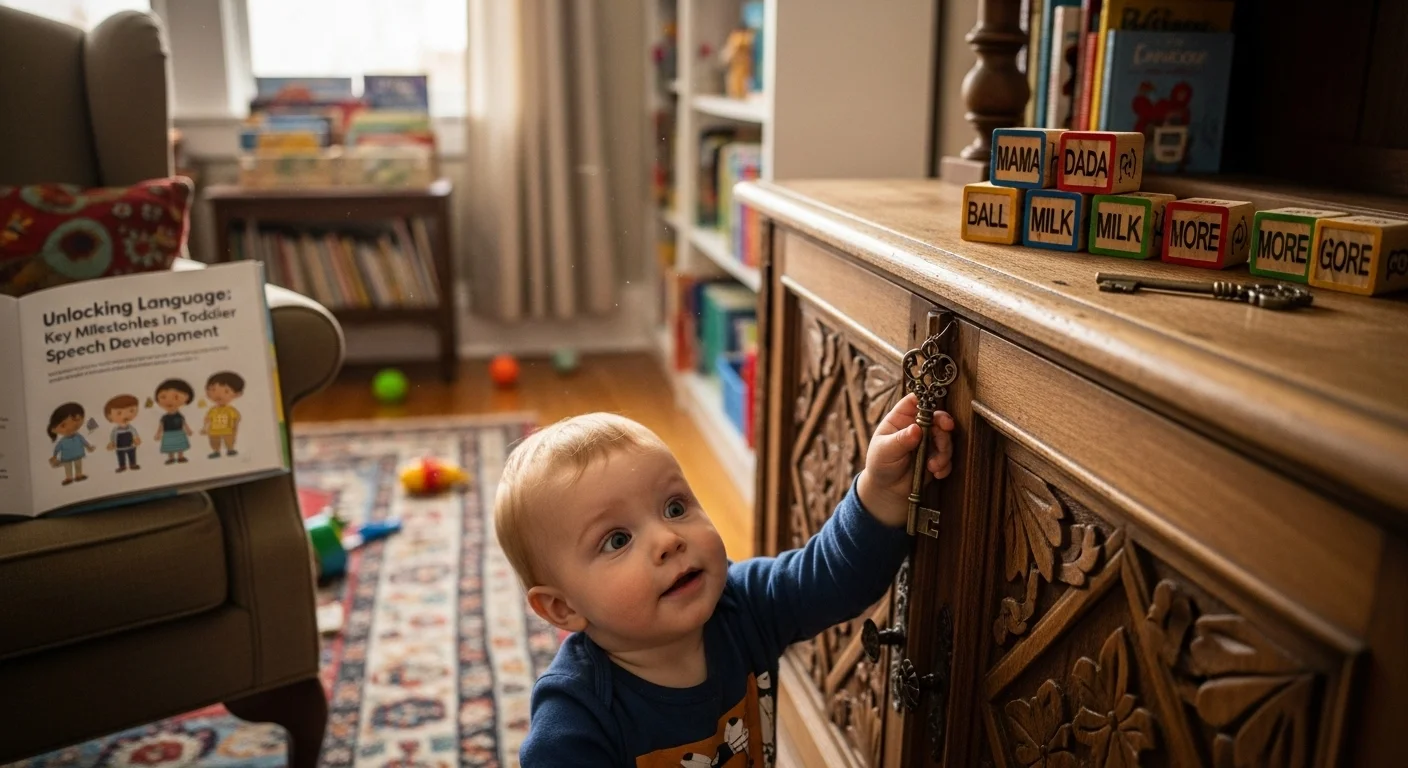
Understanding Toddler Speech Development
What is Speech Development?
Speech development refers to how children learn to communicate verbally. This includes not just the ability to form words and sentences, but also understanding and using language appropriately in different contexts. I remember when my child started to mimic sounds and expressions; it was like watching a tiny light bulb flicker on. Speech development is a gradual process, beginning long before actual words are spoken. It encompasses everything from the initial coos of infants to the complex sentences toddlers begin to string together by age three or four.
The Importance of Early Language Skills
The early years are crucial for speech and language development. I’ve learned that the skills toddlers acquire during this time form the foundation for their future communication abilities. When children articulate their thoughts and feelings, it builds confidence and fosters their social skills. In my experience, engaging with my child in conversations, even when they were just babbling, laid the groundwork for effective communication later on. Research shows that children with strong early language skills tend to perform better academically as they grow older, which is another compelling reason to focus on these skills early on. For tips on fostering these skills, see How to Encourage Your Toddler’s Communication and Social Skills.
Key Milestones in Toddler Speech Development
Pre-Language Skills (0-12 Months)
The first year of life is full of pre-language milestones that lay the groundwork for speech. I remember being in awe of my little one’s cooing and babbling phases. These sounds are not just random; they’re crucial for developing the muscles needed for speech and understanding the rhythm of conversation.
Coos and Babbling
From about two months, infants start to coo, making soft vowel sounds. By six months, they venture into babbling, producing repetitive consonant-vowel combinations like “ba-ba” or “da-da.” I found it fascinating to watch my baby experiment with different sounds, and it became a fun game for us. This babbling is their way of practicing speech, even if they don’t yet know what they’re saying. It was important for me to respond to these sounds as if they were real conversation, reinforcing their desire to communicate.
Understanding Non-Verbal Communication
During this stage, babies also start to understand non-verbal cues. They might respond to facial expressions or gestures, which is a key aspect of early communication. I noticed that when I smiled or raised my eyebrows, my baby would mimic my expressions, showing they were engaged and responding to my cues. This non-verbal communication is vital because it helps toddlers learn the social aspects of language. They begin to grasp that communication isn’t just about words but also about gestures and tone.
First Words (12-18 Months)
As babies approach their first birthday, they often take a monumental leap into verbal communication. This is one of the most thrilling phases in a parent’s life. I still remember the joy I felt when my child said their first word. It felt like a huge milestone, and I couldn’t wait to hear more.
Common First Words
Typically, first words emerge around 12 months. Common ones include “mama,” “dada,” and names for familiar objects like “ball” or “dog.” I remember my child’s excitement when they recognized a favorite toy and called it by name for the first time. These words usually reflect their immediate world, and it’s amazing how quickly they start to associate sounds with meanings.
Contextual Usage of Words
At this stage, toddlers begin to use their new words in context, which is a thrilling development. They might say “mama” when they want my attention or “milk” when they’re thirsty. My heart swelled with pride each time my child used words to express their needs instead of crying. This phase is crucial as it teaches them how to communicate their desires and feelings, paving the way for more complex interactions later on.
Expanding Vocabulary (18-24 Months)
As toddlers approach the 18-month mark, many experience what’s known as a vocabulary “explosion.” It’s like watching a garden bloom overnight! I remember feeling overwhelmed by how quickly my child picked up new words during this time.
Word Explosion Phase
This is when you might notice your toddler’s vocabulary increasing from a handful of words to dozens in just a few months. I found it delightful to see how my child would pick up words from everyday conversations or even simple television shows. They are like little sponges, soaking up everything around them, and it’s an exhilarating phase for any parent.
Simple Two-Word Phrases
Along with expanding vocabulary, many toddlers begin to combine words into simple two-word phrases, like “more juice” or “big truck.” This was a turning point for my child, as it showed me they were not only learning words but also starting to understand how to put them together. I encouraged these phrases by repeating them and responding enthusiastically, which made them feel valued and understood.
Complex Sentences (2-3 Years)
As toddlers reach the two-year mark, their language skills continue to evolve rapidly. This is the time when they start forming more complex sentences, which can be a joy and a challenge for parents. I found myself both amused and impressed by my child’s growing ability to express thoughts and feelings with more clarity.
Developing Grammatical Structure
During this phase, children begin to grasp basic grammatical structures. They might say things like “I want cookie” instead of just “cookie.” I remember feeling a mix of pride and laughter when my child experimented with sentence structure, sometimes getting it hilariously wrong. This development shows that they are starting to understand the rules of language, which is essential for effective communication.
Understanding and Using Pronouns
By this age, toddlers also begin to understand and use pronouns like “I,” “you,” and “me.” I was thrilled the first time my child pointed to themselves and said “me!” It was a clear sign that they were starting to understand their identity in relation to others, a critical part of language development.
Advanced Communication Skills (3-4 Years)
As they approach four years, toddlers’ language skills really begin to shine. It’s during this time that I noticed my child’s ability to communicate more effectively with those around them, which was a relief and a joy.
Storytelling and Narrative Skills
Many children start to engage in storytelling, sharing their experiences and imaginative tales. I found it fascinating to listen to my child weave together stories, even if the details were sometimes outlandish! This showed me that they were not only learning vocabulary but also how to organize thoughts. Encouraging this kind of play can be a wonderful way to enhance their language skills even further. For more fun ideas, see Fun Activities to Boost Your Toddler’s Social Communication Skills.
Expressing Needs and Desires Clearly
At this age, children become much better at expressing their needs and desires clearly. Instead of just saying “play,” they might ask, “Can we play with blocks?” This clarity enhances their relationships and social interactions, and I’ve seen firsthand how it fosters stronger connections with peers and adults alike.
Factors Influencing Speech Development
Parental Interaction and Engagement
One of the most significant factors that influence speech development is the level of parental interaction. I’ve seen firsthand how my active participation in conversations with my child not only made them excited to express themselves but also helped them learn new words and phrases. When we play together or read books, I always try to engage my child by asking questions and encouraging them to share their thoughts. This two-way communication, where I listen as much as I speak, nurtures their speech development and makes them feel valued. I think it’s vital to create an environment where our children feel safe to express themselves without fear of judgment.
Exposure to Language
Another crucial element is the exposure to language. I realized that the more my child hears different words and phrases, the easier it is for them to pick up language skills. Songs, stories, and everyday conversations all contribute to this exposure. I remember incorporating songs into our daily routine, which not only made learning fun but also introduced new vocabulary to my child in a playful context. When they hear language used in various contexts—whether at home, in the community, or in daycare—they start to grasp the nuances of communication. It’s like building a strong foundation that supports their growing language skills.
Social Environment and Play
The social environment also plays a significant role in speech development. Interacting with peers can motivate toddlers to communicate more effectively. I noticed that when my child played with other kids, they were more likely to experiment with their language skills, trying out new words and phrases learned from their friends. These social interactions are essential as they teach children not only how to express themselves but also to listen and respond to others. Playdates became a wonderful opportunity for my child to practice their communication skills in a fun and engaging way, and I encourage other parents to facilitate such interactions whenever possible.
Health and Hearing Issues
While many factors promote speech development, it’s also important to recognize that health and hearing issues can affect a child’s ability to communicate. I’ve come to understand that if a toddler isn’t responding to sounds or doesn’t seem to be developing speech as expected, it might be worth exploring potential hearing issues. I remember feeling a wave of concern when my child didn’t respond to their name being called. After a check-up with our pediatrician, I learned that regular hearing assessments are crucial. If there are any concerns, addressing them early on can make a world of difference in a child’s speech development journey.
Supporting Your Toddler’s Speech Development
Encouraging Communication Through Play
Play is one of the most natural ways to encourage speech development. I found that incorporating language into play makes it enjoyable for my child while fostering their communication skills. Simple activities like playing with dolls or action figures and narrating their adventures can spark their imagination and encourage dialogue. I often create scenarios where my child needs to express what they want or how they feel. By making playtime interactive and language-rich, I help my child feel more comfortable using their words.
Reading Together: Building Vocabulary
Reading is another fantastic way to support speech development. I love snuggling up with my child and diving into books. From the colorful pictures to the rhythmic language, it’s a magical experience that opens up a world of words. I remember that when I read aloud, I would pause to ask questions about the story or encourage my child to predict what might happen next. This not only builds vocabulary but also promotes comprehension and critical thinking skills. I believe that the habit of reading together can lay the groundwork for a lifelong love of language.
Using Music and Rhymes
Music and rhymes are wonderful tools for speech development. I’ve seen how songs can capture my child’s attention and enhance their memory of new words. We often sing nursery rhymes and make up silly songs together, which helps reinforce sounds and language patterns in a fun way. The repetitive nature of music makes it easier for toddlers to remember and use new vocabulary, and it’s also a great way to bond. I recommend incorporating music into daily activities; it adds an element of joy and creativity to learning.
Creating a Language-Rich Environment
Lastly, creating a language-rich environment at home is essential. I realized that labeling objects around the house, like “door” or “table,” can engage my child’s curiosity and encourage them to use those words in conversations. Additionally, I try to narrate our everyday activities, whether we’re cooking, cleaning, or running errands. This exposure to language in context helps my child see the practical use of words and phrases. The more we talk about our experiences, the more they learn about expression and communication.
Signs of Speech Delays and When to Seek Help
Recognizing Delayed Speech Milestones
As a parent, it’s natural to worry about our children’s development, especially when it comes to speech. I remember feeling a knot in my stomach when I started noticing that my child wasn’t hitting certain speech milestones. It’s important to know what these milestones are so we can identify any potential delays early on. For example, by 12 months, most toddlers should be saying at least one word, and by 18 months, they should be using at least a few words consistently.
Some signs of delayed speech can include:
- Not speaking any words by 12 months.
- Not using gestures, like pointing or waving, by 12 months.
- Not being able to say at least 20 words by 18 months.
- Not combining two words into simple phrases by 2 years.
- Difficulty following simple instructions or questions.
If you notice any of these signs, it’s essential to take a step back and evaluate the situation. I’ve learned that every child develops at their own pace, but if you have concerns, it’s always better to seek advice sooner rather than later.
Consulting Speech-Language Pathologists
When I felt uncertain about my child’s speech progress, I decided to consult a speech-language pathologist (SLP). These professionals are trained to assess and treat communication disorders. I found the experience incredibly reassuring. An SLP can provide valuable insights into whether your child’s speech patterns are within the normal range or if there are underlying issues that need to be addressed.
During the assessment, the SLP will typically observe your child’s speech and language skills, conduct standardized tests, and may even gather information from you about your child’s development. I appreciated how they provided me with tailored strategies to support my child’s language growth at home. For example, they suggested specific activities and approaches that reinforced what my child needed to work on. Consulting an SLP can be a pivotal step in ensuring that our children get the support they need.
Resources and Support for Parents
Accessing resources and support can make a significant difference in navigating speech development concerns. I remember feeling overwhelmed at times, but I found various resources that helped me feel more empowered. Local early intervention programs are often available for children with communication delays. These programs can offer personalized support and services for your child.
Additionally, I discovered online resources, such as websites and forums, where parents share experiences and advice. Books on child development can also be beneficial, as they provide practical tips and insights into fostering speech and language skills at home. I often turned to these resources when I needed guidance or reassurance, and it helped me feel more connected to a community of parents going through similar experiences. I recommend reaching out to your pediatrician as well, as they can provide information on local resources and referrals.
The Role of Technology in Speech Development
Educational Apps and Games
Technology has become a part of our lives, and I’ve seen how educational apps and games can play a role in supporting speech development. When used wisely, they can provide engaging ways for toddlers to learn new words and practice their communication skills. I remember finding a few interactive apps that encouraged my child to repeat words, identify objects, and even play simple language games.
These digital tools made learning more fun, and I loved watching my child interact with them. However, it’s crucial to choose high-quality, age-appropriate apps that focus on speech and language skills. I recommend looking for apps that are designed by educators or speech therapists, as they often have proven methodologies behind them.
Screen Time Guidelines for Toddlers
While technology can be beneficial, it’s essential to balance screen time with other activities. The American Academy of Pediatrics suggests limiting screen time for toddlers to no more than one hour of high-quality programming per day for children aged 2 to 5. I tried to adhere to this guideline, ensuring that the time spent on screens was interactive and not passive. Watching educational shows or playing apps together can lead to meaningful conversations, but I also made sure to prioritize face-to-face interactions and playtime.
By finding a balance, I felt more confident that my child was benefiting from technology without it detracting from their speech development. Encouraging discussions about what they watched or played helped reinforce learning and made it a shared experience.
Frequently Asked Questions
What is speech development?
Speech development refers to how children learn to communicate verbally, including forming words and sentences and using language appropriately in different contexts. It begins long before actual words are spoken, encompassing everything from coos of infants to complex sentences by age three or four.
Why are early language skills important?
The early years are crucial for speech and language development as they form the foundation for future communication abilities. Engaging toddlers in conversations helps build their confidence and social skills, and research shows that strong early language skills can lead to better academic performance later in life.
What are some pre-language skills for children aged 0-12 months?
Pre-language skills include cooing and babbling, which are essential for developing the muscles needed for speech. Babies also start to understand non-verbal cues and may respond to facial expressions or gestures during this stage.
What are common first words for toddlers between 12-18 months?
Common first words typically include “mama,” “dada,” and names for familiar objects like “ball” or “dog.” These words usually reflect their immediate environment and experiences.
What is the vocabulary “explosion” phase?
The vocabulary “explosion” phase occurs around 18 months when toddlers rapidly increase their vocabulary from a handful of words to dozens. They also start combining words into simple two-word phrases like “more juice” or “big truck.”
How do toddlers develop complex sentences between 2-3 years?
During this phase, toddlers begin to grasp basic grammatical structures and start forming more complex sentences. They may use pronouns and express their thoughts with greater clarity, showing a deeper understanding of language rules.
What factors influence toddler speech development?
Key factors include parental interaction and engagement, exposure to language, social environment and play, as well as health and hearing issues. Active participation in conversations and providing a language-rich environment significantly enhance speech development.
How can parents support their toddler’s speech development?
Parents can encourage speech development through play, reading together, using music and rhymes, and creating a language-rich environment at home. These activities promote vocabulary growth and effective communication skills.
What signs indicate potential speech delays?
Signs of delayed speech may include not speaking any words by 12 months, not using gestures by 12 months, not saying at least 20 words by 18 months, not combining two words by 2 years, and difficulty following simple instructions.
When should parents consult a speech-language pathologist?
Parents should consider consulting a speech-language pathologist if they have concerns about their child’s speech progress. An SLP can assess communication skills, provide insights, and suggest tailored strategies to support language growth.